

Sandstone, Granite and Natural Stone From India: Specs That Hold Up, and Quarry Checks That Are Fair
- Updated
Your route: sandstone, granite and natural stone from India
Made in
Several centres
Leaves India from
Port not researched yet
IndicativeUseful directional information where precise verification is unavailable.UnknownInsufficient evidence, or not yet researched.
At sea
No schedule yet
Needs a researched port first
Made in
Several centres
Leaves India from
Port not researched yet
IndicativeUseful directional information where precise verification is unavailable.UnknownInsufficient evidence, or not yet researched.
At sea
No schedule yet
Needs a researched port first
Made in
Several centres
Leaves India from
Port not researched yet
IndicativeUseful directional information where precise verification is unavailable.UnknownInsufficient evidence, or not yet researched.
At sea
No schedule yet
Needs a researched port first
Made in
Several centres
Leaves India from
Port not researched yet
IndicativeUseful directional information where precise verification is unavailable.UnknownInsufficient evidence, or not yet researched.
At sea
No schedule yet
Needs a researched port first
Made in
Several centres
Leaves India from
Port not researched yet
IndicativeUseful directional information where precise verification is unavailable.UnknownInsufficient evidence, or not yet researched.
At sea
No schedule yet
Needs a researched port first
Made in
Several centres
Leaves India from
Port not researched yet
IndicativeUseful directional information where precise verification is unavailable.UnknownInsufficient evidence, or not yet researched.
At sea
No schedule yet
Needs a researched port first
Carrier schedules read 23 Sept 2026. Days are port to port; inland haul and customs time come on top.
Add up the landed costFind the HS codeGet help shipping it (opens sourcingsync.com in a new tab)
In July 2009, a British news crew filmed children breaking stone in Rajasthan's quarries. The Ethical Trading Initiative's director wrote about one of them the next week. "Mohan, 5, said he enjoyed playing with hammers, but would rather be at school" (ETI, 15 Jul 2009 (opens in a new tab)). The quarries were described as "the source of much of the sandstone that ends up in our patios and driveways". The post didn't tell UK importers to stop buying. It said "walking away from this problem is no solution", and it pointed to one importer that had changed how it bought.
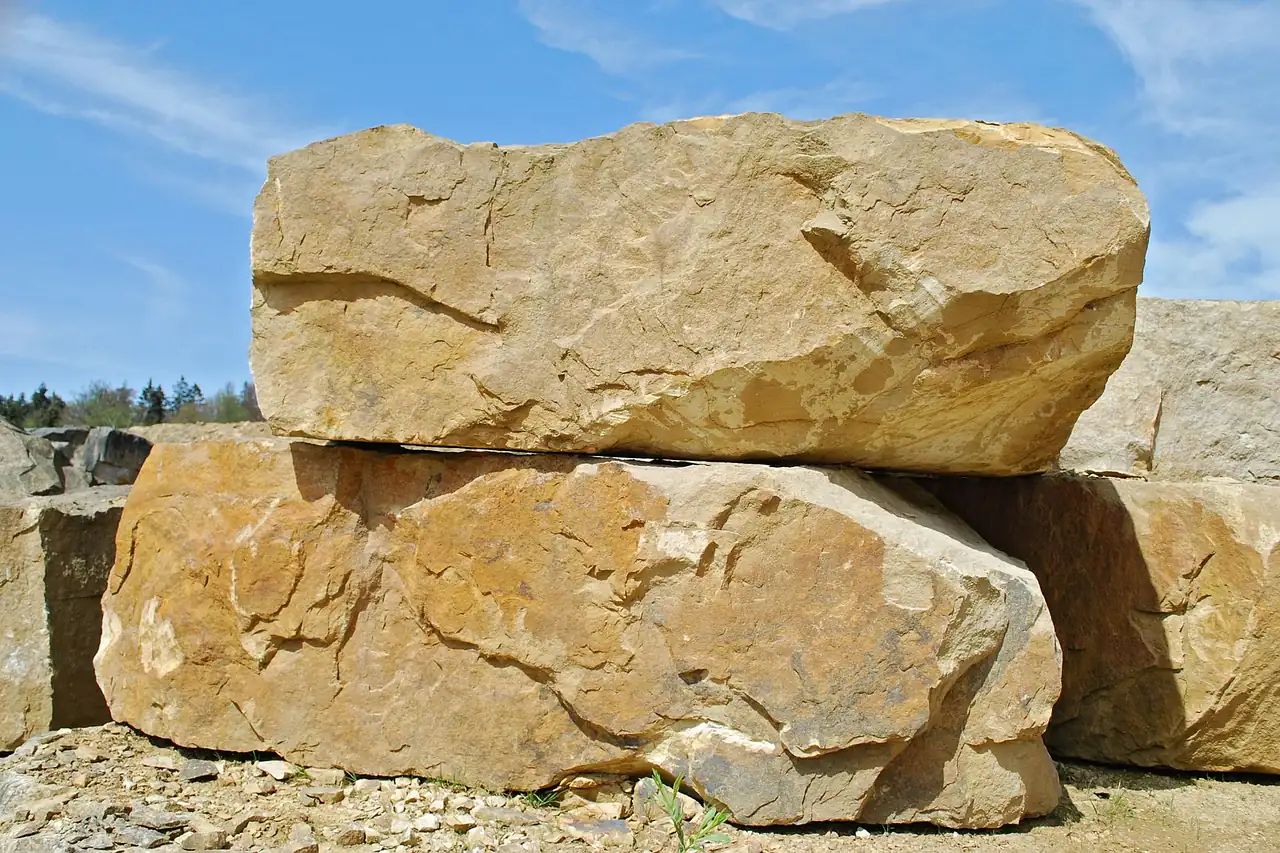
Sixteen years later that importer's datasheet for Indian sandstone names the district its stone comes from, the British Standard it's tested to, and the numbers it meets. That journey, from an open market of unknown quarries to a named district and a test certificate, is the whole of this page. It's for landscape suppliers, stone merchants and contractors outside India buying paving, setts, kerbs and granite. We cover what India sells and where, how to write a spec that holds, what each border charges, and how to check quarry labour without treating every Indian supplier as a suspect. We publish no prices. Stone moves on shade, size and freight, so check the current price with each supplier.
1. What India Sells, And Where It Comes From
Three families of stone matter to a buyer. Sandstone, mostly from Rajasthan. The ABA report says "nearly 90%" of India's sandstone is produced there (Tainted Stones, 2020 (opens in a new tab)). Granite, from the south and from Rajasthan. India's mines bureau says the dimension stone trade matters most in Tamil Nadu, Andhra Pradesh, Telangana, Karnataka and Rajasthan, and that India's granite comes in "over 200 shades" (IBM, Indian Minerals Yearbook 2022, Granite (opens in a new tab)). And limestone and other paving stones, which we don't cover in depth here.
The import data shows where India wins. These are 2025 shares from each market's own customs records.
| Market | Worked other stone (6802.99, finished sandstone and similar) | Flagstones, setts, kerbs (6801) | Worked granite (6802.93) |
|---|---|---|---|
| United Kingdom | India first, 67.1% | India first, 28.1% | China first, India second at 30.7% |
| European Union (27) | Brazil first, India third at 12.1% | China first, India second at 19.3% | India first, 41.9% |
| United States | Brazil first, India third at 7.3% | Türkiye first at 71.6%, India second at 13.2% | Brazil first, India second at 24.2% |
| Australia | China first, India not in the top three | Türkiye first at 54.4% | China first at 81.2%, India second at 6.8% |
Read it as a map of where Indian stone is the default and where it's the challenger. In the UK, Indian sandstone paving is the market. In the EU, Indian granite is. In the US and Australia, Türkiye owns the flagstone line and India is one supplier among several.
2. Calibrated Or Hand-Cut: Write The Spec Before The Shade
Most disputes about Indian paving are about thickness, not colour. A hand-cut, riven slab is split along the stone's natural bedding, so its thickness varies across the slab and from slab to slab. A calibrated slab is sawn to a set thickness on the back. The face can look the same. The laying can't.
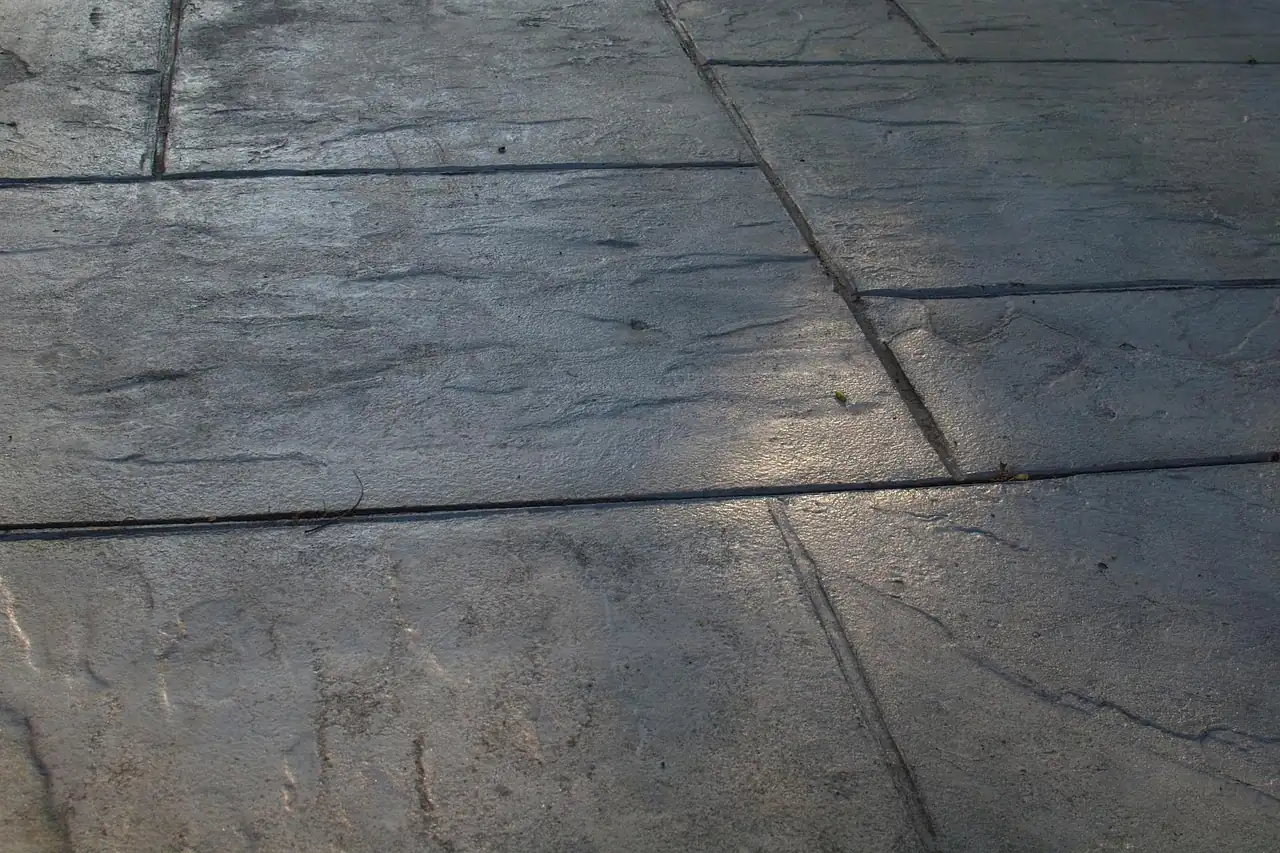
The clearest public example of a spec is the UK importer's datasheet we mentioned in the opening. Its calibrated Indian sandstone is sold as 610 x 610 x 18 mm nominal, 600 x 600 x 18 mm as work dimensions, from "quarries in the Bundi district of Rajasthan", tested to BS EN 1341:2012, with water absorption of 1% maximum, a minimum breaking strength of 13.0 MPa, and slip resistance quoted wet and dry (Marshalls datasheet, 2 Dec 2025 (opens in a new tab)). It also lists a UKCA mark and a declaration of performance, which is what UK construction-product rules ask for on paving.
That datasheet is a good model for your own purchase order, whoever your supplier is. Put these into writing before you discuss shade.
- Finish and thickness. Calibrated or hand-cut, with the thickness tolerance in millimetres. For hand-cut stone, ask the supplier what tolerance they hold and write their answer in.
- Nominal and work sizes. Say which figure includes the joint, because 610 and 600 are both "the size" to someone.
- The test standard and the test report. For external paving in the UK and EU that's EN 1341. Ask for a recent report from a named laboratory for the stone you're buying, not a generic one for "Indian sandstone".
- The district or quarry. It costs the supplier nothing to name it if they know it, and it's the start of your labour check in section 4.
- A shade-range sample. Natural stone varies. Approve a set of slabs that shows the range, and keep one.
Stone is heavy, so it fills a container by weight before volume. The same datasheet gives about 1,215 kg for a 23.81 m² pack of 18 mm slabs. Ask your forwarder for the payload limit on your lane before you plan square metres per box, and expect most Rajasthan stone to leave through the Gujarat ports, Mundra or Pipavav, the gateways our port research uses for Rajasthan (see Mundra port). Confirm the port with your forwarder.
3. Duty, Border By Border
Stone is one of the cheaper categories to land, duty-wise. Here's what Indian stone pays on the main lines today.
| Market | What Indian stone pays |
|---|---|
| United Kingdom | 0% on 6801 and every 6802 line we read. The normal rate is already zero |
| Australia | 0% under ECTA. Worked granite and worked other stone had a 5% base rate, now cut to zero |
| United States | Normal rates of 2.8% (6801), 3.7% (worked granite), 6% (6802.29.90) or 6.5% (6802.99), plus 10% on Indian goods under the Section 301 forced-labour action from 24 July 2026 |
| European Union | We didn't read the lines. Check them with your customs broker |
Sources: UK Trade Tariff (opens in a new tab), DFAT FTA Portal (opens in a new tab), USITC HTS (opens in a new tab), 91 FR 47318 (opens in a new tab), all read 7 October 2026.
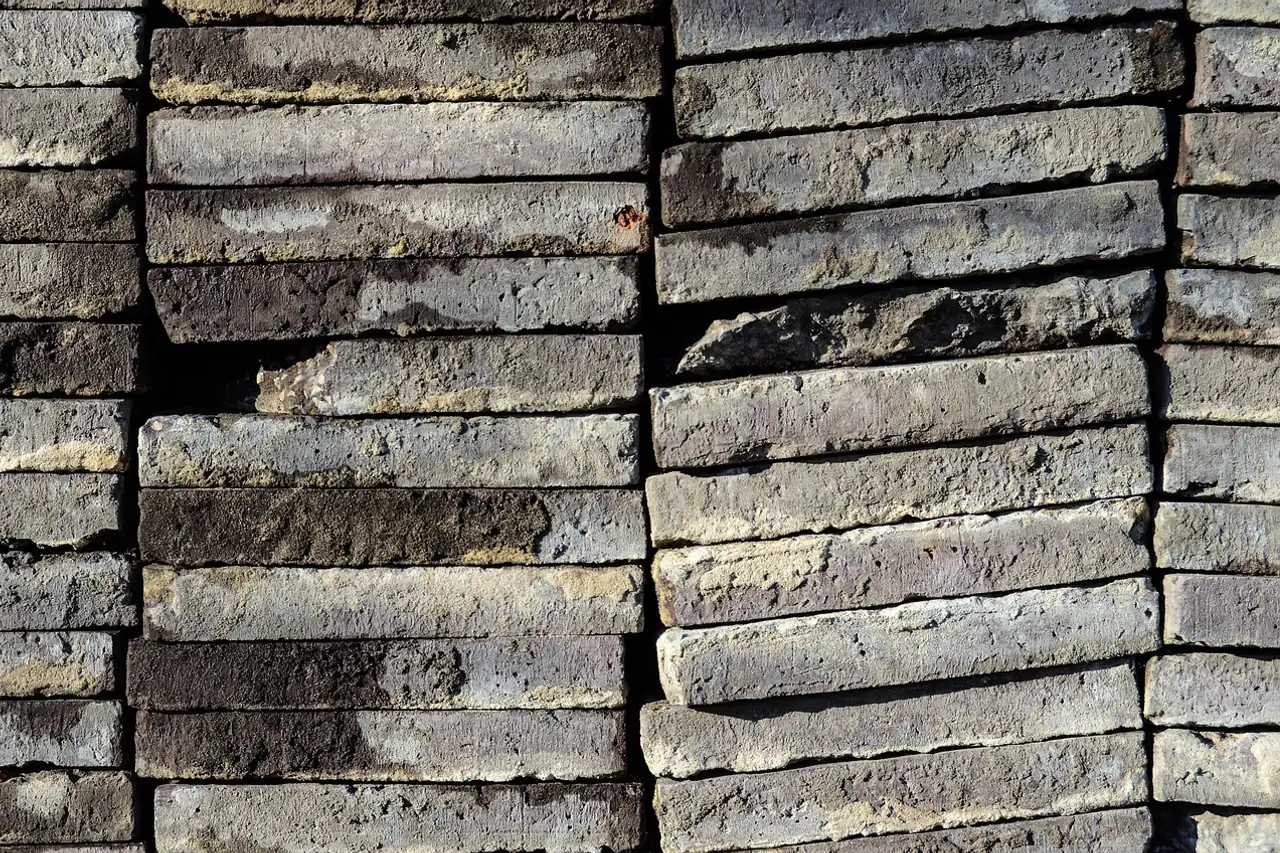
Two practical notes. The classification line between 6801 (flagstones and setts) and 6802 (worked stone) depends on how the stone is worked, so a riven paving flag and a sawn, honed slab of the same sandstone can land on different lines. Ask your broker to classify a sample before the first order. And because Australia's zero rate depends on ECTA, you'll need the origin certificate from a designated Indian agency, which our Australia page sets out.
4. Quarry Labour: Checks That Are Specific, And Fair
Here's what the evidence says, without exaggeration. The ABA's 2020 study found three million seasonal workers in India's sandstone mining, a "thriving unregulated and unlicensed market" next to thousands of licensed leases, and violations "concentrated in the quarry level": bonded labour, child labour, low wages and silicosis (Tainted Stones, 2020 (opens in a new tab)). The same report is clear that the stone goes through "multiple intermediaries" before it reaches an exporter. So the exporter you talk to is usually not the employer at the quarry, and may not know who is.
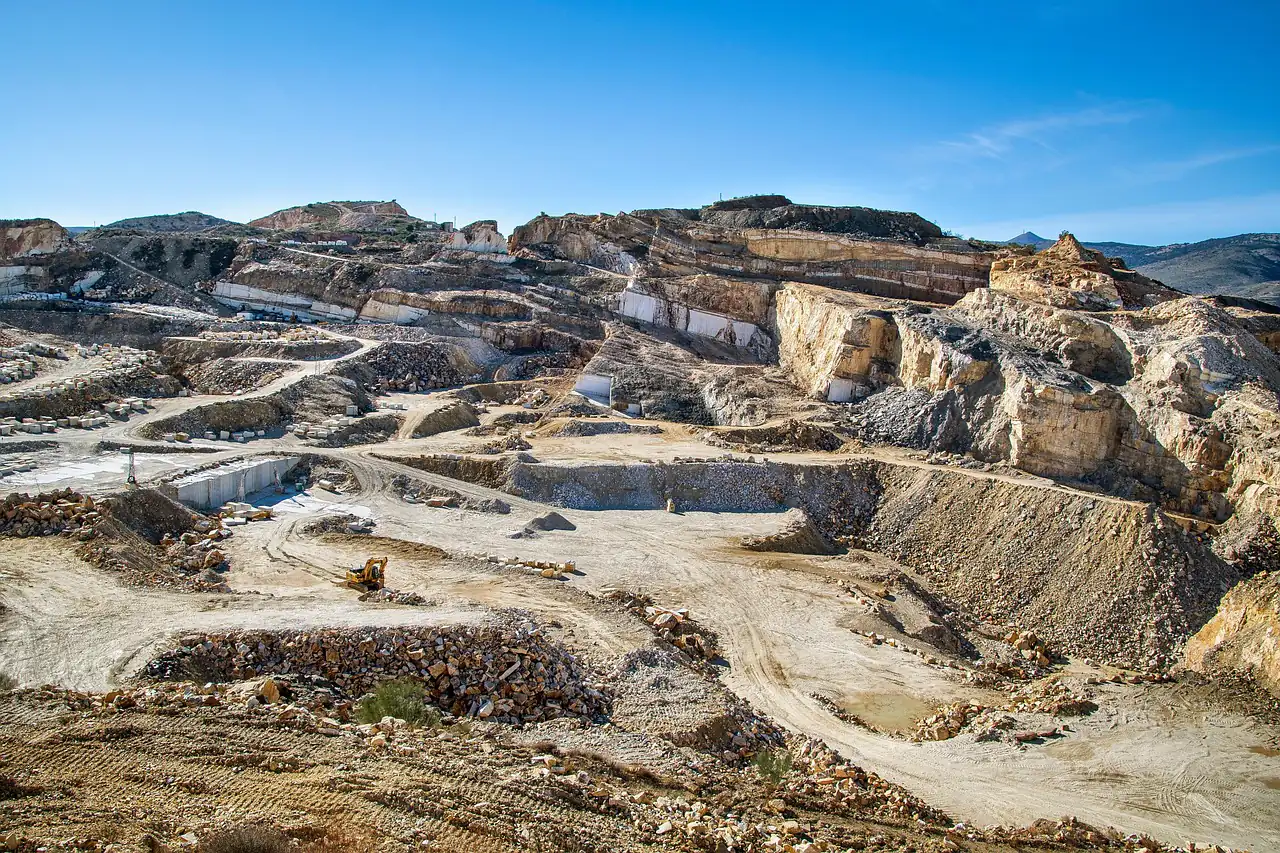
That's the fair way to see it. Many Indian stone processors don't run quarries, and a processor buying blocks in an open market isn't hiding anything. The risk is the open market itself. The 2009 ETI post makes the same point, that many importers "buy their sandstone from open markets, where it is virtually impossible to trace the origin", and it describes what one importer did instead: an exclusive relationship with a single processor "which purchases its stone from a small selection of known quarries" (ETI, 2009 (opens in a new tab)).
You may not have that buying power. You can still ask for the things that make a supply chain checkable.
- The quarry or quarries, by name and district. If the answer is "from the market", you've learned something useful, and you can decide whether that's acceptable for your customers.
- The quarry's mining lease. A licensed quarry holds a lease from the state. Ask for its number and holder. The ABA recommends sourcing "only from government-licensed and certified mines that are subject to labor inspection".
- How blocks reach the processor. Direct from the quarry, through a trader, or both.
- A visit, or a third-party audit that reaches the quarry. An audit of the cutting unit alone doesn't answer the question, because the cutting unit isn't where the ABA found the problems.
- A grievance route for workers. The ABA lists an operational grievance mechanism among its recommendations to companies.
This matters for your own legal duties too. UK businesses above the turnover threshold publish a modern slavery statement, and the EU's Forced Labour Regulation applies from 14 December 2027. If you'd rather not run the quarry trail yourself, tracing blocks back to a lease, arranging the visit and keeping the records is execution, and it's what SourcingSync (opens in a new tab) does.
Ready to act
Need hands-on help?
Tracing stone to a licensed quarry, visiting it and checking a container before it leaves Rajasthan is execution, not knowledge.
Questions Buyers Ask
Is all Indian sandstone linked to child labour?
No. The risk is concentrated in unlicensed quarries and open-market buying. Licensed quarries with known buyers exist, and the checks in section 4 are how you find them.
Why does Indian sandstone vary so much between deliveries?
It's a natural product cut from different beds and quarries. A shade-range sample, a named quarry and a thickness tolerance in the order keep the variation inside what you agreed.
Where does Indian granite come from?
Mostly from the southern states and Rajasthan, according to India's mines bureau. Ask each supplier for the quarry and the stone's trade name, then check them against your sample.
Do I need an origin certificate for the UK?
Not for the duty rate on stone, because the UK's normal rate is already zero. Australia's zero rate does need the ECTA certificate.
Back To The Patio
The children in the 2009 footage were breaking stone that could have ended up in any British garden. The importer that changed course didn't do anything exotic. It narrowed its supply to known quarries and wrote down where the stone came from. Its datasheet today names a district and a test standard, which is exactly what you can ask of your own supplier on the first call. A good Indian supplier will have the answers. The ones who don't are telling you where the stone comes from, too.