

Ways to Source From India: Models, Agents and Buying Houses
- Updated
A small T-shirt brand went to Tiruppur in 2026 the way most first-timers do. It got a maker's name through a friend, briefed six styles to its own spec, and paid for a custom run. The order came in three months late, and afterwards the same maker offered it existing stock "at nearly 25% lower pricing than what I had paid" (r/Tiruppur, 2026 (opens in a new tab)). The brand hadn't been cheated. It had simply picked the hardest way to source a product the factory already made.
That's what this page is for. We'll walk through the five ways to source from India and what each one looks like on the ground, then the question everyone asks, which is whether you need a sourcing agent. Short answer - usually not for your first order, and often not for your tenth. An agent runs a process you could run yourself, and earns the fee when you lack the time, the language or the presence. We'll also cover what an office in India takes, and how dropshipping meets your own country's tax rules. One caveat up front. Nobody has surveyed what Indian agents charge, so you'll find no fee table here, only what buyers report and how to check.
The decision in brief is in the playbook: Ways to source.
1. Ready-To-Sell: Speed, And A Provenance Question
You buy a finished product as it is and sell it on. In India that means marketplaces, merchant exporters with stock, and the wholesale markets. It's the fastest model, and it has one catch that surprises people.
A ready-to-sell seller is often a trader, and a trader who bought stock from several makers may not be able to say where each carton was made. Without that, your origin paperwork is shaky, and without origin paperwork you pay the full duty rather than the free-trade rate at your border. So ask early who made the item, and whether that maker's records exist (verify suppliers).
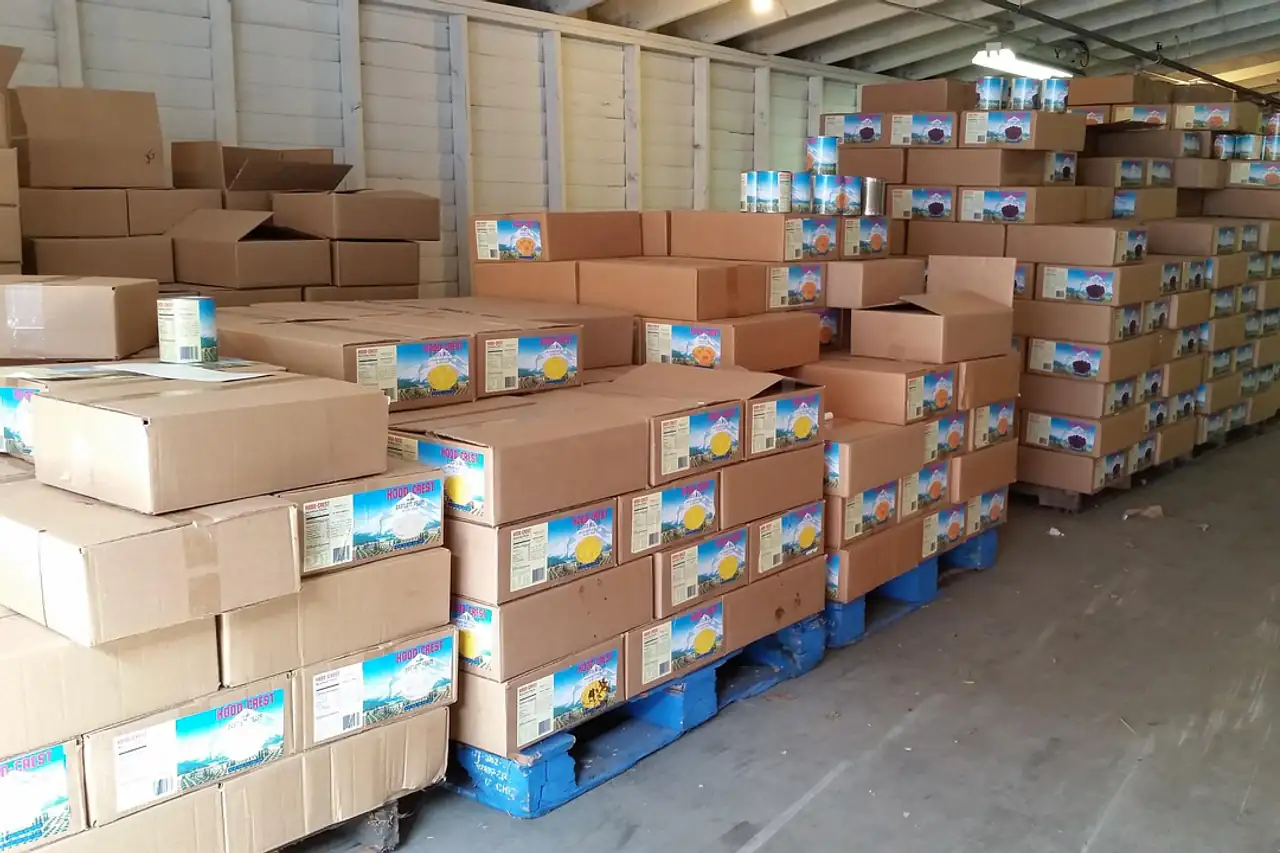
Inspection matters more here than anywhere, because there's no sample stage to catch faults. The goods that exist are the goods you get.
2. Wholesale: Cheap, Small, And Not An Exporter
India's big domestic markets sell at low prices and small minimums, and foreign buyers love the idea. Two things trip them up.
First, market shops trade mostly in cash, often without bills, and none of the voices we found described a shop acting as the exporter on a shipping bill (buyers and traders on forums, 2025 to 2026). A shop in a Delhi or Mumbai market will happily sell you a bale. It can't ship it under its own name. You need a merchant exporter to buy for you, invoice you and export under its IEC.
Second, market stock isn't always Indian. Insiders describe shelves carrying Chinese imports alongside local goods (forums, 2025 to 2026), so origin isn't assured, and neither is your duty rate. How the markets work for a foreign buyer is on India's wholesale markets.
3. Private Label: Your Brand On Their Line
You put your brand on a product a manufacturer already makes. In India that means a manufacturer exporter, which owns the line and the export code. Register your trademark in India before you send artwork, agree the label and packaging spec in writing, and treat the first run as a trial. The full guide, with the trademark steps and the label rules by destination, is on private label from India.
4. Light Customisation: The Model Most Buyers Skip
This is the cheapest way to get a product that's yours, and it's the one the Tiruppur brand should have tried first. You start from an item the maker already produces and change the colourways, sizes, trims or packaging. No new tooling, no development sampling, because the maker works from fabric, patterns and a line it already runs.

It works because it goes with the grain of how Indian makers operate. Buyers have said for years that makers resist new products - "It will be very hard to get them to make a specific product unless they are already making it", as one US maker put it (r/FulfillmentByAmazon, 2020 (opens in a new tab)), and a US textile brand found interest vanished the moment it said its product was unique (same thread (opens in a new tab)). Those voices are from 2020, so they're dated, but newer buyers describe the same "yes, then silence" on custom work. Ask the same maker to run its standard item in your colour with your label, and the answer comes faster and the price is firmer.
Before you brief anything, ask one question. What does your running line cost, and what's in stock? The Tiruppur brand learnt the answer after paying. You can learn it before. More on pricing is on MOQ and pricing.
The limit is the dye lot. Your minimum is set by the smallest batch the dyer will run, not by the sewing line, so ask for that number before you plan quantities.
5. Custom Manufacturing: When Nothing Else Will Do
A product nobody makes yet, built to your drawings. Fewer Indian makers do this well, and the ones who can are busy. Three rules, all from buyers who have done it.
Budget two or three sample rounds. The first proto is often made in whatever fabric is on the shelf, and only the pre-production sample, in the bulk fabric and trims, proves the order. The sampling protocol is on how to source.
Use a fabric library as a screening test. One India-based apparel founder met 12 to 15 makers and found catalogues or swatch books at only one or two (Hacker News, 2023 (opens in a new tab)). A maker with a library has done development before. One without will source fabric as it goes, and every round takes longer.
Put tooling ownership in the contract. Moulds, dies, screens and patterns you paid for are yours. Say so in writing, with a clause that lets you collect them.
6. Do You Need A Sourcing Agent?
An agent is one person or a small firm. A buying house is a larger operation with merchandisers, QC staff and a vendor base. Both do the same work at different scale: find makers, run sampling, follow production, book audits and organise inspection. Neither is a sourcing model. They carry out whichever model you picked.
So the question isn't "agent or no agent". It's "what can't I do myself?". If nobody on your team can talk to makers by phone and WhatsApp in Indian working hours, an agent fills that gap. If you need someone at the factory, and buyers who succeed in India nearly always have someone there, more than once (r/procurement, 2026 (opens in a new tab)), then an agent is one way to get that. But if what you need is only a set of hands for inspection and follow-up, a full agent is more than you need.
Volume matters too. The larger India agents "won't engage with you unless you can give them a decent annual volume flow", according to one agent's own representative (r/FulfillmentByAmazon, 2021 (opens in a new tab)). A first order of a few hundred pieces may land with a small agent who routes you to the same trader you'd have found yourself.
How the middle layers get paid
Agents charge a commission on order value or build a margin into the price you see. Market traders add a margin over the maker's price. And the tourist funnel in Jaipur, where a guide's "friend" sells visiting buyers gemstones on a promise of resale profit, charges several times a fair price with the guide taking a cut (buyers on forums, 2011 to 2026). We don't publish rates, because nobody has surveyed them, so ask each agent for the current fee in writing.

Buyers argue about whether commission lines an agent up with your price. A veteran of 15 years in sourcing called it "a model of competing interests" (r/supplychain, 2023 (opens in a new tab)), while a large agency argued the opposite in the same thread. Both are right about different agents, which is why the checks below matter more than the fee.
How to check an agent
Check an agent as you'd check a supplier, then add these -
- A written scope that says what they do, what they don't, and what a change costs.
- The named factory for each purchase order, the actual unit rather than a group name.
- Whose IEC goes on the shipping bill (the agent's, the maker's or a merchant's), because each changes your origin paperwork.
- Whether they also take a commission from suppliers. Ask directly. A yes is common and isn't a deal-breaker, but you should know.
- Whether the certificates cover the named factory. A certificate held by the agent covers nothing you ship.
- References you can phone. Treat big-brand client lists as the agent's own claim until then.
And be wary of finding one on a forum. Public "recommend me an agent" threads draw mostly self-promotion, and some replies look coordinated (r/procurement, 2026 (opens in a new tab)).
What goes in the contract
Scope, fees, the named factory, who owns samples and tooling, and non-circumvention. On that last one, read India's law before you copy a clause from home. Section 27 of the Indian Contract Act makes agreements in restraint of trade void (Indian Contract Act, s.27 (opens in a new tab)), and restraints that run after a contract ends generally fail in Indian courts (Nishith Desai Associates (opens in a new tab)). A clause that holds up operates during the contract, ties to confidential information, and is drafted by someone who knows the Act.
Buyers in Australia and New Zealand
The checks are the same wherever the agent sits. An agent in Melbourne with a team in Tiruppur needs the same written scope and named factory as one in Delhi. One thing not to expect is help from your own trade agency. Austrade points importers to business.gov.au, and NZTE serves New Zealand exporters (Austrade (opens in a new tab), NZTE (opens in a new tab), read 25 September 2026). They exist to sell your country's goods abroad, not to buy India's.
If you'd rather not hire and manage an agent at all, SourcingSync (opens in a new tab) does this work as a service.
7. An Office In India Instead?
Some buyers ask whether to set up their own presence. Honestly, most don't need to, and the Reserve Bank of India's rules make it heavy (RBI Master Direction on branch, liaison and project offices (opens in a new tab), updated 18 May 2021).
A liaison office needs a profit-making track record over the three preceding years and a net worth of at least US$50,000 (a parent's letter of comfort can cover a subsidiary that falls short). A bank approves it, it may promote trade and act as a channel between you and Indian parties, and it can't earn income in India. It runs for about three years, with an annual activity certificate from an auditor. If the office is going to act as your buying agent, you need a branch office instead, and the tests rise to five years of profit and US$100,000 net worth.
The Reserve Bank published a draft in December 2025 that would drop these financial tests, and it hadn't been notified as of May 2026 (EY tax alert, December 2025 (opens in a new tab), India Briefing, 2026 (opens in a new tab)). Check the status before you plan around it.
Ready to act
Need hands-on help?
For most importers the answer is no. You don't need an office. SourcingSync can be your team on the ground.
8. A Note On Dropshipping From India
Dropshipping means the Indian seller posts single parcels to your customers, and that puts you inside your own country's low-value import rules.
In Australia, GST applies to low-value imported goods sold by overseas businesses with Australian turnover over AUD 75,000 (ATO (opens in a new tab)). In New Zealand, offshore suppliers selling over NZD 60,000 a year to New Zealand must register for and charge GST on low-value goods (Inland Revenue (opens in a new tab)). In the US, the de minimis exemption is suspended, so every parcel is a customs entry with duty (Federal Register, 24 June 2026 (opens in a new tab)). The thresholds for every market are on low-value import rules by country, and each destination's page has the rest (Australia, New Zealand, the US).

What We Don't Know Yet
What we know, and what we don’t
What we know: how agents and traders are paid, as buyers report it, and the Reserve Bank's office rules, dated above.
What we don't: agent fees across the market, and how often agents take commission from both sides. Nobody has surveyed it. Our own mystery enquiries to agents and buying houses are on the list, deferred with the wider panel.
Back To Tiruppur
Run the T-shirt brand's order again, with the model chosen first. The friend's reference still finds the maker. But the first question is "what do you run, and what's in stock?", and the brief becomes the maker's own tee in the brand's colours, fabric weight and labels. Fewer development rounds, a firmer date, and a price that starts from the running line rather than from scratch. The six fully custom styles can come later, once the brand knows the maker and the maker knows the brand.
Set your model and quantities down once in the sourcing brief, so every supplier gets the same question. Where to find them is on finding suppliers in India. Hope this helps.
Next step → The 13 stages