

How to Source From India, Step by Step
- Updated
In October 2025 an Indian garment maker posted his side of a first order that went wrong (r/streetwearstartup, 2025 (opens in a new tab)). A Canadian brand had ordered five styles, about 300 pieces, and wanted sampling and full production done in two months. He delivered in three. The brand had skipped the sample on the t-shirt "because he didnt have time", didn't like how it came out, and then withheld the entire remaining payment, including the money for the styles it had accepted. Nobody in that thread was a crook. Both sides lost money, and both could have seen it coming.
We keep coming back to that order on this page, because almost every stage of the sourcing process for India had a hand in it. There are thirteen stages, but only four of them decide your first order - the RFQ, the samples, the trial order and the export - because that's where money moves. Get those four right and the rest tends to follow. So this page holds the working templates for them, plus the re-check schedule for Stage 13, the India calendar for 2026-27, and a timeline that shows where the weeks actually go. Stages that belong to other sections get one line and a link.
It's one side of one story, told by the maker. Keep that in mind, and notice how little of it is about India being difficult. Most of it is about time and money running out of order.
The decision in brief is in the playbook: How sourcing from India works.
One Habit Before the Stages
Every stage leaves a paper trail, and the buyers who come out of a dispute in one piece are the ones who kept it. The dated brief, a screenshot of each registry lookup, the RFQ and every reply, sample photos and test reports, the signed terms, the PO, every inspection report and every export document. Keep them in one folder per supplier. When a Canadian-style argument starts, that folder is the only thing that isn't one person's word against another's.
Stage 1 Define requirement: The Brief, the HS Code, the Destination
A brief is one page. It states what you want in terms a maker can quote against and a customs broker can classify.
Start with the product, what it does and who buys it from you. Add the HS code to six digits at least, with your destination's full code if you know it (the HS code finder gives the national codes for India, the UK, the EU, the US and New Zealand). Then the country of import and whether you sell retail, wholesale or online, the first-order quantity and the volume you expect over a year, and a target landed cost per unit delivered to your warehouse.
The rest is the spec a maker actually quotes against - materials, dimensions, weight, colours, tolerances and packaging, plus the certifications, labelling and test limits your destination demands. Finish with the date you need stock on the shelf and the preferential rate you plan to claim, with the document that claims it.
Why does the HS code come first? Because everything hangs off it. The duty rate is looked up by HS code, the labelling rules follow product class, and chemical limits and safety standards attach to categories that track the same lines. The rule of origin your goods must meet to claim 0% is written per HS heading in each agreement, too. Pick the wrong code and every number after it is wrong. The sourcing brief tool walks the fields.
The timing line is the one the Canadian brand got wrong, and it's the one most first-time briefs get wrong. Two months for sampling plus bulk on five new styles isn't a deadline a small maker can meet, so the pressure had to come out somewhere, and it came out of the sampling. Write the date you need stock, then work backwards through the calendar further down this page before you promise that date to your own customers.
Stage 2 Research: Using Official Sources
Three sources tell you where India makes your category, and none of them is a listing.
Official Indian trade data from DGCI&S and the Department of Commerce shows what India exports by HS code, to which countries, and how that has moved. We publish our own analysis of it across this playbook, never the raw tables.
The Towns of Export Excellence and One District One Product lists are the government's own map of where things are made. Towns of Export Excellence carry 43 designations across 42 towns, and One District One Product names a product for each district. Both tell you which cluster to look in.
Council member directories counted by city show where the exporters actually are. When a third of a council's members sit in one town, that town is where your category's supply is.
Stages 3 and 4: Finding and Screening
Where to look, and what each channel has checked, is on finding suppliers in India. The five free registry checks that make up Stage 4, with walkthroughs of each portal, are on how to verify Indian suppliers.
Two things from buyers belong here, because they shape how you approach a maker rather than how you check one.
The first is the channel. Phone and WhatsApp get answers where cold email and LinkedIn don't, and one Indian manufacturer in that thread said he gets hundreds of such emails a month (r/india, 2023 (opens in a new tab)). A buyer who went to Karur in 2026 found that only a few of the many makers he'd written to had replied, and walk-ins with prior notice worked better (r/Karur, 2026 (opens in a new tab)).
The second is what you ask for. Indian makers want to sell what they already run, and a US textile brand found interest dropped the moment it said the product was unique (r/FulfillmentByAmazon, 2020 (opens in a new tab)). The China habit of sending a drawing and getting a prototype in a week works badly here. So ask for photos of something close to your item in production, and shortlist on that. Five brand-new styles, like the Canadian order, is the hardest possible way in.
Meeting Suppliers: Fairs, Buyer-Seller Meets and Missions
Reverse buyer-seller meets (RBSMs) are India's way of bringing you to the exporters. Foreign buyers are flown in, met at the airport, put up in a hotel and seated across the table from pre-screened exporters, often with a visit to the production cluster. The councils run them with government money.
The government support rules sit under the Market Access Support scheme of the Export Promotion Mission (DGFT Trade Notice 19/2025-26, 31 December 2025, with the rules still headed "draft") (DGFT, Market Access Support (opens in a new tab)). The mission carries an outlay of ₹25,060 crore for FY2025-26 to FY2030-31 (PIB backgrounder, 6 Dec 2025 (opens in a new tab)). Only a few of the rules touch you. An event needs at least 100 overseas participants, and the support covers hospitality only. Airfare support is capped at a ceiling that is higher for buyers from the Americas, Africa and Oceania than for everyone else, and the government pays 75% of the ceiling or of actual cost (check the current ceilings on the DGFT page). The hotel ceiling isn't notified yet. Supported delegates are finalised at least three weeks before the event, and feedback afterwards is mandatory, so treat it as a working trip, not a jolly.
The related-party rule matters to some readers. The rules say: "Overseas delegates requesting support must not be related to Indian entities." So an importer with family links to an Indian exporter may be left out of the subsidy, though the meeting itself stays open to them.
The richest offers pay on results. FIEO's 2026-27 RBSMs reimburse part of your airfare "based on business outcomes such as MoUs or confirmed orders" (CGI Atlanta notice (opens in a new tab)), so check the current terms with FIEO before you book. India SME Forum's RBSMs need at least US$50,000 of imports over the last two financial years (Embassy of India, Abu Dhabi, invitation for 2026-27 (opens in a new tab)). Come with a buying record and the meet pays for itself.

How to get in. Watch your Indian mission's events page, then email its commercial wing and ask to be nominated for your category. Calls close months ahead, and the 30 May 2026 deadline covered July to December events.
Priority sectors most likely to be funded, from the same rules, are agriculture, food and marine goods, then handicrafts, handlooms, carpets, AYUSH and GI goods, then leather, sports goods and toys, and finally stone, silk, wool and jute.
Hosted-buyer offers at fairs vary by council. The India Carpet Expo pays a fixed airfare contribution, set higher for buyers from Australia, New Zealand and the US than for the UK and EU, so check the current amounts with CEPC. It adds two nights in a five-star hotel in the carpet belt itself (CEPC hospitality package, read 23 September 2026 (opens in a new tab)). Indusfood asks buyers for a refundable deposit (TPCI, read 23 September 2026 (opens in a new tab)), so check the current amount with TPCI before you register. IHGF gives no free hotel (EPCH, read 23 September 2026 (opens in a new tab)), and EPCH's hotel desk has current room rates. Full dates and terms are on India's trade fairs.
Visa. The e-Business visa lasts 365 days with multiple entries, and no single stay may run past 180 days (Government of India e-visa, read 23 September 2026 (opens in a new tab)). You need your passport and a business card, and an invitation letter is optional. Apply at least four days ahead, though the carpet council advises two weeks. Councils such as EPCH and CEPC issue invitation letters if you want one. Keep your boarding passes and passport stamps, because reimbursement needs them.
Stage 5 RFQ: What to Send
Send the same RFQ to every shortlisted supplier, so the replies compare. Most of it is your brief. What makes it an India RFQ is a handful of lines that first-timers leave out.
Name the Incoterm and the place - FOB or FCA at a named port or container yard, never EXW. Ask outright whether the price assumes an export duty-remission scheme, because a quote that leans on one can move if the scheme changes. Ask for a zero-rated export invoice with no Indian GST on it.
Then pin the money and the paper. Write the payment split, the trigger for each payment and the bank that receives it, remembering that the supplier's bank processes your remittance under the Reserve Bank's new export regulations from 1 October 2026 (RBI, FEMA 23(R)/2026-RB (opens in a new tab)). List the documents by name: commercial invoice, packing list, bill of lading and the exact origin proof your destination needs (the ECTA certificate, the NZ certificate or declaration, or the UK origin declaration). Set the sample terms too, meaning cost, credit against bulk, whose courier account and how many rounds you expect.
Two questions do the most work. The first is "Which unit will make this order?", asked on the RFQ so the answer becomes part of the quote. The second is "Does this include export packing and every charge to the named port?" Buyers report prices rising after award, sometimes as a separately quoted packing charge at the last hurdle (r/procurement, 2026 (opens in a new tab), r/Entrepreneur, Australian importer, 2020 (opens in a new tab)). Some of that is fair, since sampling lots and bulk lots differ, but a written all-in price closes the gap before the deposit.
This is where most first orders slip. SourcingSync (opens in a new tab) can run quotes, samples, production follow-up, inspection and freight for you.
Stage 6 Sample & evaluate: Protocol and Golden Sample
Money. Samples are paid for and usually credited against the bulk order (Indicative). Makers usually want the advance before sampling begins, not just before bulk (Hacker News, India-based founder, 2023 (opens in a new tab), r/streetwearstartup, Indian maker, 2025 (opens in a new tab)). Experienced exporters often send samples free and charge courier only (r/exportersindia, exporter of 12 years, 2026 (opens in a new tab)). Is it worth haggling over sample fees? We don't think so. A sample carries pattern and setup cost, and a maker will happily invest in three styles for a serious buyer but resent twelve for a browser, so sample fewer styles instead.
The protocol. The first sample is a proto, and all it proves is that the maker understood the spec, so expect stock fabric and stand-in trims. The fit or function sample comes next with your corrections applied, and it still isn't the bulk material.
The one that counts is the pre-production sample, made in the bulk fabric and bulk trims on the line that will run the order. Buyers say it plainly: "The fabric you get in sampling often isn't the fabric you get in bulk" (r/ClothingStartups, 2025 (opens in a new tab)). This is the one you approve or reject.
Once approved, it becomes the golden sample - sealed, signed and dated by both sides. You keep one, the maker keeps one and the inspector gets a photo set, because every inspection in Stage 10 compares against it. Then send it to a lab for your destination's limits before bulk starts, not after.
This is where the Canadian order broke. The brand skipped the pre-production sample on one style because the two-month deadline left no room, and that single missing sample turned into the whole dispute. The top reply in the thread, with 99 upvotes, was four words: "He shoulda did the sampling" (r/streetwearstartup, 2025 (opens in a new tab)). We agree. A sample is the only moment both sides look at the same object and say yes, and without one there's nothing to hold the bulk against, so every complaint afterwards is one person's word against another's.
Heavy-knit checks. If you're buying fleece, terry or heavy jersey, two more things are worth knowing, both from a production agent working inside India's garment exports (r/streetwearstartup, 2026 (opens in a new tab)). Starch or stiffener in the finish can make a lighter fabric weigh in at the quoted GSM, and it washes out, so ask for a video of the GSM test on unwashed raw fabric before the sample is cut. AQL sampling won't catch it. And rushed small orders get cut straight off the roll without resting, which the agent says leaves 5 to 8% shrinkage after the first wash. Write a maximum shrinkage into the spec and tie the final payment to a post-wash measurement.
Sending Samples Out of India
Samples leave by courier or by post. India Post runs 1,013 postal export centres, the Dak Ghar Niryat Kendras, and export rebates apply to postal exports since 15 January 2026 (PIB (opens in a new tab) and UPU digital panorama report on India, 2026 (opens in a new tab)).
Two cautions, both from the Indian side. First, customs can hold even a courier export for a valuation query and ask for the payment trail and purchase order (r/StartUpIndia, Jaipur food exporter, 2026 (opens in a new tab)), so don't book the lab slot for the day the courier is due. Second, some new exporters ship samples as a "gift" or under a token invoice value to skip paperwork (r/exportersindia, 2026 (opens in a new tab)). The misdeclaration lands on you as the importer, so ask for a proper commercial invoice at the real value.
Stages 7 and 8: Terms and Verification
What to negotiate on price, MOQ and payment is on MOQ, price and payment. The full Stage 8 check of certificates, origin capability and the named factory is on how to verify Indian suppliers.
Stage 9 The Trial Order
A trial order is a small purchase order that tests the whole chain, not just the product. Think of it as the Canadian order done properly.
Start with a small PO under a letter of credit or a staged payment, with each payment tied to an event you can see - order confirmation, pre-production sample approval, a passed pre-shipment inspection, documents presented. Attach a written spec with tolerances, so every measurement has a plus and a minus, every colour has a reference and the golden sample is named in the PO. Then let the pre-shipment inspection report, checked against that golden sample, release the final payment. The photo the supplier sends does not.
Why does this matter so much? Because in the Canadian order the balance was the only lever left, and the buyer pulled all of it at once, for good styles and bad. The maker's answer, in the same thread, was to change his terms for everyone: "70/80 percent prepaid and rest after dispatch" (r/streetwearstartup, 2025 (opens in a new tab)). That's the market a first-time buyer walks into. Staged payments tied to inspection are the middle ground, because the maker is paid for work you've approved and you keep leverage on the work you haven't.
If the goods are never supplied at all then DGFT's quality complaints and trade disputes mechanism takes a complaint against an Indian exporter (DGFT quality complaints (opens in a new tab) and FTP 2023 chapter 8 (opens in a new tab)). It's a route for non-supply, not a court, but it isn't toothless either. One Indian exporter describes the formal warning it received after a foreign buyer complained through the embassy (r/LegalAdviceIndia, 2024 (opens in a new tab)).
Stages 10 to 12: QC, Export and Import
Inspection types, sampling plans and lab tests are on quality control. Export documents, ports and routing, then your import entry and origin proof, are on trade routes and duty and the destination pages under it.
Stage 13 Manage and Learn: The Re-Check Schedule
A supplier's records change every year, so five dates go in your calendar.
Two of them fall in the Indian financial year. The IEC must be updated between 1 April and 30 June, and one that isn't gets deactivated (DGFT, FTP 2023 para 2.05 (opens in a new tab)). The letter of undertaking (LUT) that lets the supplier export without GST runs one financial year, so it renews each 1 April. A lapsed one means your next invoice may suddenly carry tax.
The other three follow their own clocks. Each certificate has an expiry date, and an expired certificate covers nothing you ship after it. The RCMC runs five years to 31 March, and it's worth checking before you accept any price that depends on an export incentive. And your own tariff moves whenever your destination changes a rate or an agreement enters into force, which takes your landed cost with it.
Log every inspection result, every refusal and every late delivery against the supplier. That log is the only lead-time data that exists for your product.
The India Sourcing Calendar, 2026-27
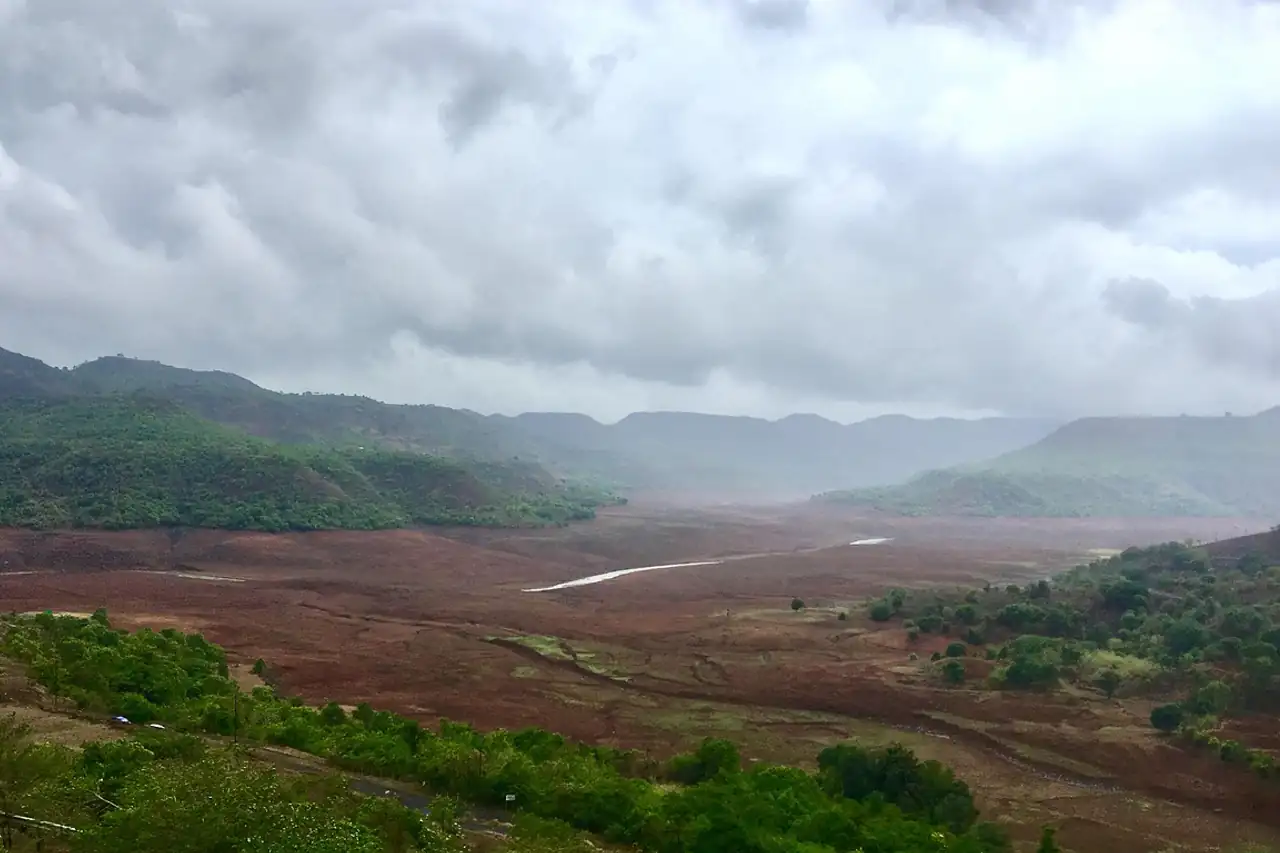
The weather comes first. The monsoon reaches Kerala about 1 June, so wet processing and drying slow in the south first, then it covers the country by about 8 July and road transport and open-air drying slow everywhere. It withdraws between about 17 September and 15 October (IMD normals (opens in a new tab)). Conditions recover just in time for the festivals to begin.
The festivals are the bigger hit. Holi (4 March 2026) costs one to three days in the north, and Id-ul-Fitr (about 21 March 2026) a day or two depending on the region. The real gap is the window that opens with Dussehra on 20 October 2026, peaks at Diwali on Sunday 8 November, when most units close for several days, and gets a second wave of travel in the east and north with Chhath about six days later (DoPT 2026 list, reproduction (opens in a new tab), Supported). Migrant workers go home for weeks, not days, and knitwear hubs like Tiruppur report labour shortages every festival season (Knitting Views (opens in a new tab), Reported).
Then there's everyone else's demand. Christmas orders for Western markets land on Indian lines in August and September, so capacity tightens just before the festivals (Indicative). The cotton season runs October to September, which means new-crop prices get set in the last quarter (Cotton Association of India (opens in a new tab)). And the next fairs with hosted-buyer terms are the India Carpet Expo (4 to 7 October 2026), IHGF Autumn (13 to 17 October 2026) and Indusfood (8 to 10 January 2027) (India's trade fairs, organiser sites read 25 September 2026, Verified).
For 2027, the central holiday order puts Id-ul-Fitr on 10 March (subject to the moon), Holi on 23 March, Dussehra on Saturday 9 October, Diwali on Friday 29 October and Chhath on 4 November (DoPT holiday list for 2027, office memorandum F. No. 12/2/2023-JCA, July 2026 (opens in a new tab), Verified). So the 2027 festival window runs about ten days earlier than 2026's, from early October to early November.
A Worked First-Order Timeline
Illustrative. The buyer, the maker and the order are fictional. It shows where time goes, never how long anything takes.
A Melbourne activewear brand places its first knitwear purchase order with a Tiruppur maker in the second week of September. The pre-production sample was approved in August, the golden sample is sealed and the LC is open.
For the rest of September the yarn is booked and the dye house takes the lot. Nothing is visible to the buyer, and the maker is running a larger European order alongside, so the buyer books the during-production inspection for when the first panels come off the knitting machines.
In early October, with the monsoon withdrawing, that inspection finds a GSM shortfall on one colour and the dye house re-runs it. The re-run lands in the week before Dussehra on 20 October.
Then the festival window opens. Migrant workers leave for home before Diwali on 8 November, and the line runs at a fraction of its strength, then stops. The re-dyed colour waits. Workers come back in stages through the second half of November, sewing resumes, and the pre-shipment inspection is booked for the end of the month.
In early December the inspection passes against the golden sample. The ECTA certificate of origin is applied for, then come the shipping bill, the Let Export Order and gate-in at the port. India to Australia always transships, so the buyer checks the routing and the date on the booking, not a generic transit time.
So where did the time go? The dye re-run and the festival window, together, took more of the calendar than the sewing did. A PO placed in July would have cleared the line before Dussehra, and that's the whole lesson of the calendar above.
Back to the Canadian Order
So what would have saved it? Not a better supplier, as far as we can tell. The brief asked for five new styles in two months, which pushed the maker into an impossible date and the buyer into skipping a sample. The payment terms left one lever, the whole balance, so the first disagreement pulled it. And there was no golden sample for the t-shirt, so there was nothing to settle the argument with.
Run the same order through this page and it looks different. The brief allows for development time and checks the date against the calendar. Every style gets a pre-production sample, sealed. Payments are staged against approvals and an inspection, so a problem with one style holds back the money for that style and not the rest. It would have taken longer on paper, and it would have finished sooner in real life.
What We Don't Know Yet
What we know, and what we don’t
What we know: the stage sequence, the official rules and dates for support programmes, visas, monsoon and festivals, all cited above. The 2027 central holiday list is issued, though Id-ul-Fitr still depends on the moon. Where buyers and makers report how first orders go wrong, we cite their own words and mark them Reported.
What we don't: lead-time norms by category. We looked, and none is published anywhere (Not found). A supplier's own quote is never a norm, and neither is one buyer's order, so the durations quoted above are single cases.
All of India's fairs, and the global fairs hub, are at India's trade fairs and fairs.
Ready to act
Need hands-on help?
This is where most first orders slip. SourcingSync can run quotes, samples, production follow-up, inspection and freight for you.
Next step → How to verify Indian suppliers