

Quality Control in India: Inspections, Lab Tests and AQL
- Updated
In August 2024 a European buyer posted a plain, tired question on a legal forum. The order of wool goods from a maker in Uttar Pradesh had come in partly unusable, and when pressed, "the factory confessed and confirmed they used two different source materials, one of which is not usable" (r/LegalAdviceIndia, 2024 (opens in a new tab)). The order was worth five figures. The sample had been right. Since then the supplier had mostly said "we will discuss this matter with the team" and gone quiet for weeks at a time.
We'll come back to that order at the end, because quality control is mostly about the distance between a good sample and a mixed lot. It's one side of one story, told by the buyer, and nothing in it says Indian makers are careless. What it shows is that nobody checked the lot before the money and the goods moved, and that part is fully in your hands.
The decision in brief is in the playbook: Quality control.
1. What The Sample Can't Tell You
A sample tells you the maker understood your spec and can hit it once. It doesn't tell you what came off the line in week three, which fibre lot went into which carton, or whose machines ran your order. The wool buyer found out the hard way that two source materials can sit inside one order, and a Canadian importer of Indian garlic says the same happened to a food lot, with substandard garlic and dirt mixed in (r/exportersindia, 2026). Neither problem would show on the sample, because the sample came from the good material.
Small orders carry more of this risk, not less. A production agent in India's garment exports describes small bulk orders being quietly sent to a cheaper unit across town while the sampling room made the sample (r/streetwearstartup, 2026 (opens in a new tab)). That's a normal way for a busy factory to fit a small order in, and job work is ordinary business in India. But it means the unit you sampled and the unit you should inspect may differ. Asking "which unit makes my order?" belongs at the quote stage (see how to source from India), and the inspection is how you find out if the answer held.
Then there's the uncomfortable habit on the buyer's side. Third-party inspection gets booked "if the order size is good" (an Indian manufacturer on a forum, 2025), so a first order of a few hundred pieces usually ships unchecked. Buyers who learnt that lesson say it plainly - do QC "irrespective of how small the quantities are" (a buyer on a forum, 2024). We agree. A first order is where you learn how a supplier behaves, and an inspection report is the only record of that lesson you'll have.
The samples themselves, including the pre-production sample in bulk fabric and the sealed golden sample every inspection compares to, are covered in how to source from India. This page starts where that one stops, when bulk is on the line.
2. Book The Inspection While Money Still Moves
There are four checks you can buy, and most orders need two of them.
A pre-production inspection happens before cutting or mixing starts. The inspector compares the bulk raw material against your approved sample, checks trims and packaging are on site, and asks which unit and line will run the order. It's worth booking on a first order and on anything with custom material, because it's the last point at which a wrong fabric lot costs nothing but a delay.
A during-production inspection comes when a good part of the run is finished and more is still on the machines. This is the check that would have saved the wool order, because it's when an inspector can see that the second half of the lot doesn't look like the first. Faults found here get fixed on the remaining goods. Found later, they get argued about.
A pre-shipment inspection happens when the order is fully made and mostly packed. It's the one almost everyone knows, and the one to tie your balance payment to. Two details decide whether it protects you. The inspector draws the sample at random from across cartons, colours and lots, never from a stack the factory has laid out. And if your order has more than one material lot then say so in the booking, so the draw covers each lot.

A loading check happens as the container is stuffed. The inspector counts cartons against the packing list, notes the seal number and confirms the goods going in are the goods that were inspected. It's cheap insurance on a high-value load.
Is an inspection a guarantee? No. The Canadian garlic importer says his lot passed a well-known inspection firm and was still adulterated, and he suspects the inspector was paid off (a claim he can't prove). An inspection is sampling, so it lowers the odds of a bad lot slipping through. It doesn't make them zero. That's why the payment structure matters as much as the report, and why a buyer who can't be there often wants someone who is. SourcingSync (opens in a new tab) books and runs inspections in India at any order size.
3. Reading An AQL Without Being Fooled By It
Most inspection firms sample under ISO 2859-1, whose 2026 edition is current (ISO (opens in a new tab)). The idea is simple once you strip the tables out. The inspector doesn't check every piece. Your lot size and an inspection level give the number of pieces to pull, and General Inspection Level II is the usual default. A tighter level pulls more pieces, a looser one fewer.
The AQL is the worst defect rate you're prepared to accept, set separately for each class of defect. The standard then gives an accept number and a reject number for your sample size. Find that many defects or fewer and the lot passes. Hit the reject number and it fails. Critical defects, the ones that make a product unsafe or illegal like a broken needle in a garment or a missing safety label, are usually set to zero.
Two things go wrong here. First, if you don't write your AQL and your defect classes into the purchase order then you've quietly accepted the inspection firm's defaults. Write them in, with examples from your own product, because an inspector's generic list won't know that a visible bar-tack matters on your brand and not on someone else's. Leather is the classic trap. "Grade A" has no shared meaning, and one Indian seller defines it as allowing one or two small defects in the most visible part of the hide, which the buyer on the other end didn't expect at all (r/Leathercraft, 2025). A defect map in the PO settles that before the inspector arrives.
Second, an AQL checks what an inspector can see and measure. It can't see a pesticide, a Salmonella count, chromium in leather or cadmium in a pendant. For those you need a lab, and the lab test depends on where the goods are going.
4. Your Border Decides The Lab Test
Here's the finding from our study of official rejection records that we think every food importer should know. The same Indian product fails for different reasons at different borders.
We counted every border rejection, alert and recall we could retrieve for Indian-origin goods from January 2021 to September 2026, about 22,000 records from the EU, the US and Australia. For spices, pesticide residues drove the EU notifications (202 of 453), with Salmonella in only 19. In the US, Salmonella was on 690 of 1,320 refused spice lines and filth on 355. In Australia, Salmonella caused 77 of 88 spice failures (RASFF, FDA import refusals and DAFF failing food reports, our counts). So a lot tested only for Europe can clear Rotterdam and fail at Los Angeles, and the reverse is just as true.
| Product | EU | US | Australia |
|---|---|---|---|
| Spices | Farm pesticides, and ethylene oxide on ground spice | Salmonella and filth | Salmonella |
| Rice | Pesticides, mainly tricyclazole and thiamethoxam | Pesticides | Rarely fails |
| Sesame | Salmonella, and ethylene oxide in 2021 | Pesticides and Salmonella | Salmonella |
| Groundnuts | Aflatoxin | Aflatoxin | Aflatoxin |
The leading failure at each border, from our counts of RASFF (to 22 Sep 2026), FDA import refusals (to Aug 2026) and DAFF failing food reports (to Jul 2026). A count shows what regulators checked, not how often Indian goods fail.
Food
For spices going to the EU or UK, the test that matters is a multi-residue pesticide panel on the raw material before it's processed. Ethylene oxide, the big EU story of 2021, has mostly been fixed. It fell from 43% of EU spice notifications on Indian goods in 2021 to 6% in 2025. Farm residues took its place, chlorpyrifos and the neonicotinoids above all, against limits of 0.01 and 0.05 mg/kg recorded in the rejections (RASFF, our count). Cumin is the worst case, with 151 of the 453 EU spice notifications, and its failed lots usually carry several pesticides at once. Our reading is that many farmers' lots get blended at the mandi (the wholesale market), so the fix is buying a segregated, traceable lot rather than cleaning a mixed one harder. Keep testing ground spices and curry powders for ethylene oxide too, because that's where it still turns up.

For the US and Australia, test every spice lot for Salmonella and, for the US, for filth. Black pepper from India has its own rule. It needs a certificate from India's Export Inspection Council under FDA Import Alert 28-02. And look your supplier up on the FDA's import alert list before you order, because Import Alert 99-19, the Salmonella alert, listed 295 Indian firms on 23 September 2026 (FDA import alerts for India (opens in a new tab)).
Rice failures in both the EU and the US are pesticides, and in the EU they're mostly tricyclazole and thiamethoxam against a 0.01 mg/kg limit. Our honest view is that a mill test only detects those. The residue gets there through spray timing on the farm, so a buyer serious about basmati for Europe ends up working with a miller who runs a grower programme. Groundnuts fail almost only on aflatoxin, and because aflatoxin sits in pockets through a lot, one grab sample tells you very little. Ask the lab for a proper sampling plan.
Ayurvedic and botanical products have a quieter problem. In the EU, 100 of 254 notifications on Indian botanicals and supplements carried no hazard at all. They were certificates and lab reports that didn't match the lot (RASFF, our count). In the US, 945 supplement lines were refused as unapproved drugs, for the claims on the label rather than the contents (FDA, our count). Paperwork and wording lose more of these consignments than contamination does.
Leather, jewellery, children's wear and cosmetics
Non-food failures are mostly decided before a single piece is made, which is good news, because it means the spec can prevent them.
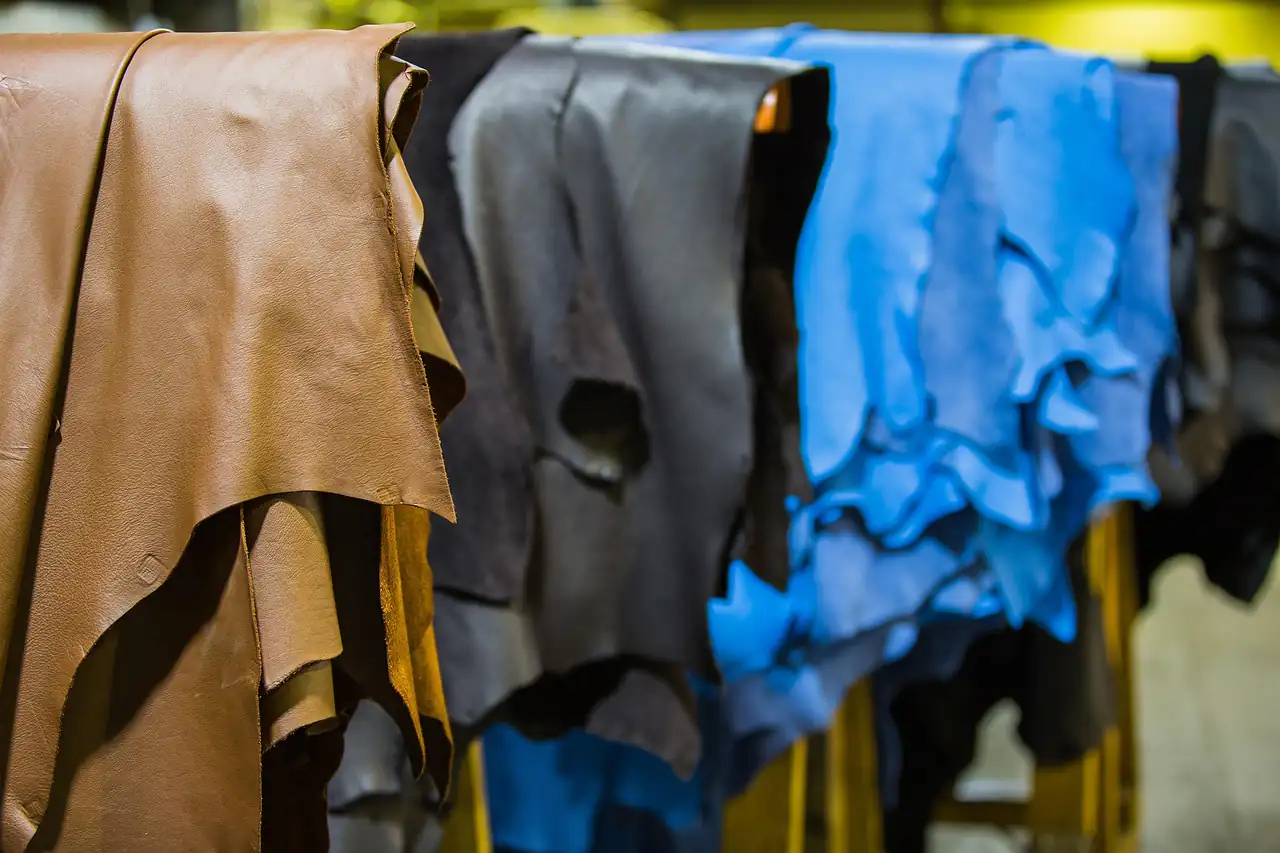
Leather is the clearest case. The EU bans skin-contact leather with 3 mg/kg or more of chromium VI (Regulation (EU) No 301/2014 (opens in a new tab)), and the Indian leather goods caught by EU Safety Gate since 2021 measured 5.0 to 20.5 mg/kg (our count, 12 alerts). Test per colour and per hide lot, not once per style. Craft buyers also complain about dye that rubs off and about smell (Leatherworker.net and r/Leathercraft, 2020 to 2025). The smell comes from finishing chemistry or chrome residue, not from any exotic tanning method, so ask for a rub-fastness test and ask about the finish. For textiles and leather dyes, the EU limit on azo dyes that release the listed amines is 30 mg/kg (Regulation (EC) No 552/2009 (opens in a new tab)).
Fashion jewellery from India has failed in the EU with cadmium at up to 95% of the metal by weight (Safety Gate, our count). The cadmium is the alloy somebody chose to save money, not a trace contaminant, so the control is the alloy specification written into your order, with XRF screening of metal parts as the check.
Children's clothing gets recalled for design, not chemistry. Cords and drawstrings caused 12 EU alerts and detachable poppers 10, and sleepwear that failed US flammability rules sits behind 8 of the 45 CPSC recalls of Indian-made products since 2021 (Safety Gate and CPSC, our counts). A design review of the pattern and trims before production catches nearly all of it. For the US, children's products also need a Children's Product Certificate backed by an accepted lab.
Cosmetics are almost half of India's EU non-food alerts, and one banned fragrance ingredient, lilial (BMHCA), explains half of those (Safety Gate, our count). It turns up in attars, perfumes and hair oils. If you're importing into Europe or the UK then ask for the fragrance allergen declaration for each batch, not once for the product.
Your destination's full rule set lives on its own page: EU, UK, US and Australia.
5. A Supplier's Lab Report Is A Start, Not A Shield
This one surprises buyers. In the US refusal record, 149 refused spice lines and 113 rice lines had a private laboratory analysis on file, and they were refused anyway (FDA import refusals, Jan 2021 to Aug 2026, our count). We can't tell from the data whether each report came before shipment or after the goods were held. Either way, a clean report didn't get the goods in.
So who draws the sample matters as much as who runs the test. A result on a sample the factory picked is a result about that sample. Have your inspector draw it from the lot, seal it and send it to the lab, and have the lab's certificate name the lot number.

Then check the lab can actually run your test. An ISO/IEC 17025 accreditation covers the tests listed in the lab's scope, not every test it offers. The scope names the substance, the material and the method, and a lab accredited for pesticides in vegetables may not be accredited for pesticides in dried spices. Ask for the scope before you send anything. India's accreditation body for laboratories and certification bodies is NABCB, under the Quality Council of India (QCI (opens in a new tab)).
6. India's Own Checks For Food
For some foods India inspects before you do. The Export Inspection Council certifies notified products for specified markets through its inspection agencies, and seafood, meat, honey, egg and dairy are the well-known ones (EIC (opens in a new tab)). If your product is notified for your market then the EIC certificate is part of the shipment, not an extra. Ask your supplier whether it applies, and ask the EIC directly if the answer sounds vague.
Heavy incoming checks on a new Indian supplier aren't a sign that India can't do quality, by the way. Engineers who qualify suppliers anywhere expect to test almost everything at first, and loosen up as the supplier earns it (Hacker News, 2023). Budget for a ramp. Don't read it as a verdict.
7. Back To The Wool Order
So what would have saved it? Probably not a better supplier. The maker could make good wool goods, and the sample proved that. What was missing was a check between the sample and the shipment.
Run the same order through this page and it goes differently. The PO names the approved material and says bulk must come from it. A during-production inspection pulls pieces from across the run while the second material is still on the line, and the problem costs a re-run instead of an order. The pre-shipment inspector draws from every lot, and the balance waits for that report. And when something does go wrong, the buyer holds back the money for the bad lot rather than chasing a supplier who says "we'll discuss with the team". If the goods never come at all, India's official complaint route is in how to source from India.
None of that is expensive next to a lost order. It just has to happen before the money moves.
Next step → Exporting from India · Related: How to verify Indian suppliers · Risks