

Finding Suppliers in India: Types, Channels and Trade Fairs
- Updated
A Dubai trading company went looking for Indian manufacturers in 2026 and came back frustrated. Makers, it said, "either don't respond, are difficult to reach, or aren't willing to work with overseas trading companies" (r/SmallBusinessUAE, 2026 (opens in a new tab)). We hear versions of that from buyers in Sydney, Auckland and Leeds too. And it's not that Indian makers don't want foreign orders. It's that the buyer was looking where the makers aren't.
So this page is about where they are. We'll cover the kinds of supplier you'll meet, the channels that reach real makers (export council lists, government portals and fairs), and what the marketplaces actually check and protect, read from their own terms. One honest caveat - nobody publishes what share of India's online "manufacturers" really run machines, so we won't give you a number for it. We'll give you a way to find out for your own shortlist.
The decision in brief is in the playbook: Who you can buy from.
1. Know Which Kind Of Supplier You're Talking To
Every supplier you meet is one of five types. None of them is a type to avoid. Intermediaries and contract makers are how trade works everywhere, and the big retailers on your high street buy through them daily. The job is simply to know who makes your goods and who answers for quality.
| Type | Makes the goods? | Exports on its own IEC? | How to check the claim |
|---|---|---|---|
| Manufacturer exporter | Yes | Yes | A manufacturer-type RCMC, the GST record, a visit or audit |
| Merchant exporter | No, buys from makers | Yes | A merchant-type RCMC, and the named maker on each order |
| Buying house | No, manages makers | Usually not | A written scope, and the named factory on every PO |
| Artisan cooperative or NGO | Yes, by hand | Sometimes, often through an exporter | PEHCHAN cards, and the exporting entity's IEC and RCMC |
| 100% EOU or SEZ unit | Yes | Yes | The unit's scheme approval and its RCMC |
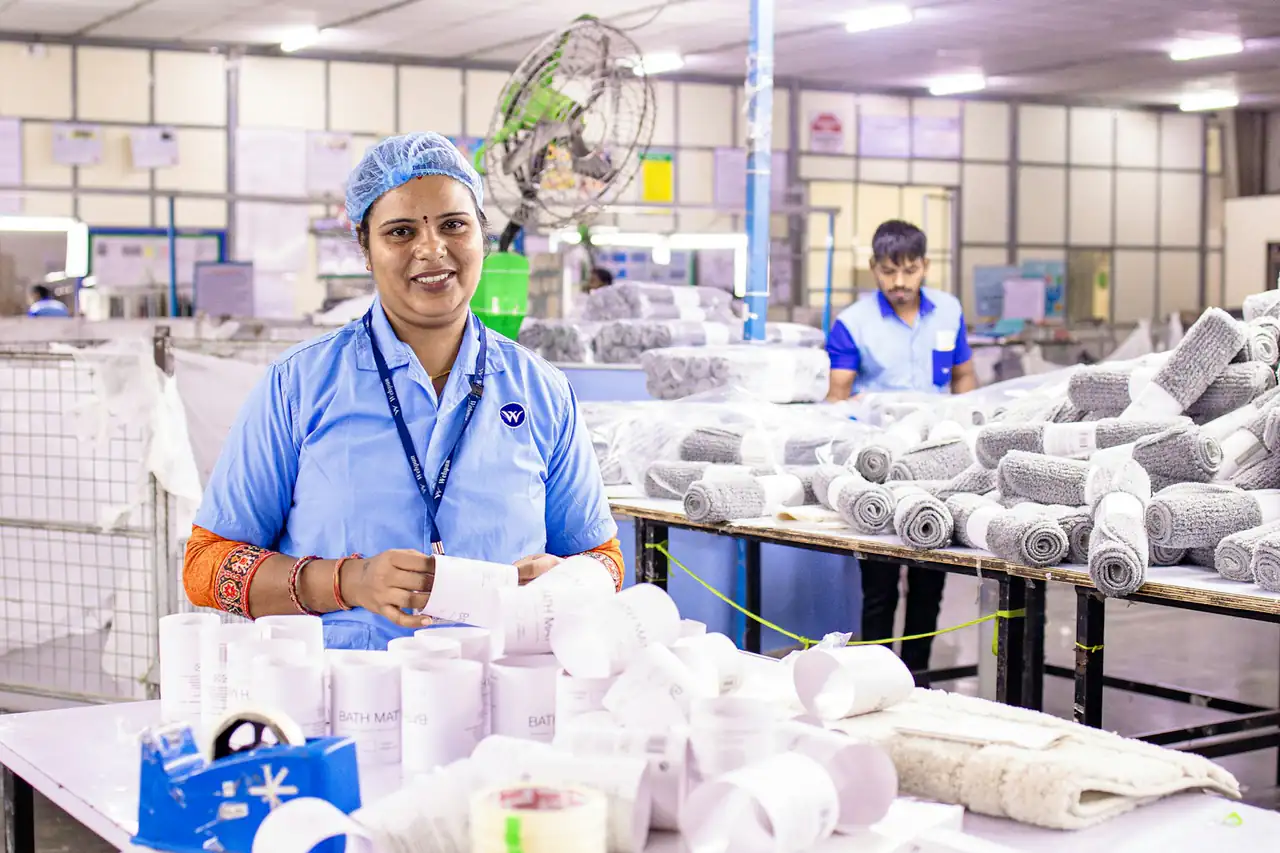
The merchant exporter is the one most first-time buyers meet, and it's often the right partner for small or mixed orders, where no single maker could fill the container. Under GST a merchant export is zero-rated just like a maker's export (TaxGuru commentary, 2025 (opens in a new tab)), so there's no tax reason to avoid one.
The EOU row deserves a note. A 100% Export Oriented Unit must export its entire production, the scheme says plainly that "trading units are not covered", and the unit needs at least ₹1 crore in plant and machinery outside a few exempt sectors like handicrafts and agriculture (DGFT, FTP 2023 chapter 6 (opens in a new tab), paras 6.00, 6.04 and 6.06). So an EOU is a maker with a legal commitment to export. It's a useful signal about set-up. It isn't a quality certificate.
The one question for every intermediary
"Which factory makes my goods?"
Traders often keep the maker private, and they'll tell you how they do it. One piece of advice to an Indian food exporter in 2025 was to "share copies of certificates (like FSSAI, IEC, ISO, FDA, etc.) but blur or cover details of manufacturer", and to get buyers to sign a non-circumvention agreement (r/IndiaBusiness, 2025 (opens in a new tab)). That's a normal way to protect a business built on relationships, and another trader in the same thread pointed out that most importers never try to cut the trader out anyway. You can respect it. You still need to know which unit answers for quality, and whether its certificates are the ones on your order, because a trader's certificates cover the trader. The checks are on verify suppliers.
2. Start With The Export Councils
An export promotion council is a body set up under India's trade ministry for one product group. AEPC covers apparel, EPCH handicrafts, CEPC carpets, CLE leather, GJEPC gems and jewellery, and there are more. Exporters join to get the membership certificate (the RCMC) they need for most export incentives, which means the councils hold India's best supplier lists.
Most of those lists sit behind a member login. One doesn't. AEPC's member directory is public, and when we read it on 24 September 2026 it held 6,728 members, each with a city and PIN code (AEPC member directory (opens in a new tab), our count). 2,094 of them, about 31%, are in Tiruppur, and 1,018 of those list cotton T-shirts. After Tiruppur come New Delhi (778), Mumbai (572), Jaipur (415), Noida (344), Gurugram (259) and Ludhiana (218). If you buy knitwear, that list is a better starting point than any directory search.
Treat the product codes as a hint though. Members declare them, and the data is noisy (one T-shirt maker in our count had listed a footwear code). The other councils were harder to reach when we checked in September 2026. GJEPC and TEXPROCIL need a member login, EPCH's directory link redirected to a membership page, CEPC's site was down, and CLE says it separates makers from merchants but offers no public search. For food and farm goods, APEDA runs an exporter directory (opens in a new tab) with a maker-or-merchant filter, which is self-declared and generous (many records claim every product the authority covers).
A council list gives you a legal name, a city and a council. That's the start, not the end. Run the name through the free registries before you send an enquiry.
3. Use The Government Portals For What They're Good At
Three official portals reach exporters directly, and each does one job well.
DGFT Trade Connect, "Source from India" (DGFT (opens in a new tab), read 24 September 2026). It's open, needs no login, and is small, with 1,347 exporter profiles when we counted, because exporters opt in. Each profile shows the IEC, the countries exported to, key products and an export turnover band ("100 to 390 USD Thousand", for example). The band comes from DGFT's own records, not the supplier. That makes it the one free, independent check on a supplier's claimed scale, and it's the tool we'd open first when someone tells you they ship "containers every week". A Buyer Connect feature lets you post an enquiry that only exporters with a valid IEC can see, which is a neat answer to the Dubai buyer's problem.

India-USA Trade Facilitation Portal (indiausatrade.mea.gov.in (opens in a new tab), read 23 September 2026). Free, and you need a US EIN to register, so it serves American buyers only. Its "verified" tag means the IEC, GST, incorporation and PAN documents passed an OCR check. The Government of India disclaims any endorsement of listed firms, and payment happens outside the portal.
FIEO's Indian Trade Portal (indiantradeportal.in (opens in a new tab)). Trade queries are for FIEO or council members, and we found nothing built for a foreign buyer.
4. Go To A Fair
A council fair puts hundreds of exporters in one hall, every one of them already a council member. For most first trips, it's the best use of a week. You see the product, handle samples and read people across a table, none of which a directory gives you.
Know who you'll meet though. At IHGF, the handicrafts fair, an exhibitor needs EPCH membership plus three years of export performance (IHGF FAQ (opens in a new tab), read 23 September 2026). IIJS, the jewellery show, is "exclusively for GJEPC members". Neither rule separates makers from merchant exporters, so the maker question still applies at the stand. Dates, hosted-buyer places and which fair suits which buyer are on India's trade fairs, and we keep the calendar there only.
UK buyers have a shortcut. Some Indian makers exhibit at UK trade shows, so the same UK importer we quoted earlier pointed buyers to fairs at home (r/smallbusinessuk, 2026 (opens in a new tab)). You can meet a factory without flying.
5. Read The Marketplace Terms As A Foreign Buyer
Marketplaces are where most foreign buyers start, and where most of the confusion lives. Read the terms as the buyer you are, not the buyer they assume.
What the badges check
IndiaMART's TrustSEAL is a paid seller package (sellers on forums, 2025 to 2026, so check the current price with IndiaMART). IndiaMART then checks registration, GST, PAN, bank and contact details, and its own page says the check covers business authenticity, "not product quality" (IndiaMART (opens in a new tab), read September 2026). Alibaba's Verified Supplier is also a paid tier, with a third-party inspector visiting the premises first (Alibaba (opens in a new tab), read September 2026). Both badges tell you one useful thing, that the business is real. Neither says anything about your order. We looked for what TradeIndia's and ExportersIndia's badges check and found nothing published, so treat those as an open listing.
IndiaMART's payment protection, read in full
The Buyer Payment Protection Plan, in force from 12 February 2026, covers TrustSEAL sellers only, on the first deal between that buyer and seller only, for complete non-delivery only, claimed within 60 days, up to ₹5 lakh (IndiaMART terms (opens in a new tab)). It excludes quality, partial delivery, delays and custom orders. It covers KYC-verified business buyers in India, and "foreign buyer transactions" are excluded in so many words. IndiaMART also says the plan is "not an insurance contract, escrow mechanism, financial guarantee". And the older "Pay with IndiaMART" service is discontinued (IndiaMART help (opens in a new tab)).
So a buyer in Sydney or Leeds who pays an IndiaMART seller has the same platform protection as one who found the seller in a newspaper. None. That's not a reason to avoid IndiaMART. Buyers who do well there treat it "like a directory of sellers", in one US voice's words (r/Entrepreneur, 2023 (opens in a new tab)), take the contact off-platform and run their own checks.
How the lead model works
The platform sells leads. Post a requirement and it goes to many sellers at once, with paid tiers seeing it first (r/IndianEntrepreneur, Indian seller, 2026 (opens in a new tab)). Then the calls start, and one buyer found that even a search, with a phone number entered, gets passed on as a lead (r/IndiaBusiness, 2025 (opens in a new tab)). Some listings are built from bought data rather than by the business itself, according to a platform employee (r/IndiaBusiness, 2026 (opens in a new tab)).
What to do about it - use a separate phone number and email for enquiries from day one, and treat anyone who contacts you first as unvetted rather than as a bad actor. Most are ordinary traders working their leads. The same goes for the "manufacturers" who message you after you show up in import shipment data. They pulled your name from a list, which is sales, not vetting (r/exportersindia, 2026 (opens in a new tab)).
Alibaba and India-based sellers
Alibaba's Trade Assurance holds your payment until the order ships as agreed. India-based sellers reportedly can't offer it, and ask for PayPal or a wire instead (buyers on forums, 2021 to 2023, r/AlibabaImport, 2023 (opens in a new tab)). That evidence is a few years old, so check the payment options on the listing before you invest time in a supplier there.
A myth, corrected
"IndiaMART is mostly scammers." Much of that reputation comes from people buying grey-market medicines, who fill the complaint threads (r/IndiaBusiness, 2025 (opens in a new tab)). For a business buyer the real gap is simpler. Nobody verifies the seller for you. SourcingSync (opens in a new tab) fills that gap if you'd rather not do it yourself.
6. Agents, Artisans And Offices
Buying houses and agents find makers, run sampling, follow production and organise QC, for a commission or a margin. How they charge and how to check one is on ways to source from India. One warning about finding one online - public "recommend me an agent" threads draw mostly self-promotion, and in one UK thread two accounts posted the same comment word for word (forums, 2025 to 2026). Treat any agent's list of big-brand clients as their own claim until they give you a reference you can call.
Artisans reach you through cooperatives, NGOs and the exporters who work with them. The artisan holds the skill, the exporting entity holds the IEC. The government's PEHCHAN card, linked to Aadhaar, had gone to 31.14 lakh artisans by June 2023 (PIB, June 2023 (opens in a new tab)). It confirms that a named person practises a named craft, and says nothing about volume, lead time or export experience. Check the exporting entity the same way you'd check anyone. For markets and wholesale buying, see India's wholesale markets.
Your own office is rarely needed. A liaison office can promote trade but can't earn income in India or act as a buying agent, and the Reserve Bank wants three profitable years and US$50,000 net worth behind it (RBI Master Direction (opens in a new tab), updated 18 May 2021). The full rules are on ways to source from India. SourcingSync (opens in a new tab) can be your team on the ground instead.
What We Don't Know Yet
What we know, and what we don’t
What we know: what AEPC's public directory holds, what Trade Connect and the India-USA portal check, and what IndiaMART's and Alibaba's badges and protections cover. All dated above.
What we don't:
- The maker-to-trader share on any directory, by category. Our next desk task is to match one fair's exhibitor list against council records of exporter type.
- What TradeIndia and ExportersIndia check before they show a badge.
- Whether India's exports come mostly from makers or from merchants. The official statistics don't split them.
Back To Dubai
The Dubai trading company wasn't wrong about what it found. It was fishing in the wrong pond. Cold enquiries to makers who fill their books at fairs will mostly go unanswered, and the sellers who do answer are mostly traders. Run the same search from the top of the ladder - the council list for your product, Trade Connect's Buyer Connect so only IEC holders see your enquiry, one fair, and the question "which factory makes my goods?" at every stand - and the conversation changes.
The supplier types above also have their own pages under Sourcing. Hope this helps.
Ready to act
Need hands-on help?
Short on time? SourcingSync can shortlist makers for your product, with the maker named and checked.
Next step → How to verify Indian suppliers