Skip to content

India's Manufacturing Clusters: The Official Town-by-Product Map

Updated

Emailing an Indian cluster from abroad can feel like shouting into a well. A buyer heading to Karur in January 2026 found exactly that - lots of enquiries sent online and by email, and "only few of the many manufacturers/Factories have responded" (r/Karur, 2026 (opens in a new tab)). The locals weren't surprised. Let the owners know when you're coming, one said, and walk into the factories (r/Karur, 2026 (opens in a new tab)).

This page is the map behind that advice. It sets out every official export town by product, the other official lists that fill the gaps, the little that's known about scale, how some clusters behave with foreign buyers, and the part nobody else publishes - which port each cluster's goods actually leave from. One caveat before we start. The gateway work is ours, built from official data, and it's a planning figure, so re-run your lane before you quote.

The decision in brief is in the playbook: Where production is concentrated.

Last researched 28 September 2026 · Next review 7 October 2026 · Written by SourcingFrom

1. The Official Export Towns, In Full

The government's Town of Export Excellence list is Appendix 1B of the Foreign Trade Policy, dated 6 April 2023, with 43 designations across 42 towns (DGFT (opens in a new tab), Verified, re-extracted 23 September 2026). Here it is by product, in the document's own spellings. It's the one table on this page you'll want to scan for your product.

CategoryTowns (state)
Hosiery and knitwearTirupur (Tamil Nadu) · Ludhiana, woollen knitwear (Punjab)
Apparel and textilesNoida (UP), Faridabad (Haryana), Gurugram (Haryana), Bhilwara (Rajasthan), Bhiwandi (Maharashtra), Ahmedabad (Gujarat), Kolhapur (Maharashtra)
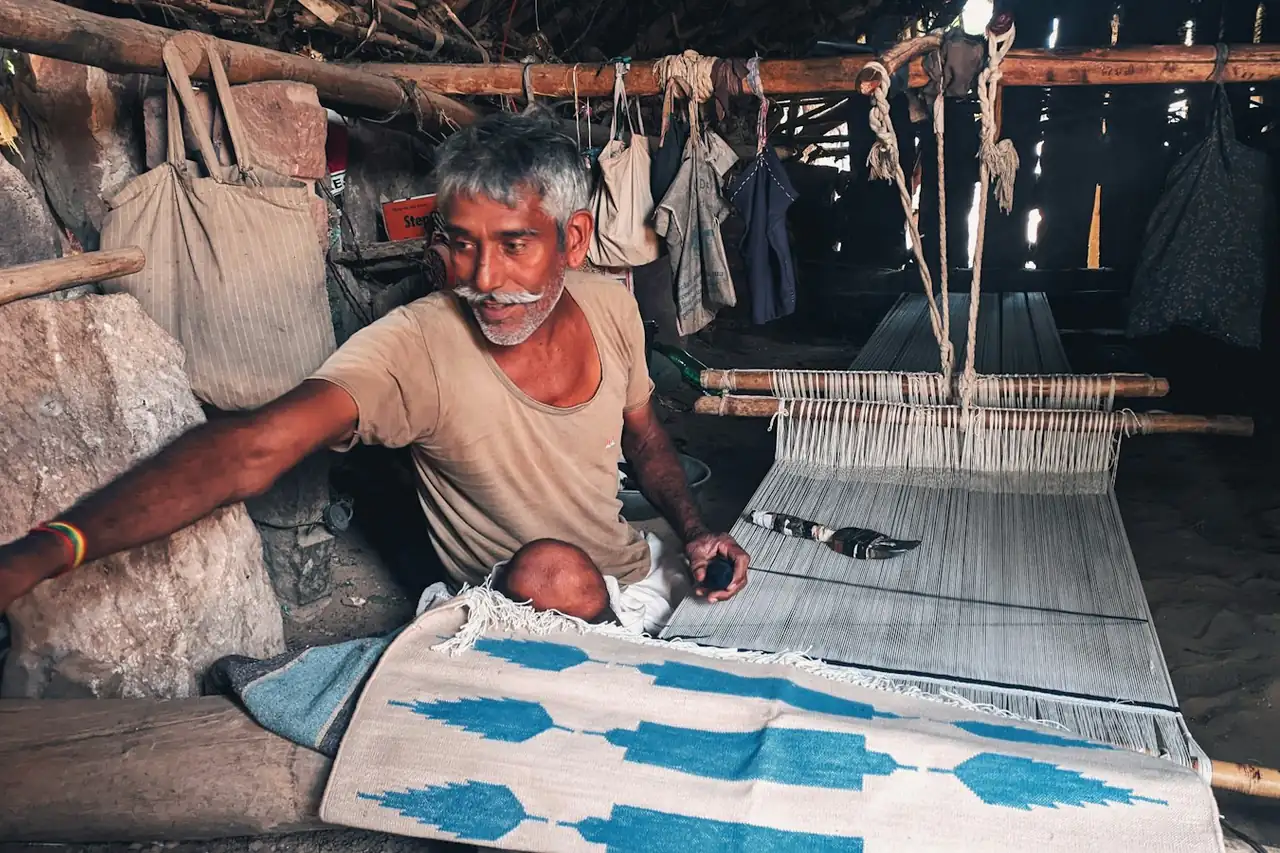
HandloomsKannur (Kerala) · Karur (Tamil Nadu) · Madurai (Tamil Nadu) · Kekhra (UP) · Varanasi, handloom and handicraft (UP)
Carpets, floor coverings, bed linenPanipat, also woollen blankets (Haryana) · Bhadohi (UP) · Mirzapur, handmade carpet and dari (UP)
HandicraftsJodhpur, Jaipur, Barmer (Rajasthan) · Srinagar, Anantnag (Jammu and Kashmir) · Saharanpur (UP) · Agartala, bamboo and cane (Tripura) · Moradabad (UP)
Leather productsKanpur, Agra (UP) · Ambur (Tamil Nadu)
Glass artwareFirozabad (UP)
Gems and jewellerySurat (Gujarat)
Ceramic tiles and sanitarywareMorbi (Gujarat)
Marine and seafoodAEKK (Kerala) · Bhubaneswar (Odisha) · Thoothukudi (Tamil Nadu) · Visakhapatnam, Bhimavaram (Andhra Pradesh)
Coir and cashewAlappuzha (Kerala) and Pollachi (Tamil Nadu), coir · Kollam (Kerala), cashew
Pharma, soya, horticultureDewas, pharma (Madhya Pradesh) · Indore, soya (Madhya Pradesh) · Malihabad, horticulture (UP)

Three versions of this file circulate, and only the newest counts. An older one has 37 rows. The March 2021 version had 39 (DGFT Appendix 1B, 2021 (opens in a new tab)), and Foreign Trade Policy 2023 added Faridabad, Mirzapur, Moradabad and Varanasi (PIB, 31 Mar 2023 (opens in a new tab)). If a guide tells you there are "43 towns", it has counted Panipat twice.

What does the status actually give a town? Priority access to Market Access Initiative funds and some capital-goods scheme benefits, which in practice means a town's association can get help paying for a fair stand or a shared testing lab. It does not mean any firm in the town has been inspected, audited or rated. So use the list to decide where to look, and use verify suppliers to decide who to trust.

2. The Other Official Lists

The export-town list misses plenty, so read three more lists beside it.

Uttar Pradesh's One District One Product portal names each district's products (UP ODOP (opens in a new tab), Verified as the state's statements). Moradabad is metal craft, GI-tagged. Aligarh is locks, metal craft and industrial fasteners. Saharanpur is wood craft, hosiery and handloom. Bhadohi is carpets, silk ones included, and Mirzapur is carpets and brass. Meerut is sports goods, from cricket bats and balls to hockey sticks and boxing gear. Kanpur is leather footwear, saddlery, bags and belts. Agra is leather footwear and marble inlay. Varanasi is Banarasi silk, wooden toys and lacquerware. Noida is ready-made garments, and Firozabad is glass, the only page with a unit count.

The Ministry of Textiles has nine handicraft mega clusters - Moradabad, Narsapur, Srinagar (carpets), the rest of Jammu and Kashmir, Lucknow, Bareilly, Jodhpur, Mirzapur-Bhadohi and Kutch-Bhuj (National Portal of India (opens in a new tab), Supported). Narsapur, Lucknow, Bareilly and Kutch-Bhuj aren't on the export-town list at all. EPCH also runs a wood testing lab and a Pashmina certification centre (EPCH (opens in a new tab)), and those are the places where a species or fibre claim can be tested inside India.


A block printer pressing a carved block onto cloth

The Council for Leather Exports lists its production centres state by state (CLE (opens in a new tab), a council's own description, undated). Tamil Nadu has Chennai, Ambur, Ranipet, Vaniyambadi, Vellore, Pernambut, Trichy, Dindigul and Erode. Uttar Pradesh has Kanpur, Agra, Noida and Saharanpur. Then come Kolkata, Mumbai, Jalandhar, Bengaluru and Hyderabad. Only Ambur, Kanpur and Agra of these hold the export-town designation, but Kolkata matters more than its status suggests. Indian exporters say many Delhi leather "manufacturers" turn out to have their factory in Kolkata (r/IndiaBusiness, 2025 (opens in a new tab)).

3. How Clusters Behave With Foreign Buyers

Official lists tell you where. They don't tell you how a town treats a stranger, and that's where our Karur buyer's story earns its place.

Karur makers rarely answer cold email, and a visit with notice works better. The same thread carried a warning from a former Karur merchandiser, who offered to name makers "who compromise the quality for better quotation" (r/Karur, 2026 (opens in a new tab)). So a low quote in Karur is a question to ask, not a win to bank. Is that unique to Karur? No, but it's specific, and it's the kind of thing you only learn from someone who's worked there.

Other towns have their own versions. In Jaipur, locals say much of the "block print" in the city's shops is screen-printed and send serious buyers out to Sanganer (r/jaipur, 2023 (opens in a new tab)), and they split the villages by dye - Bagru for natural indigo and mud-resist, Sanganer for synthetic dyes (r/jaipur, 2024 (opens in a new tab)). In Kashmir, a Srinagar rug maker says many showrooms sell rugs woven in Jaipur or Bhadohi under a Kashmir label (r/Rugs, 2025 (opens in a new tab)). In Kannauj, a resident says shops sell synthetic attar to outsiders as genuine (r/DesiFragranceAddicts, 2025 (opens in a new tab)). And Surat, to people who buy there, is "more of a fabric place" than a garment town (r/IndiaBusiness, 2025 (opens in a new tab)).

The lesson running through all of these is simple. A place name is not provenance. Put the making town, and ideally the unit's address, in your contract, and ask to see the work where it's done.

In the workshop clusters of Moradabad, Jodhpur and Saharanpur the model is different again. Small, often family-run workshops take orders from export houses that hold the export code, the showroom and the buyer. When you contract the export house, it places your order across several workshops and answers to you for the result. That's how a craft cluster scales, and it's nothing to worry about. The question to ask, politely and early, is which workshop will make your order and who checks it before it ships. The supplier types are covered in finding suppliers.

Ready to act

Need hands-on help?

Planning a cluster visit and want the introductions set up in advance, or someone to walk the workshop floor for you? SourcingSync has people on the ground.

Talk to SourcingSync (opens sourcingsync.com in a new tab)

4. Scale: What's Sourced and What Isn't

Almost every cluster-size figure you'll read online is a supplier's claim or a copy of one. Three clusters have a number we'll stand behind, each with its label.

Tiruppur reported exports of ₹40,000 crore in FY2024-25 (Business Standard, Apr 2025 (opens in a new tab), Reported) and ₹46,000 crore in FY2025-26, described as "nearly 60%" of India's knitwear exports (Business Standard, Jun 2026 (opens in a new tab), Reported). The Apparel Export Promotion Council's public member directory lists 2,094 apparel exporters in Tiruppur, 31% of all 6,728 members, with 1,018 of them declaring cotton T-shirts as a product (AEPC Members Directory (opens in a new tab), self-declared, our count of the public listing on 24 Sep 2026). That's a count of members, not factories.

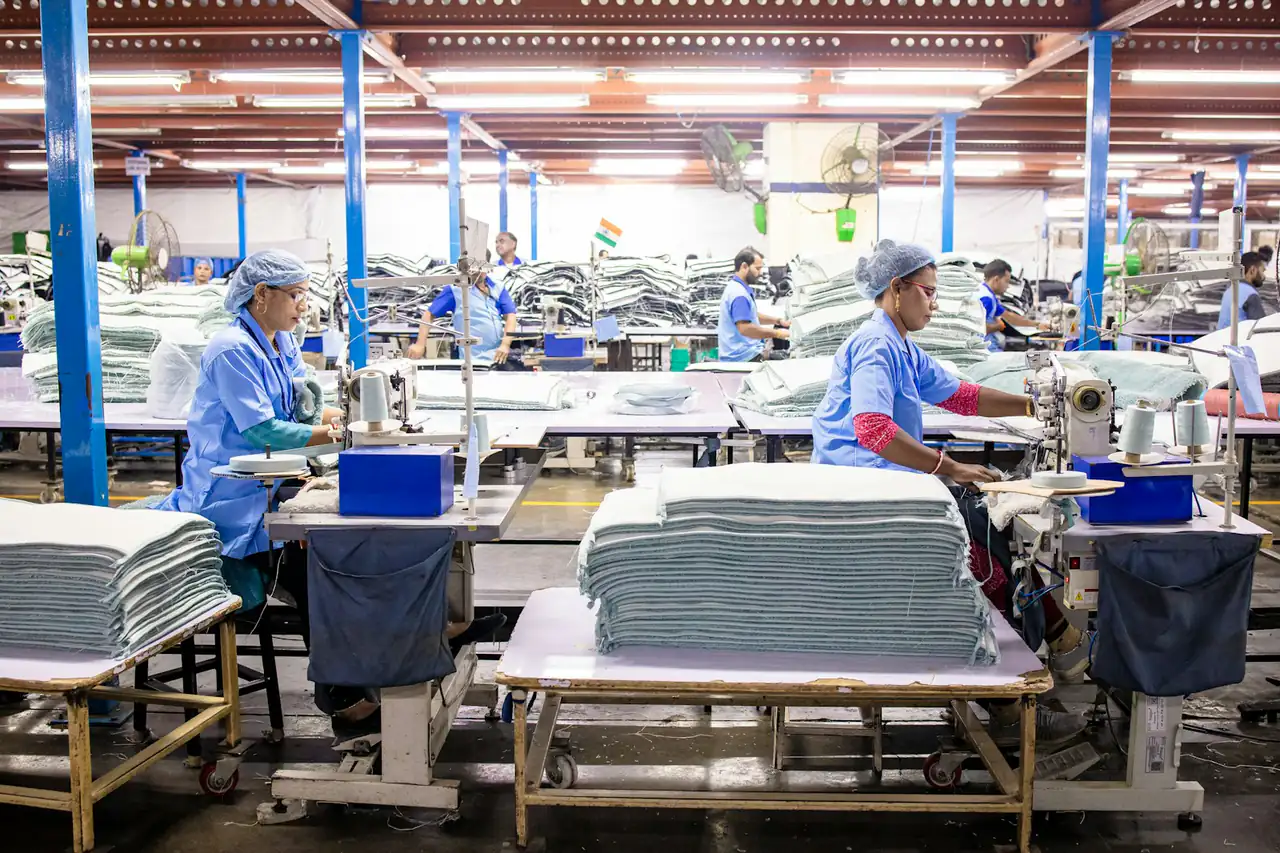
Workers at long tables in a garment factory

Morbi has three counts in circulation - 459, 610 and "1,100+". We use the association's own figure, 610 units (Morbi Ceramic Manufacturers Association (opens in a new tab), Supplier-stated). In 2026 the West Asia conflict shut Morbi kilns for want of gas (SME Futures (opens in a new tab), Reported), so any count is also a count of who survived.

Firozabad has "more than 400 glass work units", most of them small, per the state (UP ODOP, Firozabad (opens in a new tab), Verified as the state's statement). For every other cluster, scale is unknown. The official district-level export data sits behind a paid account, and buying it for about 25 cluster districts is on our list.

5. From Cluster to Ship: The Gateway Each Cluster Really Uses

No government body, export council or port publishes a map from cluster to port. We checked twice. So we built one by joining five official datasets that hadn't been joined before - the export-town list, the rail operator's terminal register (CONCOR (opens in a new tab), read 23 Sep 2026), the customs list of connected freight stations (CBIC / ICEGATE, 5 Feb 2024 (opens in a new tab)), the freight corridor status (DFCCIL, updated 30 Jul 2026 (opens in a new tab)) and airport freight by airport (AAI Traffic News, FY2025-26 (opens in a new tab)). On top we added straight-line distances and carrier schedules. Terminals in the official registers are Verified. Every gateway is our inference, so it's Indicative.

North and West India

For every cluster in Punjab, Haryana, the Delhi region, western Uttar Pradesh, Rajasthan and Kashmir, Mundra is closer than Nhava Sheva in a straight line, by about 64 km for Firozabad up to 337 km for Srinagar. Ludhiana (ICD Dhandarikalan), Noida (ICD Dadri), Moradabad, Agra, Jaipur (ICD Kanakpura), Jodhpur (ICD Bhagat ki Kothi and the Thar Dry Port) and Bhilwara all have a container terminal in their own district. Panipat's Jattipur depot is a customs site that wasn't yet network-connected in February 2024, and Gurugram and Faridabad use ICD Tughlakabad in Delhi. The likely gateways for all of these are Mundra, Pipavav or Nhava Sheva.

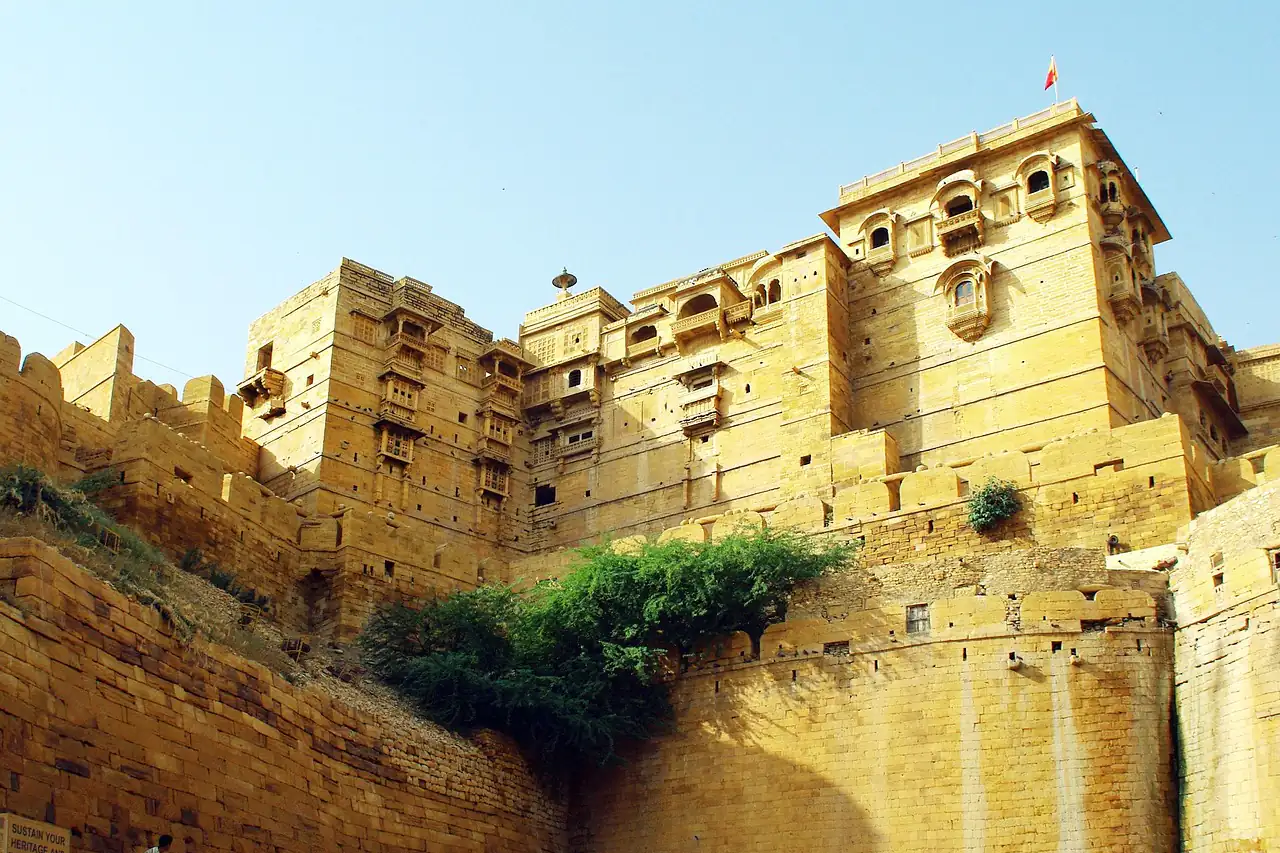
Sandstone walls of Jaisalmer fort

Distance no longer settles it, though. Since 31 March 2026 the Western Dedicated Freight Corridor reaches Nhava Sheva, and the port ran its first long-haul double-stack train on 21 August 2026 (JNPA, 22 Aug 2026 (opens in a new tab), Verified). Even so, most of Nhava Sheva's boxes still arrive by road - about 11.7% came by rail in August 2026, on our arithmetic from the port's own figures (JNPA (opens in a new tab)).

The eastern carpet belt is the puzzle. Bhadohi, Mirzapur and Varanasi are 624 to 664 km from Kolkata and over 1,200 km from the western ports, and yet US records show hand-knotted carpets loading at Nhava Sheva. Kanpur's leather is similarly split, with ICD Kanpur in the district and Kolkata the nearer port. No source says how these exporters choose, so ask yours.

Gujarat and Maharashtra

Morbi's tiles and Rajkot's engineering are about 120 km from Mundra, and Kutch-Bhuj has a logistics park at Mundra itself. Ahmedabad's textiles have ICD Khodiyar and a choice of Mundra, Pipavav or Hazira. Surat's gems go by air through Mumbai, because Surat's own airport handled no international freight in FY2025-26, and its sea cargo uses Hazira. Bhiwandi and Kolhapur use Nhava Sheva.

South and East India

Tiruppur has no container terminal of its own in the official lists. The nearest is ICD Irugur in Coimbatore district, and Tiruppur is closer to Cochin (172 km) than Tuticorin (278 km) or Chennai (391 km). Official data shows where its paperwork is filed - UK-bound cotton garments from the Tiruppur side were filed at Chennai Sea and Tuticorin Sea in FY2025-26 (DGCI&S FTDDP (opens in a new tab), Verified). US-bound cargo often loads at Colombo, as the playbook shows.

Karur, Madurai and Erode's textiles have no terminal we could find and would use Tuticorin, Cochin or Chennai, with Trichy the nearest busy cargo airport. The Tamil Nadu leather belt of Ambur, Ranipet and Vellore uses Chennai and its neighbouring ports, with an Ambur freight station on the customs list. Kerala's coir, cashew and marine towns use Cochin, and Vizhinjam, near Kollam, became a direct export-import gateway in August 2026 (Vizhinjam International Seaport (opens in a new tab)). Kolkata's leather has its own port and a dozen or more notified freight stations.

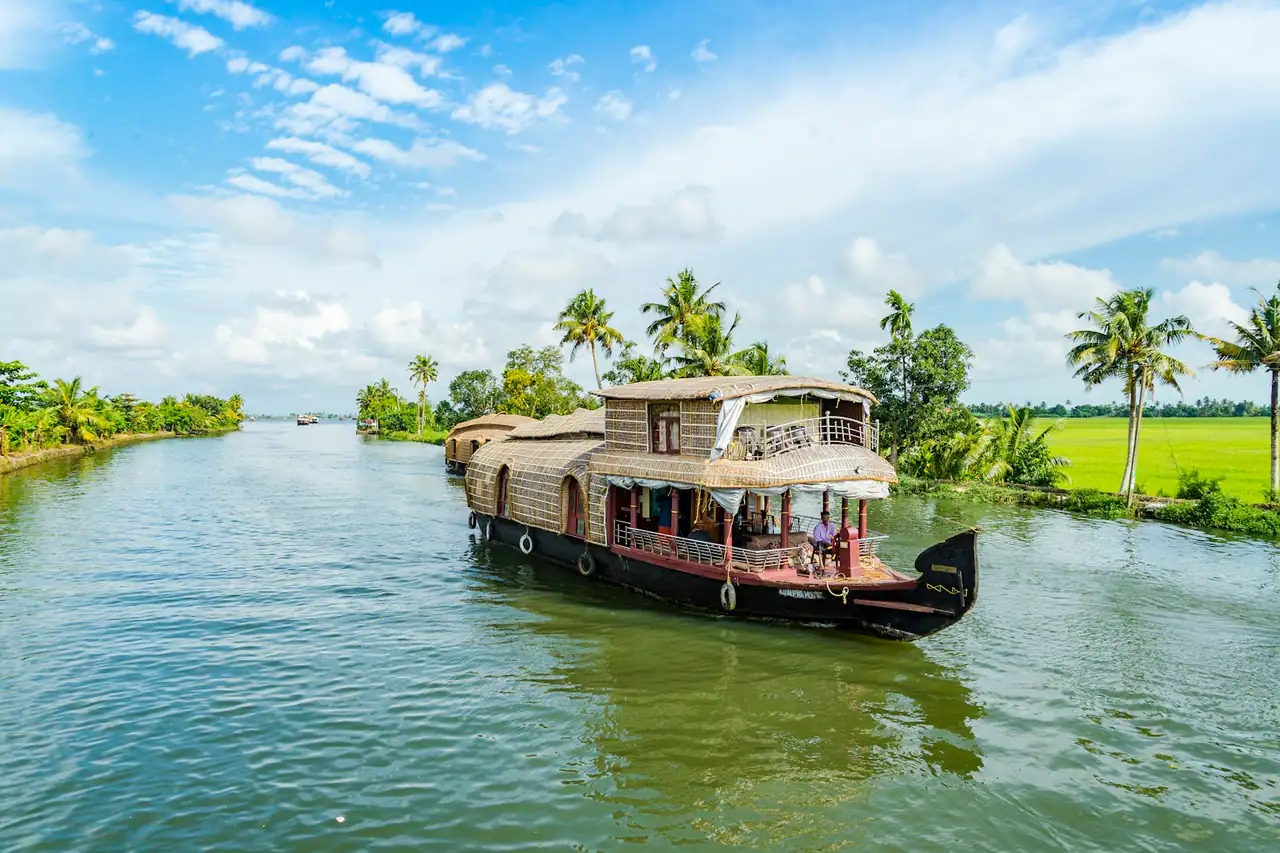
A houseboat on the Kerala backwaters

Air freight lives in two cities. Delhi and Mumbai carried 58.5% of India's international air freight in FY2025-26, and five export-town airports - Surat, Rajkot Hirasar, Indore, Visakhapatnam and Agartala - handled none (AAI (opens in a new tab)).

[Component: functional cluster map. Every export town, its category, its terminal and its gateway, with the Indicative label on each gateway. A diagram, never a postcard.]

6. Port-To-Port Transit, Planning Figures Only

This table compares ports side by side, which is why it's a table. The figures are medians in days, with the range, from one carrier's public schedule for departures from 24 September 2026 over six weeks (schedule tool (opens in a new tab), read 23 September 2026, Indicative). D means every listed sailing is a single service, T means every sailing transships, and D/T means both are listed. They're port to port and leave out the inland leg, waiting time and clearance.

DestinationNhava ShevaMundraChennaiTuticorinCochin
Sydney31 (25 to 33) T35 (29 to 42) T34 (27 to 53) T36 (29 to 51) T36 (28 to 49) T
Melbourne26 (20 to 35) T32 (26 to 36) T40.5 (27 to 61) T41 (30 to 52) T35 (28 to 45) T
Auckland66 (51 to 80) T79 (55 to 89) T76 (53 to 86) T78 (55 to 90) T82 (54 to 90) T
London Gateway41 (34 to 41) D/T46 (35 to 46) D/T28 (26 to 34) D/T33 (31 to 33) T34 (31 to 37) T
Rotterdam33 D38 D25 (23 to 31) D/T30 (28 to 30) T31 (28 to 34) T
New York / New Jersey33 (33 to 35) D/T30 (30 to 32) D33 (31 to 43) T35.5 (34 to 57) T36 (34 to 47) T
Savannah39 (38 to 40) D36 D48 (41 to 53) T50.5 (40 to 60) T46.5 (40 to 53) T
Los Angeles / Long Beach45 (35 to 57) T49 (45 to 62) T50 (36 to 55) T52 (38 to 53) T57.5 (44 to 67) T
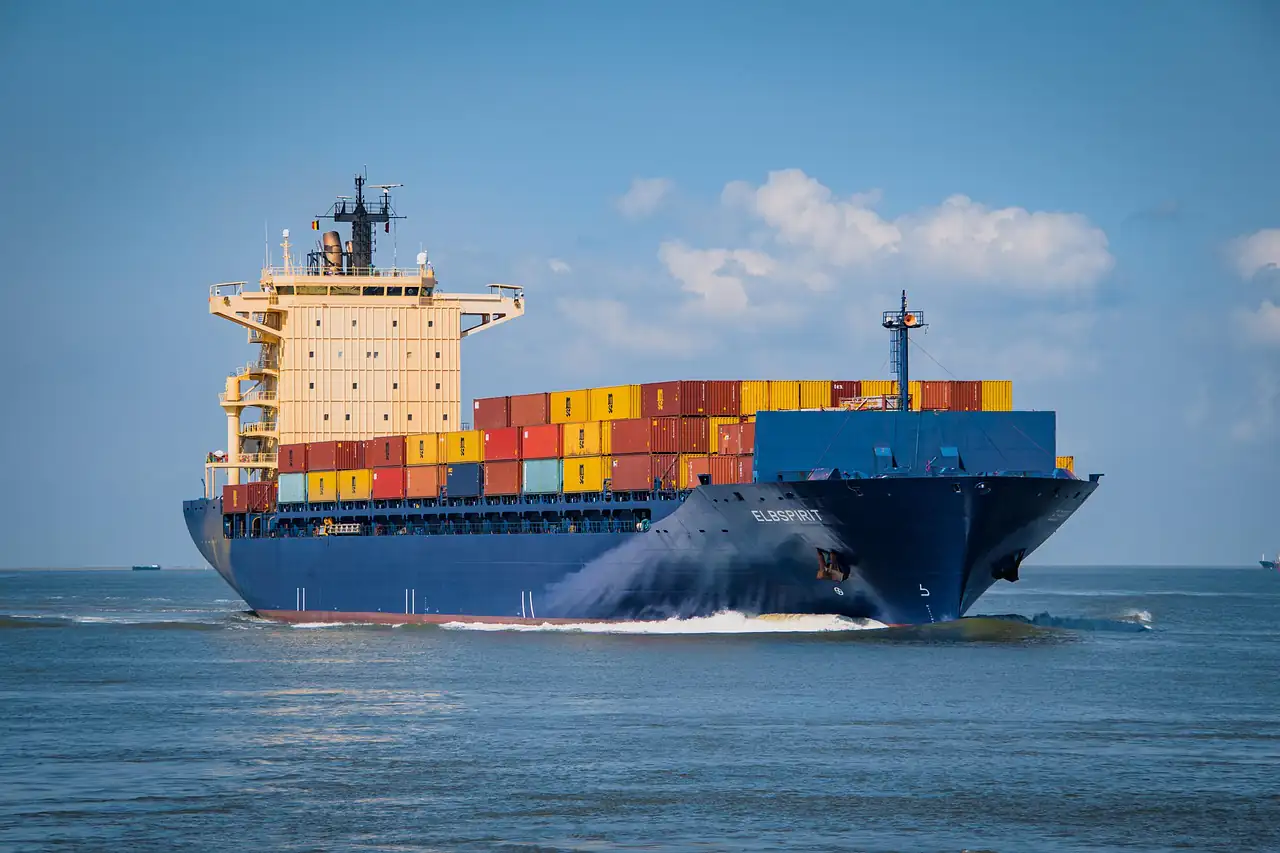
A loaded container ship under way at sea

Two things jump out. From the south, Europe is often faster than from the west, with Chennai to Rotterdam at 25 days against 33 from Nhava Sheva. And New Zealand depends entirely on the relay. A second carrier's published New Zealand service runs Nhava Sheva or Chennai to Auckland in 30 to 32 days through Port Klang (published schedule, printed 23 Sep 2026 (opens in a new tab)), against the 51 to 80 days above. Ask your forwarder which relay you're on before you promise a date. A third carrier put Chennai to Sydney at 28.5 days (point-to-point schedule (opens in a new tab), read 23 Sep 2026).

For the UAE, the picture is disrupted. The Strait of Hormuz was effectively closed on 23 September 2026 (straits.live (opens in a new tab), Reported), and boxes booked to Jebel Ali are being discharged at Khor Fakkan, Sohar, Fujairah or Jeddah and finished overland. Plan on about 11 days from Nhava Sheva and 26 to 29 from Mundra or the southern ports, not the old 4 to 6. For the UK, the carrier we read listed no Felixstowe sailing from five of the six Indian gateways, so expect London Gateway or Southampton on that network.

Re-run every lane before you quote. Our next review date is at the top of this page, and it's close for a reason.

Ready to act

Need hands-on help?

Want the inland leg, the port and the relay planned together with your supplier's Incoterm? SourcingSync arranges the shipment end to end.

Talk to SourcingSync (opens sourcingsync.com in a new tab)

7. City, Cluster, Market, Port: Four Different Things

These four words get used as if they mean the same thing, and quotes go wrong because of it. The city is where the offices are. The cluster is where the making happens. The market is where the trading happens. The port, or inland depot, is the place your Incoterm names. Surat is a city with a textile cluster, a set of markets and a diamond bourse, and its goods leave through Hazira or Mumbai's airport. Keep the four apart and your quotes will name the right place. If you're buying in a market rather than a cluster, read wholesale markets first.

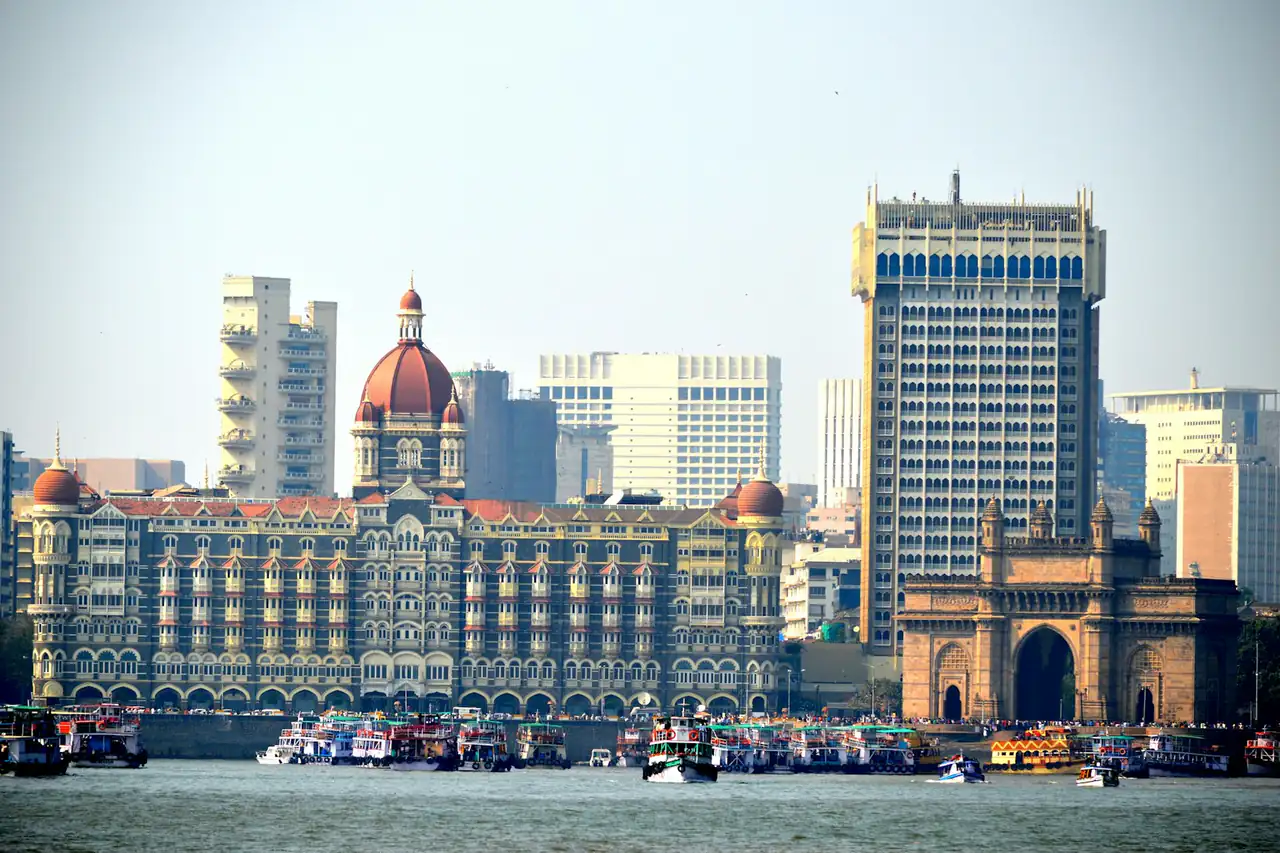
Mumbai's waterfront seen from the harbour

8. Associations We Couldn't Verify

Some pairings of town and product are so popular that they feel official. No official source we read supports them, so each stays Reported until one does - Ludhiana for cycles, Surat for synthetic textiles (its official listing is gems), Jalandhar for sports goods (it appears on the leather council's list, not any sports-goods list we read), Channapatna for toys, Jaipur for block print (its listing is handicrafts), and Rajkot for engineering. A state listing, a council production list or a GI record read directly would settle each one.

What We Don't Know Yet

What we know, and what we don’t

What we know: every official export town by product, the other official lists beside it, and the gateway each cluster most likely uses, built from official terminal, port and schedule data.

What we don't:

  • Scale for any cluster beyond Tiruppur, Morbi and Firozabad.
  • How the eastern Uttar Pradesh carpet belt chooses between the western ports and Kolkata.
  • Rail services from the northern terminals to Mundra and Pipavav, and inland transit times. Neither DFCCIL nor the ports publish them.
  • Private inland depots not on the customs list, including ones known at Tiruppur, Garhi Harsaru and Patparganj.
  • Working days lost around Diwali and the monsoon, cluster by cluster. We plan to measure it in 2027.

Our Karur buyer did the right thing in the end. The cold emails didn't work, so the plan became a visit with notice, in a town whose official category is handlooms, whose goods most likely leave through Tuticorin or Cochin, and where a low quote deserves a second look. That's the whole page in one trip. Know the town, know who makes it, and name the real port.

Location entities will be listed here as they are added.

Next step: name your port or inland depot in the quote. The Incoterm rules are in exporting and trade.

Pages we hold for India

Back to this section in the India playbook

Type a word you met on the page, a product or a place.