

Surat's Textile Markets: Buying Sarees and Fabric for Export
- Updated
Ask an Indian where to buy sarees and dress fabric wholesale and most will say Surat. Ask the government what Surat exports and it gives a different answer. On India's official list of export towns, Surat is designated for gems and jewellery, not textiles (DGFT, Appendix 1B (opens in a new tab), Verified).
Both are true, and the gap between them is the useful bit for an importer. Surat's textile markets are a giant domestic trading floor, and the city's officially recognised export trade is diamonds, which are on the Surat diamond cluster page. If you came for fabric, you're in the right city and the wrong export channel, and this short page explains what that means. The general method for buying in Indian markets is on Market or factory?.
What You'll Find
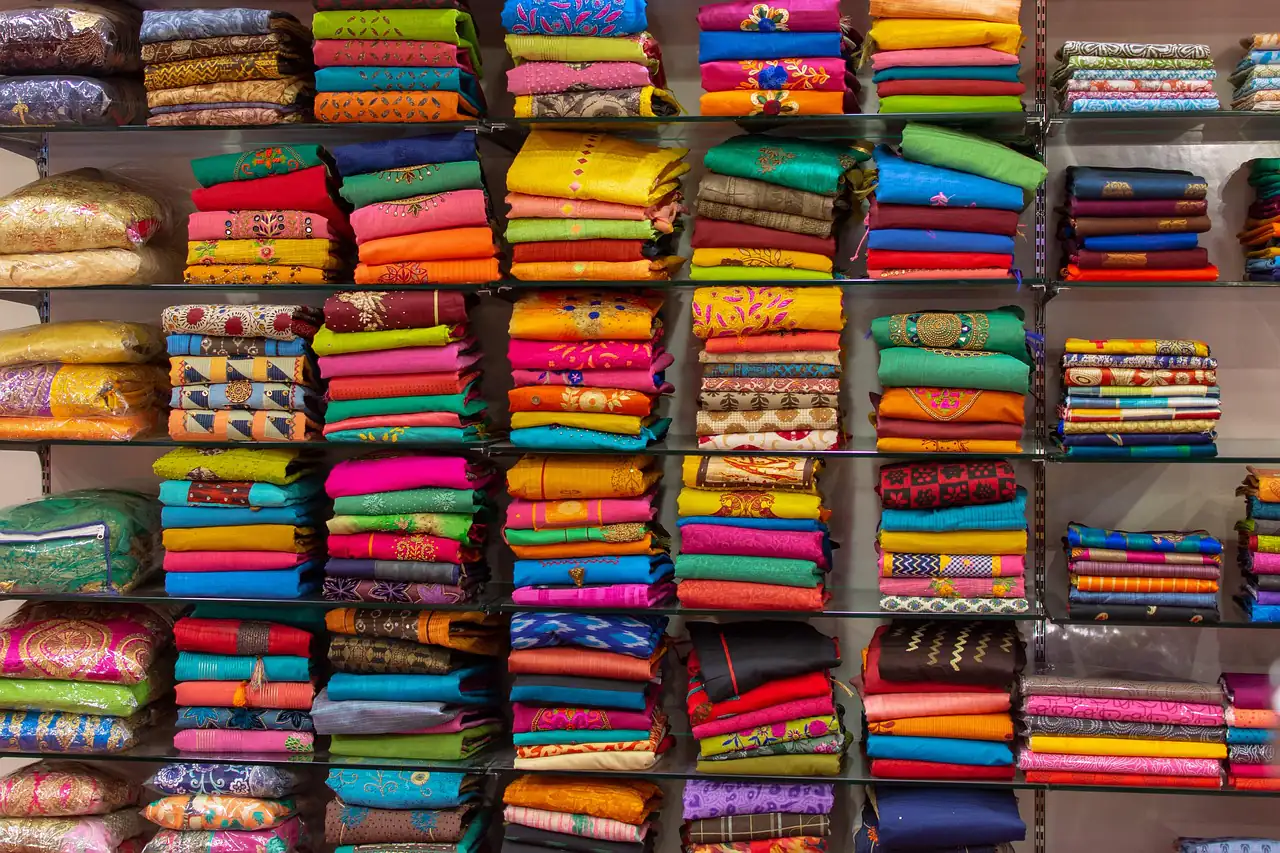
The markets line Surat's Ring Road and sell sarees, dress material and synthetic yardage, by the piece and by the bale, mostly to Indian retailers and wholesalers. Buyers who use them describe Surat as a fabric town first. Finished garments exist too, and a maker of kurtis (long tunics) replied from Surat in one 2024 buyer thread, but it isn't the place to look for a full apparel range. For that, the clusters on textiles are the better start.
How big is it? Nobody knows. No official body measures the markets, and Surat's synthetic fabric output has no published figure either. Counts of the number of markets do circulate online, and they come from listing sites, so we don't use them.
How Buying Works
Through an agent. Buyers describe a commission-agent system where the agent walks you from shop to shop, and one put it bluntly - "you just cant buy directly from the manufacturer" (r/IndiaBusiness, 2025 (opens in a new tab), Reported, domestic voice). The agent is your guide, translator and often your guarantor. Choose one carefully, and get their terms in writing.
Money first. A Surat maker summed up the terms for newcomers - "No credit policy, first advance and then delivery of goods" (r/surat, 2024 (opens in a new tab), Supplier-stated). Long credit exists in Surat, but between parties who've traded for years. A new foreign buyer pays up front, which makes the next point important.
Be there when it's packed. The most common loss in buyer accounts is substitution at packing on remote orders. If you can't be in Surat for packing, someone you trust has to be.
Getting It Out of India
A market shop won't be your exporter. You need an Indian merchant exporter to invoice you, consolidate the bales and file the export papers, and how to judge one fairly is on trading companies and merchant exporters. Ask that firm about origin before you buy. Fabric bought in a market can't usually be traced back to the mill that wove and processed it, so plan for the full duty rate unless your exporter can document the chain.
Then the shipping. Surat's nearest container gateway is Hazira, about 22 km away, with Nhava Sheva as the bigger alternative (Nhava Sheva port). Samples are the surprise. Surat airport handled no international freight at all in FY2025-26 (AAI, Annexure IV (opens in a new tab), Verified), so swatches and sample pieces travel to Mumbai to fly. Allow a day for that.
Ready to act
Need hands-on help?
An exporter of record, someone at packing and consolidation across shops is the part a market can't do. SourcingSync handles it for foreign buyers.
Related: India's wholesale markets · Sadar Bazaar · Textiles industry