

Nhava Sheva Port (JNPA): What a Foreign Buyer Needs to Know Before Naming It
- Updated
On 21 August 2026 the port authority at Nhava Sheva ran its first long-haul double-stack container train down the new dedicated freight corridor from the north (JNPA, 22 Aug 2026 (opens in a new tab), Verified). It was a real milestone. In the same month, by the port's own figures, only about 11.7% of its containers arrived by rail, 97,602 TEU out of 831,956 (JNPA performance highlights (opens in a new tab), our arithmetic). The rest came by truck.
That gap is the most useful thing to know about Nhava Sheva before you write it into a contract. It's the port most of your Indian suppliers will name, it's very good at what it does, and the hard part of using it is usually the road that leads to it. This page answers the questions an importer actually has about it, in the order they tend to come up. One caveat. Every transit figure here comes from carrier schedules we read on 23 September 2026, and routing is changing week to week in 2026, so treat them as planning numbers with a date on them.
Is Nhava Sheva the Same as JNPA, Mumbai and "INNSA"?
Yes, and the naming causes more confusion than it should. The port's legal name is Jawaharlal Nehru Port, run by the Jawaharlal Nehru Port Authority (JNPA). Shippers call it Nhava Sheva after the village it sits on, across the harbour from Mumbai. US customs records call it "Jawaharlal Nehru". Its UN location code is INNSA, which is what you'll see in carrier schedules.
What it is not is Mumbai Port, which is a separate and much smaller container operation. If a supplier quotes "FOB Mumbai", ask which one they mean. It's almost always Nhava Sheva, but the answer belongs in writing.
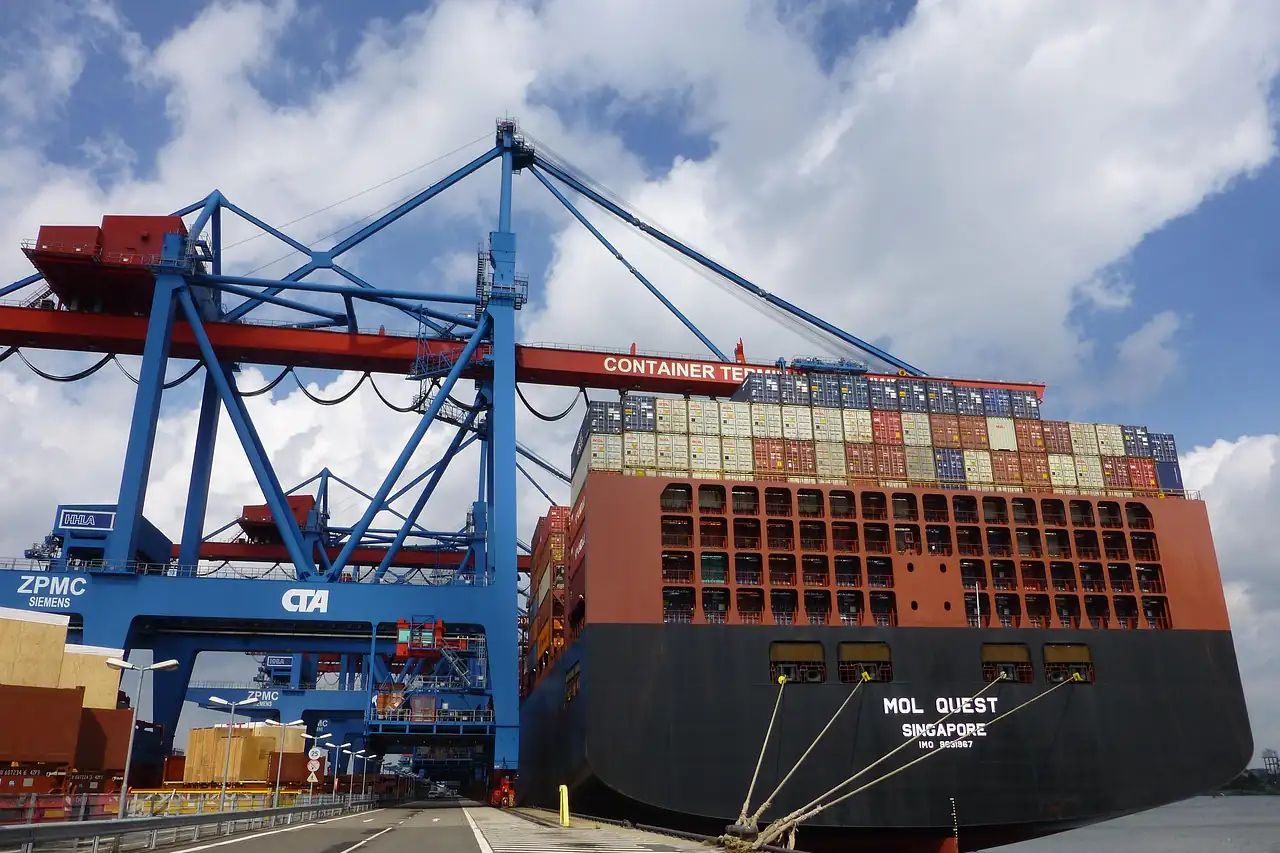
The port is also not one terminal. JNPA lists six, and by its figures for FY2025-26 the largest, BMCT, handled 2.677 million TEU, followed by GTI at 2.23 million, NSICT at 1.30 million, NSIGT at 1.08 million and NSFT at 0.84 million (JNPA operating profile (opens in a new tab), Supported). Your container is booked to a terminal through the carrier, so you don't choose it. You only need to know that "the port was congested" can mean one terminal was.
How Big Is It, Really?
Big enough that it's rarely the bottleneck. JNPA handled 102.0 million tonnes of cargo in FY2025-26, up 10.7% on the year before (Ministry of Ports, Shipping and Waterways (opens in a new tab), advance estimate, Verified), and a record 8.17 million TEU (JNPA (opens in a new tab), Supported). The whole of India's government-owned ports moved 14.92 million TEU that year, so this one port did more than half.
What scale buys you is choice of sailings. For a buyer, that's the practical point. More services call here than anywhere else in India, which is why the port turns up as the relay for cargo that starts at smaller gateways.
Which Clusters Use It?
No government body publishes a cluster-to-port map, so we built one, and every link on it is our inference unless shipping records back it (cluster-to-port reading on the location guides page). Here's where the evidence is strongest.
Carpets from eastern Uttar Pradesh. The Bhadohi and Mirzapur carpet belt sits more than 1,200 km from the west coast in a straight line, and much closer to Kolkata. Even so, 85.7% of US-bound hand-knotted carpet bills load at Nhava Sheva. The road is long, and the carpet trade uses it anyway.
Apparel from the Delhi region. For women's woven tops, 62.5% of US bills load here, which fits the makers in Noida, Gurugram and Faridabad on the NCR apparel hub page.
Jewellery and Mumbai's own trade. Two thirds of imitation jewellery bills load here. Maharashtra's own textile towns, Bhiwandi (about 41 km) and Kolhapur, have no closer container gateway.
Shared with Mundra. For bed linen the split is 33.7% here and 30.0% at Mundra, and for brass and copper articles 55.0% here and 28.4% at Mundra. Panipat, Moradabad, Agra and Jaipur sit closer to Mundra in a straight line, but both ports are in play, and the supplier's habit often decides it. The comparison is on the Mundra port page.
All the shares above come from US customs records (Jan 2015 to Sep 2026, our analysis). They describe cargo bound for America. Cargo bound for Sydney or Rotterdam may load elsewhere, and nobody publishes that split.
How Long to My Country?
Here are the medians from one carrier's public schedule for departures from 24 September 2026, with a second source where we had one. Port to port only, so add the inland leg, the days before sailing and your own clearance.
| To | Median days (range) | How it gets there |
|---|---|---|
| Sydney | 31 (25 to 33) | Transshipped, Singapore |
| Melbourne | 26 (20 to 35) | Transshipped, Singapore |
| Brisbane | 29 (22 to 30) | Transshipped, Singapore |
| Fremantle | 44 (15 to 52), or 28 on a second carrier | Transshipped, Port Klang or Singapore |
| Auckland | 30 (30 to 32) on a Port Klang relay, 66 on other routings | Always transshipped |
| London Gateway | 41 (34 to 41) | Direct and transshipped (Tanger Med) |
| Rotterdam | 33 | Single service |
| New York / New Jersey | 33 (33 to 35) | Direct and via Colombo |
| Savannah | 39 (38 to 40), or 28 on another line's Suez loop | Single service |
| Los Angeles / Long Beach | 45 (35 to 57) | Always transshipped |
| Khor Fakkan (UAE) | 6 (2 to 6) | Single service |
| "Jebel Ali" | 11 (7 to 14) | Discharged outside the Gulf, finished by truck |
Sources are the carrier's schedule (opens in a new tab), the NZ relay schedule (opens in a new tab) and the Georgia Ports Authority (opens in a new tab), all read 23 September 2026 and graded Indicative.
Three of those rows need a sentence each. The UAE figure is low because the Strait of Hormuz has been effectively closed to routine traffic, and Jebel Ali bookings are landed at Khor Fakkan, Sohar or Fujairah and trucked in. If your quote says Jebel Ali, ask where the ship actually stops. Felixstowe doesn't appear because the carrier listed no Felixstowe sailing at all in a six-week window, so UK buyers should expect London Gateway or Southampton. And Europe is slower from here than from Chennai on the same network, which is on the Chennai port page. Why schedules differ from what actually happens is covered in how sea freight gets to you, and Suez and Hormuz are tracked in its dated section.
When Should "Nhava Sheva" Be My FOB Port?
When your supplier is in Maharashtra, or ships from a depot that railed or trucked the box to Nhava Sheva anyway, and you want the supplier to carry the cost and risk until the goods are on board. FOB names a port, and the seller's job ends at the ship's rail there. The rule itself is on FOB.
For an inland supplier with a full container, FOB Nhava Sheva hides a 1,000 km trip inside the supplier's price, and you can't see what it costs or how long it takes. Naming the inland depot under FCA usually gives you a cleaner contract. For a small LCL lot the depot route often fails, because the cargo gets trucked to the port to be consolidated anyway, so FOB at the port can be the honest choice there. The trade-off is set out in LCL vs FCL.
There's one specific case where you should insist on Nhava Sheva by name. If you buy for the UAE, it's the gateway with the short single-service sailings, and a supplier who quotes from Mundra or a southern port is adding weeks for you.
What Should I Ask My Forwarder?
Four things, in writing. Which terminal and vessel? Where does the box get stuffed, at the factory, a depot or a freight station by the port? Is the inland leg by rail or road, and who books it? And for UAE cargo, where does the vessel discharge?
You don't need to settle any of that with the port itself. That's the forwarder's job. Check this with your forwarder before you book, because terminal cut-offs and the rail slot are the two things most likely to slip a sailing by a week.
Ready to act
Need hands-on help?
Booking the freight in your own name, choosing between the depot and the port and making sure the box really makes the vessel is execution work. SourcingSync runs it for foreign buyers.
The rail line that opened in August is the port's best news in years, and it'll matter more each season. For now, most of your cargo still reaches Nhava Sheva by road. Ask how yours gets there, and the port itself will rarely be your problem.
Related: Exporting from India · India location guides · Mundra port · Chennai port