

Country playbook
Sourcing From India: The Complete Playbook
20 sections · about 76 minutes. We remember where you stopped.
On this page · 20 sections
In June 2026 a small UK business asked a forum a simple question. It wanted cotton tote bags made in India, and it wanted to know what the duty would be, how long shipping takes and what could go wrong (r/smallbusinessuk, June 2026 (opens in a new tab)). The answers were good and a little out of date. One said to budget a 2% import duty, one said sea freight takes six to eight weeks, and one warned that some Indian makers use Chinese cotton. Only one reply mentioned the trade deal coming. Three weeks later the UK-India agreement came into force, and every consumer line we sampled on the UK tariff, bags included, went to 0% for goods with proof of origin.
That thread is the reason this playbook exists. Buyers outside India ask sharp questions and get answers that were right once. So we wrote down, with a date and a source on every figure, what India makes well, which towns make it, who sells it and how to land it in your country at the duty rate you're owed. One honest caveat - India moves fast, and some of what you read here will date too. When it does, the date next to it tells you.
Last researched 28 September 2026 · Next review 1 October 2026 · Written by SourcingFrom
The Promise
Sourcing from India pays for buyers who check. That's the whole method, and it runs through every section. Our promise is simple: what to source from India, where, from whom, and how. Evidence you can act on. Gaps you can see.
We wrote it for businesses that buy from India or want to. It isn't for shoppers, and it isn't for buyers inside India. If you run a store, a brand, a wholesale line or a distribution business outside India then this is your first read, and if you read it end to end you should be able to run a first order.
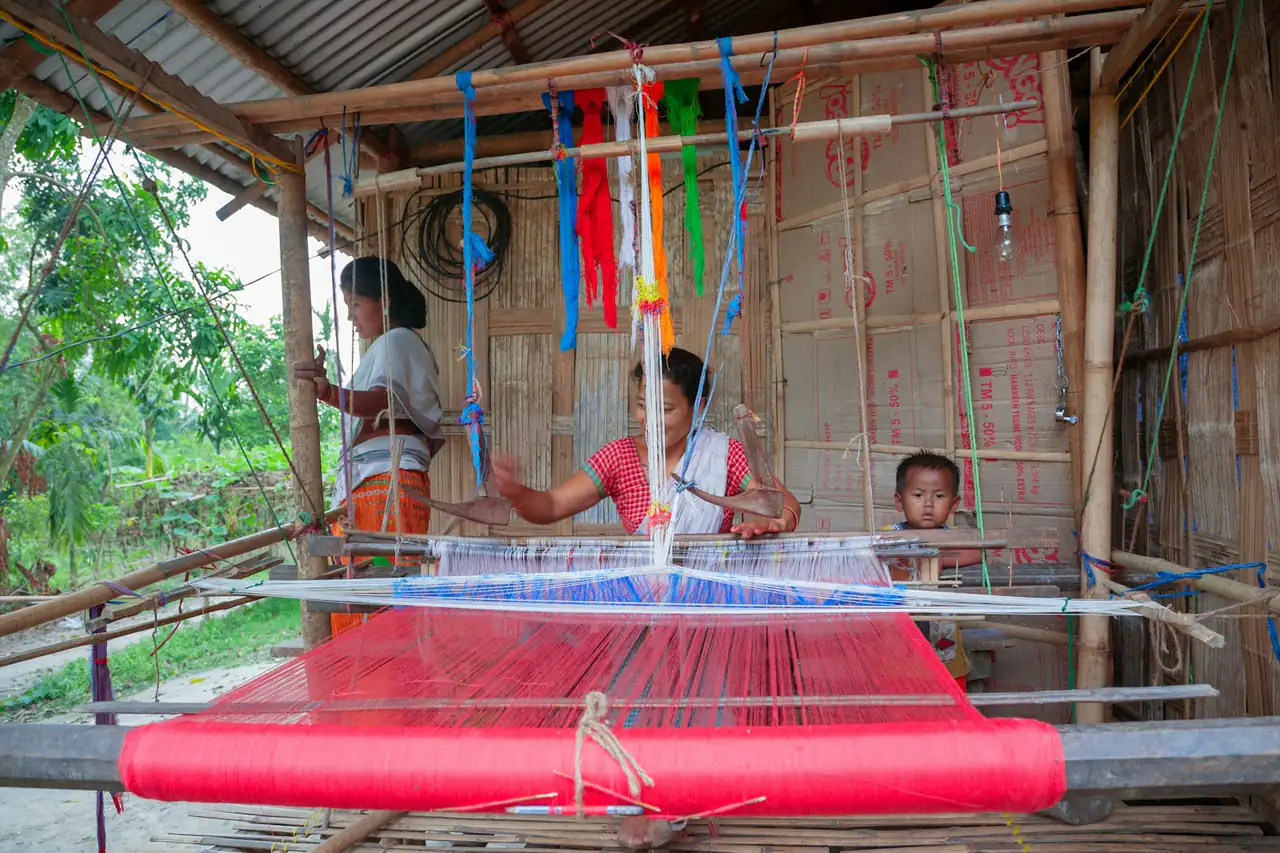
Who It's For
We serve three readers, in this order.
Ecommerce sellers and brands with revenue. You want a second supplier, a private-label line or a country that isn't China. You know your product, so what you need is India explained.
Wholesalers, importers, traders, retailers and distributors. You need supplier intelligence, proof that a supplier really exports, the right documents and a landed cost you can defend.
Product entrepreneurs. Welcome. We don't build the playbook around an idea nobody has tested yet, but every check here works for a first product too.
We write for Australia and New Zealand first, then the UK, the UAE, the EU and the US. When a fact covers one market only, we say so. US shipment records, for example, cover US sea imports and nothing else, so we never use them to describe what India sells to Sydney.
What Makes It Different
Most India guides are written from other India guides. We wrote this one from the record, and you'll see it in four habits.
Every figure carries its date and its source. The trade numbers are our own analysis of official data from India's Department of Commerce, the ABS, Stats NZ, HMRC, Eurostat and UN Comtrade. We publish what we found, never a copied table.
Gaps stay visible. Each intelligence block ends with "What we don't know yet", and where no source exists we say "not found" rather than guess. Nobody publishes lead-time or MOQ norms by category, because no such norms exist, and we don't make them up either.
We're fair to suppliers. Traders, merchant exporters, job work and sister companies are ordinary ways to do business in India, and a small firm is an opportunity that hasn't grown yet, not a warning sign. We never name a supplier and we never rank one.
Knowledge here is free and complete. The SourcingFrom Intelligence blocks are powered by Kirnova (opens in a new tab), our data and intelligence partner. When you want the work done for you on the ground in India, that's SourcingSync (opens in a new tab). We point to it where the task is genuinely hard, and nowhere else.
Changed Recently, Changing Soon
Check these dates before you quote a duty rate or book a shipment, because they're the ones that move prices.
- Australia, since 1 January 2026. Every tariff line is 0% under ECTA, but only with an ECTA certificate of origin. Self-declaration is not allowed (News On AIR (opens in a new tab), ABF rules of origin (opens in a new tab)). Supported.
- EU, concluded 27 January 2026. The India-EU FTA is agreed but not in force, so standard or GSP rates apply until it is (Council document ST 13066/26 (opens in a new tab), EU Trade (opens in a new tab)). Verified.
- UK, since 15 July 2026. The India-UK CETA is in force, with 0% on proof of origin (UK Trade Tariff news (opens in a new tab)). This is the change that overtook that tote-bag thread. Verified.
- US, since 24 July 2026. Indian goods pay the standard rate plus 10% under Section 301. The 18% and 50% figures you still see quoted are history (Federal Register 91 FR 47318 (opens in a new tab), CBP CSMS #69326983 (opens in a new tab)). Verified.
- US, from 29 September 2026. Patented pharmaceuticals face a 100% Section 232 duty. Other 232 lines (metals, autos, furniture and cabinets) apply product by product (FR, pharmaceuticals (opens in a new tab), FR, metals (opens in a new tab), FR, furniture and cabinets (opens in a new tab)). Verified.
- India, 1 October 2026. The RBI's new export regulations, FEMA 23(R)/2026-RB, take effect. They govern how your supplier gets paid and declares the shipment (RBI (opens in a new tab)). Verified.
- New Zealand, 20 October 2026. The India-New Zealand FTA enters into force. Until then NZ buyers pay the normal tariff (MFAT (opens in a new tab)). Verified.
- India, mid-October to mid-November 2026. The festival slowdown. Diwali falls on 8 November 2026, and sampling and dispatch slip in these weeks (DoPT 2026 holiday list, reproduction (opens in a new tab)). Supported.
- Bangladesh, 24 November 2026. Bangladesh is due to leave LDC status, and it has asked the UN to push that date back (UN LDC portal (opens in a new tab)). Either way its EU duty-free access continues at least until the end of 2029 (European Commission, Q&A on the new GSP (opens in a new tab), read 25 September 2026), so India-versus-Bangladesh price comparisons into the EU don't change yet. Verified.
Also moving, week by week: Red Sea and Hormuz routing, and what each does to transit into Europe and the UAE. That lives in Exporting and trade.
How To Read It
Read the twenty sections in order once. You'll pick a category and its cluster, find and check suppliers, choose a sourcing model and work through the stages of an order, and then you'll get the goods out of India and into your country with the right origin document. Each section ends with a "Decide here" box. Make those decisions as you go and you'll reach the end with a plan rather than a reading list.
Open a section's full page when you need reference depth, such as the templates, the record walkthroughs and the edge cases. The heading of every section links to its page.
Contents
- India at a glance
- Why India, and when not
- What you can source
- Major industries
- Where production sits
- Wholesale and trade markets
- Who you can buy from
- Ways to source
- How sourcing works
- Checking suppliers
- MOQ and pricing
- Private label and customisation
- Quality control
- Exporting and trade
- Common risks
- Product playbooks
- Location playbooks
- Supplier intelligence
- Tools and checklists
- FAQ
01
India at a glance#
In October 2023 a Belgian buyer asked where in India to make a clothing range, and an Indian maker answered in one line: "Tirupur is great if you need massive quantities. They specialize in knits, and thats it" (r/streetwearstartup, 2023 (opens in a new tab)). That's India in miniature. The country is huge, but what you'll buy is made in a named town that does one thing well, by small firms you have to choose between.
India exported US$441.78 bn of goods in FY2025-26, or US$387.88 bn without petroleum (Department of Commerce quick estimates, 15 April 2026 (opens in a new tab)). Watch the second figure, because petroleum isn't what you'll buy. The growth sits in engineering goods and electronics, while textiles, leather, gems, carpets and spices slipped a little. About a fifth of those exports (19.8%) go to the US, our arithmetic from the same release, and the government names 42 towns for export excellence (DGFT, FTP Appendix 1B (opens in a new tab)). So sourcing from India is mostly the work of picking the right town and then choosing and checking suppliers inside it.
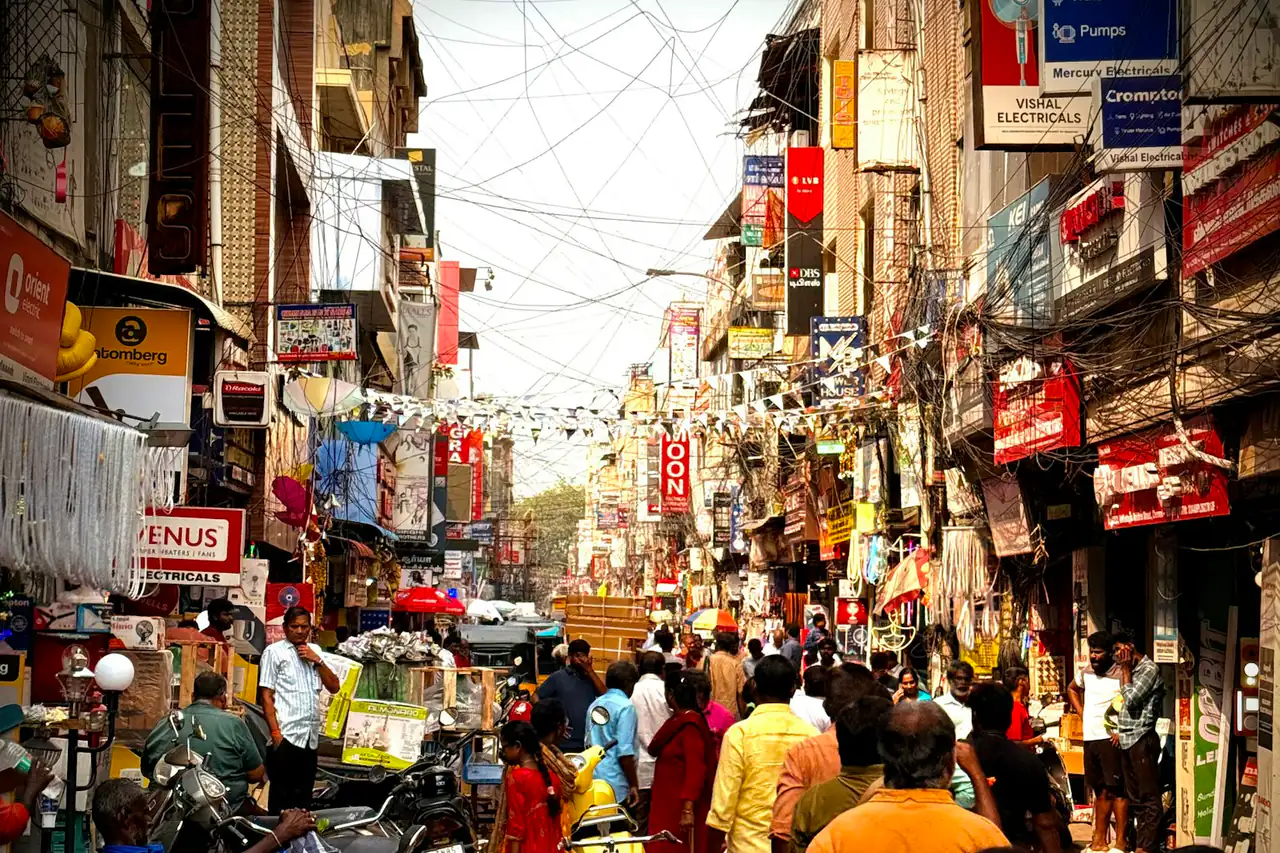
02
Why India, and when not#
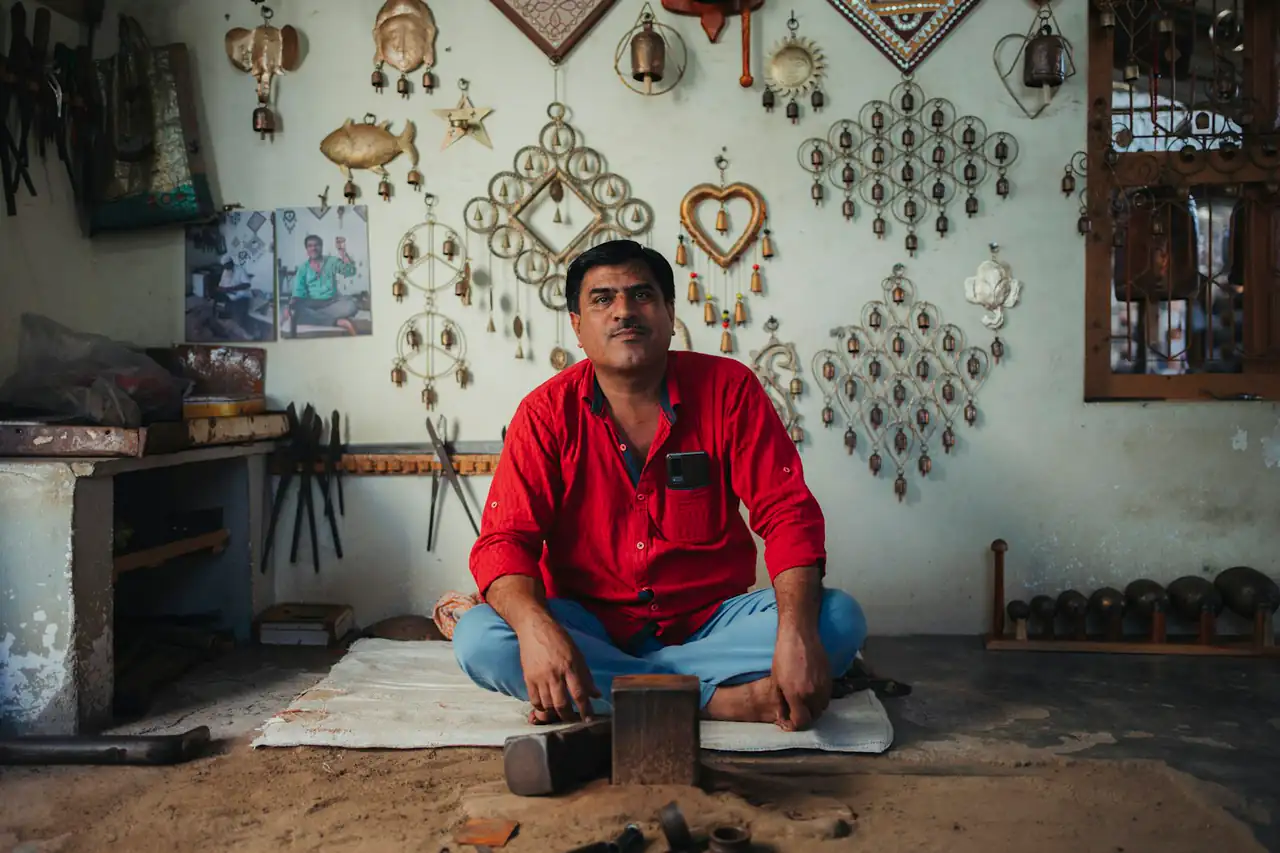
In March 2026 the child of a metal-handicraft maker asked an Indian business forum how to save the family workshop. The products are "made on order so they are not mass produced", and "the last five years have been very hard on him" (r/IndiaBusiness, 2026 (opens in a new tab)). A skilled maker, real craft, and not enough orders. That's the India most small foreign buyers will meet, and it's why the honest answer to "why India?" is yes, for the right product and the right kind of relationship.
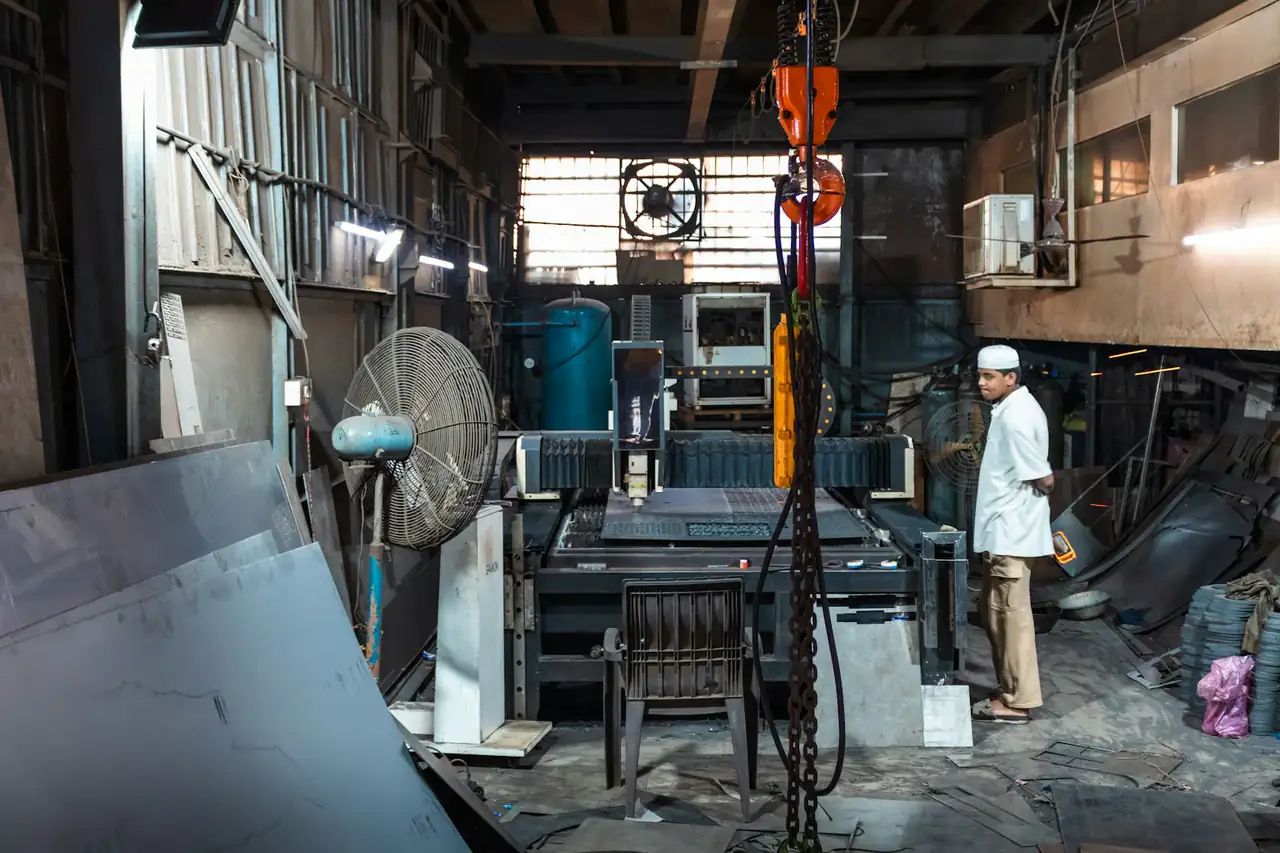
India is strong in goods that start with fibre, craft or a raw material, made in named clusters. It's strong in metal parts made to drawing and in smartphone assembly too. It's weaker on scale, speed and synthetics, and its share of world apparel exports slipped from 3.2% to 3.0% between 2010 and 2025 (The Tribune (opens in a new tab) · Reported).
Where India is strongest
India grew 23.8 million bales of cotton in 2025/26 against China's 35.8 million, which makes it second in the world, not first (USDA ERS, 13 April 2026 (opens in a new tab)). It grows most of the world's organic cotton and holds 27.8% of GOTS-certified facilities (GOTS Annual Report 2025 (opens in a new tab)). In apparel its edge is value-added work, such as babywear, women's woven tops, embroidery and washes, not plain basics.
Engineering goods are India's largest export group at US$122.4 bn in FY2025-26 (EEPC India (opens in a new tab)), and India is the #1 supplier of iron and steel castings to the US at 42.8% (UN Comtrade, 2025). Smartphones were its top single export in 2025 at US$30.13 bn (PIB, 11 March 2026 (opens in a new tab)).
Where India is weaker
The average apparel factory has 131 workers (The Tribune, as above), so high-volume basics favour Bangladesh. The man-made-fibre line is thin, about 59% of machine tools are imported, and below a few hundred units a simple item is often no cheaper than buying locally (UK importers on forums, 2016 to 2026 · Indicative).
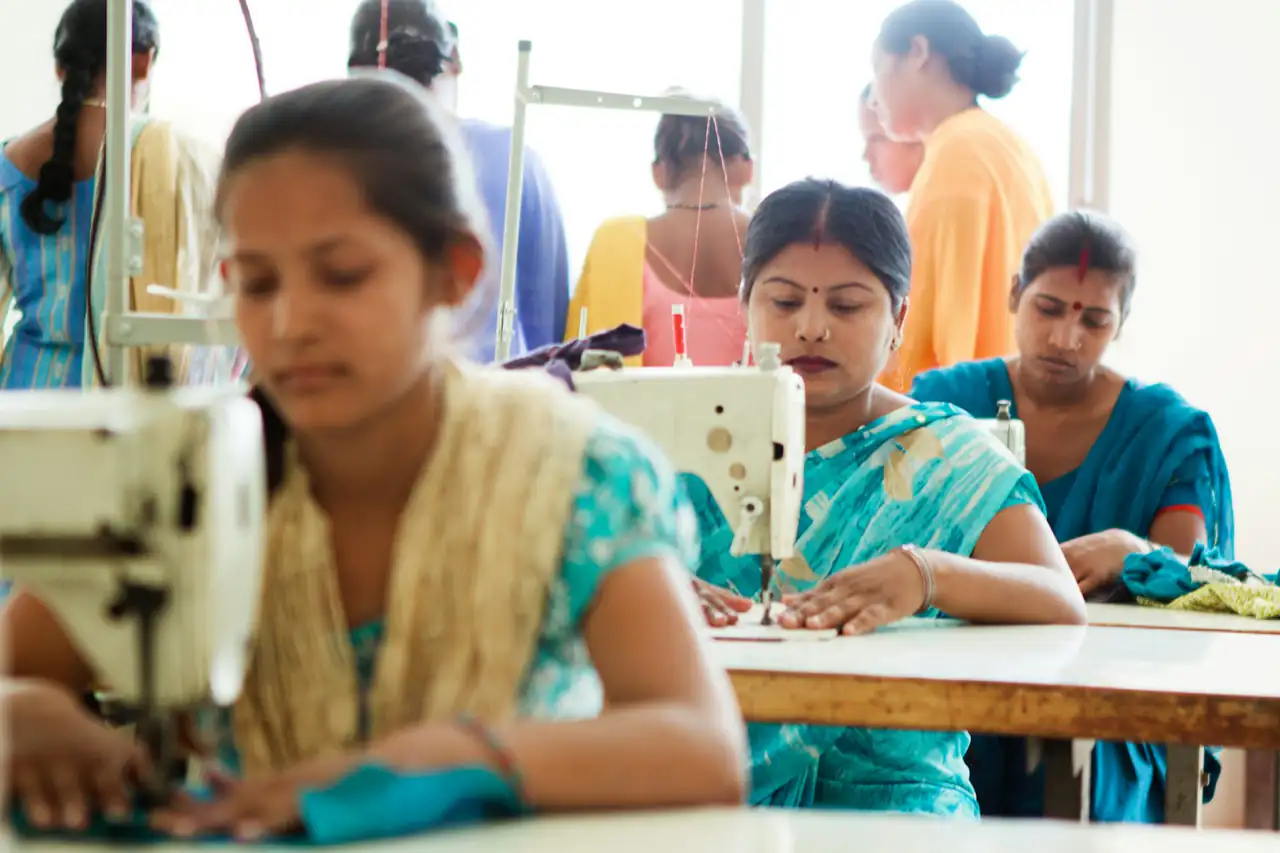
A poor country that's growing, and why that's your reason to build
India's income per person was US$2,760 in 2025, which puts it among the World Bank's lower-middle-income countries, a touch below Bangladesh (US$2,840) and well below Viet Nam (US$4,970) (World Bank, GNI per capita, Atlas method (opens in a new tab)). It's also growing fast, at 7.6% in 2025 (World Bank (opens in a new tab)). For a buyer that means capable makers who are hungry for steady orders, and a supplier base that will look very different in ten years. Build with it early and you grow with it.
03
What you can source from India#
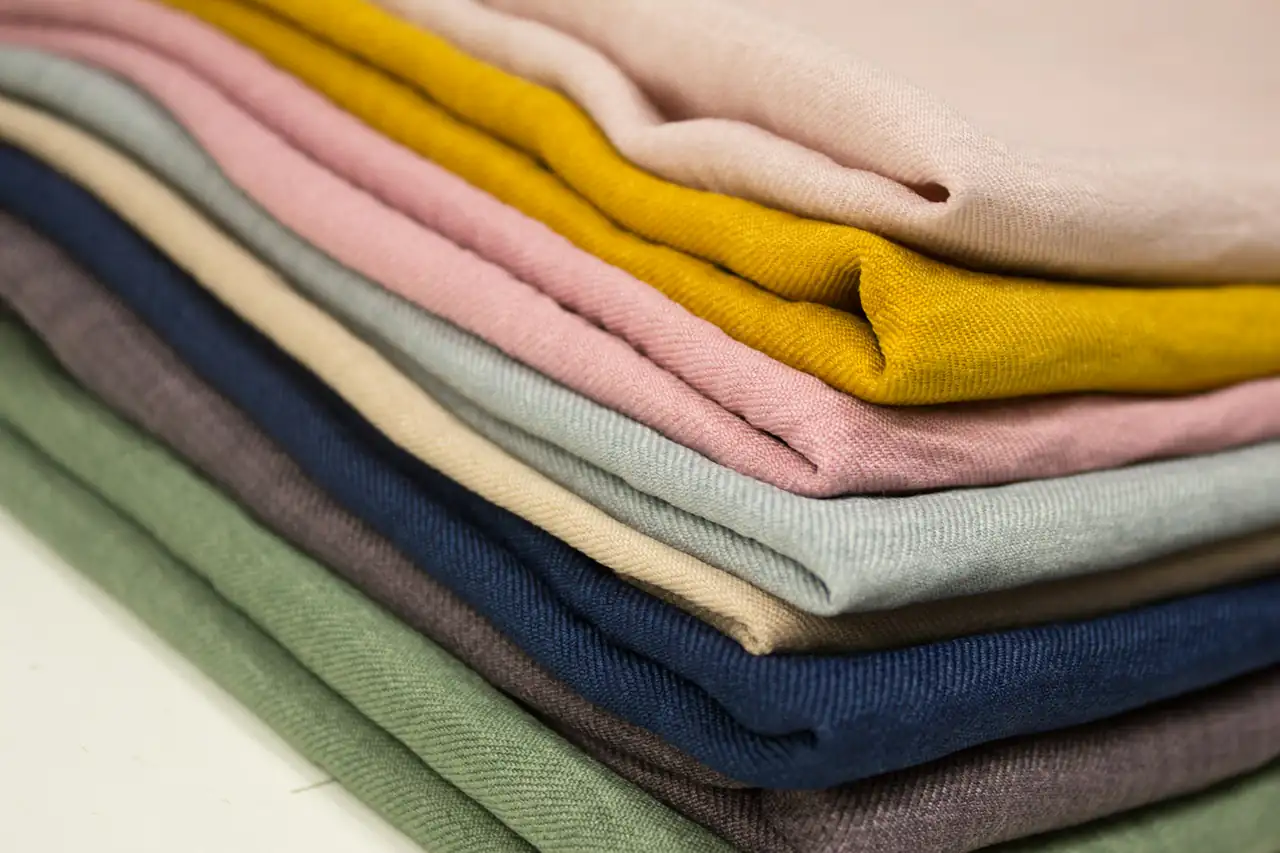
In June 2026 a UK sewist asked a forum what to line a dress with, because the Indian block-print cotton she'd bought was "sheer and needs lining" (r/sewing, 2026 (opens in a new tab)). Nothing was wrong with it. Jaipur prints on a light base because it takes dye easily, so a buyer who wants cushion covers has to say so. In India the product is whatever your spec says, town by town.
That's India in a sentence. It isn't one big factory. It is a country of specialist towns, each very good at a narrow family of products and ordinary at everything else. So this section doesn't rank "best products". It shows you which families have a deep export record, which fit your kind of business, and where the evidence runs out.
Which Families Fit Your Business
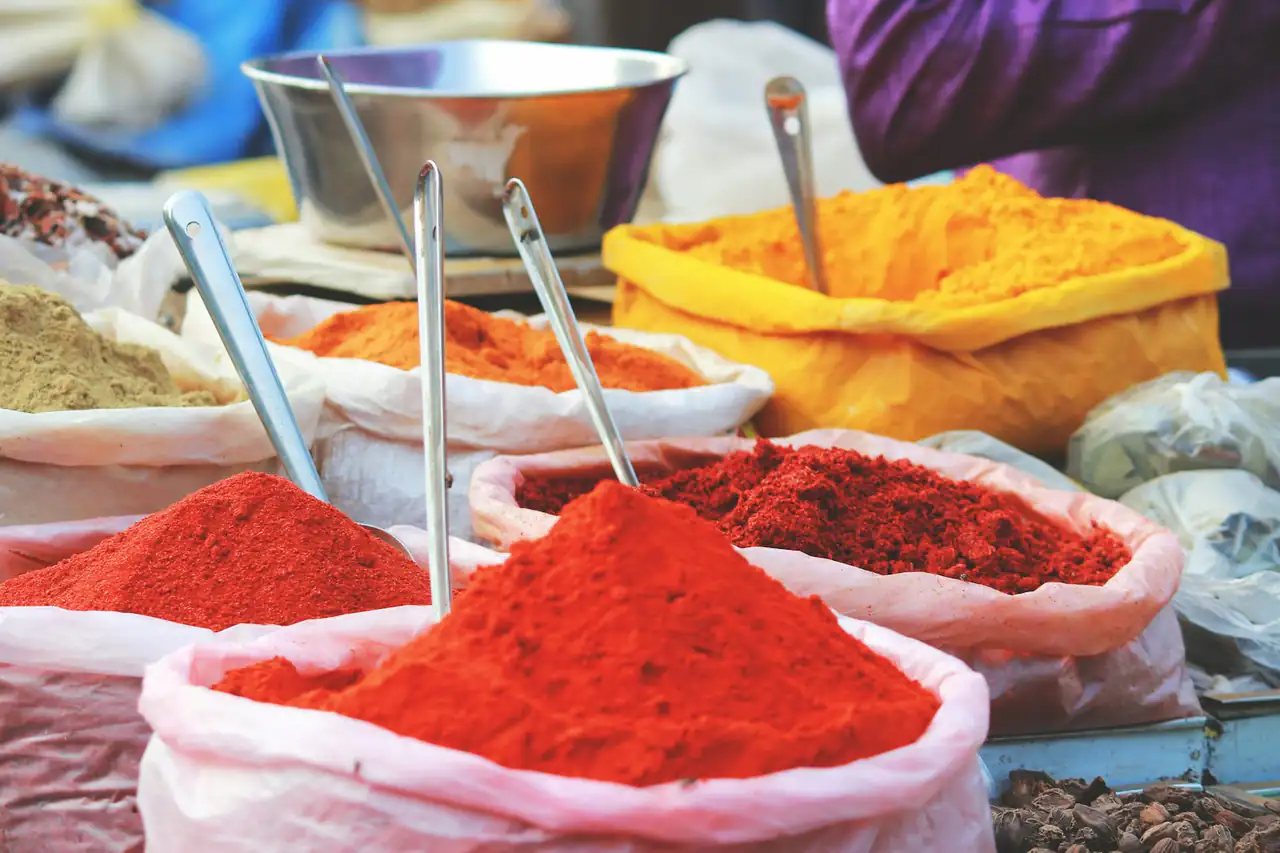
If you run an online store or a small brand, the families that suit you are home textiles, décor and handicrafts, cotton apparel, leather accessories, silver and fashion jewellery, spices, and ayurveda and personal care. These are made in clusters of many small firms. Smaller orders are possible, but quality swings more from one maker to the next, so sampling matters more for you than for anyone.
If you buy for a brand or a large retailer, India's audited export bases are in cotton apparel and knitwear, home textiles, footwear, cut diamonds and jewellery, and generic pharma. These firms have compliance teams and a long history of Western buyers.
Wholesalers and importers will find volume lines with settled export channels in spices, rice, marine products, processed food, engineering hardware and chemicals. The learning curve there is the destination's rules, not the product.
Engineering buyers are the ones who most often underrate India. Metal parts made to drawing (castings, forgings, gears, seamless tubes, bearings, fasteners, valves, pumps and auto components) sit inside India's largest export group, which reached US$122.43 bn in FY2025-26, up 4.86% (Department of Commerce quick estimates annexure, 15 Apr 2026 (opens in a new tab)). Results follow the supplier's tier, not the category.
Electronics is the exception. It was India's fastest-growing export at US$47.97 bn, up 24.40% (same annexure), but the production sits with a few large assemblers making for their own clients. It is not an open-market category for a small buyer.
Where India Has Real Depth
We worked out India's share of each priority market's imports, product by product, from the importing country's own records (UN Comtrade mirror data, Stats NZ and Eurostat, 2025 unless stated, UAE 2023, our analysis). Five findings hold up, and one popular belief doesn't.
Home textiles are India's strongest consumer category in every market we cover. India is the number two supplier of made-up textiles (HS 63) to the US (18.9%), New Zealand (17.2%) and Australia (10.8%), and number three to the EU (10.4%) and the UK (10.2%). In bed, table, toilet and kitchen linen (HS 6302) it supplies 37.4% of US imports, worth US$2,089 m, and 36.4% of New Zealand's, up from 27.1% in 2020 (UN Comtrade (opens in a new tab), Stats NZ HS10 by country, 2025 (opens in a new tab)). China leads everywhere, and Pakistan is the direct rival in the UK and EU.
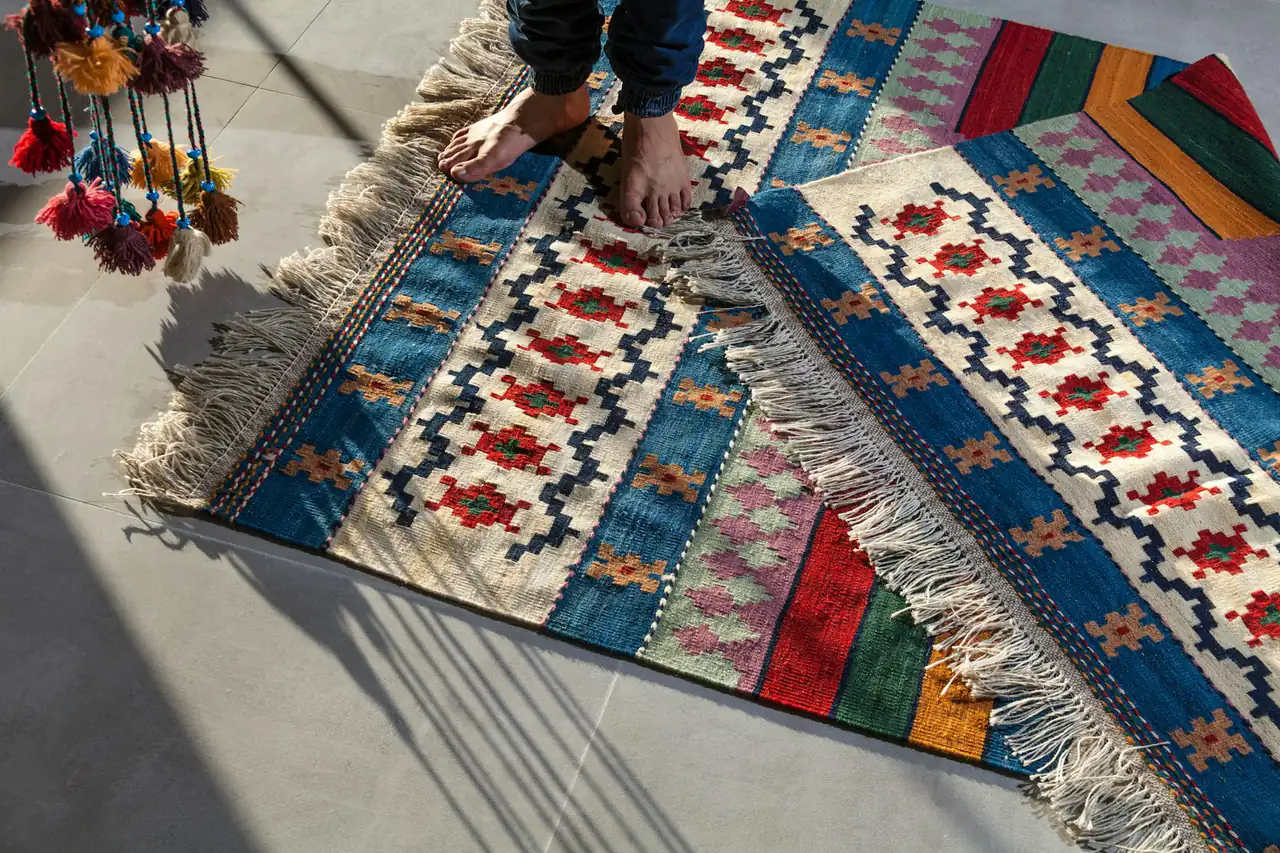
Carpets are India's other stronghold. India is the number one carpet supplier to the US, with 38.0% of all carpet imports (HS 57) and 62.4% of hand-knotted (HS 5701), and number two to the EU (21.0%) and Australia (23.9%) (UN Comtrade (opens in a new tab), Eurostat Comext (opens in a new tab)). Türkiye is the rival.
In apparel the strength is specific garments, not the basic tee. India supplies about a quarter of babies' knitted garments (HS 6111) in the UK (25.4%), the US (23.2%) and Australia (20.9%), and a quarter of women's woven blouses (HS 6206) in the US and 21.8% in the UK. The cotton T-shirt (HS 6109) runs at 6.9 to 8.0% (UN Comtrade (opens in a new tab)). Lead with babywear, women's woven tops, nightwear, embroidery and washes.
Jute bags are an overlooked stronghold, with a trap in the code. India holds 57.4% of UK imports of packing sacks and bags (HS 6305) and 45.5% of US imports. But if you want jute shopping bags, search HS 4202, not 6305. India's 6305 trade to the US is mostly polypropylene bulk bags, and four of the eight largest US shippers of 4202 are in Kolkata (US import bill-of-lading records, Jan 2015 to Sep 2026, US sea imports only, our analysis).
Some lines are rising. India's share of UK ceramic imports (HS 69) went from 2.5% to 6.9% between 2019 and 2025, and in lab-grown and synthetic stones (HS 7104) India supplies 87.5% of US imports (UN Comtrade (opens in a new tab)).
The belief that doesn't hold is "India grows the most cotton". It is the second-largest producer, at 20% of 2025/26 output behind China's 29.4% (USDA ERS, Apr 2026 (opens in a new tab)). Its real edge is certified cotton - about 62% of the world's certified organic cotton by our arithmetic (Textile Exchange, 2025 (opens in a new tab)) and 27.8% of the world's GOTS-certified facilities (GOTS Annual Report 2025 (opens in a new tab)).
Where To Take Care
Three families are weaker than their reputation on the same import data. Footwear is losing share, in the EU from 6.2% to 4.7% and in New Zealand from 2.4% to 1.1% between 2019 and 2025 (UN Comtrade (opens in a new tab)). Furniture sits at 1 to 2% of imports in every priority market. Toys and sports goods are small, and the published export figures conflict because they measure different things, so state the scope whenever you quote one.
And then there are the traps buyers keep paying for, family by family. Hand-tufted rugs are glued with latex. Leather grade words mean nothing on their own. Mango wood cracks if it's finished before it's dry. The section page takes each one apart.
Ready to act
Need hands-on help?
Found your family and want to compare real samples from vetted makers side by side? SourcingSync can source them for you.
Your Destination Changes the Answer
The same product lands at a different cost in each market. US buyers pay the MFN rate plus 10% on most consumer goods, and Section 232 rates on steel, aluminium, copper and some wood furniture (US). EU buyers keep GSP on apparel and leather goods but lose it on home textiles (EU). UK buyers get 0% on almost everything with an origin declaration (UK), Australian buyers get 0% with an ECTA certificate of origin (Australia), and New Zealand buyers get 0% from 20 October 2026 (New Zealand). Check how your destination changes the duty before you shortlist.
We don't publish a "best products to import" list, and we'd be wary of anyone who does. No source measures which products make importers money. A family with a deep export record, bought by someone who knows their own market, beats any list. The first live product guide is cotton T-shirts from India, and the rest are listed under product guides.
Read the full guide: What to source from India, family by family
04
India's export industries: where India is strongest, and which way each is moving#
In June 2026 a small Indian maker asked an Indian business forum how to find export buyers, and an exporter in Jodhpur answered with the whole industry in one sentence: "Go to expos, or supply locally to Saharanpur, Moradabad and Jodhpur exporters in volume" (r/IndiaBusiness, 2026 (opens in a new tab)). Flagged for a spot-check.
That one reply explains how most of India's consumer industries work, and why it matters to you. The maker sits behind an exporter. The exporter holds the buyer. And when an industry shrinks, the workshop feels it first. This section shows which industries are growing, which are contracting, and what each means for a buyer.
Two Groups Lead, and Neither Is Textiles
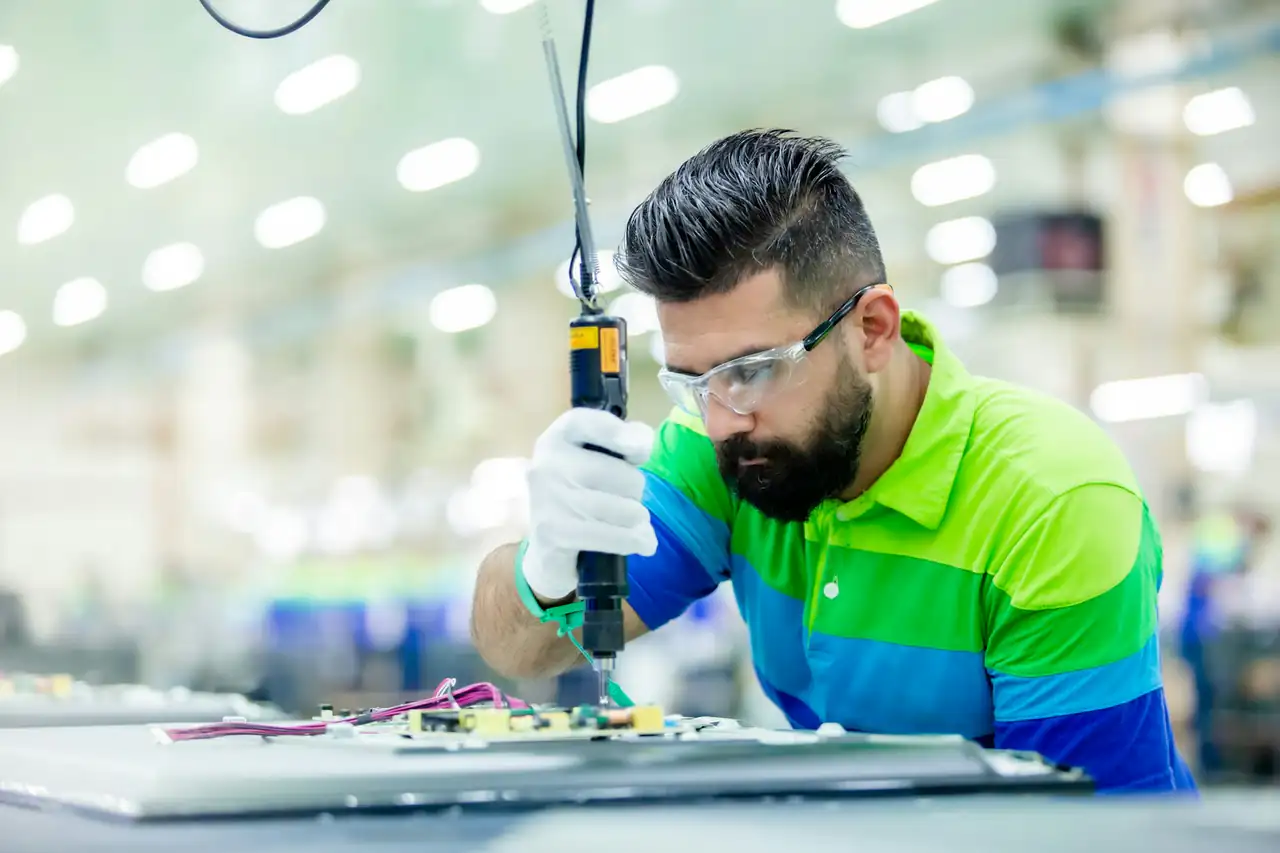
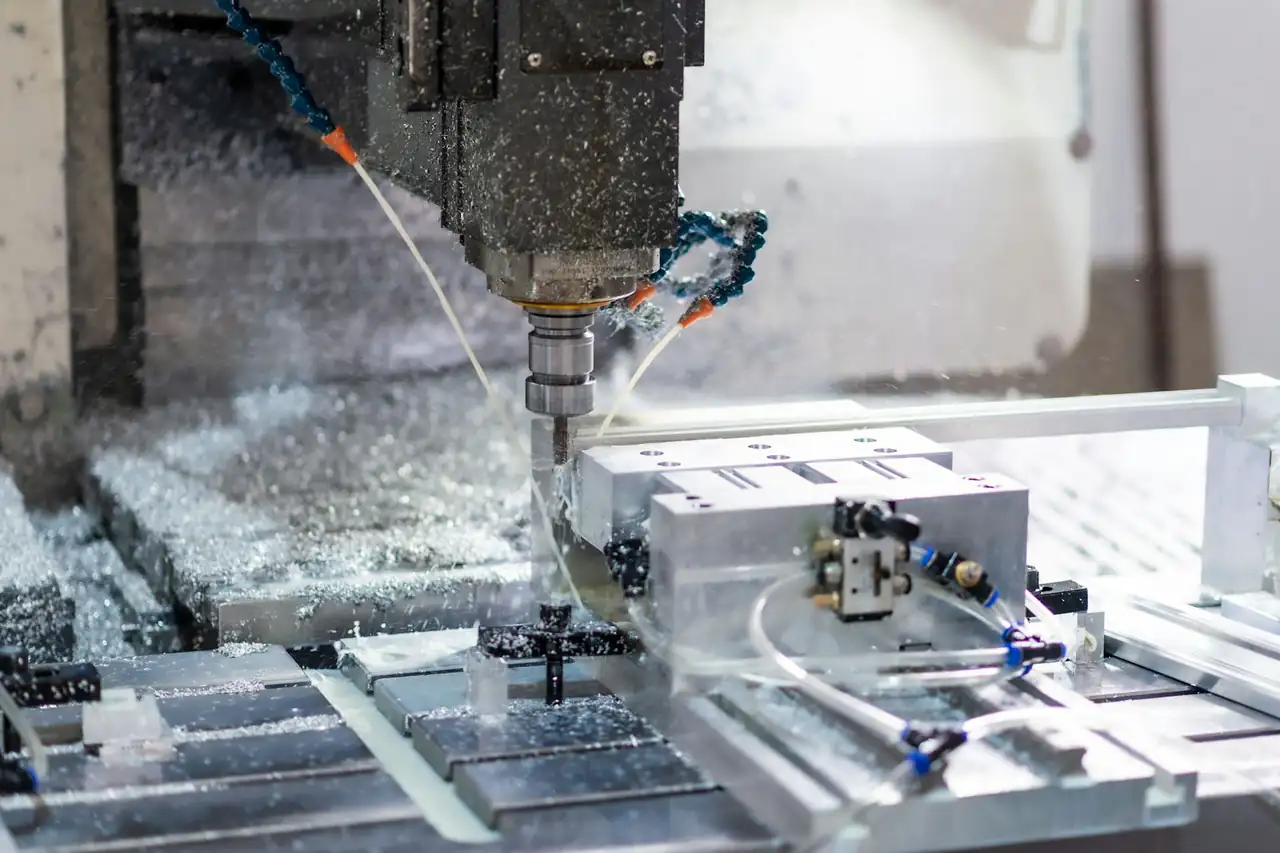
Engineering goods are India's largest export group, at US$122.43 bn in FY2025-26 and 27.7% of merchandise exports, a record for the second year running (Department of Commerce quick estimates annexure, 15 Apr 2026 (opens in a new tab), with the share from EEPC India, March 2026 (opens in a new tab)). India is the number one supplier of iron and steel castings to the US, at 42.8% of US imports, and number two to the EU (UN Comtrade (opens in a new tab), 2025, our analysis). Metal parts made to drawing are mainstream Indian work, not a niche.
Electronics is counted separately, and we keep it separate, as the official statistics do. Smartphones were India's top single export item in 2025 (PIB, 11 Mar 2026 (opens in a new tab)), and India supplied 42.3% of US smartphone imports that year, up from almost nothing in 2019 (UN Comtrade (opens in a new tab), our analysis). A few large assemblers make them for their clients, so it's not a category a small buyer can enter.
Which Way Each Industry Moved
On the official provisional figures for FY2025-26, five industries grew. Electronic goods rose 24.40%, marine products 13.86%, engineering goods 4.86%, drugs and pharmaceuticals 2.13%, and handicrafts 1.45%. The consumer industries most importers buy from mostly shrank - ready-made garments fell 1.36%, leather 2.36%, cotton textiles 3.89%, spices 4.29%, carpets 5.31% and gems and jewellery 5.40% (Department of Commerce, 15 Apr 2026 (opens in a new tab)).
Is a shrinking industry bad news for you? Not necessarily. It means makers have room in their order books and a reason to listen. It can also mean a supplier under strain, and that part needs checking. When US tariffs spiked in 2025, Tiruppur exporters were reportedly told to absorb the cost or lose their orders (Business & Human Rights Resource Centre, 2025 (opens in a new tab), Reported). A supplier who took that deal may still be carrying it.
US shipment records show how uneven the hit was. In the tariff trough from September 2025 to February 2026, US sea shipments of decorative metal from India fell 81% and women's blouses 73%, while footwear rose 60% and furniture 14% (US import bill-of-lading records, US sea imports only, our analysis). The counts are solid, and the tariff as the cause is our reading. Decorative metal is exactly what the Moradabad and Jodhpur workshops make.
Every Consumer Industry Is Fragmented
In 15 of 21 product lines we tested, the ten largest Indian shippers hold under a fifth of India's US sea shipments - knit tees at 6.5%, furniture at 5.8%, bags at 6.5% (US import bill-of-lading records, Jan 2015 to Sep 2026, our analysis). You're choosing among many mid-sized exporters, with small workshops behind them. That gives you room to shop around and room to switch, and it means the first question for any supplier is who actually makes the goods.
Ready to act
Need hands-on help?
Want to know whether a supplier is the maker, an exporter placing work, or a parts job shop? SourcingSync can check it on the ground.
Read the full guide: India's export industries, profile by profile
05
Where production is concentrated: towns, not regions#
In January 2026 a buyer planning a trip to Karur, the Tamil Nadu town known for home textiles, posted a small complaint. "I tried enquiring online and through email's but unfortunately only few of the many manufacturers/Factories have responded" (r/Karur, 2026 (opens in a new tab)). A local answered with the fix - tell the owners in advance, then just walk in (r/Karur, 2026 (opens in a new tab)).
That's what this section is about. India's export production sits in named towns, each with its own speciality, its own habits and its own route to the sea. Know the town, and you know who to write to, how to reach them and which port your goods will really leave from.
Start From the Official Export-Town List
The government designates 42 towns as Towns of Export Excellence, under 43 entries, on a list dated 6 April 2023 - Tiruppur for knitwear, Moradabad for handicrafts, Kanpur for leather, and so on (DGFT, Foreign Trade Policy Appendix 1B (opens in a new tab), Verified). Panipat appears twice, which is why 43 rows cover 42 towns. The status gives a town's exporters priority access to certain export-promotion funds. It says nothing about any single firm in the town, so treat it as a map, not a recommendation.
Check the Official Category, Not the Reputation
A town's official category is sometimes narrower than its fame, and that matters when you write your first email. Surat is listed for gems and jewellery, not synthetic textiles. Kolhapur is listed for textiles, not footwear. And Karur, our buyer's town, is listed for handlooms, not "home textiles".
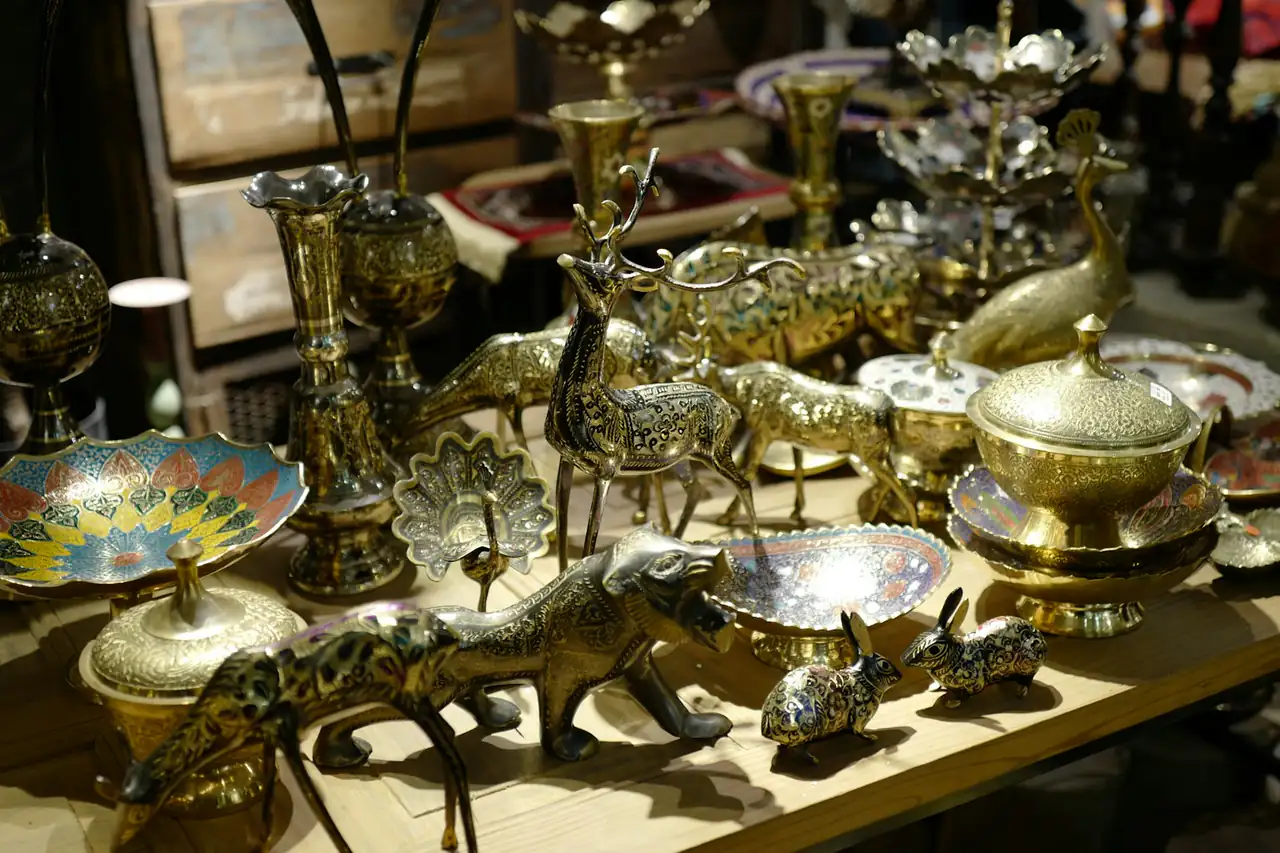
Reputations drift too. Moradabad is famous for brass, but its US sea trade today is mostly iron, steel, aluminium, glass and wood décor (US import bill-of-lading records, US sea imports only, archived June 2025, our analysis). Tiruppur makes knits and sends woven work to other cities. Ludhiana's hosiery units call themselves winter-only (r/ludhiana, 2026 (opens in a new tab)). Write to the town for what it makes now, not what it was famous for.
Know Who Makes It
In Moradabad, Jodhpur and Saharanpur, workshops make to order for exporters and rarely sell direct. The exporter you contract is often not the maker. That's a normal model, and the same one most Western retailers buy through. Your job is to find out who makes the goods and who answers for quality - ask early, ask kindly, and write the answer into your order.
Ready to act
Need hands-on help?
Need someone in the cluster to visit makers with notice, find the workshop behind an exporter, or inspect? SourcingSync does this.
Your Goods Leave From a Port, Not the Town
This is where most India guides stop, and where we keep going. Nobody in government publishes a cluster-to-port map, so we built one from official terminal registers, port data and carrier schedules. Every gateway below is a planning figure (Indicative), because carriers change schedules weekly.
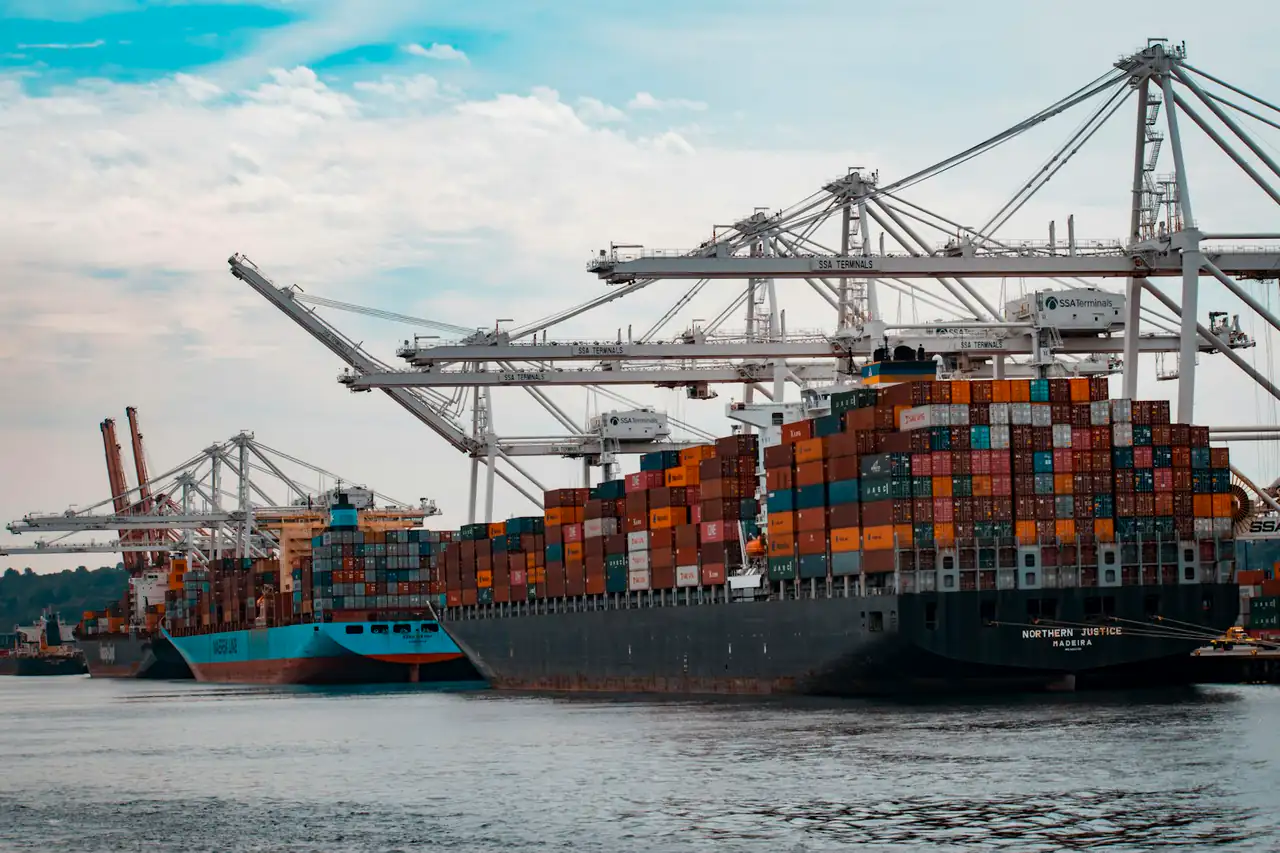
US-bound knitwear from the Tiruppur side loads at Colombo, in Sri Lanka, on 47.4% of babywear and 34.6% of T-shirt shipments, because southern cargo is fed there onto the US-bound ship (US import bill-of-lading records, Jan 2015 to Sep 2026, our analysis). Hand-knotted carpets load 85.7% at Nhava Sheva, and tiles and furniture mostly at Mundra (same records). To Europe, Chennai to Rotterdam had a median of 25 days against 33 from Nhava Sheva on one carrier's schedule read on 23 September 2026 (interactive schedule (opens in a new tab), Indicative).
And if you're in Australia or New Zealand, know this - no sailing we found goes direct from India. Every one transships, via Singapore, Port Klang, Colombo or Tanjung Pelepas. To Australia, plan on 25 to 36 days port to port. To New Zealand it's about 30 days on a good relay through Port Klang (published NZ schedule (opens in a new tab)) and up to 80 on a bad one. The relay decides.
Only three clusters have a size figure we'd stand behind. Tiruppur reported about ₹46,000 crore of exports in FY2025-26 (Business Standard, Jun 2026 (opens in a new tab), Reported). Morbi's association counts 610 units (Morbi Ceramic Manufacturers Association (opens in a new tab), Supplier-stated). Firozabad has "more than 400 glass work units" per the state (UP ODOP (opens in a new tab)). Everything else is unknown.
The first live location guide is the Tiruppur knitwear cluster, with its real gateway, and the rest are listed under location guides.
Read the full guide: India's manufacturing clusters, the official map
06
Wholesale markets: useful for importers, but not factories#
In May 2026 a Canadian importer posted on an Indian business forum looking for saree suppliers from Surat, Banaras and Kanchipuram. The list of asks was sensible - "export-ready documentation (IEC/GST/invoices/shipping experience)" and "consistency between sample and bulk" (r/IndiaBusiness, 2026 (opens in a new tab)). One of the replies offered help with "transport companies with/without bill, Hawala agents etc etc" (r/IndiaBusiness, 2026 (opens in a new tab)).
Both halves of that thread are the story of India's wholesale markets. They're wonderful for seeing and sampling a huge range in one day. They're not built to export, and some of what's on offer there can't legally leave India at all. So should you buy in one? For sampling, scouting and small mixed orders, yes. For traceability, export papers and proof of origin, not on its own.
What a Market Is Good For
Four things, and they're real. You can handle many makers' goods in a single day. You can see what's selling in India before it reaches your competitors' catalogues. You can put together a small mixed order across ten shops that no single factory would take. And you can find the makers behind a product, because every shop knows its two or three suppliers. A Delhi trader put it memorably - "Every owner in sadar bazaar has one manufacturer as their godfather" (r/delhi, 2024 (opens in a new tab)).
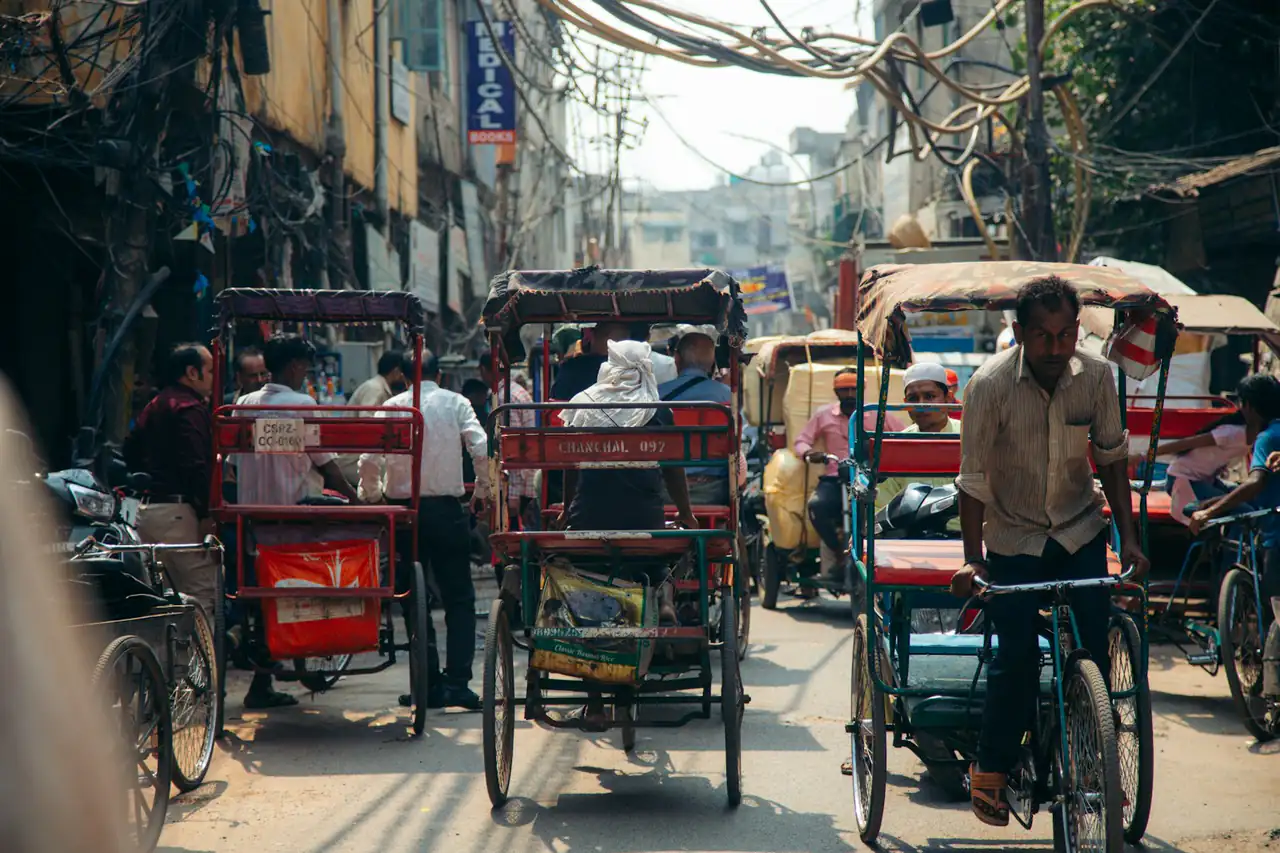
The markets foreign buyers name most are Delhi's Sadar Bazaar for general goods, Chandni Chowk for textiles and fashion and Khari Baoli for spices, Surat's Ring Road for sarees and dress fabric, and Jaipur's Johari Bazaar lanes for stones and bulk jewellery, with Bapu Bazaar for fashion jewellery at retail. Shops are traders working on slim margins over a few makers. That's a normal route, and it's how plenty of small importers start.
What a Market Can't Give You
The first thing it can't give you is an exporter. Market shops trade mostly in cash, often without a bill, and none of the buyers or traders we read describes a shop acting as exporter of record (r/IndiaBusiness, 2026 (opens in a new tab)). You need an Indian merchant exporter or agent to raise the export invoice and file the shipping bill.
The second is origin. Insiders say stock in Sadar Bazaar and Mumbai's Crawford Market includes Chinese imports and copies (r/mumbai, 2025 (opens in a new tab)). Your 0% duty into Australia, New Zealand or the UK needs a producer who can document origin, and a market shop can't. So label anything you buy there "origin not verified", and price it at the full duty rate.
The third is consistency. Market stock is pooled from many workshops, so the repeat lot won't match the first. The fourth is credit. Long credit runs only between established parties, and a new foreign buyer pays cash or in advance (r/surat, 2024 (opens in a new tab)).
Walk-Away Signals
Some signals end the conversation. Transport "with or without bill", or payment through hawala agents, means goods that can't be exported legally, so walk away. Branded surplus, like the stock sold around Tiruppur's Khaderpet market with logos still on, can be seized at your border as counterfeit. And in Jaipur, the tourist funnel (a guide's "friend", then a showroom) is the most-reported way a foreign buyer overpays in India.
Ready to act
Need hands-on help?
Buying across several market shops means an exporter of record, consolidation, documents and an honest origin label. SourcingSync buys in India's markets for foreign buyers and exports it properly.
07
Who you can buy from, and where to find them#
In July 2026 a Dubai trading company posted a complaint that anyone who has tried to buy from India will recognise. Many Indian manufacturers, it said, "either don't respond, are difficult to reach, or aren't willing to work with overseas trading companies" (r/SmallBusinessUAE, 2026 (opens in a new tab)). A UK importer who runs a company in India explained the other half of it a few months earlier: "Most of the actual Manufacturers are not even there online or have hardly any presence" (r/smallbusinessuk, 2026 (opens in a new tab)).
Put those two together and you have the whole problem. The sellers who answer you online are mostly traders, and the makers who could fill your order are mostly somewhere else. This section is about who you can buy from, and where the makers actually are.
Four kinds of supplier, all normal
India's trade policy recognises two kinds of exporter. A manufacturer exporter makes what it exports, and a merchant exporter buys goods and exports them (DGFT, FTP 2023 chapter 11, paras 11.32 and 11.33 (opens in a new tab)). Both hold an export code (IEC), and either can be the name on your shipping bill. Add buying houses, which manage makers for you and make nothing themselves, and artisans, who reach you through cooperatives, NGOs and exporters.
Most sellers a foreign buyer reaches online are traders or merchant exporters, not the maker (buyers on forums, six voices, 2023 to 2026). That's fine. Most of the brands on your own high street outsource too. It only becomes a problem when you don't know who makes your goods, so ask every seller the same question, early and kindly - which factory makes my goods, and who answers for quality?
Where the makers are
Think of the channels as a ladder, from least checked to most:
- An open listing on a directory, which nobody has checked.
- A marketplace badge, which means someone checked the business exists.
- An export council member with a current RCMC and an active IEC.
- An exhibitor at a council-run trade fair, whom you can meet.
- A factory you or your representative have audited.
The makers with capacity cluster on rungs three and four. They fill their order books at fairs and through repeat customers, which is why the Dubai buyer's cold enquiries went nowhere. India's export councils keep member lists sorted by city and product, and one of them (AEPC, for apparel) is public: 6,728 members when we counted, 2,094 of them in Tiruppur (AEPC member directory (opens in a new tab), our count, 24 September 2026). DGFT's own Trade Connect (opens in a new tab) adds something no directory can, an export turnover band taken from DGFT's records rather than the supplier's mouth. Fairs are on India's trade fairs.
What the marketplaces don't do for you
Directories are good for finding names and poor for checking them. A fast reply on IndiaMART shows the seller's paid tier, because paid sellers see your enquiry first (sellers on forums, 2025 to 2026). IndiaMART says its TrustSEAL badge checks business authenticity, "not product quality" (IndiaMART (opens in a new tab)). Its Buyer Payment Protection Plan excludes "foreign buyer transactions" altogether (IndiaMART terms, 12 February 2026 (opens in a new tab)), and India-based sellers on Alibaba reportedly can't offer Trade Assurance (buyers on forums, 2021 to 2023). As a foreign buyer, you are the protection.
Which supplier type you target follows which model fits your order. How we read the records is on how we assess suppliers.
Ready to act
Need hands-on help?
Want a shortlist of makers, with the maker named? SourcingSync can build it for you.
Read the full guide: Finding Suppliers in India: Types, Channels and Trade Fairs
08
Ways to source: use the simplest model that works#
In May 2026 a small premium T-shirt brand posted its first-order story from Tiruppur. It had found a maker through a friend's reference, ordered six styles made to its own spec, and waited while the order ran three months late. Then came the part that stung. "Realised this later when the same manufacturer offered me existing stock at nearly 25% lower pricing than what I had paid" (r/Tiruppur, 2026 (opens in a new tab)).
Nothing went badly wrong there. The brand got its T-shirts. But it bought the most expensive way of sourcing when a simpler one sat on the same factory floor, and that's the choice this section is about. Pick the simplest model your product and your order size allow, and decide separately whether you need an agent to run it.
Five models, applied to India
- Ready-to-sell. A finished product bought as it is, from marketplaces, merchant exporters or the markets. Fast, and the watch-out is provenance, because a trader's mixed stock may not prove where it was made.
- Wholesale. Low prices and small minimums from India's big domestic markets. Market shops can't export for you, so a merchant exporter has to buy, invoice and ship (wholesale markets).
- Private label. Your brand on a product a maker already runs. Register your trademark in India first (private label).
- Light customisation. The maker's own item in your colours, sizes, trims or packaging. This is what the Tiruppur brand should have asked about first, because it goes with the grain of how Indian makers work. Dye-lot minimums set the MOQ.
- Custom manufacturing. A product nobody makes yet. Slower, dearer, and many makers resist it, so keep it for when nothing else will do.
The pattern that decides most choices is simple. Indian makers prefer to sell what they already make. Ask for something new and many say yes, then slow down (buyers on forums, 2020 to 2026). Ask for their standard item with your changes and the answer comes faster and firmer. And ask the price of the running line before you commission a custom one (MOQ and pricing).
Do you need an agent?
An agent or buying house carries out one of those models. It doesn't replace the choice. Three questions settle whether one adds anything -
- Can you talk to makers yourself, by phone and WhatsApp, in Indian working hours? If not then an agent fills that gap.
- Is your volume worth a good agent's time? The larger ones want steady annual volume (r/FulfillmentByAmazon, 2021 (opens in a new tab)), and a first order of a few hundred pieces may not get their attention.
- Do you need someone at the factory? Buyers who succeed in India usually have someone on the ground, and more than once (r/procurement, 2026 (opens in a new tab)).
If you already have one checked exporter, or stock you can inspect before you pay, you probably don't need an agent at all. And you don't need your own office in India. SourcingSync (opens in a new tab) can be your people on the ground instead.
Read the full guide: Ways to Source From India: Models, Agents and Buying Houses
09
How sourcing from India works: the 13 stages#
[Component: readiness quiz, "Before you start"]
Sourcing from India runs in thirteen stages, and you can run every one of them yourself. They are Define requirement, Research, Discover, Screen, RFQ, Sample & evaluate, Negotiate, Verify claims, Trial order, Production and QC, Export and logistics, Import, and Manage and learn. You check the supplier twice - a light screen at Stage 4 and a full check of every claim at Stage 8 - and both happen before any money moves.
Why does the order matter? An Indian maker's account of a first order from a Canadian brand shows it well (r/streetwearstartup, 2025 (opens in a new tab)). The brand wanted five new styles sampled and made in two months, skipped a sample to save time, and ended up withholding the whole balance in a dispute nobody won. Three stages went missing (a realistic brief, a sealed sample, staged payment), and each one would have caught it. Below is each stage with the one India-specific thing that decides it.
1 and 2 Define and research
Stage 1, Define requirement. Fix the destination and the HS code before anything else. Together they set your duty, your labelling and your chemical limits, and they also decide which origin document you'll need from the supplier. Here's the duty picture in September 2026. Australia charges 0% on every tariff line if you hold an ECTA certificate of origin (Australian Border Force rules of origin (opens in a new tab), all lines at 0% since 1 January 2026, Supported). The UK charges 0% with proof of origin under the India-UK CETA, in force since 15 July 2026 (UK Trade Tariff news (opens in a new tab), Verified). New Zealand's preference starts on 20 October 2026, when its FTA with India enters into force (MFAT (opens in a new tab), Verified). And the US goes the other way, charging MFN plus an extra 10% under Section 301 since 24 July 2026 (Federal Register, 91 FR 47318 (opens in a new tab), Verified).
Then write the brief down. It holds the product, HS code, destination, quantity, target landed cost, the certifications you need and the date you need stock. The sourcing brief tool has the fields.
Stage 2, Research. Find where India is strong in your category from the official record, not from a listing. We use three sources - official Indian trade data (DGCI&S and the Department of Commerce), the government's Towns of Export Excellence and One District One Product lists, and export-council membership counted by city. Then hold your delivery date up against the festival and monsoon calendar, which is a few paragraphs down.
3 and 4 Discover and screen
Stage 3, Discover. Your channels are council fairs and directories, FIEO, the marketplaces, the wholesale markets, buying houses and reverse buyer-seller meets. Which to use, and what each one has checked, is in who you can buy from.
One habit changes your reply rate more than any channel does. Indian makers answer the phone and WhatsApp, and mostly don't answer cold email or LinkedIn. Buyers who tried email for weeks got nothing back, and a manufacturer in the same thread said he gets hundreds of such mails a month (r/india, 2023 (opens in a new tab)). So send the email, then message.
Stage 4, Screen. Run five free checks on official portals before you send an RFQ. They're View Any IEC, View RCMC, the GST filing history, MCA company data and Udyam, and what each proves is in checking a supplier. Add one question of our own: "Can you quote FOB and file the shipping bill yourself?" A maker who can't isn't a bad maker, but it tells you someone else will run the export (more on that at Stage 11). A supplier who fails the screen doesn't get an RFQ, which saves you both the time.
5 to 7 Quote, samples, negotiation
Stage 5, RFQ. Three India-specific lines go in every request for quotation. First, ask whether the price assumes an export rebate. India has duty-remission schemes that refund embedded taxes to exporters, and a quote can lean on one, so you want to know if it does. Second, ask for FOB or FCA at a named port or place, not EXW, because EXW leaves you responsible for export clearance inside India and you can't do that from abroad. Third, ask for a zero-rated export invoice. Exports carry no Indian GST, so a quote that adds it is a quote from someone who isn't exporting.
Stage 6, Sample & evaluate. Expect to pay an advance before sampling starts, and budget two or three rounds. The first proto usually comes in whatever fabric is on the shelf, so approve a pre-production sample made in the real bulk fabric and trims before you release production. Then seal and sign a golden sample, keep one, send one, and lab-test it against your destination's limits.
Stage 7, Negotiate. Agree who pays how, through which bank, and when. India's export payment rules change on 1 October 2026, when the Reserve Bank's new regulations (FEMA 23(R)/2026-RB) take effect (RBI (opens in a new tab), Verified), and your supplier's bank will apply them to your remittance. Write non-circumvention terms that survive section 27 of the Indian Contract Act, which voids most post-contract restraints (Indian Kanoon, s.27 case search (opens in a new tab)). And put tooling ownership in writing.
8 and 9 Verify claims, then a trial order
Stage 8, Verify claims. This is the full check, on your shortlisted supplier only. You look up each certificate at the scheme's own database, find out which factory stands behind an intermediary, and confirm the maker can produce the origin proof your 0% rate depends on. If it can't then your duty plan fails, and you want to know that before the deposit. The how-to is in checking a supplier.
Stage 9, Trial order. Place a small first purchase order under a letter of credit or a staged payment, with a written spec and an inspection before the balance. Why staged? Because the leverage you keep is what keeps a busy maker answering you. If the goods never arrive then India's official complaint route runs through DGFT's quality complaints and trade disputes mechanism (DGFT (opens in a new tab), FTP 2023 chapter 8). It covers non-supply, not disappointment.
Stages 5 to 13 are where first orders slip. SourcingSync (opens in a new tab) can run them for you: quotes, samples, orders, production, inspection and freight.
10 and 11 Production, QC and export
Stage 10, Production and QC. Book two inspections. One goes during production, when faults are still cheap to fix, and one goes before shipment. Set your sampling plan to ISO 2859-1, whose 2026 edition is current (ISO 2859-1:2026 (opens in a new tab)), and write the acceptance level into the purchase order. Some foods need certification from India's Export Inspection Council before they leave (EIC inspection agencies (opens in a new tab)). How to run the inspections is in quality control.
Stage 11, Export and logistics. The exporter files a shipping bill, customs issues the Let Export Order and the electronic certificate of origin is generated. Then the goods move to the port you named in Stage 5. Here's the quiet problem. Many small makers have never run an export themselves, so they hand the goods to a logistics firm and the clearance drifts to you, which is EXW by the back door even when you agreed FOB (r/smallbusinessuk, 2024 (opens in a new tab), r/logistics, 2025 (opens in a new tab)). That's why the Stage 4 question matters, and SourcingSync (opens in a new tab) can act for you here if the answer was no.
12 Import into your country
This stage is the origin proof, the customs entry, your product rules and the tariff. Each destination works differently, and each has its own page: trade routes and duty.
13 Manage and learn
Sourcing doesn't end at delivery. Put four re-check dates in the calendar - the supplier's IEC annual update, its export undertaking (LUT), its certificate expiries and your tariff status. Log every QC failure and every customs refusal against the supplier. After three orders you'll know more about that supplier than any registry does.
The Indian calendar in one paragraph
The monsoon reaches Kerala about 1 June, covers the country about 8 July and withdraws between about 17 September and 15 October (India Meteorological Department normals (opens in a new tab)), and roads, dye houses and drying yards all feel it. The 2026 festival window runs roughly mid-October to mid-November, with Dussehra on 20 October and Diwali on Sunday 8 November (DoPT 2026 holiday list, reproduced (opens in a new tab), Supported). Workers travel home, and lines run short before and after. The cotton season runs October to September (Cotton Association of India (opens in a new tab)), so new-crop prices land in the last quarter. Christmas orders for your market hit Indian lines in August and September (Indicative). Pick a delivery date, then check it against all four.
Meeting suppliers
The single most useful thing a serious buyer can do costs one email. Write to the commercial wing of the Indian mission in your country and ask to be nominated for reverse buyer-seller meets in your category. India flies foreign buyers in to meet pre-screened exporters, and the mission is the gate. Calls close months ahead, and the deadline for July to December 2026 events was 30 May 2026 (Consulate General of India, Atlanta, read 23 September 2026 (opens in a new tab)).
For a first trip, a hosted-buyer programme beats a big general fair, because the subsidy and the pre-set meetings matter more than the size of the hall. Two notes. IITF, the big Delhi fair, is business-to-business for only its first days of 14 (ITPO, read 23 September 2026 (opens in a new tab)), and AAHAR, the food show, isn't an export-sourcing fair either.

The next relevant fair is IHGF Delhi Fair Autumn, 13 to 17 October 2026 (IHGF Delhi Fair (opens in a new tab), read 25 September 2026, Verified). The India Carpet Expo in Bhadohi ran in early October, and its next dates aren't announced yet. Every other date, offer and entry rule is on India's trade fairs.
Why first orders stall
Buyers who've run a first order describe the same three things. We give them with context, because the makers involved are usually small businesses juggling many buyers, not bad actors.
The biggest one is distance. Buyers who succeed have someone on the ground, and one visit isn't enough, because one buyer says quality slipped again the moment his colleague left India. You don't need your own team there (that's the role SourcingSync plays), but you do need someone who keeps turning up.
The second is time. Delivery dates slip by months, not weeks, and "next week" repeats, so build the slip into your plan and inspect during production so you learn early. The third is silence after the deposit, which is the most-described pattern of all. Most of it is a small maker heads-down on a bigger order, and honestly, more email won't fix it. Payment structure will, so keep part of the money tied to the next milestone.
The sources for all three are in the box below.
[Diagram: the 13-stage flow, with India checkpoints marked at each stage and verification highlighted at Stages 4 and 8]

10
How to check an Indian supplier#
In February 2026 an Australian buyer took a list of GOTS certificate numbers and did the one thing most people skip. The buyer looked every number up in the GOTS public database, and about half of them weren't there (buyers on r/SustainableFashion, 2026 (opens in a new tab)). No agent, no audit firm, no Indian login. Just a public database and the patience to type.
That's the whole method, really. India publishes more about its exporters than most countries do, and you can read nearly all of it for free. You check twice. Before you send an RFQ, you confirm who the supplier is and that it may export, using five official portals: the IEC and RCMC lookups at DGFT, the GST taxpayer search, MCA company data and Udyam. Later, before you pay a deposit, you do what that Australian buyer did and look up every certificate at the scheme's own database, and you make sure the supplier can prove origin for your duty rate.
The single best check costs nothing and takes ten minutes. India's records share one key, because the GST number carries the PAN in characters 3 to 12 and the IEC simply is the PAN. So one GST number lets you pull the export record too, and the legal name should then match across GST, IEC, the proforma invoice and the bank account. Experienced buyers name this check first (buyers on forums, 2023 to 2025 (opens in a new tab)). If the bank account is in another name then stop and ask why. Money follows the legal name, and so should you.
[Component: Stage 4 checklist]
Read the records fairly, though, because a false alarm can cost you a perfectly good maker. A trader or merchant exporter isn't a red flag. A small "Micro" firm isn't a failure. A certificate held by a sister company in the same group is normal. The question in every case is the same - who makes it, and who answers for quality? Only four things end a conversation on their own: a bank account in another name, a cancelled GST registration, a request to pay Indian GST on an export, and certificates held by an unrelated company with no answer to "which unit makes my order?"
Then there's origin, which is where a good factory can still cost you money. Your 0% rate in Australia, the UK or (from 20 October 2026) New Zealand depends on a document the supplier has to produce, and an imported input like Chinese cotton can break the rule. Ask whether they've issued that document for your market before, and for which product. The rules are on the Australia, New Zealand and UK trade pages.
If you'd rather not do this yourself, SourcingSync (opens in a new tab) runs these checks for you, including the deeper GST view (directors, turnover band, e-way bill history) that needs an Indian GST login.
Read the full guide: How to Verify Indian Suppliers: Records, Certificates and Origin
11
MOQ, price and payment: what drives them#
India has no MOQ norm. Price moves in steps, from the listing to the quote to the bill after award, and how you pay depends on who you buy from. The rules on payment also change on 1 October 2026.
MOQ: drivers, not norms
Nobody publishes minimum order quantities for India. We don't either, because none exist. A supplier's "100 pieces per style" is that supplier's number for that style on that day, and the next supplier, or the next style, will differ.
MOQ is set upstream of the factory. The factory's minimum is usually the sum of other people's minimums (industry explainer (opens in a new tab), our reading). A dye vat runs at a fixed batch size, so a custom colour waits for the mill's dye-lot minimum. Screens and digitising cost the same whether you make 50 pieces or 500, so each print or embroidery carries a set-up floor. And every colourway and size can carry its own minimum - four colours in five sizes is twenty minimums, not one.
Buyers on trade forums, 2024 to 2026, describe the same knitwear ranges again and again. It's roughly 200 to 500 pieces per style at established factories, about 100 at small units, and 1,000 from traders. Those are what buyers report. They are not a norm, and we will not print them as one.
Custom fabric at small volume works only in yarns the mill already stocks. A Gujarat weaver put it plainly in 2025: he "cannot purchase yarn for small orders, unless its already something I have in stock" (r/ClothingStartups, 2025 (opens in a new tab)). Anything else waits for a dye lot.
Packaging has its own minimums, and they often sit above the product's. Moulds, printed cartons and tubes each have a floor (r/IndiaBusiness, 2026 (opens in a new tab)). So ask for the product MOQ and the packaging MOQ in the same RFQ, because the higher one is your real MOQ.
Is India cheaper at small volumes? Often not. UK importers on trade forums say that below a few hundred units, simple items cost less bought at home once freight, duty and time are counted. That is not a failure of India. It's just arithmetic.
Established factories often decline small orders, so small buyers land with traders. That is a normal route, and large retailers use it too. Know who makes the goods and who answers for quality (check who you're paying). Low-MOQ offers see more failed orders, but smaller upstarts can also be excellent, so verify the maker rather than avoiding the offer.
Negotiate MOQ through its drivers. Fewer colours cut dye lots, fewer designs cut set-ups and fewer sizes cut size minimums. A supplier who "can't go below 500" for four colourways may well take 300 in one.
What's inside an Indian export quote
A genuine export invoice carries no Indian GST. Exports are zero-rated, and most exporters ship under a Letter of Undertaking (LUT), so they neither charge the tax nor wait to claim it back (GST export guide (opens in a new tab), current). If a quote to you shows GST then ask why.
Listed prices in directories are a starting point, and often a stale one. Buyers on trade forums (2023) describe listed prices months old, or set low to draw an enquiry. Ask two things of every quote. Does it assume an export rebate? And which Incoterm is it on, with the named place? "FOB" without a port is not a price.
Extra charges appear at three points - after award, after the deposit, and at the end, often labelled "export packaging". Buyers on trade forums (2019 to 2026) describe all three. Get an all-inclusive price in writing before any deposit leaves your account, and write into the PO who carries a freight surcharge, because the 2026 Gulf-conflict surcharges reached buyers as mid-contract letters (buyers and logistics voices on trade forums, 2026).
The factory's running line can cost less than a custom order of the same item, because it has no set-up left to recover. Before you customise, ask what the running-line equivalent costs (the first-order case that shows it is on how sourcing works in India).
The rebates question
India has export duty-remission schemes that refund taxes built into an exporter's costs, and they can affect the price you're quoted. Ask your supplier whether the price assumes one, and whether it holds if the scheme changes.
Paying: what India's rules now allow
From 1 October 2026 the RBI's new export regulations, FEMA 23(R)/2026-RB, take effect (RBI, 13 Jan 2026 (opens in a new tab)). Three rules touch you. The exporter must realise payment within 15 months of shipment (18 if the invoice is in rupees), up from 9 months before a November 2025 amendment (EY alert, Dec 2025 (opens in a new tab)). A third party can pay on your behalf only if the exporter's bank is satisfied, which is the bank's call and not your right. And your advance must go through the same bank that will receive the export proceeds.
So how much credit you get is not set by Indian law. It's the call of the exporter's bank and insurer. ECGC, India's export credit insurer, sets a limit per overseas buyer (ECGC brochure, Jul 2026 (opens in a new tab)), and a small exporter's insurer may hold no limit for you at all.
Exporters on trade forums (2026) rank terms the same way - advance, then letter of credit, then documents against payment (D/P), then open account. A new buyer who won't open an LC can usually get D/P from a small exporter. You pay the bank, and the bank releases the shipping documents.
Small makers commonly ask for 70 to 100% up front, because foreign buyers, including long-standing ones, have paid late or not at all (seven exporter voices on trade forums, 2025 to 2026). Trade-finance voices put typical advances at 10 to 30%. Both are real, and it depends on the maker and on you. Merchant exporters usually can't give credit at all, because their own suppliers want cash and your advance funds the purchase (exporters on trade forums, 2023 to 2025).
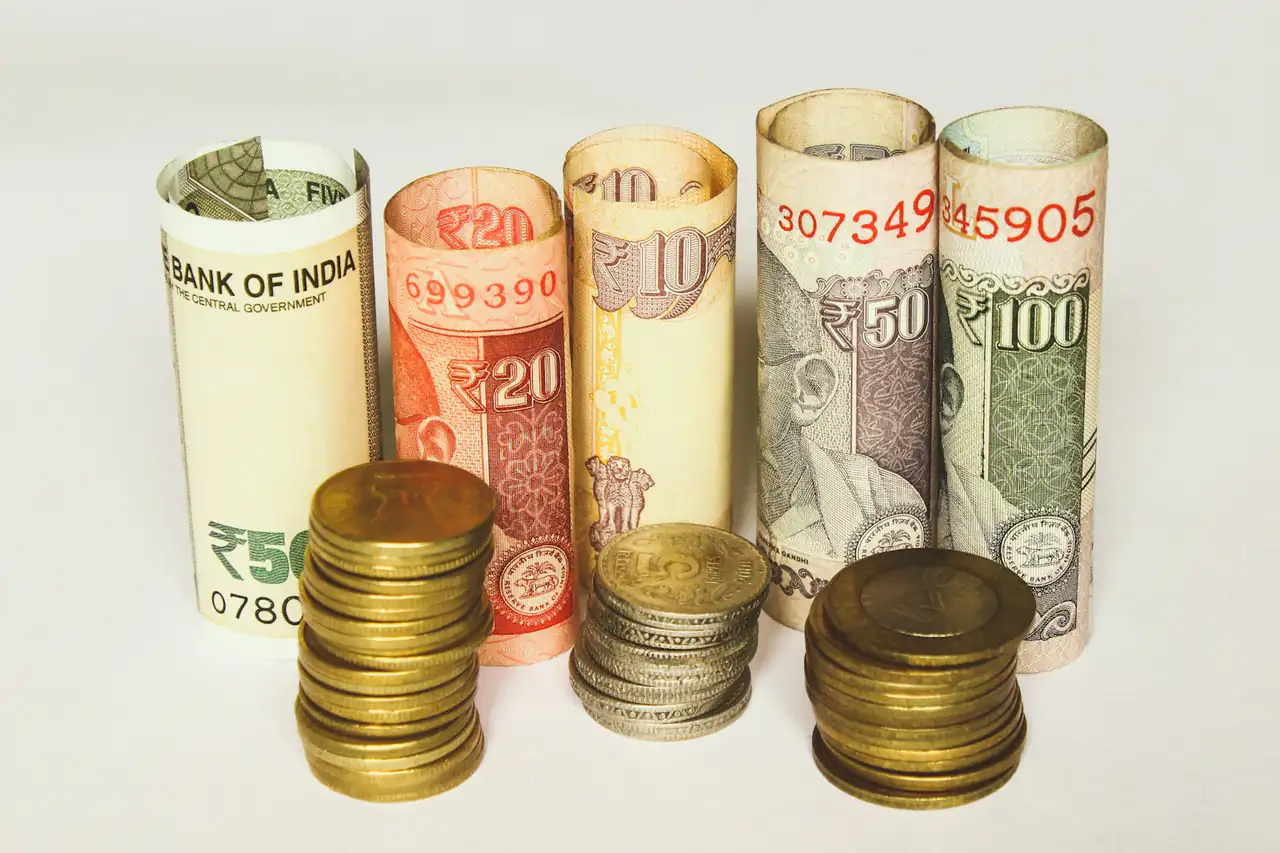
Paying safely
Pay only a corporate account in the exporter's name. Not a director's personal account, and not a "sister firm" you have never heard of. If the bank details change then confirm the change by phone on a number you already had.
Platform protection is thinner than buyers assume. India-based sellers on Alibaba.com can't use Trade Assurance (buyers on trade forums, 2021 to 2023). IndiaMART's payment protection excludes foreign buyers, and "Pay with IndiaMART" was discontinued on 31 March 2024 (IndiaMART FAQ (opens in a new tab), Verified). And PayPal disputes have made buyers ship goods back to India at their own cost before any refund (buyers on trade forums, 2023 to 2026).
One scam pattern repeats. After the first payment come a "minimum order" fee, then a "customs" fee, then an "export" fee (buyers on trade forums, 2024 to 2026). Stop at the first unplanned fee, because a real exporter quoted the whole price before you paid. More on paying safely.
Ready to act
Need hands-on help?
Paying in stages against milestones only works if someone holds the supplier to them. SourcingSync can.
Compare landed cost, not unit price
A lower unit price with a port charge and duty on top is not lower. Run every quote through the landed-cost calculator before you compare.
[Component: landed-cost calculator]
Read the full guide: MOQ, pricing and payment terms in India
12
Private label and customisation: protect the brand first#
Before you send a single piece of artwork to India, do two things. Decide which job you are buying, and file your mark. Both cost less than fixing them later, and we have watched buyers learn that the expensive way.
Brand, modify or develop: three different jobs
Putting your label on a product the factory already makes is one job. Changing that product is a second. Developing something new from a brief is a third, and the three differ in cost, in timeline and in who owns the result when the work is done.
Indian contract makers use "private label", "third party" and "custom development" as if they meant the same thing. One practitioner spelled out the difference in 2026 - "private label (their formulation, your label), third party (your formulation, they produce), or full custom development" - and added that "people use those terms interchangeably" (r/IndiaBusiness, 2026 (opens in a new tab)). State in the RFQ which job you mean, and say who owns what at the end.
Much of Indian direct-to-consumer beauty is made by a small number of contract manufacturers, "each with 2-3 sister companies so they can claim they are not making for competition" (r/indianstartups, 2025 (opens in a new tab)). That is a normal model, in India and everywhere else. Exclusivity isn't implied, so if you want it then write it down and expect to pay for it.
Register in India before you share artwork
India joined the Madrid Protocol on 8 July 2013 (WIPO Lex (opens in a new tab)). If you already hold a mark at home then you can designate India through Madrid rather than file from scratch.
You will hear that India is "first to file". That is imprecise. Section 34 of the Trade Marks Act protects an honest prior user in India, and prior use abroad does not defeat an Indian registration (Lexology (opens in a new tab) · Intepat (opens in a new tab), current). In practice, filing priority decides most cases. Your use in Sydney or Leeds gives you nothing in Chennai. File, then share the logo.
What an Indian NDA can and can't do
Section 27 of the Indian Contract Act treats restraints that run after a contract ends as generally void. The Supreme Court applied that in Percept D'Mark v Zaheer Khan (2006). Restraints that apply during the term were upheld in Niranjan Shankar Golikari (1967) (Indian Kanoon (opens in a new tab) · Nishith Desai (opens in a new tab)). Supported
So an Indian NDA works best when it says what the maker may not use or disclose while you work together, not what it may not do after you part. A ban after the relationship will probably fail. Take Indian legal advice before you sign, because nothing here is legal advice.
What goes in the PO
Four things go in every private-label PO. Attach the exact label content - text, fibre or ingredient list, origin line and care symbols. Say that nothing gets printed without your written sign-off of the proof. Name who owns the moulds, screens, dies and patterns you paid for, and what happens to them at the end. And say what the maker may do with printed cartons, labels and tubes left over after the run, because that last one is the line most POs forget.
Ready to act
Need hands-on help?
Briefing a contract maker, approving samples and locking ownership in writing is detailed work. SourcingSync can run it.
How private label works anywhere: /sourcing/private-label/. The allergen declaration belongs with quality control.
13
Quality control: what the sample can't tell you#
In 2024 a European buyer took an order of wool goods from a maker in Uttar Pradesh, and part of it was unusable. The factory admitted it had used two different source materials in the one order, and one of them was not fit for the job (r/LegalAdviceIndia, 2024 (opens in a new tab)). The sample had been fine. The lot was not. That gap between the sample you approved and the goods you receive is what quality control in India is for, and you close it with three things you control - the inspection you book, where the inspector draws from, and the lab test you set to your own border.
Inspect before shipment even with a supplier you trust, and even on a small first order. Small orders are exactly the ones that go uninspected, because third-party checks tend to be bought only "if the order size is good" (an Indian manufacturer on a forum, 2025), and small orders are also the ones most likely to be run off the main line. Book a during-production check while faults are cheap to fix and a pre-shipment check before the balance is paid, and make the inspector draw across lots and cartons, not from the pile the factory sets aside. If you can't be there, SourcingSync (opens in a new tab) books and runs the inspection for you.
Then test for your market, because the same Indian product fails for different reasons at different borders. Across official rejection records from 2021 to 2026, Indian spices failed in the EU mostly for farm pesticides and in the US and Australia mostly for Salmonella (RASFF, FDA and DAFF, our counts). So one spice lot bound for Europe and America needs two test panels, and a single "export quality" certificate covers neither properly. A lab report the supplier sends you is a start, but in the US record hundreds of refused lines had one on file. Commission your own, on a sample your inspector draws.
Leather, jewellery and children's wear fail for choices made before production starts - the tanning finish, the alloy, the cords and poppers on the pattern. Those get fixed in the spec, not at the end of the line.
Read the full guide: Quality Control in India: Inspections, Lab Tests and AQL
14
Exporting from India and importing at home#
In July 2024 a US Amazon seller posted that their goods from India had landed and they couldn't have them. The supplier had chosen the forwarder, and "the agent in India still has not paid the amount to the agents in the U.S. and the US agents are holding my shipment" (r/AmazonSeller, 2024 (opens in a new tab)). The goods were fine. The paperwork was fine. The problem was who controlled the freight.
That's the thread through this whole section. Your supplier files almost everything on the Indian side, and you can't file it for them. What you control is which documents you ask for, which Incoterm you agree, who books the freight and which route it takes. At home, the origin document decides what you pay, and in 2026 the route decides when you get it.
What your supplier files, and what you name
The exporter, or its customs broker, files the shipping bill on ICEGATE, India's customs portal, and the Let Export Order that comes back is the export clearance (ICEGATE (opens in a new tab)). Only an Indian IEC holder can file, so you never touch it. Certificates of origin are electronic now, issued by DGFT or a product body such as the Export Inspection Council, APEDA or the Spices Board (ABF ECTA rules of origin guide, §8.3 (opens in a new tab)).
Your job is to name the documents in the PO or the letter of credit: commercial invoice, packing list, the right certificate of origin for your agreement, any product certificate your border needs and the bill of lading. A document that isn't named tends not to arrive. And since April 2026 the invoice number on a preferential certificate of origin must match the shipping bill exactly, or the preference can be refused at your border (DGFT Notification No. 05/2026-27, 7 April 2026 (opens in a new tab)). The notification's listing is Verified, and the rule text is Reported because the PDF is a scan we read through a reproduction.
Incoterms: FOB or FCA, never EXW
EXW puts export clearance on you, and in India you can't do it. It also cuts the exporter out of its own export: no rebate claim, no zero-rated LUT invoice and no e-BRC to close the books. Use FOB with the port named, or FCA at the named inland container depot for clusters far from the coast.
"FOB India" doesn't cap what you pay at origin either. Forwarders' invoices carry origin lines that sit in the gap (logistics practitioners, 2026), and small LCL shipments carry about ten fixed charges (exporters and forwarders on forums, 2025 to 2026). Ask for the origin charge list per booking before you compare quotes.
Ready to act
Need hands-on help?
If your supplier can't export then you need an Indian exporter of record, plus control of the freight and the certificate of origin. That's complex, and SourcingSync handles it.
Who books the freight carries the risk
This is where the Amazon seller's shipment went wrong. When the supplier picks the forwarder, a dispute between the Indian agent and the destination agent can hold your box for weeks, and you're a stranger to both. When the supplier ships on its own courier account, often two to three times cheaper, the courier becomes the importer of record, and any duty refund goes to the courier rather than to you (importers on forums, five voices, 2024 to 2026). And a supplier that offers to split the invoice or under-declare "to save you duty" is offering customs fraud that lands on you. Book your own forwarder and your own customs broker once volumes justify it.
Getting 0% duty: the origin document decides
The rate is public. Whether you get it depends on the proof of origin, and each agreement asks for a different one. Snapshot dated 23 September 2026.
[Component: destination snapshot table, stacked one destination per card on mobile]
| Destination | Duty position | What earns the preference | Routing |
|---|---|---|---|
| Australia | 0% on all lines since 1 Jan 2026 (DFAT (opens in a new tab)) | An ECTA certificate of origin only, no self-declaration (ABF (opens in a new tab)) | Always transships |
| New Zealand | Standard rates, up to 10% on apparel and leather footwear, until 19 Oct, then 0% from 20 Oct 2026 (MFAT (opens in a new tab)) | A certificate of origin, or an Indian status-holder's declaration | Always transships |
| UK | CETA 0% on every consumer line we sampled, since 15 Jul 2026 (UK Trade Tariff (opens in a new tab)) | Exporter's declaration, a certificate or your own knowledge (CETA ch. 3 (opens in a new tab)) | London Gateway or Southampton |
| UAE | CEPA, 97% of lines (UAE MoET (opens in a new tab) · Reported) | A DGFT CEPA certificate | Discharges outside the Gulf, trucked on |
| EU | FTA concluded, not in force, so standard or GSP rates (DG Trade (opens in a new tab)) | GSP with a REX number, and textiles (S-11a) have lost GSP (Reg. 2025/1909 (opens in a new tab)) | Suez partly back |
| US | Standard rate plus 10% under Section 301 since 24 Jul 2026 (91 FR 47318 (opens in a new tab)) | No preference | East Coast direct, West Coast transships |
Timing has cash value. An apparel container that lands in New Zealand on 19 October 2026 pays up to 10% duty, and the same container landing on 20 October pays none. Check your arrival date against every rate-change date before you book. Staged cuts under each agreement are in How free trade agreements cut your duty.
Routes in 2026: Suez is back, Hormuz is not
Australia and New Zealand always transship. We read every public liner schedule we could find and there's no direct India-to-Australia call, so cargo relays through Singapore, Port Klang, Colombo or Tanjung Pelepas, typically 25 to 36 days port to port (our read of public carrier schedules, departures 24 September to early November 2026). India to Auckland is about 30 days on a Port Klang relay and 51 to 97 days on some others (published NZ service schedule, 23 September 2026 (opens in a new tab)). The carrier picks the relay, but you pick the carrier.
"Jebel Ali" cargo has unloaded elsewhere since March 2026, at Khor Fakkan, Fujairah, Sohar or Jeddah, and finished by truck, because Hormuz has been effectively closed to routine traffic since 28 February apart from a window in June (Straits monitor, 16 September 2026 (opens in a new tab), US MARAD advisory (opens in a new tab)). Westbound, services are returning to Suez, and Nhava Sheva to Savannah is now 28 days (Georgia Ports Authority, 22 September 2026 (opens in a new tab)). Chennai beats Nhava Sheva to Rotterdam by about a week on the schedule we read.
Your destination guide
Australia · New Zealand · UK · UAE · EU · US · All agreements
[Component: landed-cost calculator with destination presets]
15
Is it safe to buy from India?#
In April 2026 a buyer in a thread about IndiaMART wrote: "i paid over 500$ and he shipped 10$ of the product and is asking for large sums of money from me now" (r/IndiaBusiness, 2026 (opens in a new tab)). That one line holds most of what this section is about. The money went out before anyone knew who the seller was, the token shipment was bait for the next payment, and the way out, if there is one, is an Indian government office most buyers have never heard of. (The slower failure, a real factory whose bulk didn't match the sample, is told on quality control.)
So is it safe? As safe as your controls. Nobody publishes how often Indian orders go well or badly, so anyone calling India "risky" or "safe" as a whole is guessing. What we can say is that the losses we read about fall into a handful of gaps, and every gap has a control you can put in place before the first payment.
The gaps that cost buyers money
- Not knowing who makes the goods. Buying through a trader is normal. Not knowing is the risk. Ask for the maker's name and unit and write both into the order (how to check a supplier).
- A badge read as quality. Paid listings and "verified exporter" tags prove registration, nothing more.
- Paying ahead of what you can see. Tie each payment to something checkable (a sample, an inspection report, a bill of lading), and stop at the first fee you didn't agree up front.
- Payment redirection. Confirm any change of bank details by phone, on a number you already had, and pay only a corporate account in the exporter's legal name.
- The bulk drifting from the sample. A pre-production sample in bulk material, then a pre-shipment inspection that draws from more than one carton (quality control).
- Time. Dates slip by months, not weeks, and the festival season takes a real bite out of October and November (the Indian calendar).
- Policy and routes. An export curb or a closed sea lane can land between your order and your ship date.

The everyday challenges
Most of the friction isn't fraud. It's the gap between how you work and how a small Indian maker works. English is the language of paperwork, but only about one Indian in ten speaks it at all (Census 2011, via The India Forum (opens in a new tab)), and the person cutting your fabric probably isn't one of them. Makers rarely say "no" directly, so a "yes, no problem" to a hard spec means nothing until a sample proves it (r/procurement, 2026 (opens in a new tab)). And India's ports are quick (a three-day container dwell, level with Singapore, in the World Bank's LPI 2023 (opens in a new tab)), so the logistics time you lose is inland, in booking and at the transhipment hub, not at the quay.
When things go wrong
Escalate on a timetable you set at the start. A complaint through the Indian embassy or DGFT brings the exporter an official warning, and an Indian exporter on a forum described receiving exactly that (r/LegalAdviceIndia, 2024 (opens in a new tab)). DGFT's Quality Complaints and Trade Disputes route (QCTD) covers quality failures, non-supply, part supply and wrong goods, aims to settle "preferably within three months", and can end in the exporter's export code being suspended (FTP 2023, chapter 8 (opens in a new tab)). Suing is the wrong tool at this size, because on a US$10 to 15k order the legal bill can pass the claim.
Ready to act
Need hands-on help?
The cheapest dispute is the one your payment terms and inspections prevent. SourcingSync structures the order and holds the supplier to it on the ground.
Read the full guide: Is It Safe to Buy From India? Risks, Challenges and Controls
16
Product playbooks#
A bulk T-shirt buyer explained that in Tiruppur "the sizes are actually mentioned in 'Dia'" - the tubular chest width in inches - so a medium is "17″ Dia chest and 26" length", not an M (Quora, Indian bulk buyer, about 2018 (opens in a new tab)). That's the whole case for a product guide. In India the right answer depends on the product and the place together, and a general page can't give it to you.
So a guide pulls the playbook's threads into one page for one product: the town that makes it, the HS code, the tests it needs and the rule at your border. We only publish one when the product changes the answer, and right now one is live.
- Cotton T-shirts from India: Tiruppur, HS 6109, and why India's edge is fibre and certification rather than the cheapest piece.
Read the full index: India product sourcing guides →
17
Location playbooks#
A UK importer once got a sea freight quote from India that looked fine until the last line, and the deal died on it. "It was the inland trucking in india that made it none viable" (r/smallbusinessuk, 2024 (opens in a new tab)). Where your supplier sits, and which port or depot the box really leaves from, is a cost line, not trivia.
A location guide takes one cluster and gives you its makers, its gateway and how to visit it. One is live, and the ports and air hubs behind every cluster are on the index page.
- Tiruppur knitwear cluster: knits only, no terminal of its own, US cargo via Colombo, UK paperwork at Chennai or Tuticorin.
Read the full index: India location guides, ports and hubs →
Read the full guide: India Location Guides: Ports, Hubs and Buying Visits
18
How SourcingFrom assesses suppliers#
In March 2026 a Chennai hardware seller told other Indian business owners that he'd upgraded to IndiaMART's TrustSEAL package, "and somehow I don't have any more business than the basic package after upgrading" (r/IndiaBusiness, 2026 (opens in a new tab)). Read that from the buyer's side. The badge you'd see on his listing is something he bought, not something his factory earned.
That's why we don't do badges, ratings or rankings. We record four separate checks on each business (identity, capability, certification and export history), each with its own evidence label and its own date. Payment never counts as verification.
Four checks, each with its own label
| Check | The question it answers | Label it can earn |
|---|---|---|
| Identity | Does the legal entity exist, and does its name match the invoice and the bank account? | Verified when we read the registry ourselves |
| Capability | Can this business make what it says, on its own floor? | Supplier-stated until a visit, audit or production record exists |
| Certification | Is the certificate real, current, and issued to this entity at this site? | Verified, or Not found |
| Export history | Has it shipped to buyers abroad under this name? | Supported, or Unknown |
A check we couldn't finish stays on the record as Unknown or Not found. We never hide a gap, and we never fill one.
Ready to act
Need hands-on help?
Want this assessment run on your supplier? It takes days per business and someone who can pick up the phone in India. SourcingSync does it for you.
What we will never do
- Sell a "verified" badge. Paid status is never verification, here or anywhere.
- Rate or rank suppliers without a published method. We haven't seen one we trust, so we publish none.
- Invent a fact to make a record look complete. A sparse, accurate record beats a full-looking invented one.
19
Tools and checklists for India#
In June 2026 a first-time US importer looked back on a container from India and wrote two lines every new buyer should read: "Freight quotes vary wildly. The first number is rarely the real one." And then, "My customs broker billed me per line item. Nobody warned me." (r/FulfillmentByAmazon, 2026 (opens in a new tab)). Neither cost was hidden on purpose. Nobody had put a number and a date on those lines before the order went in.
Three free tools cover a first order from India, in the order you'll need them, and each one shows its assumptions with a date.
Which tool, at which stage
| Tool | Use it | What it saves you |
|---|---|---|
| Sourcing brief builder | Before you contact anyone | A brief in the words an Indian exporter needs, so the quotes you get back answer the same question |
| Landed cost calculator | Before you compare quotes | The cost per unit at your door, with a dated preset for each destination and its own line for origin and destination charges |
Four text tools sit alongside them: the RFQ template, the supplier questionnaire, the supplier verification checklist and the sample evaluation checklist.
Ready to act
Need hands-on help?
Ready to run this with a team on the ground in India?
Read the full guide: India sourcing toolkit: checklists and calculators
20
Questions buyers ask#
A month after the India-UK trade agreement came into force, someone on a UK small-business forum mentioned it, and the first reply was "Oh wow, I didn't actually think it went live yet! I completely missed the news" (r/smallbusinessuk, 2026 (opens in a new tab)). Most questions about India have short answers. The trouble is that the answers keep moving, and the old ones stick around.
So here are ten questions that cut across every section, each answered on its own and dated where it needs to be, with a link to the page that goes deeper. The full list of about sixty is on the FAQ page.
How long does a first order from India take?
Nobody has published a reliable norm, so treat anyone who quotes one as guessing. Your timeline is the sum of the stages you actually run (brief, screen, sample, order, inspect, ship) plus your category's rhythm and the calendar - the monsoon, and the festival slowdown from mid-October to mid-November. Ask each supplier for a dated plan, stage by stage, and hold them to the dates they wrote. How to source →
What does it cost to start, beyond the goods?
Six things sit outside the unit price: samples and courier, the lab tests your border needs, a pre-shipment inspection, a customs broker at home, your border's charges and taxes, and the origin port charges that "FOB" leaves out. We don't invent figures for any of them, so check current prices with each provider. The calculator has a line for each. MOQ and pricing → · Trade →
Can a small ecommerce seller source from India?
Yes, in categories with clusters that already serve small orders. And since 15 September 2026 an export consignment worth up to ₹3 lakh FOB doesn't need the exporter to hold an RCMC (DGFT Notification 36/2026-27 (opens in a new tab), Verified). The real trade-off is markets against factories. A wholesale market gives you variety at small quantities and leaves the export paperwork and consistency to you, while a factory gives you consistency at a higher minimum. Products → · Markets →
Do I need to visit India?
Not to confirm a supplier exists, because the public registries do that from your desk. You do need eyes on the floor to confirm capability, though - a visit, an audit or a live walk-through. Managing a first order entirely at a distance is the failure buyers report most. If you can't go then SourcingSync (opens in a new tab) can be your people on the ground. Verify suppliers →
Which destinations get the best duty position right now?
As at 24 September 2026, Australia and the UK, both at 0% with valid proof of origin. New Zealand joins them from 20 October 2026. The EU stays on MFN or GSP rates until its concluded agreement comes into force, and the US charges MFN plus a 10% Section 301 duty. In every case the certificate, not the rate, decides what you pay. Trade →
What changed in 2026, and what changes next?
In date order: the US moved to MFN plus 10% on 24 July. India's new export payment rules take effect on 1 October. The New Zealand FTA comes into force on 20 October. And the festival slowdown runs from mid-October to mid-November, with Diwali on 8 November. Trade →
What is the one check to do before paying?
Match the legal name across three documents - the GST record, the invoice and the bank account you're about to pay. The same name, not a similar one. A mismatch is the moment to stop and ask, because once money moves the question gets much harder. Verify suppliers →
When should I not source from India?
When the run is very small and the item is simple. UK importers say that below a few hundred units of a basic product, buying locally often works out cheaper once samples, shipping and small-consignment charges are counted. Also when your product needs a component base India doesn't have yet, or when nobody on your side can manage a supplier at a distance. Why India, and when not →
What does SourcingFrom do, and not do?
We give you the knowledge, free and complete: what India makes, where, how to check a supplier and what duty you'll pay. We don't publish supplier names, sell badges or rate anyone. When you want the work done (finding suppliers, checking them, running RFQs and inspections), that's SourcingSync (opens in a new tab), and it's paid. Our assessment method →
How current is this playbook?
Every section shows the date it was last researched and the date it's next reviewed. Every volatile figure carries its own date and source, and claims carry one of seven evidence labels where the label changes your decision. If you spot a fact that has moved, tell us at team@sourcingfrom.com. Corrections are part of the method, not an embarrassment.
Read the full list: Sourcing from India: questions buyers ask →
Read the full guide: Sourcing From India: Questions Buyers Ask
Ready to act
Ready to source from India?
SourcingSync does the hands-on work: supplier checks, samples, inspection and shipping.