

Cotton T-Shirts From India: Which Town, What Each Border Charges and What It Tests
- Updated
Your route: cotton t-shirts from India
Made in
Leaves India from
Cochin
IndicativeUseful directional information where precise verification is unavailable.UnknownInsufficient evidence, or not yet researched.
Also Tuticorin (V.O. Chidambaranar), Chennai
At sea
31 to 37 days
9 scheduled sailings, port to port
Every port and sailing to United Kingdom
- Cochin to London Gateway: 31 to 37 days, 9 sailings
- Tuticorin (V.O. Chidambaranar) to London Gateway: 31 to 33 days, 6 sailings
- Chennai to London Gateway: 26 to 34 days, 9 sailings
Made in
Leaves India from
Cochin
IndicativeUseful directional information where precise verification is unavailable.UnknownInsufficient evidence, or not yet researched.
Also Tuticorin (V.O. Chidambaranar), Chennai
At sea
28 to 34 days
9 scheduled sailings, port to port
Every port and sailing to European Union
- Cochin to Rotterdam: 28 to 34 days, 9 sailings
- Tuticorin (V.O. Chidambaranar) to Rotterdam: 28 to 30 days, 6 sailings
- Chennai to Rotterdam: 23 to 31 days, 9 sailings
Made in
Leaves India from
Cochin
IndicativeUseful directional information where precise verification is unavailable.UnknownInsufficient evidence, or not yet researched.
Also Tuticorin (V.O. Chidambaranar), Chennai
At sea
34 to 47 days
11 scheduled sailings, port to port
Every port and sailing to United States
- Cochin to New York/New Jersey: 34 to 47 days, 11 sailings
- Cochin to Savannah: 40 to 53 days, 8 sailings
- Cochin to Los Angeles/Long Beach: 44 to 67 days, 10 sailings
- Tuticorin (V.O. Chidambaranar) to New York/New Jersey: 34 to 57 days, 14 sailings
- Tuticorin (V.O. Chidambaranar) to Savannah: 40 to 60 days, 14 sailings
- Tuticorin (V.O. Chidambaranar) to Los Angeles/Long Beach: 38 to 53 days, 7 sailings
- Chennai to New York/New Jersey: 31 to 43 days, 13 sailings
- Chennai to Savannah: 41 to 53 days, 15 sailings
- Chennai to Los Angeles/Long Beach: 36 to 55 days, 7 sailings
Made in
Leaves India from
Cochin
IndicativeUseful directional information where precise verification is unavailable.UnknownInsufficient evidence, or not yet researched.
Also Tuticorin (V.O. Chidambaranar), Chennai
At sea
20 to 38 days
11 scheduled sailings, port to port
Every port and sailing to United Arab Emirates
- Cochin to Jebel Ali: 20 to 38 days, 11 sailings
- Cochin to Khor Fakkan: 20 to 29 days, 6 sailings
- Cochin to Fujairah: 22 to 39 days, 4 sailings
- Tuticorin (V.O. Chidambaranar) to Jebel Ali: 22 to 57 days, 8 sailings
- Tuticorin (V.O. Chidambaranar) to Khor Fakkan: 27 to 58 days, 7 sailings
- Tuticorin (V.O. Chidambaranar) to Fujairah: 23 to 23 days, 1 sailings
- Chennai to Jebel Ali: 20 to 44 days, 12 sailings
- Chennai to Khor Fakkan: 24 to 56 days, 12 sailings
- Chennai to Fujairah: 19 to 25 days, 2 sailings
Made in
Leaves India from
Cochin
IndicativeUseful directional information where precise verification is unavailable.UnknownInsufficient evidence, or not yet researched.
Also Tuticorin (V.O. Chidambaranar), Chennai
At sea
28 to 49 days
15 scheduled sailings, port to port
Every port and sailing to Australia
- Cochin to Sydney: 28 to 49 days, 15 sailings
- Cochin to Melbourne: 28 to 45 days, 10 sailings
- Cochin to Brisbane: 25 to 47 days, 10 sailings
- Cochin to Fremantle: 23 to 40 days, 10 sailings
- Tuticorin (V.O. Chidambaranar) to Sydney: 29 to 51 days, 15 sailings
- Tuticorin (V.O. Chidambaranar) to Melbourne: 30 to 52 days, 12 sailings
- Tuticorin (V.O. Chidambaranar) to Brisbane: 26 to 48 days, 14 sailings
- Tuticorin (V.O. Chidambaranar) to Fremantle: 25 to 56 days, 14 sailings
- Chennai to Sydney: 27 to 53 days, 19 sailings
- Chennai to Melbourne: 23 to 61 days, 21 sailings
- Chennai to Brisbane: 24 to 64 days, 15 sailings
- Chennai to Fremantle: 18 to 56 days, 15 sailings
Made in
Leaves India from
Cochin
IndicativeUseful directional information where precise verification is unavailable.UnknownInsufficient evidence, or not yet researched.
Also Tuticorin (V.O. Chidambaranar), Chennai
At sea
54 to 90 days
15 scheduled sailings, port to port
Every port and sailing to New Zealand
- Cochin to Auckland: 54 to 90 days, 15 sailings
- Tuticorin (V.O. Chidambaranar) to Auckland: 55 to 90 days, 13 sailings
- Chennai to Auckland: 30 to 86 days, 31 sailings
- Chennai to Tauranga: 37 to 39 days, 16 sailings
Carrier schedules read 23 Sept 2026. Days are port to port; inland haul and customs time come on top.
Add up the landed costFind the HS codeGet help shipping it (opens sourcingsync.com in a new tab)
On 22 September 2026, ten weeks after the UK-India trade deal took effect, the president of the Tiruppur Exporters' Association called it "a significant opportunity for the apparel sector" (The Week, 22 Sep 2026 (opens in a new tab)). The same report put Tiruppur's knitwear exports at ₹46,000 crore for 2025-26 and said British retailers are likely to lean harder on environmental standards, labour practices and traceability. A trade deal opens a door. Then a buyer finds there's a rule on every hinge.
This page is the India-specific answer for one product. Which towns make cotton T-shirts, what six markets charge on them and what each one wants as proof, and what the official records say actually goes wrong. What a cotton T-shirt is, and how to specify one, lives on the global product page. One caveat before we start. Where we use shipment records they're US records, so they show Indian behaviour, not your market's. And we publish no prices. Check the current price with your maker.
1. Pick The Town Before You Pick The Supplier
Knit T-shirts mean Tiruppur. India's own export-town list pairs the town with hosiery and knitwear (DGFT, Appendix 1B, 6 April 2023 (opens in a new tab)), and the US shipment records agree. The largest named exporters of knit T-shirts and sweatshirts have addresses in Tiruppur, Coimbatore, Bengaluru and Chennai, plus one forwarder in Tuticorin. The town's own story is on the Tiruppur knitwear cluster page. Here we only need what it means for a T-shirt order.
First, the geography decides your freight. Tiruppur is about 172 km in a straight line from its nearest gateway port and about 1,500 km from Mundra (our calculation, great-circle distances). Its cargo goes through Cochin, Tuticorin or Chennai by our inference from geography and port calls, so a quote that says "Nhava Sheva" for a Tiruppur order is a quote with a long truck leg in it. Ask which port, and why.
Second, Tiruppur makes knits. A woven shirt or a trouser in the same range belongs in the Delhi belt, where Noida, Gurugram and Faridabad hold the government's apparel listing, so see the NCR apparel belt. If you only need tees, you can skip that belt. Ludhiana is listed for woollen knitwear, so it's the place for knitted winter pieces, not summer cotton (Ludhiana knitwear cluster).
Third, don't expect India to win on the plain basic. It's a mid-table supplier of T-shirts everywhere we looked, 6.9% to 8.0% of imports (UN Comtrade 2025, our analysis). Where it does stand out is babywear, about a fifth to a quarter of what the UK, US and Australia buy. If your range has a children's line, it's worth a sample from the same town. Bangladesh is the honest comparison for basics.
2. What US Shipping Records Say About Who Ships
You can't phone the customs office of India and ask who exports T-shirts. But US customs publishes the sea bills of lading, and we read the Indian knit T-shirt lines (HS 6109) as ImportYeti shows them on 23 September 2026. It's US-only data. It's still the only shipment-level view of Indian exporter behaviour that's public, and a few patterns carry over to other buyers.
The first is fragmentation, and we gave the numbers above. The second is that a quarter of the rows aren't makers. In our sample of named shippers, 21.6% carry a forwarder or logistics name, and several give the real exporter in the address line after "on behalf of". So ranking Indian "suppliers" by shipment count mostly ranks forwarders. Read the address, not the volume.
The third is good news for small buyers. Of the five Tiruppur and Coimbatore makers whose pages we could read, all shipped between 7% and 24% of their bills as part containers (LCL). A maker already handling part-container orders may talk to you at a smaller size. That's a reading, and the sample is tiny, so treat it as a reason to ask, not a promise.
The last one is a warning about demand. India's US shipments of these T-shirts fell 13% in September 2025 to February 2026 against the year before, and 23% in March to August 2026 against 2025 (same data, US only). Makers who lost US volume are looking for other buyers, and that's your negotiating room as an Australian, NZ or UK buyer. It isn't proof of anything about quality.
3. Duty And Proof, Border By Border
One T-shirt, six answers. We re-read the Australian, UK and US tariff lines on 5 October 2026. The New Zealand and UAE rows come from the destination pages dated late September.
| Destination | What a cotton T-shirt pays | What gets you the best rate | The catch |
|---|---|---|---|
| Australia | 5% general, 0% under ECTA | Certificate of origin only | Imported fabric can fail the 35% or 45% value test |
| New Zealand | 10% until 19 October 2026, 0% from 20 October | Certificate or status-holder declaration | Two tests, not one, and the date your box lands |
| United Kingdom | 12% third-country, 9.6% under DCTS, 0% under CETA | Exporter's declaration, certificate or your own knowledge | Name which preference you're claiming |
| United States | 16.5% general, plus 10% Section 301 on Indian goods | No preference exists | 26.5% before freight and fees |
| EU | No FTA, GSP kept on apparel | Registered exporter (REX) statement | Duty rate not read by us, check TARIC |
| UAE | 5% on CIF value | CEPA rate on a DGFT certificate | Claims are checked after clearance |
Sources: the Australia, New Zealand, UK, US, EU and UAE pages, with the live tariff reads above. The UK's DCTS and CETA rates both sit on the same commodity code (6109100010), and the proofs aren't interchangeable. How the duty is really worked out works the same shirt through Australia, the US and the UK step by step.
The row that trips people is origin, not rate. "Made in India" on the label isn't the test. The test is where the value was added. Tiruppur's real advantage here is that cotton is grown, spun, knitted and sewn inside one country, so a Tiruppur maker working from Indian yarn passes easily. A maker who sews from imported fabric might not. For Australia, a change of subheading plus 35% qualifying value (build-up) or 45% (build-down) applies, with 10% by weight of foreign material forgiven for chapters 50 to 63 (ABF (opens in a new tab)). For New Zealand it's both a change of heading and 40% qualifying value (MFAT Annex 3A (opens in a new tab)). A garment cut and sewn from expensive imported fabric can pass the first and fail the second. So put the fabric's origin in the RFQ before anyone quotes. The rules of origin and cotton traceability guides show how to ask for it, and what a bale-to-garment record looks like.
Timing matters in two places. New Zealand's 0% starts on 20 October 2026, so a box landing on the 19th pays up to 10% and one landing on the 20th doesn't. And for the UK, you can claim after the fact, up to a year after import, if the paperwork wasn't ready on the day. Both are laid out on the destination pages. If you'd rather not run the origin file yourself, it's the sort of documentation SourcingSync (opens in a new tab) handles.
4. What To Test, And Where Failures Come From
Official records are kind to the plain adult tee. Across the EU Safety Gate, the US consumer safety recalls and the UK product safety reports we pulled for India-origin goods (2021 to September 2026), we found no alert or recall that names an adult T-shirt. The failures sit in children's clothing and in prints.
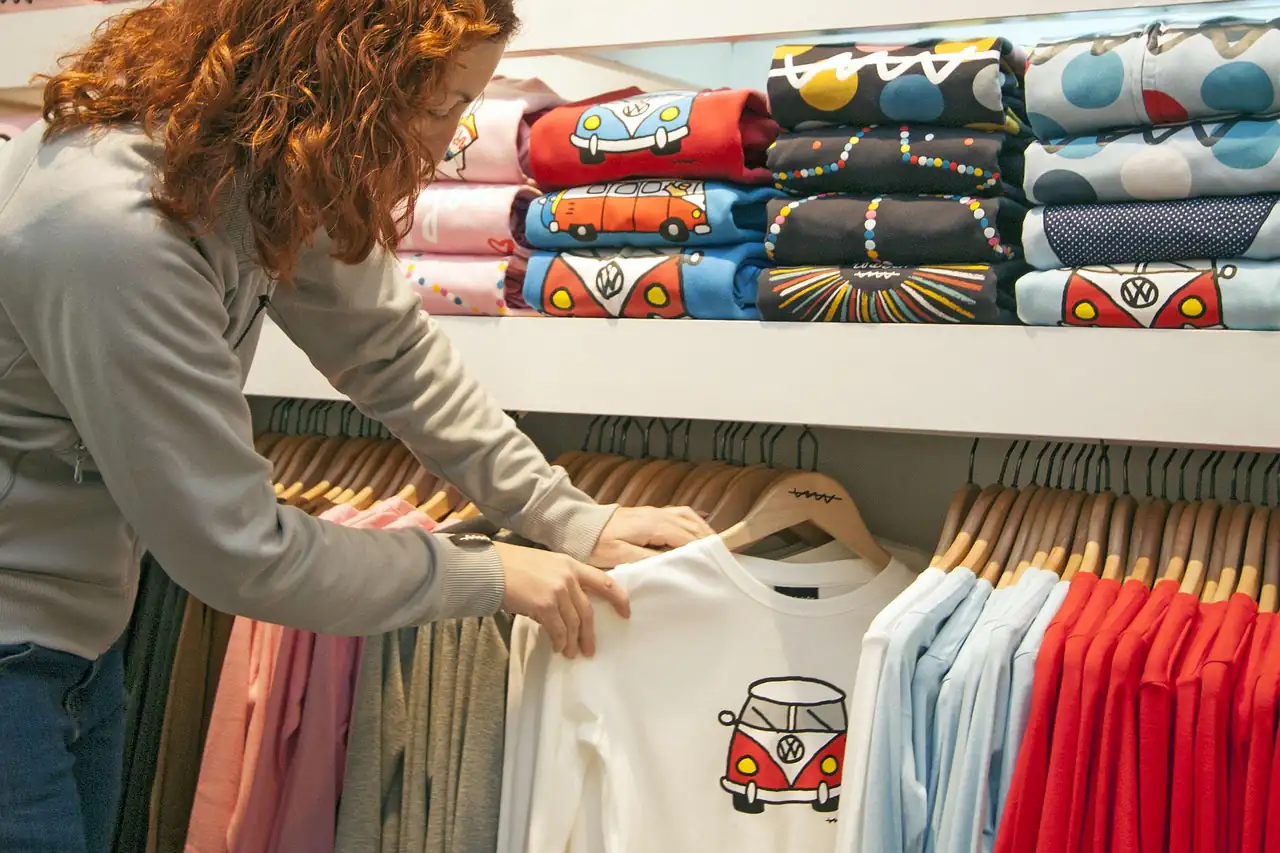
The two children's T-shirt alerts above are the pattern in miniature. In the EU, 22 of 27 alerts on Indian children's clothing are about cords and drawstrings (12) and detachable poppers or zips (10), which are design and trim problems, not dye problems. In the US, 8 of 45 recalls of India-made goods are children's sleepwear that failed flammability rules. So the control for a kids' tee is a pattern review before the first sample, with no functional neck or hood cords, not a lab test after the last carton.
For anything printed, test the print. Plastisol and rubbery prints are where phthalates live, and the EU limit we have on record is 0.1% by weight for the listed phthalates (Reported, we couldn't read the regulation text). For dyed cotton sold in the EU or UK, add azo dye amines, with 30 mg/kg as the limit we have (Reported). For the US and children's goods, add total lead at 100 ppm and the Children's Product Certificate, which has to be filed electronically from 8 July 2026 (see the US page). These are the tests that have historically failed Indian goods, but our limits are Reported, not read from the law. Confirm them with your lab, and use the quality control page for the inspection steps that sit around them.
Two more things belong in the purchase order and not in the lab. Fabric weight and shrinkage are commercial specs, and an AQL inspection won't catch a lighter fabric, so write the weight, the tolerance and a post-wash shrinkage limit into the PO and measure on a washed sample (AQL sampling explains what it can't see). And if the product is sold as organic or GOTS, the certificate that matters is the transaction certificate for your shipment, not the factory's scope certificate. That check is explained in textile certifications. For checking a Tiruppur maker's claims against public records, see verifying Indian suppliers.
If you want someone to stand on the sewing floor, check the fabric against the PO and draw the inspection sample, SourcingSync (opens in a new tab) arranges that at origin.
5. Meeting Makers
The local body is the Tiruppur Exporters' Association, and it's the quote in our opening. For a trade fair with the whole textile chain under one roof, Bharat Tex held its third edition in Delhi on 14 to 17 July 2026 and hasn't announced the next (Bharat Tex). Until a date appears, a visit to Tiruppur itself is the practical route, and the location page says what to see.
Ready to act
Need hands-on help?
Visiting the knit, dye and sewing units, checking fabric origin, and running pre-shipment inspection is execution, not knowledge. SourcingSync does it.
Questions Buyers Ask
Do all Indian cotton T-shirts come from Tiruppur?
Most export knits do, but Bengaluru, Coimbatore and Chennai appear next to it in shipping records, and the Delhi belt makes wovens. Ask the maker which unit knits, which dyes and which sews, because they can be three different places.
Which proof do I need for the UK?
Any of three: the Indian exporter's origin declaration on the GOV.UK template, a certificate from an Indian issuing agency, or your own knowledge. The exporter's declaration is the safer route for a first order. The detail is on India to the UK.
Is the US landed cost much higher because of the tariff?
The general rate is 16.5% and Indian goods carry an extra 10% Section 301 duty from 24 July 2026, so 26.5% before freight and fees. There's no preference to claim. The US page has the sequence.
Does the EU give Indian T-shirts a lower duty?
Apparel kept GSP for 2026 to 2028, with a REX statement from the exporter, while home textiles lost it. We haven't read the live TARIC rate for 6109, so check your own code before you order (India to the EU).
Back To The Door And The Hinges
Tiruppur's association is right that the UK deal is an opportunity, and ten weeks into the deal is a fair moment to slow down for one afternoon. The hinge on each door is a question you can answer before the order, not after the box lands. Which unit knits, and where does the fabric come from. Which preference am I claiming, and is the proof matched to the invoice. Is the shirt for a child, and who checked the cords. India is a mid-table T-shirt supplier with a strong babywear line and an integrated cotton chain, and a buyer who asks those three questions first tends to get the benefit of the deal instead of a customs hold.
Next, run your numbers in the landed cost calculator with the duty row for your market, and keep India product guides open for the other products.