

Tiruppur Knitwear Cluster: What It Makes, How Buying Works and How Goods Get Out
- Updated
In September 2025 the owner of a Tiruppur garment company said his biggest US buyer had told him to absorb 90% of the new US tariff or have the order cancelled. He had two million pieces ready to ship. The head of the town's exporters' association summed up the mood in one line - "there is no business with the US now" (Business and Human Rights Resource Centre, 8 Sep 2025 (opens in a new tab), Reported). Margins in the town were described as 5% to 8%, so there wasn't much to absorb with.
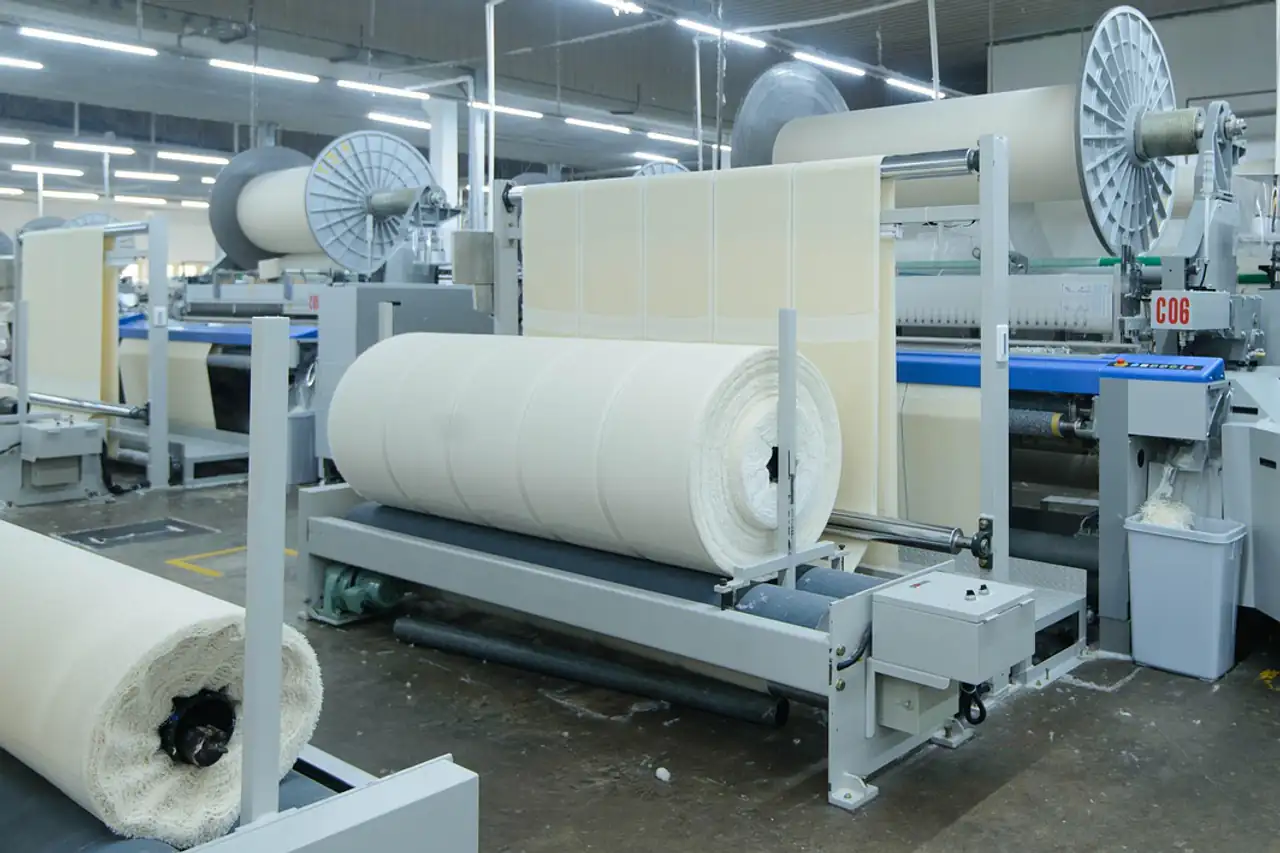
That one report tells you most of what's worth knowing about Tiruppur. It's big, it's built around volume buyers, it runs on thin margins and a lot of its people are migrant workers on short notice. This page gives you the town as a buyer outside India needs it: what it makes, how big it is by the figures we can stand behind, how buying there works, which port the goods really use and when not to visit. One caveat up front. Official statistics stop at the state, so most numbers here are trade-press or association claims, and we label each one.
1. Where It Is And What The Government Calls It
Tiruppur is a city in western Tamil Nadu, in the textile belt around Coimbatore. The government lists it as a Town of Export Excellence for hosiery and knitwear, on the list dated 6 April 2023 (DGFT, Foreign Trade Policy Appendix 1B (opens in a new tab), Verified). That designation gives exporters in the town priority access to certain promotion funds. It says nothing about any one firm, so read it as a map and not a recommendation. The wider picture of India's export towns is on India's manufacturing clusters.
Notice what the designation says, because it's also a boundary. It says knitwear. A Belgian buyer asked a forum in 2023 whether Tiruppur could make a full range, and an Indian maker answered that the town is "great if you need massive quantities. They specialize in knits, and thats it" (r/streetwearstartup, 2023 (opens in a new tab), Reported). Wovens belong to other towns, such as the Delhi region's belt on the NCR apparel hub page.
2. What Tiruppur Makes
The core product is cotton knitwear: T-shirts, polos, hoodies, underwear and babywear. In the US record, Tiruppur-side makers lead the named shippers of cotton T-shirts (44.6%) and hold 37.4% for knit babywear, though the largest named babywear shipper is in Kerala. For sweaters they share the field with Ludhiana (US import bill-of-lading records, our analysis, 2026, Verified). So for a T-shirt, Tiruppur is the first town to look at. For woollen knitwear, Ludhiana deserves the same look.
Where India's apparel edge lies is a fair question. An agent who has worked on Indian garment exports argued in 2013 that India's strength is value-added work, embroidery, beadwork and garment dyeing and washing, and not plain basics where China takes most orders (a buying agent on r/IAmA (opens in a new tab), 2013, Reported). Tiruppur's own pitch is the opposite, volume basics. Both can be true in different units of the same town. Ask each maker which of the two it is.
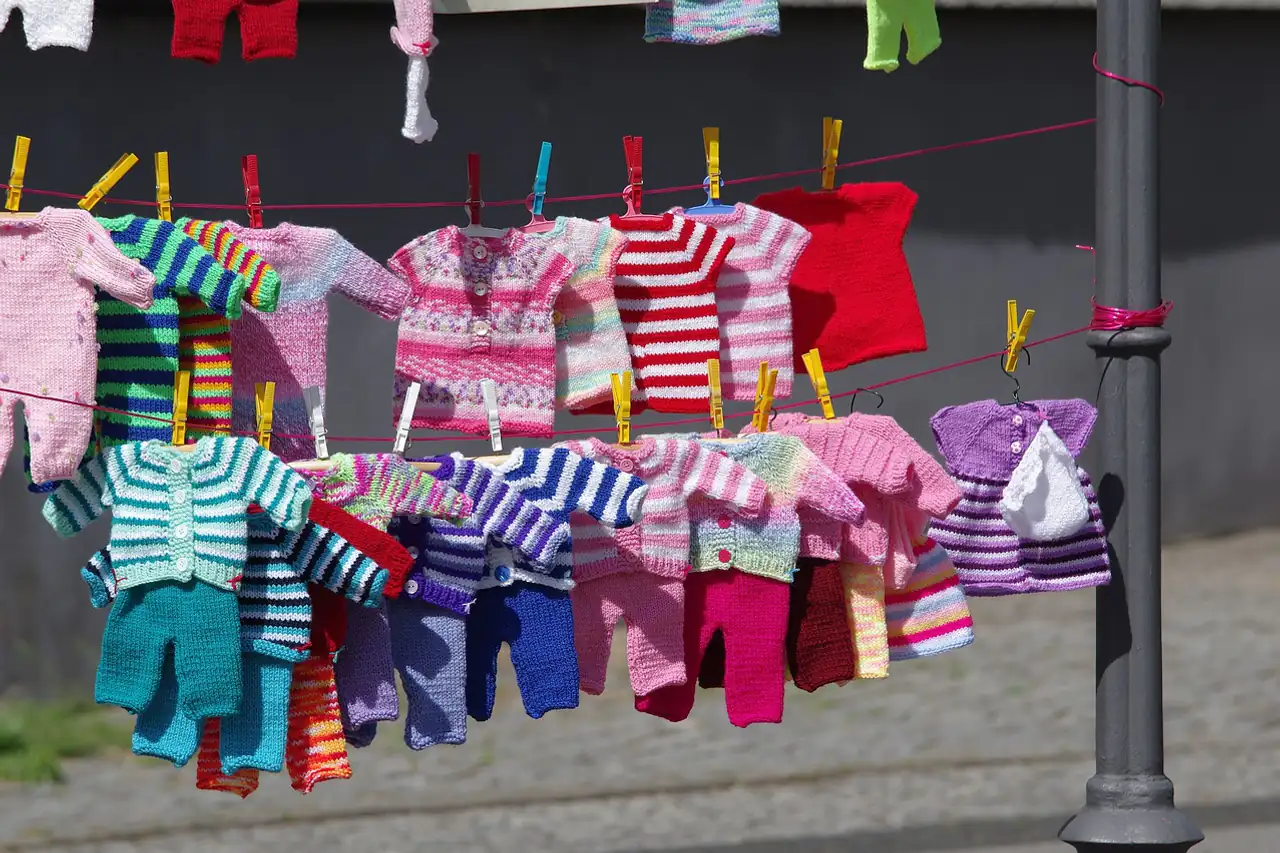
India's duty position for these goods depends on where you sit, and it's changed through 2026. The product-level view is on cotton T-shirts from India, and your destination's page, for example Australia, carries the current rate and the proof you need.
One convention is worth knowing before your first quote. A bulk buyer in the trade said in a Quora answer that Tiruppur sizes T-shirts by "dia", the tubular chest width in inches, together with a length, and not by S, M and L (Quora, about 2018, Reported, a single and old source, so check it against any price sheet you receive). If your size chart is in centimetres of body measure, expect to convert it.
3. How Big It Is
Here's what we can stand behind. Tiruppur reported about ₹40,000 crore of exports in FY2024-25 (Business Standard, Apr 2025 (opens in a new tab), Reported) and about ₹46,000 crore in FY2025-26, a record, with a target of one trillion rupees by 2030 (Business Standard, Jun 2026 (opens in a new tab), Reported, and we could read only the headline and summary). The exporters' association president put knitwear at ₹36,891 crore, up 2.4%, within that textile and apparel total (Covai Mail, 24 Sep 2026, Reported). A third figure of ₹44,747 crore circulates for FY2024-25, and we couldn't verify it, so we don't use it.
On firms, the Apparel Export Promotion Council's public member directory listed 2,094 apparel exporters in Tiruppur on 24 September 2026, 31% of its 6,728 members, and 1,018 of them declared cotton T-shirts among their products (AEPC members directory (opens in a new tab), self-declared, our count). That's members, not factories, and many are exporting houses that place work with units across town.
And the size of a typical factory? Primark's disclosed Tiruppur-area factories average 621 workers (our count of its Nov 2025 data), and an exporter in the BHRRC report put a typical factory at about 400 employees, roughly half of them migrant workers. Bangladesh's Primark factories average over 3,000 workers, five times as many (same Primark data, Verified counts). So Tiruppur is a place of mid-sized, many-unit supply and not a place of giant single sites. Our reading is that this fits orders in the low thousands better than the very large runs Bangladesh is built for (Indicative).
4. How Buying Works Here
Understand the structure first, because it explains most of what goes wrong. Tiruppur isn't a few vertically integrated mills. A trade voice described it in 2026 as a network of independent, specialised units, "exporters, processing units, dyeing units, printing units" (LinkedIn, 2026, Reported). The exporter holds the customer, the licence and the paperwork. Knitting, dyeing, printing and sewing may be spread across several units, some inside the exporter's own walls and some outside.
That's a normal and efficient way to run a cluster, and job work isn't a red flag. It does change what you ask. An agent describing Indian garment exports in 2013 said larger suppliers often keep "1 big shiny beautiful factory for the audits and inspections" while running other units too (r/IAmA, 2013 (opens in a new tab), Reported, old). Our reading is that in Tiruppur the sensible question is "which units make my order, and who checks the dye lot", asked at the quote and answered in writing. Then have your inspection follow the goods, as in AQL sampling explained.
Minimum orders vary. On forums, established Indian knit and streetwear factories quote about 200 to 500 pieces per style, smaller units about 100, and Tiruppur B2B traders around 1,000 (r/streetwearstartup, r/IndianFashionAddicts, 2024, Reported, and every figure is one person's statement). Offers well below 100 pieces tend to come from unvetted direct-message sellers. For under about 300 pieces per style, foreign founders say they use Pakistan, China or Portugal instead (r/streetwearstartup, 2024, Reported). That's useful positioning to know, and an honest warning, since a micro order isn't a priority for a volume town.
There's also a stocklot trade. Export surplus from Tiruppur is sold through brokers around the Khaderpet market, where a Quora poster said inspectors could be hired by the day (Quora, about 2017, Reported). Some surplus still carries the original brand's logo, and an Indian commenter noted that the outer logo isn't always removed (r/bangalore, 2021, Reported). If you buy stock, check for brand marks, because selling them could infringe the brand owner's rights. That risk is our inference and nobody on the forum raised it.
Beware of one thing, though. "Tiruppur quality" isn't a grade. A Tiruppur exporter said as much in 2024, noting that T-shirts there start at very low price points (r/indianstartups, 2024, Reported). The same town supplies mass-market and mid-market brands, so the town name tells you nothing about a particular maker. Specification, yarn, finishing and a pre-production sample do.
To check a firm, start with the free records on how to verify Indian suppliers, then look the firm up in the AEPC directory and ask for its IEC and GST. Finding supplier names to check is the part we leave to SourcingSync (opens in a new tab), which has people in Tiruppur who shortlist and visit units for foreign buyers.
5. Getting Goods Out: The Real Gateway
Tiruppur has no container terminal of its own on the official lists we read. The nearest is ICD Irugur, a CONCOR terminal in Coimbatore district, and the Tuticorin container freight stations (CONCOR (opens in a new tab) and the ICEGATE CFS list, read 23 Sep 2026, Verified). Private depots in Tiruppur are known from news reports, and we have no official district-level entry for them.
In a straight line Tiruppur is 172 km from Cochin, 278 km from Tuticorin and 391 km from Chennai (great-circle distances, our calculation, so the road runs longer). The ports differ in what the paperwork and the cargo show.
The paperwork says Chennai and Tuticorin. UK-bound cotton garments from the Tiruppur side were filed at Chennai Sea (US$160.9 million) and Tuticorin Sea (US$109.3 million) in FY2025-26 (DGCI&S FTDDP (opens in a new tab), Verified). The cargo to the US says Colombo. In US bills of lading, Colombo is the main port of loading for every sampled southern maker, from 28% to 76% of their shipments, because southern cargo is fed there by a short feeder service onto the US-bound ship (our analysis, Indicative, as in the intelligence note above). So if a Tiruppur supplier quotes "FOB Colombo" for a US order, that's not an error. Tuticorin is the only Tamil Nadu port that appears directly in that data, and forwarders registered there are among the biggest named shippers.
How long it takes comes from carrier schedules, which we read on 23 September 2026 and which change. Chennai to Rotterdam showed a median of 25 days on one service, against 33 from Nhava Sheva. Cochin and Tuticorin are level for Europe, 31 and 30 days to Rotterdam. For Australia, Sydney is 36 days from both, and Fremantle is 30 from Cochin and 46 from Tuticorin (Indicative, medians of a few sailings, and the schedules don't say which route a ship takes). Our practical reading is that Cochin and Tuticorin both deserve a quote, and for Western Australia Cochin looks faster. Ports in more detail are on the Tuticorin and Chennai pages.
By air, Coimbatore handled 1,908 tonnes of international freight in FY2025-26, a small figure, with Chennai, Bengaluru and Kochi as the bigger hubs (AAI, Verified). We haven't confirmed which airport Tiruppur exporters use, so ask the supplier.
Because the town sits inland, the Incoterm matters. FCA at a named place is usually cleaner than FOB or EXW for a container leaving an inland cluster, and the reasons are on the FCA page. The inland trucking leg is a real part of cost and time, and a UK buyer reported that it was "the inland trucking in india that made it none viable" on one Indian quote (r/smallbusinessuk, 2024, Reported). That's why quoting from Tiruppur to a named depot or port, in writing, comes before price comparison.
6. Seasons And The Calendar
The first fact is labour. Tiruppur depends on migrant workers, mostly from Odisha, Bihar, Jharkhand and Uttar Pradesh, according to trade press and news reports (ThePrint (opens in a new tab), Knitting Views (opens in a new tab), Reported, and percentages vary by date). Around festivals many go home, and shortages follow. The 2025 tariff crisis showed the same dependence from the other side. Production halts hit local and migrant workers living in hostels, and workers faced a cash squeeze before Diwali (BHRRC, 2025, Reported).
For your calendar that means three windows. The window opened by Dussehra on 20 October 2026 and peaking at Diwali on 8 November 2026 is the big one, and the regional festival Pongal in mid-January matters in Tamil Nadu (how to source from India has the full calendar with sources). Production for Western Christmas orders tends to land on Indian lines in August and September, so capacity tightens just before the festivals (Indicative). And the monsoon reaches Kerala around 1 June, so wet processing and drying slow in the south first (IMD (opens in a new tab), Verified for the dates). Build your sample and production dates around the festivals, not just your own season.
7. Fairs And Visits
The textile export councils' Bharat Tex is the fair that maps most closely to Tiruppur, alongside Ludhiana, Panipat, Karur and Surat, in our reading of the council listings (Indicative). The 3rd edition ran 14 to 17 July 2026 in New Delhi, and the 2027 dates aren't announced, so check the Bharat Tex page before you plan. We haven't verified a fair held in Tiruppur itself for foreign buyers, and we'd rather say so than list one we haven't confirmed.
Visits work differently here than in a trade-fair city. Give the cluster a full day, hire a driver who knows the area and don't rely on email, because answers to online enquiries are patchy. A visitor to the nearby Karur textile cluster reported in 2026 that only a few of many factories replied online and a local advised telling owners beforehand and simply walking in (r/Karur, 2026, Reported). Phone or WhatsApp ahead and then turn up. The visit guidance is on location guides, and avoid the fortnight either side of Diwali.
8. Certificates And Compliance
India holds 27.8% of the world's GOTS-certified facilities, 4,950 or so on our arithmetic from the share, ahead of China at 17.3% and Bangladesh at 9.3% (GOTS Annual Report 2025, as of 1 Jan 2026, Verified, and the count covers all of India and every stage from ginning to garment). That's a real strength, because India grows the cotton, but it doesn't tell you about a given Tiruppur maker. H&M's August 2026 supplier list shows GOTS in the certification field for 10% of its 20 Tiruppur-area sites, though the field is blank for 200 of its 220 Indian rows, and a blank isn't proof of no certificate (H&M Group supplier list, our reading, Verified counts).
So check the certificate, not the claim. Even a Tiruppur agent put it in 2026 as handing buyers "the certificate numbers to check rather than asking them to take our word for it" (LinkedIn, 2026, Reported). Match the number to the certifier's database and the transaction certificate to your shipment, as set out in textile certifications explained. Where the fibre came from is a separate question, and cotton traceability covers it.
The price question comes up for every buyer, so here is what the customs data says without quoting anyone's quote. Against Bangladesh, an Indian cotton T-shirt was declared 12% to 27% dearer per piece in the EU, UK and US in 2025, and 13% cheaper in Australia. Against Viet Nam, India's T-shirt was 30% to 50% cheaper in every market (Eurostat, HMRC and UN Comtrade unit values, our analysis, Verified numbers and Indicative reading). Our reading is that buyers choose Tiruppur for fibre and certification more than for price against Bangladesh.
9. Back To The Tariff Story
Go back to the exporter with two million pieces and a buyer on the phone. The cluster he works in has a particular shape. It's built for volume buyers, it carries labour that moves with the festivals and it earns thin margins, so when a shock lands, the room for absorbing it is small. A buyer who understands that doesn't ask a Tiruppur maker to bear a cost it can't, and does ask who makes the order, where the goods load and what happens if a festival lands on the deadline.
The US tariff position has changed several times since that September, and the current one is on India to the US. Our reading, which is Indicative, is that an exporting town leaning heavily on one market tends to look for other buyers when that market shuts, which is worth knowing if you buy for the UK, Australia, New Zealand or the EU. Treat that as a reason to ask good questions, and not as an expectation of a discount.
If you're weighing Tiruppur against a Chinese hub, China vs India factory cities sets them side by side. And for the product itself, start at cotton T-shirts from India.
Ready to act
Need hands-on help?
Shortlisting Tiruppur units, visiting them, running inspections and handling the inland leg to the port is execution, not knowledge. SourcingSync does it for foreign buyers.