

Tamil Nadu Leather Belt: Chennai to Ambur, Town by Town
- Updated
Drive west out of Chennai towards Bengaluru and for the next couple of hundred kilometres you're passing through most of South India's leather trade. The leather council lists the towns in order along that road - Chennai, Ranipet, Vellore, Ambur, Vaniyambadi, Pernambut - and adds Trichy, Dindigul and Erode further south (Council for Leather Exports, 2026 (opens in a new tab)). Of all of them, only Ambur holds the government's Town of Export Excellence status for leather (DGFT, Appendix 1B (opens in a new tab)).
That gap between the council's list and the government's is the first thing to understand about the belt. It isn't one cluster with a name. It's a corridor, with tanning at one end, shoemaking along the middle and a port at the start. This page walks it for a buyer outside India, and then explains the one advantage the belt has over every other Indian leather base. One caveat. Nobody publishes how big each town is, so this page has no unit counts, only what we could verify.
The Belt, Stop By Stop
Chennai is the head office and the port. Many exporters keep offices and some factories here, and the leather fair is held here. It's where you'll sign the contract, but often not where your shoes are made.
Ranipet and Vellore come next. Ranipet in particular is known for its tanneries, so if your order names a tannery, ask whether it is here. This is where chromium VI and the other leather chemistry are decided, so it's where your test plan starts. The rules are on leather and footwear.
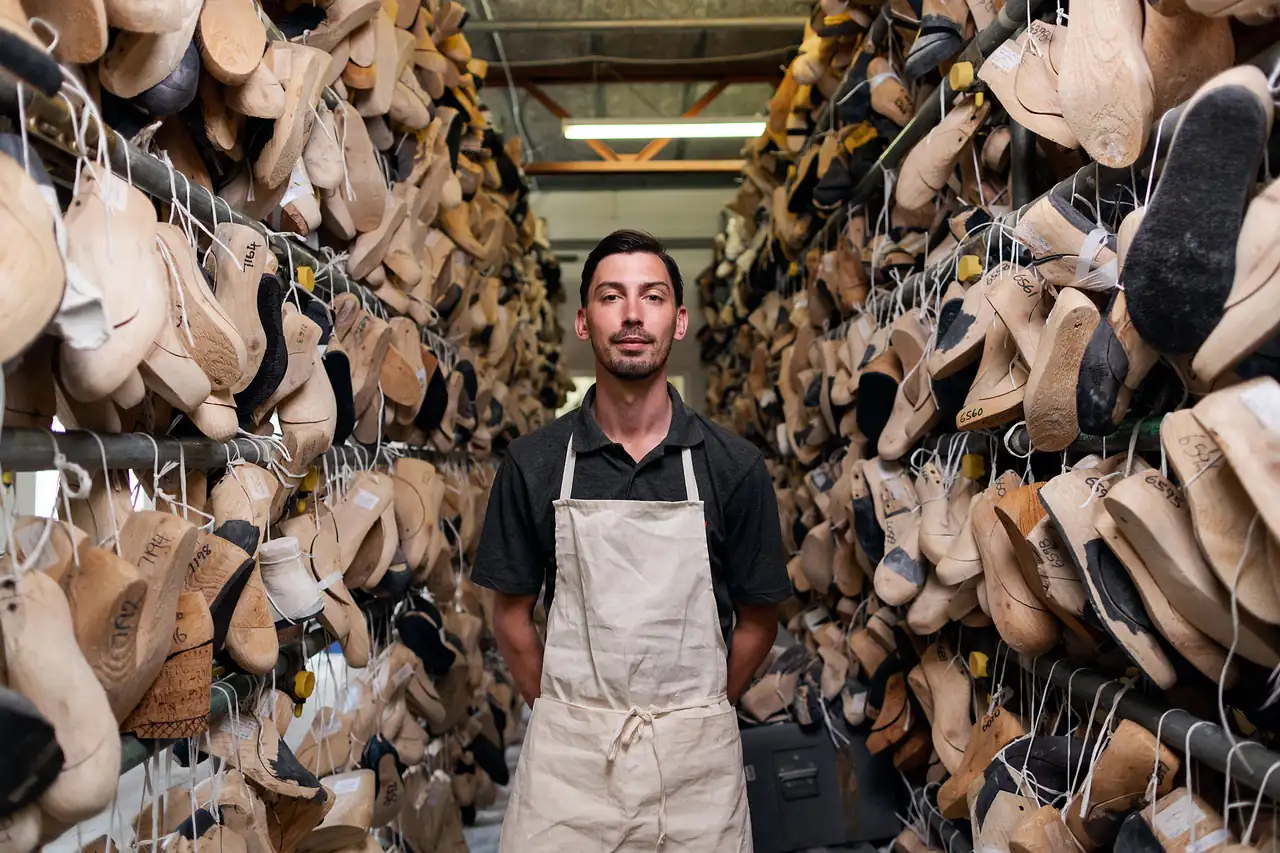
Ambur is the shoemaking town and the one with official export status. It has its own container freight station on the customs list, the Ambur CFS on MC Road (ICEGATE CFS list, 5 Feb 2024 (opens in a new tab)). A 2014 profile of one large Ambur maker described its customers as well-known Western shoe brands, and its early trade as going "mainly to Europe and the erstwhile USSR" (Outlook Business, 2014 (opens in a new tab), Reported, old).
Vaniyambadi and Pernambut carry on past Ambur with more shoe and leather-goods units, and further south the council lists Trichy, Dindigul and Erode for leather and tanning.
The practical point for a buyer is that a single order can touch three towns. The leather may be tanned in Ranipet, the uppers cut and stitched in Ambur, and the paperwork done in Chennai. That's normal and efficient. Ask which unit does each step, in writing, and make sure your inspection and test sampling follow the goods rather than the office.
Why Europe Should Look Here First
Look at the transit times in the box above. A container from Chennai reaches Rotterdam about a week sooner than one from the western ports, on the schedules we read. For a European or UK buyer that's a real advantage on reorders and seasonal deliveries, and it adds up to a lot of inventory over a year.
The belt also sits about 175 km in a straight line from Chennai's port, against roughly 1,000 km from Agra or Kanpur to theirs (our great-circle calculation). A shorter inland leg is less to go wrong. For Australia the picture is more even. Chennai to Sydney showed a median of 34 days and Melbourne 40.5 on one set of services, close to the western ports (Indicative). Check your own lane with your forwarder.
Reading The US Records Correctly
If you use US shipping records to research belt suppliers, two traps wait.
The first is the port. Because the belt's cargo is fed from Chennai or a nearby port to Colombo or Salalah and loaded onto the long-haul ship there, US bills show the hub, not India. A supplier who quotes "FOB Chennai" and a bill that says Colombo aren't in conflict.
The second is the shipper. The largest Chennai names on Indian shoe bills are logistics companies. The maker sits behind them, sometimes named in the address field and sometimes not. And only one Ambur or Vellore maker appears among the larger named shippers, with 698 bills over the years but only 14 in the last 12 months (our analysis). That says little about Ambur's real activity, since about a fifth of the bills in this data carry no shipper name, and India's leather trade as a whole sells about twice as much to Europe as to the US. Don't rank belt suppliers by US bills. Check them on the free public records on how to verify Indian suppliers instead.
Visiting And Meeting Makers
The India International Leather Fair in Chennai is the belt's home show. The last edition ran 1 to 3 February 2026, and the 2027 dates aren't announced, so check the fair page before you book. A fair day in Chennai and a drive out to Ambur fit one trip.
For the air leg, Chennai is the cargo airport for most of the belt, though Bengaluru is the nearer major airport to Ambur in a straight line and handled about 336,500 tonnes of international freight in FY2025-26 (AAI (opens in a new tab)). Ask the supplier which one its samples fly from.
If you'd like someone on the ground to shortlist makers along the belt, visit the tannery and the stitching unit, and witness test sampling, SourcingSync (opens in a new tab) does that work.