

Buying Essential Oils and Attars From India by the Batch
India exports more mint oil than anything else, sells much of the rest through wholesalers, and ships oils that need the right cap. What to ask for, test and file before you buy.

5 min read
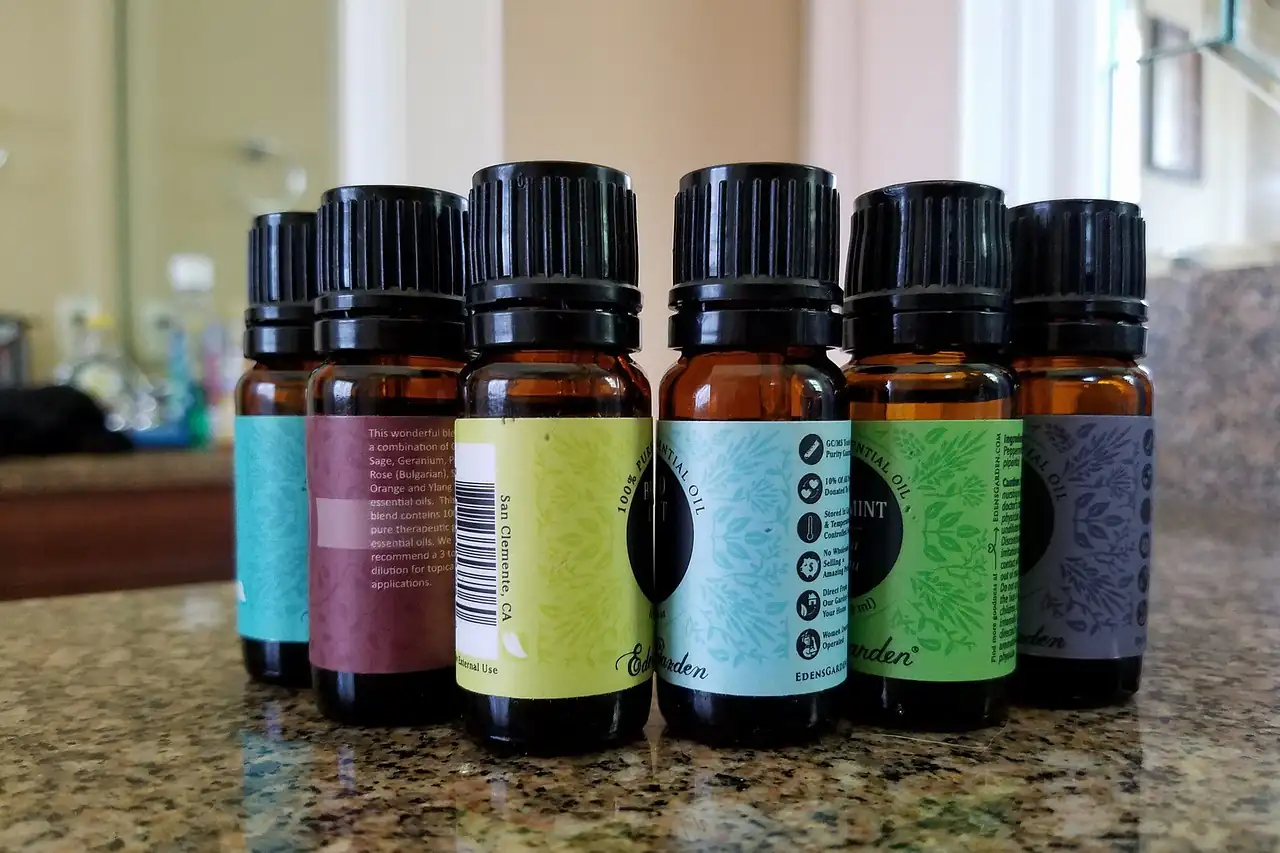
Not always, and the brand is not the guarantee. Many Indian essential oil brands buy oil from wholesalers and relabel it, and India imported more "other" essential oils than it exported in 2023 and 2024, so the oil in an Indian drum may have been distilled elsewhere. Lavandin sold as lavender is the best-known swap. Check each batch with a GC-MS matched to the drum, test the first lot yourself and ask where each oil was distilled.
Often it is, but you can't take the label's word for it, or the brand's. Many Indian essential oil brands buy oil from wholesalers and put their own label on it, so two bottles from the same brand can come from different sources. The protection is at the batch level - a lab report matched to the drum you're buying, your own test on the first lot, and a straight answer to where each oil was distilled.
India also imports a lot of the oil it sells. In 2024 it imported US$143.3 million of essential oils outside the mint and citrus lines (HS 330129) and exported US$132.8 million, and in 2023 the gap was wider (UN Comtrade, our query, 18 October 2026). That's not a scandal. Trading and blending oils is ordinary business. But it means "from India" on an offer sheet and "distilled in India" aren't the same claim. Our essential oils page covers what India grows, the GC-MS markers and REACH, so this page sticks to substitution and how to check for it. The caveat - our forum evidence is mostly Indian consumers, not bulk importers, and nobody publishes adulteration rates.
Because, for many oils, the brand didn't make it. An Indian user in a 2023 skincare thread put it simply: "most brands buy from wholesalers, and they just believe them" (r/IndianSkincareAddicts, April 2023 (opens in a new tab)). The brand trusts its wholesaler, the wholesaler trusts its source, and nobody in the chain has necessarily tested the drum.
That's a normal way to run a range. A trader who offers forty oils is useful precisely because no single distiller makes forty. It just moves the question. Instead of "is this a good brand?", ask "where did this batch come from, and who tested it?" Quality follows the batch. A brand's lavender and its peppermint can come from different suppliers and deserve different levels of trust. Our manufacturer vs trading company comparison shows how to work with each kind of seller.
Not always, and the trade data says why. India imported more HS 330129 oil than it exported in both 2023 and 2024, by value and by weight (our Comtrade query above). Indonesia was the largest source by far, then Madagascar, France, China and Australia. The data doesn't say where it goes next. Our reading is that some feeds India's own perfume, incense and cosmetics trades, and some ends up in export drums.
So ask for the country of distillation on each batch, not just the country of shipment. It matters for three reasons. Your label may make an origin claim. Your customs entry may claim a trade-agreement rate, and goods merely re-exported from India can't get an Indian certificate of origin, as our certificate of origin guide explains. And the oil's chemistry varies by where and when it was grown, so the right GC-MS ranges depend on the true origin.
Start with the ones our evidence names.
The GC-MS markers for each oil, lavender's camphor tell included, are on our essential oils page, and the same "name is not provenance" problem for attars is on is Kannauj attar really natural?
Build one for every lot, and don't release payment until it's complete.
Why insist on your own test? Because a supplier's report describes what was tested, not necessarily what was shipped, and US buyers of Indian botanicals already behave that way. One said of Indian and Chinese heavy-metal certificates, "it's probably wise to move the decimal point one place to the right" (r/Nootropics, March 2020 (opens in a new tab)). That's harsh, and dated, and the same thread said trust comes from a long relationship plus spot checks rather than blanket distrust. That's the right balance. Test hard at the start, then test less as the batches keep matching.
If you'd like someone to visit the distillery or trader, draw samples from the drums and send them to your lab before the oil ships, SourcingSync (opens in a new tab) does that work in India.
No. Traders are normal and useful for ranges. Ask where each batch came from and test it.
No. Lavandin and lavender are both pure essential oils, so you need the composition from a GC-MS.
The trade data doesn't say. Our reading is that it feeds India's own perfume, incense and cosmetics trades as well as blending and re-sale.
Every first lot from a new supplier, then periodically and whenever the source changes.
Ready to act
Want the shipment, documents and consolidation handled?
SourcingSync can coordinate the shipping, the documents and the hand-off to your forwarder.
India exports more mint oil than anything else, sells much of the rest through wholesalers, and ships oils that need the right cap. What to ask for, test and file before you buy.
Yash Khatri founded SourcingFrom to give buyers outside India the full picture of sourcing from India: what the country makes well, where it is made, who makes it and how it ships. He reviews every guide on the site and holds each one to the same rule: say what we know, show how sure we are, and say plainly where the evidence runs out. He also runs SourcingSync, the hands-on service that does the sourcing work for buyers, and Kirnova, the data and intelligence company behind SourcingFrom Intelligence.
Want new guides when they go up? Get the newsletter
Leave your email and the PDF downloads straight away. We don't email it to you.
It matters. A factory that has exported for years already packs, documents and tests to export standard. A domestic-first factory may make good goods but learns export on your order. Neither is wrong, but they need different handling. Ask what share of output is exported and to whom, then check the export records that back the answer.
A price rise after you have paid is usually one of three things. A genuine cost letter (freight shocks, bulk fabric that costs more than the sample lot) is negotiable and should come with evidence. A re-price once the supplier holds your deposit is a contract problem you fix in writing. A run of new fees after payment, such as a minimum-order top-up and then a customs or exportation fee, is a known scam, so stop at the first unplanned fee.
A quote that says "leather" tells you nothing about the animal, and in India the answer is often goat, sheep or buffalo rather than cowhide. Each behaves differently in a bag: goat is tough and small, sheep is soft and delicate, buffalo is thick, coarse and variable. Ask for the species, the tannage and the tannery in writing, check the grain yourself, and sample buffalo from the actual lot.
A custom rug from India usually arrives off-colour for one of five reasons: the colour was approved on a screen, the bulk yarn went into a different dye lot, the yarn looks different once woven into pile, the post-weaving wash shifted it, or it is being judged in different light or from the other end of the pile. Each has its own approval. Because returning a large rug to India is slow and costly, the approvals and the remedy belong in the order before weaving starts.
No. Urine does not tan leather, and the smell some buyers notice on Indian leather has ordinary causes: tannery residue left by poor washing and finishing, solvent finishes and bag-making glues, and moisture in packing and transit. Each smells different and has its own fix. Odour has no legal limit, so it has to go into the spec, with a closed-box check on bulk before you accept a shipment.
"Full grain" tells you the grain layer was left on, not which part of the hide or how clean it is. "Genuine leather" only tells you it is leather. "Grade A" is a tannery's own sorting label with no shared meaning. Small orders often get the selections left after bulk buyers have taken theirs. Name the tannery, the tannery's article and the selection with a written defect allowance, and check the bulk against a retained sample.