

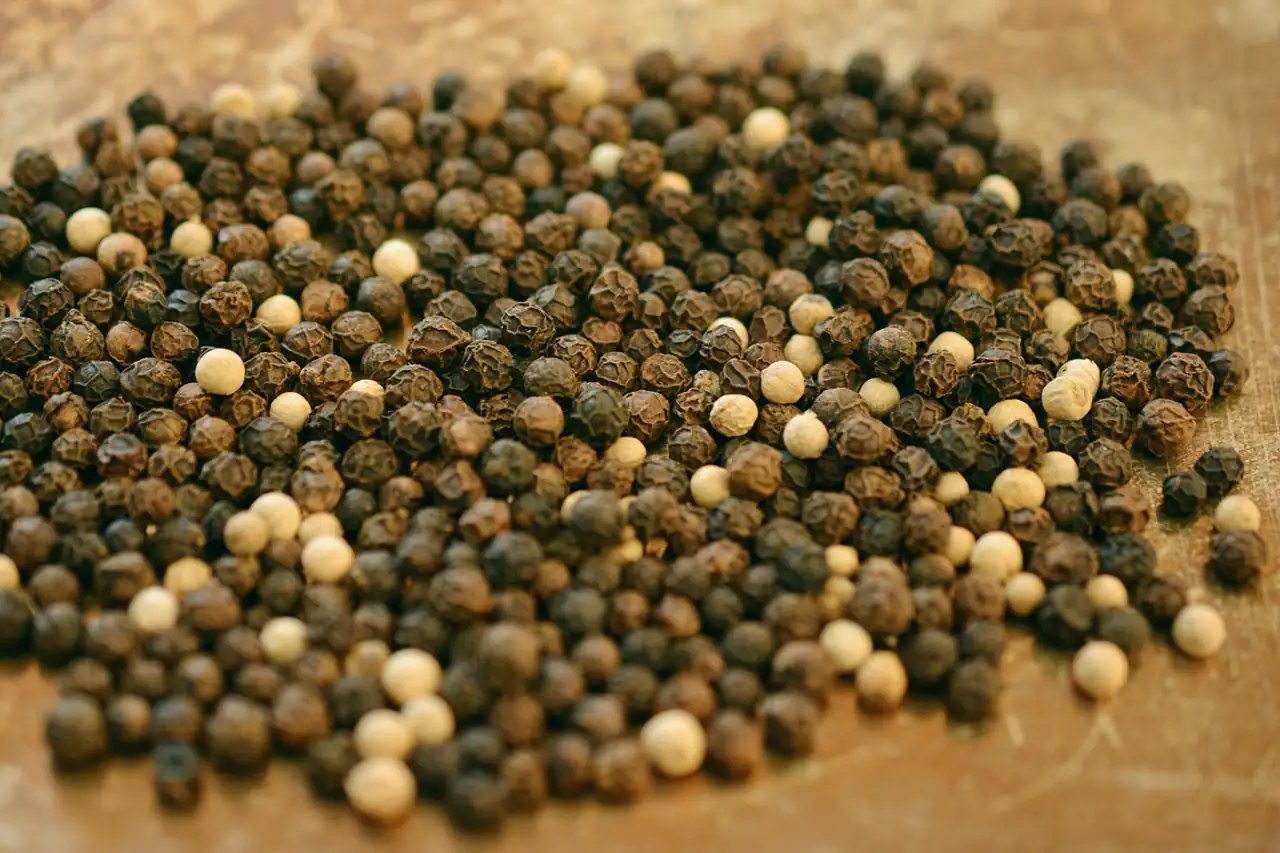
Spice Sourcing and Why the Lab Report Decides More Than the Tariff
Cumin, chilli, pepper, turmeric and curry blends each fail borders for different reasons. What the EU, US and Australia catch, where spices are traded, and what to ask an exporter.

6 min read
You only know how a spice lot was sterilised if you ask in writing and test it. US rules allow ethylene oxide fumigation of dried spices up to 7 ppm, while the limit EU authorities applied to Indian spices was mostly 0.1 mg/kg, so a lot that is legal in the US can fail in Europe by a wide margin. Ask for the method, the site and an ethylene oxide plus 2-chloroethanol result on your finished lot. Tellicherry is a size grade of Malabar pepper and says nothing about treatment.
You won't find out from the pack. Whether a spice lot was sterilised with steam or with ethylene oxide (EtO) is a processing choice made at the packer's site, and the only reliable answer is a written statement of the method for your lot plus a residue test on the finished goods. US buyers have to ask harder than European ones, because US rules allow EtO on dried spices and EU rules effectively don't.
A German trader who buys about 75 tonnes of Indian pepper a year put the split in one line to an American on a spice forum in 2022. "We don't do much Business with america, due to different food standard laws, but probably you would ask if the pepper was treated with ethylonoxide" (r/spices, April 2022 (opens in a new tab)). His lots for Europe were steam-treated as standard. A US buyer of the same pepper gets whatever the processor does for US lots, unless the contract says otherwise. Our spice industry page and the black pepper contract page set out the full specification, so this page answers one question, how you find out, and ends with the pepper grade that confuses so many buyers.
Because spices are farm products dried in the open, and they arrive at the processor carrying microbes. Exporters reduce them before packing. A US food-industry voice summed up the options in 2021: "A lot of facilities use steam treatment or ETO/PPO" (r/foodscience, October 2021 (opens in a new tab)). Steam heats the spice and kills microbes. EtO is a gas that does the same job at low temperature, and PPO is a related fumigant.
That matters for where the residue comes from. When EtO turns up in a spice, it's usually not something the farmer did. People in the trade say part of it comes from the packer's own sterilisation and weak degassing afterwards, the vacuum step that is meant to pull the gas back out (r/IndianFood, May 2024 (opens in a new tab), quoted in full on the spice industry page). So the question goes to whoever sterilised and packed your lot, which isn't always the exporter on the invoice.
It depends on the border, and the gap is wide. The US Environmental Protection Agency sets a tolerance of 7 parts per million for ethylene oxide on dried herbs and spices, and 940 ppm for 2-chloroethanol, the compound EtO forms in food (40 CFR 180.151 (opens in a new tab)). In the EU, the limit authorities applied to Indian spices in our count of RASFF records was mostly 0.1 mg/kg, the same unit as ppm. That's a ratio of about 70 to 1, and the EU figure is stricter than it looks, because the EU residue definition counts ethylene oxide and 2-chloroethanol together, expressed as ethylene oxide (Regulation (EU) 2015/868 (opens in a new tab), read 18 October 2026), while the US sets the two separately.
So a lot fumigated within US law can be far over the EU limit and still be perfectly legal to sell in the US. Here's why that matters to a US buyer -
UK and other limits change, so confirm the current number for your product with your lab or customs broker before you ship.
Ask for it in writing, then test. These are the questions that settle it, in the order I'd ask them.
The fifth one is the real answer. A declaration tells you what someone says happened, and the test tells you what's in the bag. If the supplier hesitates over any of the five, that's information too.
For the residue question, yes, because steam leaves no EtO behind. But it isn't free. Besides the moisture risk, the same US food safety manager noted that steam-treated organic lots lose some of their oils, which can show up as flavour and aroma. So if you specify steam, specify the result you expect afterwards too - moisture, and for spices where it matters, volatile oil. The black pepper contract page shows how to write treatment as a destination clause.
Largely, at the EU border. Ethylene oxide was in 30 of 69 Indian spice notifications in the EU in 2021 and 5 of 82 in 2025, while farm pesticides took over (our RASFF count, told in full on same spice, three borders). Indian exporters fixed a lot of it. But two things keep the question alive. US lots were never under EU rules in the first place, and the cases that remain still run well over the limit. Keep EtO in the test panel for ground spices, blends and anything going to Europe, and put pesticides ahead of it for EU lots.
It's a size grade, not a separate pepper and not a sterilisation standard. Tellicherry grades are the bolder berries sorted out of the same Malabar crop, bought by jar packers for how they look (traders on a spice forum, 2022 and 2025). So the word tells you how big the berries are, and nothing about treatment, residues or even origin, and the treatment line in your contract has to stand on its own. Write the grade, the minimum density, the origin and the treatment as four separate lines. The grade definitions and the density clause are on the black pepper contract page, and the district and US import alert detail, including the origin-mixing claim, on black pepper from India.
If you want someone at the processor to confirm the method, draw the sample after treatment and send it to your lab, SourcingSync (opens in a new tab) does that for buyers in India.
No. Treatment isn't a labelling requirement in most markets. Ask for the method in writing and test the lot.
Not within the EPA tolerance of 7 ppm for dried spices. It's the EU and UK limits, and buyers' own policies, that make it a problem.
Ethylene oxide and 2-chloroethanol together, on the finished lot, sampled after the last treatment step.
A US spice food safety manager in our logs says organic lots are either untreated or steam-treated. But a certificate is paperwork, so test the lot if the claim matters to you.
It's bigger pepper. For grinding, a dense MG-1 lot may suit you better.
Ready to act
Want this supplier checked before you commit?
SourcingSync can verify who makes it and who answers for quality, then manage the supplier for you.
Cumin, chilli, pepper, turmeric and curry blends each fail borders for different reasons. What the EU, US and Australia catch, where spices are traded, and what to ask an exporter.
Yash Khatri founded SourcingFrom to give buyers outside India the full picture of sourcing from India: what the country makes well, where it is made, who makes it and how it ships. He reviews every guide on the site and holds each one to the same rule: say what we know, show how sure we are, and say plainly where the evidence runs out. He also runs SourcingSync, the hands-on service that does the sourcing work for buyers, and Kirnova, the data and intelligence company behind SourcingFrom Intelligence.
Want new guides when they go up? Get the newsletter
Leave your email and the PDF downloads straight away. We don't email it to you.
"Full grain" tells you the grain layer was left on, not which part of the hide or how clean it is. "Genuine leather" only tells you it is leather. "Grade A" is a tannery's own sorting label with no shared meaning. Small orders often get the selections left after bulk buyers have taken theirs. Name the tannery, the tannery's article and the selection with a written defect allowance, and check the bulk against a retained sample.
Udyam is India's free, self-declared registration for micro, small and medium enterprises. It tells you a business has registered under its PAN, which size class it falls in by machinery investment and domestic turnover, and which activities it declared. Exports are left out of the turnover test, so Micro says nothing about export volume. It does not prove manufacturing, capacity or quality, and nearly 99% of registrations are Micro, so being Micro is normal.
Indian mango-wood furniture usually cracks after delivery because the timber was finished at a higher moisture content than the buyer's home, so it keeps drying and shrinking, most across the width of wide panels. "Kiln-dried" names a process, not a result. Put a moisture range in the order, measure it properly at inspection, design wide tops to move and specify the finish.
A quote that says "leather" tells you nothing about the animal, and in India the answer is often goat, sheep or buffalo rather than cowhide. Each behaves differently in a bag: goat is tough and small, sheep is soft and delicate, buffalo is thick, coarse and variable. Ask for the species, the tannage and the tannery in writing, check the grain yourself, and sample buffalo from the actual lot.
A custom rug from India usually arrives off-colour for one of five reasons: the colour was approved on a screen, the bulk yarn went into a different dye lot, the yarn looks different once woven into pile, the post-weaving wash shifted it, or it is being judged in different light or from the other end of the pile. Each has its own approval. Because returning a large rug to India is slow and costly, the approvals and the remedy belong in the order before weaving starts.
No. Urine does not tan leather, and the smell some buyers notice on Indian leather has ordinary causes: tannery residue left by poor washing and finishing, solvent finishes and bag-making glues, and moisture in packing and transit. Each smells different and has its own fix. Odour has no legal limit, so it has to go into the spec, with a closed-box check on bulk before you accept a shipment.