

Stainless Steel Kitchenware From India: Proving the Grade Before It Touches Food
- Updated
Your route: stainless steel kitchenware from India
Made in
Several centres
Leaves India from
Port not researched yet
IndicativeUseful directional information where precise verification is unavailable.UnknownInsufficient evidence, or not yet researched.
At sea
No schedule yet
Needs a researched port first
Made in
Several centres
Leaves India from
Port not researched yet
IndicativeUseful directional information where precise verification is unavailable.UnknownInsufficient evidence, or not yet researched.
At sea
No schedule yet
Needs a researched port first
Made in
Several centres
Leaves India from
Port not researched yet
IndicativeUseful directional information where precise verification is unavailable.UnknownInsufficient evidence, or not yet researched.
At sea
No schedule yet
Needs a researched port first
Made in
Several centres
Leaves India from
Port not researched yet
IndicativeUseful directional information where precise verification is unavailable.UnknownInsufficient evidence, or not yet researched.
At sea
No schedule yet
Needs a researched port first
Made in
Several centres
Leaves India from
Port not researched yet
IndicativeUseful directional information where precise verification is unavailable.UnknownInsufficient evidence, or not yet researched.
At sea
No schedule yet
Needs a researched port first
Made in
Several centres
Leaves India from
Port not researched yet
IndicativeUseful directional information where precise verification is unavailable.UnknownInsufficient evidence, or not yet researched.
At sea
No schedule yet
Needs a researched port first
Carrier schedules read 23 Sept 2026. Days are port to port; inland haul and customs time come on top.
Add up the landed costFind the HS codeGet help shipping it (opens sourcingsync.com in a new tab)
In August 2025 the US Food and Drug Administration warned shoppers and retailers about imported cookware that can leach lead into food, and told anyone who owned the listed pots to throw them away. By its December update the list ran to 16 products, and 11 of them were made in India: aluminium kadais, saucepans and milk pans, a brass pot and a brass tope (FDA, Aug to Dec 2025 (opens in a new tab)). Not one stainless steel item was on it.
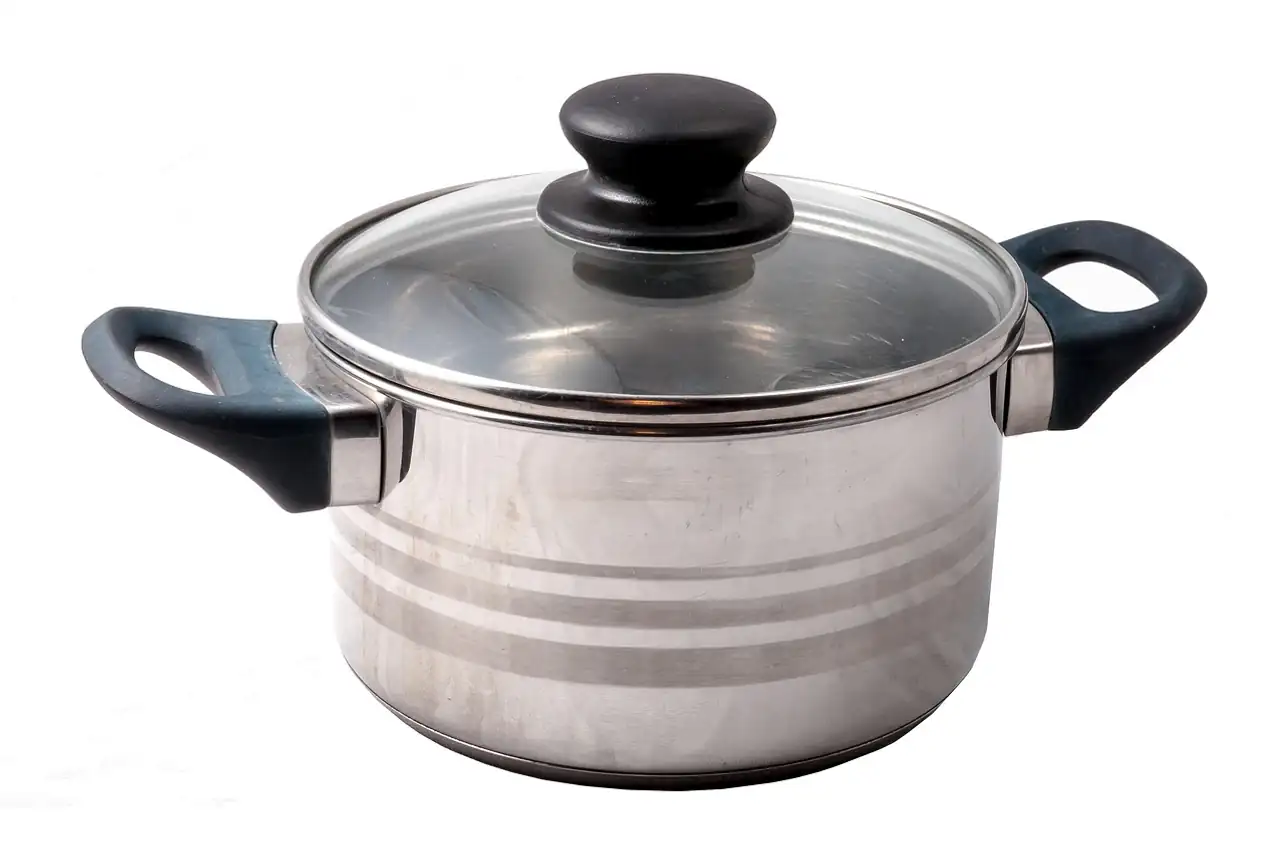
That's good news for a stainless buyer, and it's also the trap. Stainless steel doesn't fail the way cheap aluminium does, so nobody tests it, and the failure that does happen with Indian stainless is quieter. You order 304 and you receive 201, a cheaper steel that looks identical on the shelf. This page is about catching that before it ships, what each market's food-contact rules actually ask for, and what you pay at the border. We publish no prices. One honest caveat: India publishes no list of stainless kitchenware towns, so where we name places we tell you how we know.
Why Grade Is the Whole Question
Three stainless steels turn up in Indian kitchenware, and they're not interchangeable.
| Grade | What it is | Where it belongs |
|---|---|---|
| 304 (also sold as 18/8 or 18/10) | Chromium about 18%, nickel 8% to 10.5%, manganese up to 2% | Pots, pans, food containers, anything that holds acid or salt for hours |
| 201 | Chromium 16% to 18%, nickel 3.5% to 5.5%, manganese 5.5% to 7.5% | Light-duty items, some kitchen tools. Pits and stains faster in salt and acid |
| 430 (18/0) | Chromium 16% to 18%, almost no nickel, magnetic | Cutlery, outer layers of induction pans, trays |
Those composition ranges are the standard ones for each grade. The commercial point is simple. Nickel is the expensive element, and 201 swaps most of it for manganese. So 201 costs the maker less, polishes to the same mirror finish and sells to a buyer who never checks. In India's domestic market 201 is everyday kitchen steel and isn't a scandal. In your order, labelled 304, it's a mis-description, and in an acidic dish it's a release-test risk.
Here's the part most buying guides get wrong. The magnet test doesn't settle it. Both 304 and 201 are mostly non-magnetic, and both can pick up some magnetism where they've been pressed or bent, so a magnet tells you 430 from the other two and little else. What does settle it is a handheld XRF analyser, which reads chromium, nickel and manganese off the finished piece in seconds. Ask for it by name in the inspection plan, on pieces drawn from packed cartons, not from a tray the factory hands over.
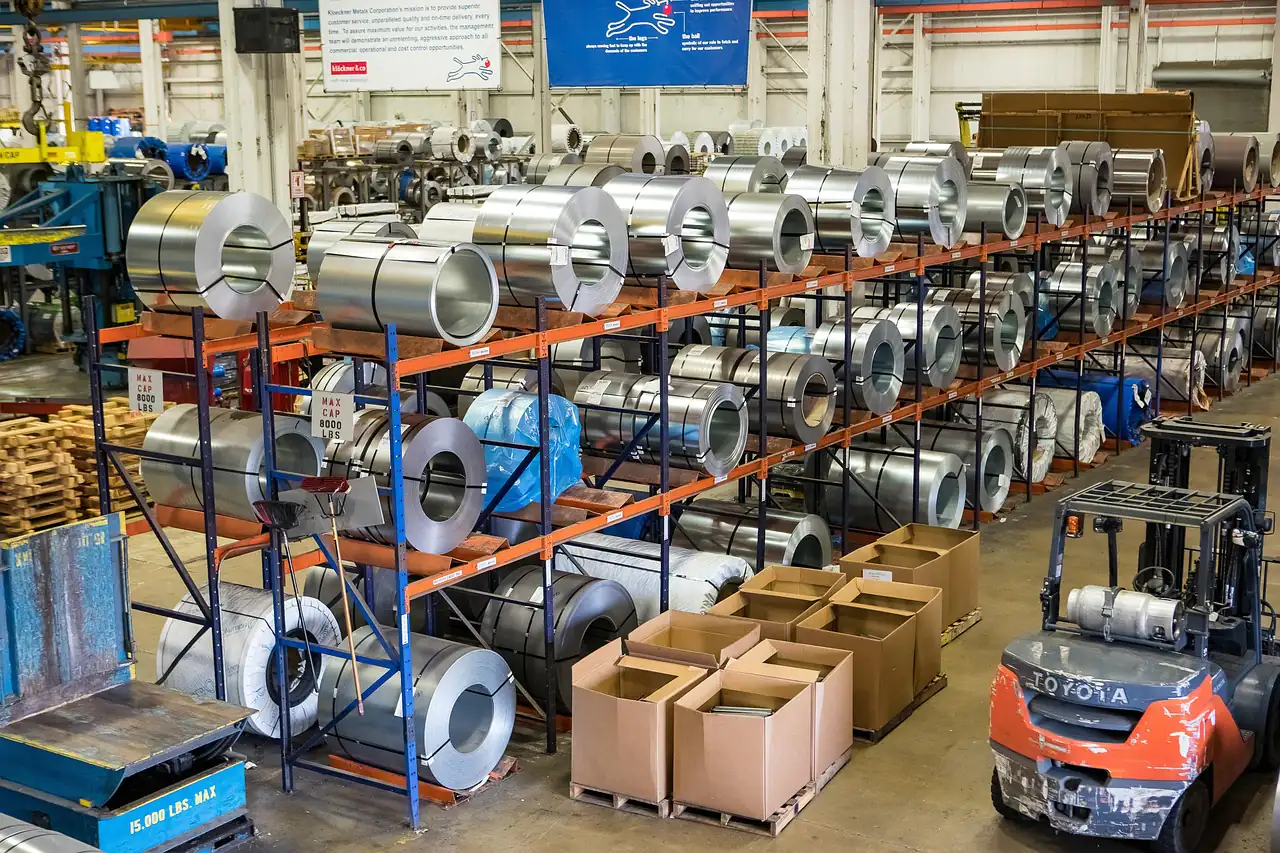
The second check is paper. The maker buys stainless coil or sheet from a mill, and the mill issues a material certificate with a heat number and the measured chemistry. Ask for that certificate (an EN 10204 type 3.1 is the usual form) for the coil your order is pressed from, and ask the maker to show you how the heat number follows the batch. A maker who can do that is a maker with control over its steel.
What Each Market's Food-Contact Rules Ask For
EU. Every food-contact article falls under the framework regulation, 1935/2004, which says materials mustn't transfer their constituents to food in amounts that endanger health. There's no EU-wide measure for metals beyond that framework. In practice labs and authorities test stainless against the Council of Europe's technical guide on metals and alloys, and the 2024 edition tightened manganese from 1.8 to 0.55 mg/kg while keeping nickel at 0.14 mg/kg (Intertek, Dec 2024 (opens in a new tab)). Several member states have their own national rules too. Our reading, which is Indicative, is that a high-manganese grade is exactly what the new limit will catch, so a 201 pot mislabelled as 304 is more exposed in the EU in 2026 than it was in 2023. You also need a declaration of compliance from the supplier for the article, so ask for one written for your product and your market.
UK. The same framework regulation still applies in Great Britain as retained law. The practical file is the same as the EU's: the grade, a migration test and a declaration of compliance.
US. The FDA doesn't publish a stainless grade list for consumer cookware. Its active enforcement has been on lead leaching from aluminium and brass, and India features heavily, with 11 of the 16 listed products (FDA (opens in a new tab)). If your range mixes stainless with brass serving pieces or aluminium kadais, the non-stainless items carry the real risk. Test those for lead release before you import, not after a customer complaint.
Australia and New Zealand. We found no metal-specific migration rule for kitchenware. The supplier is still responsible for safe food contact under general food law, so test to the EU method and keep the report. If you sell under a "surgical steel" or "18/10" claim, consumer law makes the claim yours to prove.
Where It Is Made
Here's what we can stand behind. In archived US shipping-record pages for Moradabad, 5 of the town's top 20 shippers list HS 7323 among their main lines (our count, Jun 2025, Indicative). Moradabad is a mixed-metal town and the Moradabad brassware cluster page explains how its houses work. Jagadhri, in Yamunanagar district of Haryana, is described in Indian press as a long-standing utensil town that moved from brass into stainless, but we found no official count of its units, so we don't publish one.
Beyond that, India's stainless kitchenware trade is spread across makers who rarely sit in a single named cluster, and the national figures stop at the product line. That's why the checks above matter more than the town. For what India's metal and hardware trade looks like overall, see engineering goods.
One more structural fact. A domestic BIS licence for IS 14756 tells you a maker has passed a national certification audit for its home-market line. It doesn't cover your export lot, because India's quality control order excludes goods made for export (ELP, Aug 2025 (opens in a new tab)). Treat the licence as a sign of a disciplined factory, and still test your own goods.
What the Border Charges
We read these lines on 7 October 2026.
| Destination | Stainless kitchenware (7323.93) | The catch |
|---|---|---|
| Australia | 0% under ECTA (5% base) | Needs a certificate of origin |
| United Kingdom | 0% third-country and 0% under CETA | No duty either way, so origin paperwork is optional here |
| United States | 2% general, plus 10% Section 301 on Indian goods | If the line sits on a Section 232 metals annex, the 232 rate applies to the full value instead. Check with your customs broker before you price |
| EU | Full MFN rate, because India lost GSP on base metals for 2026 to 2028 | Rate not read by us. Run your CN code in TARIC |
Sources: DFAT FTA Portal (opens in a new tab), UK Trade Tariff (opens in a new tab), USITC (opens in a new tab), and our destination pages for the US and the EU.
What about the EU carbon levy? Stainless kitchenware sits in heading 7323, and by our reading of the CBAM annex (through a secondary source, because we couldn't open the regulation text) the covered chapter 73 headings stop short of it. If you also buy steel wire, fasteners or other steel articles, those can be in. The engineering goods page sets out what to ask a supplier for.
Five Lines for the Purchase Order
- Grade by number, with chemistry limits for chromium, nickel and manganese, and the words "201 not accepted" where you mean it.
- The mill certificate for the coil, matched to your batch by heat number.
- XRF verification at pre-shipment inspection, on pieces drawn from packed cartons.
- A migration test to your market's method, from a lab you choose, on production pieces, not samples.
- A declaration of compliance for food contact, written for your product and market.
If you'd rather have someone run the XRF check on the factory floor and match the coil certificates to the batch, SourcingSync (opens in a new tab) does that inspection work at origin. The step-by-step sampling plan around it is on quality control in India, and AQL sampling explains why a visual AQL can't see the grade at all.
Ready to act
Need hands-on help?
Verifying steel grade with an analyser, matching mill certificates and drawing test samples from packed cartons is execution, not knowledge. SourcingSync does it for foreign buyers.
Questions Buyers Ask
Is 201 stainless steel unsafe?
Not by definition. It's widely used in Indian homes. The problems are that it's sold as 304, that it pits and stains faster in salt and acid, and that it's the grade most likely to fail a manganese release test in Europe.
Can I trust "18/10" stamped on the base?
The stamp is the maker's claim. The XRF reading and the mill certificate are the evidence.
Does a BIS mark prove the grade?
It shows the maker holds a domestic certification for its home-market products. Your export order is outside that scheme, so test it yourself.
Back to the FDA List
The August 2025 warning was about cheap aluminium and brass, and it was fair to India's stainless makers to leave them off it. The lesson for a stainless buyer runs the other way. Nobody will warn you about a 201 pot sold as 304, because it looks and feels right until the third acid test or the first customer whose pan pits. The fix costs less than one returned container: a grade written into the order, a certificate that follows the coil, and someone with an analyser at the end of the line.
Run your landed numbers with the landed cost calculator, and keep the product guides for India open for the rest of your range.