

Yash KhatriFounder, SourcingFrom
Yash Khatri founded SourcingFrom to give buyers outside India the full picture of sourcing from India: what the country makes well, where it is made, who makes it and how it ships.
7 min read
Not automatically. Since 1 January 2026 every tariff line from India can enter Australia at 0% under ECTA, but only with a certificate of origin from a designated Indian agency for that shipment. Without one, the Australian Border Force charges the general rate by default.
No, not automatically. Since 1 January 2026 every tariff line from India can enter Australia at 0% under ECTA, but only when the shipment is covered by a certificate of origin issued by a designated Indian agency. Without one, the Australian Border Force charges the general rate by default, and nobody rings you to say so.

I'm writing this because the data tells a strange story. Australia cut its tariffs on Indian goods, and the goods didn't come. Nearly four years in, India's share of Australia's non-fuel imports is where it was before the agreement. The data can't tell us why, and I'll be honest about that. But one plausible reason is sitting in your own import entries, and you can check it this week.
Because a trade agreement is an offer, not a setting. ECTA has no self-declaration and no "importer's knowledge" route. The ABF grants the preference on the basis of a certificate of origin from a designated Indian agency, valid for 12 months and for one importation (ABF ECTA rules of origin guide (opens in a new tab)). One trade compliance adviser put it in six words in August 2026 - "No certificate, no preference. Customs in Australia charges the standard rate by default" (LinkedIn, August 2026 (opens in a new tab)).
So the zero is conditional on three people doing their job. The supplier has to apply for the certificate. The Indian agency has to issue it against the right invoice. And your broker has to claim it on the entry. Miss any one and you pay the general rate on goods that qualified.
Two exceptions are worth knowing. The ABF has waived the certificate for Australian Trusted Traders importing under ECTA, though they must still keep evidence that the goods originate for at least five years and show it if asked. And no certificate is needed when the customs value of the originating goods is AUD 1,000 or less, unless the shipment was split to dodge the rule (section 8.7 of the ABF ECTA rules of origin guide (opens in a new tab), version as at 17 March 2023, read 13 October 2026). For most importers neither applies, so the certificate is still the whole game.
Here's the part nobody selling ECTA mentions. Strip out petroleum and India's share of Australian imports barely moved - 1.93%, 1.92%, 1.92%, 1.97% across 2022 to 2025, and 1.73% in January to July 2026 against 2.00% a year earlier (our analysis of ABS data). The final phase-out on 1 January 2026, which took the last lines to zero, shows no visible lift in any consumer category in the first seven months of 2026.
To see whether ECTA did anything at all, we compared Australia with four markets where India had no trade agreement over the same years. If ECTA mattered, India should have gained more in Australia than elsewhere. In knit apparel it did, by 0.68 points, and in articles of iron or steel by 0.54. In home textiles, carpets, leather goods and ceramics, India did relatively worse in Australia than in markets that gave it nothing (our analysis of UN Comtrade).
I want to be careful here. A flat share fits three stories - importers not claiming, tariff cuts too small to matter, or duty never being what held buyers back. The data can't separate them. What it does say is that "ECTA made India cheaper" is not something you should assume for your own goods. Check it.
Start with your last few India entries, not with the supplier. Your import declaration carries preference fields - the ABF's guide lists the codes an importer uses to claim ECTA, the preference scheme and the origin rule. Ask your customs broker for the full entry print for each India shipment and look at two things on every line. Was a preference claimed? And what duty was actually paid?
If duty was paid on a line that should be zero, you've found money. If the preference field is blank, ask your broker why. The honest answers are usually one of three - no certificate arrived, the certificate didn't match the invoice, or nobody asked. I'd rather you hear the third one from your broker now than from your accountant at year end.
The codes are in section 1.3 of the ABF's ECTA guide (opens in a new tab), which we read on 13 October 2026. A claim shows preference scheme type IECT, preference origin country IN, and a preference rule type of WO for goods wholly obtained in India or PSR for goods made from imported materials. A line with no IECT on it didn't claim ECTA. Your broker can confirm how these show on the entry print they send you.

The certificate is raised on the proforma. Since April 2026 India's trade authority requires the invoice number on a preferential certificate to match the shipping bill exactly (DGFT Notification No. 05/2026-27 (opens in a new tab)). A trade adviser's summary of the effect - "one mismatch and the duty benefit is denied at destination" (LinkedIn, April 2026 (opens in a new tab)). Ask for the certificate against the final commercial invoice, every time.
One certificate, many shipments. A certificate covers one importation. A supplier who emails you last month's certificate for this month's container has given you a document, not a preference.
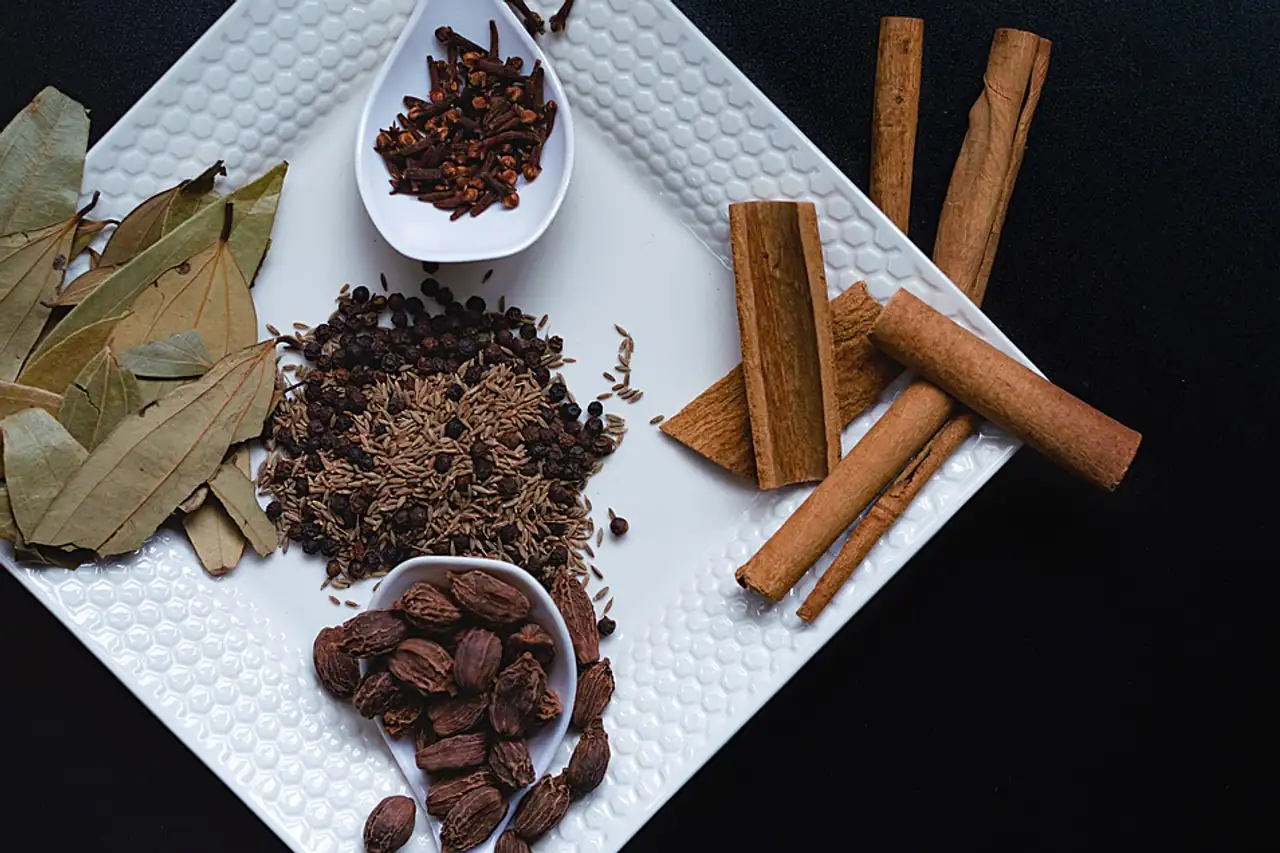
The product doesn't qualify. The certificate states an origin criterion, and the goods have to meet it. Spices are the sharp edge. Under ECTA's product rules, pepper, chillies, cumin, turmeric and the other single spices must be wholly obtained in India or Australia, so ground cumin made from imported seed can't qualify however good the paperwork (India to Australia has the detail). Garments made from imported fabric are the other common case, covered in rules of origin explained.
The supplier is new to ECTA. Many Indian makers, especially smaller ones exporting for the first time, have never applied for an ECTA certificate. That isn't a failing. It's a step you have to name in the purchase order, with the issuing agency, so it gets done before the goods sail.
Yes, if you move quickly on the Indian side. If you paid the general rate, you can claim a refund for up to four years from the date of entry once you hold a valid certificate for that shipment. The refund reason code is 23A10A, set out in section 1.3 of the ABF's ECTA guide (opens in a new tab), and practitioners put the condition plainly - "importers should have a valid COO or a copy of one at the time of seeking a refund" (LinkedIn, Australian freight industry association, December 2022 (opens in a new tab)).
The catch is in India, not Australia. The Indian agency can issue a certificate retrospectively only up to 12 months after export. So the four-year window is really a 12-month window, starting the day the goods left. Every month you wait is a month closer to losing the claim. The mechanics of refunds in each market are on duty refunds.
Ready to act
Need hands-on help?
Chasing a retrospective certificate from an Indian agency, getting it matched to the original invoice and handing it to your broker is detailed work at the Indian end, and the clock is running. SourcingSync can run it for you.
Write three things into the purchase order. The ECTA certificate as a shipping document, issued against the final commercial invoice. The origin criterion the supplier is claiming. And the source of the main inputs (fabric, seed, components), because that's what decides whether the criterion holds.
Then tell your broker, in writing, that every India entry should claim ECTA and that you want to be told when one can't. That one email closes the gap between a tariff that's zero on paper and a duty bill that's zero in your account.
Related reading: Certificate of origin · FTA duty phase-down · Same spice, three borders · Indian food failures at Australian border tests
Yes, every line has been 0% since 1 January 2026, but only with an ECTA certificate of origin for that shipment. Without it, the general rate applies.
No. ECTA needs a certificate from a designated Indian agency. A self-certification on the invoice doesn't give you the preference. The exceptions are Australian Trusted Traders, for whom the ABF has waived the certificate, and consignments of originating goods worth AUD 1,000 or less.
The Australian refund window is four years, but the Indian agency can only issue a certificate up to 12 months after export. If the goods left India within the last 12 months, ask the supplier today.
In our data, only slightly and only in knit apparel and iron or steel articles. India's overall non-fuel share hasn't moved since 2022. The full picture by category is on India to Australia.
Yash Khatri founded SourcingFrom to give buyers outside India the full picture of sourcing from India: what the country makes well, where it is made, who makes it and how it ships.
Leave your email and the PDF downloads straight away. We don't email it to you.

How to claim back duty you paid when a trade agreement or GSP rate should have applied, or a tariff was struck down, for Indian goods into Australia, New Zealand, the UK, the US and the EU. It covers the three entitlement checks, each market's route and deadline, the evidence brokers ask for, and why claims fail.
How a trade agreement's schedule stages the duty on your tariff line, why the day your goods are entered decides the rate, and when it pays to wait for a start date. India is the worked example, with New Zealand's agreement starting on 20 October 2026 and Australia's phase-down finished on 1 January 2026.
India had more failing records in Australia's imported food tests than any other country in every full year from 2021 to 2025, 411 of 1,799 records to July 2026. Nearly all fall into six repeatable patterns, from Salmonella in chilli powder to hydrocyanic acid in tapioca chips, and each can be tested for or designed out before the goods leave India.

Sea freight from India to Sydney, Melbourne, Brisbane or Fremantle takes about 25 to 36 days port to port, and about five weeks door to door. No carrier we read sails direct, every box changes ship at a hub such as Singapore, Port Klang, Colombo or Tanjung Pelepas, and a missed connection can push a shipment past 50 days.

Sea freight from India to Auckland takes about 29 to 32 days port to port on a Port Klang relay, and 36 to 39 days to Tauranga. Other routings we read took 51 to 97 days because they relayed through North Asia or Oakland, so the relay your forwarder books decides your transit.

Mundra is the closer port for every north Indian cluster we mapped, but closer is not always faster. In the schedules we read, Mundra was quicker to the US East Coast, Nhava Sheva was quicker to the UAE, New Zealand and slightly quicker to Europe, and for Australia the two are close.