Yash Khatri founded SourcingFrom to give buyers outside India the full picture of sourcing from India: what the country makes well, where it is made, who makes it and how it ships. He reviews every guide on the site and holds each one to the same rule: say what we know, show how sure we are, and say plainly where the evidence runs out. He also runs SourcingSync, the hands-on service that does the sourcing work for buyers, and Kirnova, the data and intelligence company behind SourcingFrom Intelligence.
CIF vs DDP vs FOB and Which One You Should Choose
- Published
- Updated
10 min read
FOB, CIF and DDP are three Incoterms 2020 rules that set who pays for each leg of the trip and where risk moves from seller to buyer. Under FOB and CIF risk passes to you on board at the origin port, and under DDP the seller carries it to your door and acts as importer of record. For an ecommerce importer buying from India, the author recommends FOB, or FCA for inland suppliers, with your own forwarder.
The Short Version
- Incoterms set cost and risk, not ownership. Title is set by your sales contract.
- Under CIF the risk still passes to you on board at the origin port, and the seller only buys minimum Clauses C cover.
- DDP needs the seller to act as importer of record in your country, which most Indian exporters cannot do properly.
- For inland Indian suppliers, FCA at the named inland container depot is often the cleaner term.
- Write the full term with the named port or place on every document, and keep it the same.
As an ecommerce seller, these questions must have crossed your mind at least once. At what point does the risk for goods travelling across borders move from the seller to you? Who bears the loss if something gets damaged or stolen in transit? And who is supposed to pay the freight and the duty?
I like your curiosity. It goes on to show that you can think critically, which is a prerequisite for running a successful ecommerce business. Anywho, Incoterms can be confusing, especially if you don't know which one to use, and a good chunk of what's written about them online is wrong. I know because the first version of this very post got a few things wrong, and I've fixed them here.
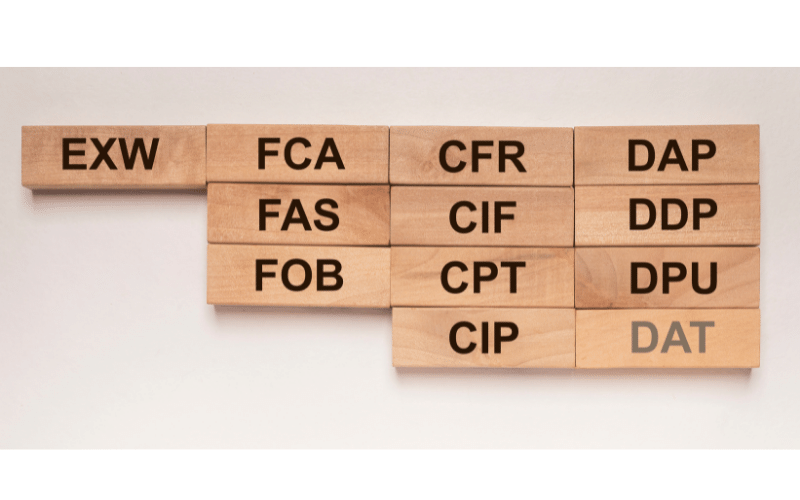
Incoterms are eleven three-letter trade terms published by the International Chamber of Commerce (ICC). The current edition is Incoterms 2020. Each one says who arranges and pays for which leg of the trip, and at exactly which point the risk of loss moves from the seller to the buyer.
One thing they do not do, and this trips up a lot of people, is decide when the goods become yours. Title and ownership are set by your sales contract, not by the Incoterm. So if a supplier tells you "under FOB the goods are yours once they ship" then that is a contract question, not an Incoterm one.
Here is a breakdown of three of the most common Incoterms, FOB vs CIF vs DDP. We'll look at the pros and cons of each and then I'll tell you which one I'd pick if I were importing for an Amazon FBA or Shopify business, especially from India.
1. What FOB Is
FOB stands for "Free On Board", and it is always followed by a named port of loading, as in FOB Nhava Sheva or FOB Mundra. Under FOB the seller clears the goods for export, brings them to that port and delivers them on board the vessel you have booked. The moment the goods are on board, the risk moves to you. Everything after that, the ocean freight, the insurance, the destination charges, the import clearance and the last mile, is yours to arrange and pay.
You'll often see "FOB Origin", "FOB Destination", "Freight Collect" and "Freight Prepaid" in American articles. Those come from the US Uniform Commercial Code (section 2-319), which governs domestic shipments inside the United States, and they are not Incoterms. If you are a US buyer then it is worth knowing both vocabularies exist, but on an import contract from India or China, FOB means the ICC version above and nothing else.
Here is how the FOB process works -
- You place the order and book a freight forwarder and a vessel.
- The seller clears the goods for export at the port of dispatch and gets them on board.
- Risk passes to you when the goods are on board. From here on, insurance is your call and your cost.
- Your forwarder handles the ocean leg, and your customs broker clears the goods at your end.

What FOB Means on an Indian Quote
When an Indian exporter quotes you "FOB Nhava Sheva" or "FOB Mundra", the port name is doing real work. The exporter (or their customs broker) files the shipping bill on ICEGATE, India's customs portal, and customs answers with a Let Export Order. That is the export clearance, and only an Indian IEC holder can file it. You cannot do it from Sydney or Ohio, which is exactly why EXW does not work in India even though people keep asking for it.
Two India-specific catches - first, many small suppliers can't handle export clearance themselves, and the paperwork quietly drifts to a forwarder you never chose (buyers on trade forums, 2024 to 2025). Ask who files the shipping bill before you pay the deposit. Second, "FOB India" does not cap what you pay at origin. Logistics practitioners in 2026 say the extra origin lines, such as terminal handling and documentation fees, add a real sum per container, which is a nasty surprise if your landed cost assumed FOB covered them. Ask your forwarder for the current origin charge list per booking.
If your supplier sits inland (Jaipur, Moradabad or Ludhiana say) then FCA at the named inland container depot is often the cleaner term, because it keeps the rail leg to the port under a booking you control. More on that in the India trade and documents guide.
2. Why You Should and Shouldn't Use FOB
Why FOB?
Buyers generally prefer FOB because it is cheaper and clearer. You choose your own freight forwarder, so you control the schedule, the routing and the price, and you can compare three quotes instead of taking the one number your supplier gives you. If anything goes wrong in transit then the forwarder answers to you, not to a stranger in another country.
Sellers like FOB too. Once the goods are on board, their job is done and they don't have to worry about your side of the ocean.
Why Not FOB?
FOB puts more on your plate. You have to pick a forwarder, buy insurance (or knowingly skip it), and get your customs entry right. People who are new to overseas shipping can make mistakes here that cost real money, and a first shipment is not the best time to learn what a demurrage charge is.
The fix isn't to give up control though. It's to hire a good forwarder and a customs broker at your end, and if you'd rather have someone run the Indian side, book the freight in your name and check the documents before sailing, SourcingSync (opens in a new tab) does that.

3. What CIF Is
CIF stands for "Cost, Insurance and Freight", followed by a named port of destination. The seller pays the ocean freight to that port and buys insurance for the trip. So far so good.
Here is the part most people get wrong - I got it wrong too. Under CIF the risk still passes to you when the goods are loaded on board at the origin port, exactly as it does under FOB. The seller is paying for the ship, but if the container goes overboard halfway across the Indian Ocean then it is your loss and your insurance claim. (The old "ship's rail" language was dropped from Incoterms back in 2010, so ignore anything that still mentions it.)
One more thing - the insurance is thinner than it sounds. CIF only requires the seller to buy minimum cover, Institute Cargo Clauses C, which covers major events like fire, sinking and collision, and not much else. If you want all-risks cover then either ask for CIP (which requires Clauses A) or buy your own policy under FOB and know exactly what it says.
4. Why You Should and Shouldn't Use CIF
Why CIF?
CIF is convenient. You get one price that includes freight and basic insurance, the seller deals with the shipping line at their end, and a first-time importer doesn't have to learn how to book a vessel before the first order. For a small trial shipment that convenience can be worth paying for.
Sellers often prefer CIF as well, because they can build a margin into the freight and insurance.

Why Not CIF?
CIF usually costs you more than FOB. The freight and insurance are baked into the invoice, some sellers pad them, and you can't compare forwarder quotes because you never see one. You are, in essence, paying for convenience.
You are also giving up control of your own shipment. The seller picks the forwarder, and at your end you are a stranger to the destination agent who holds your release. If there's an unpaid balance between the two agents then your box sits at the port while you watch, and importers on trade forums describe exactly that. Tracking is patchier for the same reason. And remember, you still clear import, pay duty and take the risk from the origin port, so CIF isn't the hand-off it looks like.
5. What DDP Is and Why You Should or Shouldn't Use It
DDP stands for "Delivered Duty Paid", followed by a named place in your country. This is the far end of the spectrum from FOB. The seller arranges and pays for everything to that place, including export clearance, the main carriage, import clearance in your country, and the import duties and taxes (GST, VAT, tariffs, the lot). Risk passes to you only when the goods arrive at the named place, ready for unloading. Unloading itself is on you.
So no, DDP is not "almost identical to CIF", which is what I wrote in 2021. Under CIF you carry the risk from the origin port and clear import yourself. Under DDP the seller carries both to your door.
Why DDP?
DDP is the most convenient term for the buyer and it can work for a first-time importer who wants one landed number and nothing else to think about. That convenience comes at a price, because sellers either add a hefty DDP charge or bump the unit price to cover the duty, the broker and the risk.
Why Not DDP?
Here's the practical catch. Under DDP the seller, or their agent, has to act as the importer of record in your country. Most Indian or Chinese exporters can't do that properly. They aren't registered for GST or VAT where you live, they don't know your tariff codes, and they're relying on a courier or an agent to guess. When an express courier assesses the duty wrongly, and importers on trade forums say that happens often with Indian goods, you're the one holding the parcel.
There's a subtler cost too - a DDP price hides the duty inside the unit price, so you never learn what your real landed cost is, and you can't claim any duty refund or FTA preference yourself because you were never the importer. A related trap - if the supplier ships on their own courier account, the courier becomes the importer of record, and any refund goes to the courier and not to you (importers on trade forums, 2024 to 2026).
DDP also gives you very little control, same as CIF, which is the thing you most want to have when a shipment goes south.


6. A Quick Word on Containers
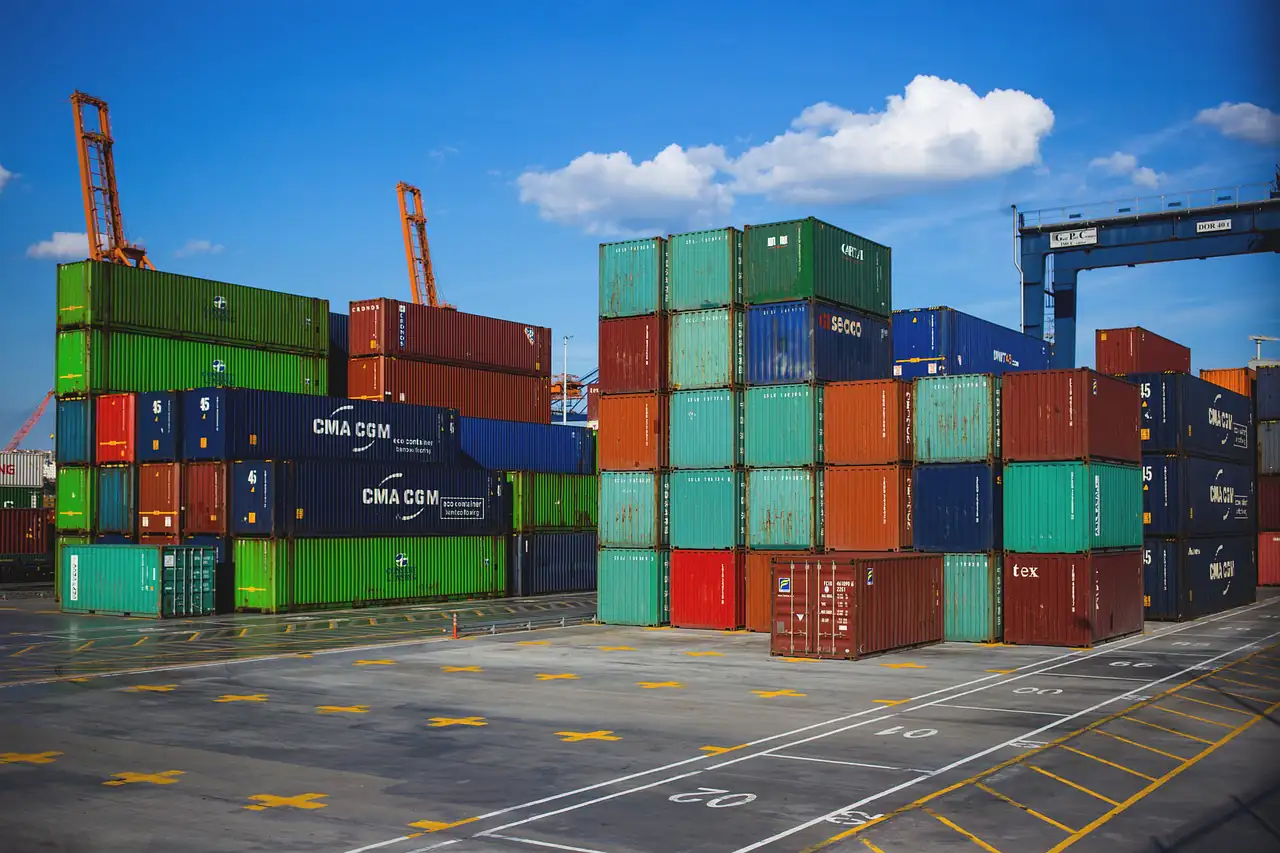
FOB and CIF are sea and inland waterway terms, written for goods that get physically loaded onto a ship. For containerised cargo, which is what most of us ship, the any-mode equivalents are FCA instead of FOB and CIP instead of CIF, because your container gets handed to the carrier at a terminal or depot well before it goes on board, and government Incoterms guides flag FOB and CIF as less suited to containers for that reason. In practice FOB is still what most Indian and Chinese exporters quote, and it works fine, but if your forwarder suggests FCA then that's why.
7. The Best Incoterm for Amazon FBA and Ecommerce Sellers
For an ecommerce importer buying from India, my honest answer is FOB (or FCA if the goods start inland), with your own freight forwarder and your own customs broker at home.
Here's why - you see the real product price and the real freight, separately, so you know your landed cost. You pick the forwarder, so one party answers to you at both ends. You buy insurance that actually covers your goods rather than Clauses C. And you remain the importer of record, which means any duty refund or FTA preference, like the lower rates under the Australia ECTA on eligible goods, is yours to claim and not lost in someone else's price.
Yes, it's more work than a DDP number. A good forwarder makes most of that work disappear, and you'll pay them a lot less than the margin hidden in a DDP or CIF quote. Veteran FBA sellers know their Amazon fulfilment centre is the final destination, and they get there with FOB and a forwarder who has delivered into Amazon before.
If you really don't want to touch logistics on your first order then CIF is the least bad shortcut, because you still clear import yourself and learn what it costs. I wouldn't do DDP from India unless the seller can show you they are genuinely registered to import in your country, and very few can.
Related reading: Why FOB India quotes and invoices differ · Importer of record · Choosing a freight forwarder · Amazon FBA from India
8. Wrapping Up
There are eleven Incoterms in the ICC's 2020 rules, and this post covers three. Whichever you choose, write it in full on the order and the invoice, with the named port or place, and make sure the same term appears on every document, because a mismatch is one of the more common reasons a container gets held. The how to source from India guide has the RFQ lines I'd put in every order.
Hope this helps. If you're stuck on which term to put on your first Indian order, do let me know.
Ready to act
Need an Indian exporter of record or someone on the ground?
SourcingSync can act for you in India: export paperwork, a local presence and the follow-up a remote buyer cannot do.
Want new guides when they go up? Get the newsletter
Download This Guide as a PDF
Leave your email and the PDF downloads straight away. We don't email it to you.
Related reading

How Do You Ship From Several Indian Suppliers in One Load?
Yes. Your forwarder can collect cargo from several Indian suppliers at a port warehouse and load it into one container. But each supplier usually remains the exporter, files its own shipping bill and issues its own certificate of origin, so you pay a set of origin charges per supplier and the saving is smaller than the single box suggests. It pays best when the suppliers are in one region feeding the same port and each sends enough cargo to justify its own papers.

"You Don't Need Any Import Documents" and Other Things Suppliers Get Wrong
When an Indian supplier says you need no documents, it usually means its own export side is handled. Your side is not. The importer carries the destination rules, such as an EORI number in the UK, the FSVP importer role for food in the US, and a full import declaration above A$1,000 in Australia or NZ$1,000 in New Zealand. Seven common supplier claims and the facts behind each.

My Supplier Can't Export. Who Handles Clearance in India?
You can't clear an Indian export yourself, and nor can a logistics provider in its own right. An Indian firm with an IEC has to be the exporter of record and file the shipping bill, usually through a customs broker. If your maker can't do it, the realistic choices are that it registers and uses a broker, or that a merchant exporter or service provider buys the goods and exports them in its own name. Agree which before you pay, because it decides who you pay and who can sign for origin.
Latest articles

Buffalo, Goat or Cow: Which Leather Is Your Indian Bag Made Of?
A quote that says "leather" tells you nothing about the animal, and in India the answer is often goat, sheep or buffalo rather than cowhide. Each behaves differently in a bag: goat is tough and small, sheep is soft and delicate, buffalo is thick, coarse and variable. Ask for the species, the tannage and the tannery in writing, check the grain yourself, and sample buffalo from the actual lot.

Why Did Your Custom Rug From India Arrive a Different Colour?
A custom rug from India usually arrives off-colour for one of five reasons: the colour was approved on a screen, the bulk yarn went into a different dye lot, the yarn looks different once woven into pile, the post-weaving wash shifted it, or it is being judged in different light or from the other end of the pile. Each has its own approval. Because returning a large rug to India is slow and costly, the approvals and the remedy belong in the order before weaving starts.

Does Indian Leather Smell Because It's Urine-Tanned?
No. Urine does not tan leather, and the smell some buyers notice on Indian leather has ordinary causes: tannery residue left by poor washing and finishing, solvent finishes and bag-making glues, and moisture in packing and transit. Each smells different and has its own fix. Odour has no legal limit, so it has to go into the spec, with a closed-box check on bulk before you accept a shipment.