Yash Khatri founded SourcingFrom to give buyers outside India the full picture of sourcing from India: what the country makes well, where it is made, who makes it and how it ships. He writes and edits every guide on the site, and holds each one to the same rule: say what we know, show how sure we are, and say plainly where the evidence runs out. He also runs SourcingSync, the hands-on service that does the sourcing work for buyers, and Kirnova, the data and intelligence company behind SourcingFrom Intelligence.
Kimberley Process Certificates, Grading Reports and Lab-Grown Disclosure
- Published
9 min read
Diamonds travel on four different kinds of paper, and each proves one thing. The Kimberley Process certificate covers rough natural diamonds crossing a border. The System of Warranties statement covers polished stones in trade. A grading report from IGI, GIA or another lab describes one stone. Lab-grown stones need none of the conflict paper but must be disclosed as grown. This guide shows importers what to ask for and Indian exporters how each is issued.
The Short Version
- The Kimberley Process certificate is for rough natural diamonds only. Polished stones and lab-grown stones do not travel on it.
- In India the KP importing and exporting authority is GJEPC, and since November 2021 only GJEPC-registered firms may trade rough.
- Polished stones carry a System of Warranties line on the invoice, and for the EU and G7 now also evidence of non-Russian origin.
- A grading report describes one stone. It is not an origin or conflict certificate, and for lab-grown stones it must state the growth method.
- In the US the bare word "diamond" means mined. A grown stone must be qualified as laboratory-grown, laboratory-created or similar.
Ask a Surat polisher for "the diamond certificate" and you'll get one of four documents, depending on what they think you mean. A KP certificate if you're buying rough. An invoice with a warranty sentence on it if you're buying polished parcels. An IGI or GIA report if you're buying a single stone. And for lab-grown, often just the IGI report, because the conflict paper doesn't apply at all.

Each answers a different question. Mixing them up is how a buyer ends up with a stone that has a beautiful grading report and no proof of where it came from. This guide sits in our certification guides. The sourcing side of lab-grown stones (why India, which clusters, duty by market) is on our lab-grown diamonds from India page. Here we stick to the paper.
1. Four Documents and the Question Each Answers
| Document | Covers | Question it answers | Who issues it |
|---|---|---|---|
| Kimberley Process certificate | Rough natural diamonds (HS 7102.10, 7102.21, 7102.31) crossing a border | Is this shipment of rough conflict-free, under the KP scheme? | The exporting country's KP authority (GJEPC in India) |
| System of Warranties statement | Rough and polished natural diamonds, every sale in the chain | Did the seller buy this from KP-compliant sources? | The seller, on its invoice |
| Origin and traceability evidence | Natural diamonds into the EU and G7 | Is this stone non-Russian? | The seller, backed by the KP certificate of the rough, or a G7 certificate |
| Grading report | One stone, natural or grown | What are its carat, colour, clarity, cut, and is it grown or treated? | A gem lab (IGI, GIA, HRD and others) |
Lab-grown diamonds sit outside the first three rows. They are classified separately (synthetic stones under heading 7104), and the KP scheme covers natural rough only.
2. What the Kimberley Process Proves and What It Doesn't
The KP Certification Scheme started in 2003 to keep "conflict diamonds" out of the rough trade. Participants, now 86 governments by the count reported at the 2025 Dubai plenary, agree to four things: enforce import and export controls on rough, share trade statistics, trade rough only with other participants, and send every export of rough with a valid KP certificate (Kimberley Process (opens in a new tab)).
What it proves is narrow. A KP certificate says the rough in that sealed parcel was exported under a participant's controls and that the government of export says it isn't conflict rough. The definition of a conflict diamond is still the 2003 one, rough sold by rebel movements to fund wars against legitimate governments. It doesn't cover state violence, forced labour or the mine's working conditions. Reform of that definition was pushed again at the 2025 plenary and, as far as we can read, not agreed. So a KP certificate is a border document, not an ethical sourcing claim.
It also stops at the cutting wheel. Once rough is cut and polished, the KP certificate doesn't follow the stone. What follows is the industry's System of Warranties, a sentence on each invoice saying the seller's diamonds were bought from legitimate sources in line with the KP and UN resolutions. It's a self-declaration, run by the World Diamond Council, and its value is that every seller in the chain is on record making it.
3. What an Importer Should Check
Buying Rough
- The certificate travels with the parcel. Tamper-resistant container, the KP certificate number on the container matching the certificate, carat weight and value matching the invoice.
- Both ends are KP participants. Your own country's KP authority will reject rough from a non-participant.
- Your own authority validates it. In the EU, rough enters through a designated Union authority (in practice almost all of it through Antwerp) for physical checks. In the US, the importer reports through the KP data in the customs entry. The UK, Australia, the UAE and India each run their own KP office. Check the procedure with your customs broker before you buy, not when the parcel lands.
- Mixed origin. Since 1 March 2025, EU-bound rough of mixed origin needs a KP certificate that names the countries of mining (Commission FAQ via Czech Customs, Dec 2025).
Buying Polished Natural Stones
- The warranty line on every invoice. If it's missing, the seller isn't in the System of Warranties.
- Non-Russian origin. The EU bans Russian-origin diamonds, including those cut in third countries, for stones of 0.5 ct and up since September 2024, and expected traceability evidence from 1 January 2026. The US has a similar 0.5 ct ban. Ask the Indian seller for the KP certificate numbers of the rough the stones came from, or a G7 certificate where one was issued. Rules here have moved four times in two years, so check the current EU and US guidance at the time of order.
- The grading report matches the stone. Laser inscription number on the girdle, report number, and weight to two decimals.
Buying Lab-Grown
- No KP paper, and don't accept any. A KP certificate offered for grown stones is a sign the seller doesn't know what they're selling.
- A report that says "laboratory-grown" and the method. IGI, GIA and others state CVD or HPHT and any post-growth treatment. Indian growers mostly ship with IGI reports, and US buyers on r/labdiamond say they value IGI for exactly that line (our lab-grown page has the quotes).
- Disclosure in your own selling. In the US the FTC Jewelry Guides say the unqualified word "diamond" means a mined stone. A grown stone must be called "laboratory-grown", "laboratory-created", "[manufacturer]-created" or similar, and "cultured" is allowed only with one of those qualifiers (16 CFR 23.12 and 23.25 (opens in a new tab)). The FTC has sent warning letters to lab-grown sellers over unclear disclosure. In the EU and UK, consumer protection law on misleading descriptions does the same job, and the ISO 18323 and CIBJO terminology is what traders work to.
Red Flags
- "GIA certified" on a stone with no report number you can look up. Every major lab runs a public report check by number on its own website. Use it.
- A grading report with no growth method on a stone sold as grown.
- A polished parcel invoice with no warranty sentence, from a seller who also can't say where the rough came from.
- Natural stones priced like grown ones. Grown stones are the main undisclosed-substitution risk in the trade, which is why serious buyers screen melee parcels with a detection device or send them to a lab.
4. Grading Reports, IGI Against GIA
A grading report is a description, not a certificate of anything except what the lab saw. For the importer the questions are simple. Is the lab one your own customers recognise, does the report number check out on the lab's website, does the inscription match, and for grown stones, does it say how it was grown.

The IGI or GIA question is commercial. Traders say IGI grades about a step more generously than GIA on colour, others disagree, and our lab-grown page quotes both sides. Most Indian lab-grown production goes out with IGI reports because IGI has large labs in Mumbai and Surat close to the growers. GIA also has a lab in Mumbai. Pick the lab your retail customer will trust and put it in the purchase order.
5. How an Indian Exporter Issues a KP Certificate
This half is for the Indian exporter or importer of rough. India's KP importing and exporting authority is the Gem and Jewellery Export Promotion Council (GJEPC), designated by the Ministry of Commerce in 2002. Since DGFT Notification 43/2015-2020 of 22 November 2021, rough diamonds can't be imported or exported unless the firm is registered with GJEPC.
Step 1 - Get an IEC and register with GJEPC. The IEC and RCMC guide covers the IEC. GJEPC membership gives you the RCMC and the KP registration. Check the current membership categories and fees on gjepc.org. (A few days to a few weeks.)
Step 2 - Get access to the GJEPC KP portal. Applications are made online at gjepc.org/kp (opens in a new tab). We could not read the portal itself, since it's behind a login, so check the current document list with GJEPC's KP cell.
Step 3 - For each export, prepare the parcel and documents. Invoice, packing list, carat weight and value per HS line, the KP certificate numbers of the rough you imported (for re-export), and the buyer's details. The importing country must be a KP participant.
Step 4 - Physical verification and sealing. The KP office checks the parcel, seals it in a tamper-resistant container and issues the certificate, with its number on the container. GJEPC runs KP offices in the main diamond centres, Mumbai's Bharat Diamond Bourse and Surat among them. Check the current locations and hours with GJEPC.
Step 5 - Endorse imports. Every rough parcel you import also has its foreign KP certificate endorsed by GJEPC on arrival. Keep the endorsed copies. They are your proof of origin for the polished stones you later sell to the EU or US.
Errors on a certificate (a typo, a wrong weight line) can be corrected only through GJEPC validation under the DGFT procedure. Don't hand-correct a KP certificate.
For polished exports there is no KP certificate. Put the System of Warranties sentence on every invoice, keep the chain back to the KP numbers of the rough, and for EU and US buyers, be ready to show it. Indian polishers who can tie each polished lot to non-Russian rough are the ones keeping their EU accounts. If assembling that chain across several rough suppliers is more work than your team can carry, SourcingSync (opens in a new tab) can manage the document trail for buyers working with you.
For lab-grown exports, no KP. Send an IGI or GIA report per stone (or per parcel for melee, as agreed), a clear "laboratory-grown" line on the invoice and packing list, and the correct HS heading (7104). Growers who mark the invoice "diamond" with no qualifier create a problem for their US buyer, who is the one liable under FTC rules.
6. A Worked Example With a Melee Parcel for London
This example is an illustration built from the rules above, not a real firm.
A London jeweller buys two parcels from Surat: 200 ct of natural melee, and 50 lab-grown stones of 1 ct and up.
The natural melee is polished, so no KP certificate travels with it. The invoice carries the warranty sentence. Because the jeweller also sells into the EU, it asks the Surat house for the KP certificate numbers of the rough the melee came from and confirmation that none is of Russian origin. The UK has its own Russian diamond measures, so the jeweller's broker checks the current UK rule too.
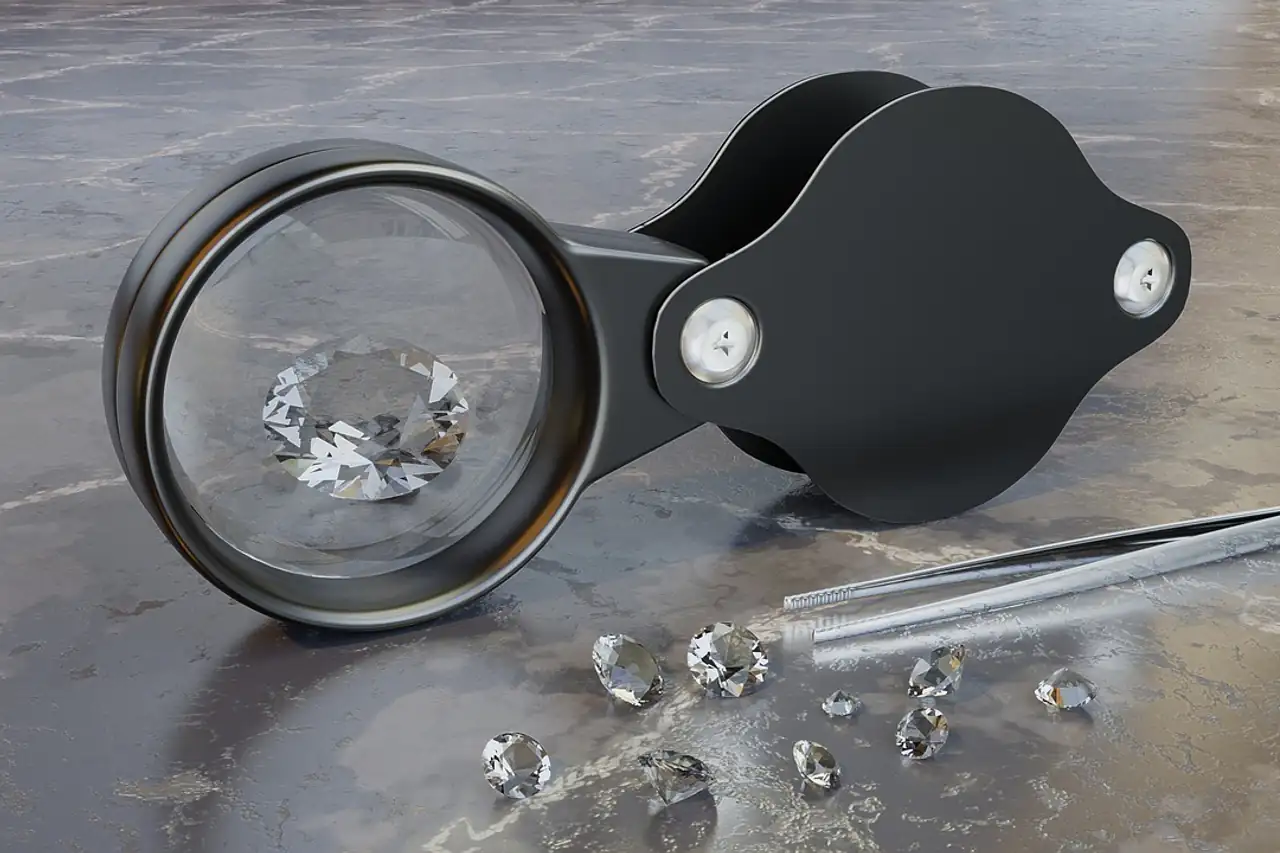
The lab-grown stones come with IGI reports stating CVD and "as-grown" (no post-growth treatment). The jeweller checks each report number on IGI's site and the girdle inscription under a loupe, and lists them on its website as "laboratory-grown diamonds", never just "diamonds".
FAQ

Do lab-grown diamonds need a Kimberley Process certificate?
No. The KP covers rough natural diamonds. Grown stones travel on the invoice and, usually, a grading report.
Does a KP certificate mean the diamond is ethical?
It means the rough isn't "conflict rough" under the 2003 definition. It says nothing about labour or human rights at the mine.
Who issues KP certificates in India?
GJEPC, as the importing and exporting authority. Only GJEPC-registered firms may trade rough.
Is an IGI report a certificate?
It's a grading report on one stone. It describes the stone. It isn't an origin or conflict document.
Can a polished stone have a KP certificate?
No. The KP stops at rough. Polished stones carry the System of Warranties statement.
7. Next Steps
- Sourcing grown stones from India: lab-grown diamonds.
- Getting exporter registrations: IEC, RCMC and export registrations.
- Origin rules for duty: certificate of origin and getting a certificate of origin in India.
- Your market's rules for Indian goods: US, EU, UK, UAE.
- Forced labour checks in the wider chain: forced labour due diligence.
- All certificates: certifications hub.
Ready to act
Want the shipment, documents and consolidation handled?
SourcingSync can coordinate the shipping, the documents and the hand-off to your forwarder.
Want new guides when they go up? Get the newsletter
Download This Guide as a PDF
Leave your email and the PDF downloads straight away. We don't email it to you.
Related reading

Food Safety Certifications for Buying and Exporting Food From India
BRCGS, IFS, FSSC 22000, ISO 22000 and HACCP are not five versions of the same thing. Only the first three are GFSI-recognised schemes that big retailers ask for, ISO 22000 on its own is a management system standard, and HACCP is a method every one of them is built on. This guide shows an importer what each proves and how to check it, and walks an Indian food exporter through getting certified.

How an Indian Exporter Gets a Certificate of Origin
The Indian exporter's side of the certificate of origin. Which DGFT system each kind goes through, which agency issues it, the steps from login to signed certificate, and the details that get one rejected. Importers get the checks to run before they pay.

Health and Veterinary Certificates for Food From India
A health or veterinary certificate is the exporting government's signed statement that a consignment meets the importing country's rules. For many foods of animal origin and some plant foods, no certificate means no entry. This guide shows importers when their border asks for one and how to check it, and walks an Indian exporter through EIC's inspection, approval and certificate steps.
Latest articles

Product Carbon Footprints and Carbon Credits for Buyers and Indian Exporters
A product carbon footprint is a calculation, not a pass mark, and it is only as good as its boundary, its data and who checked it. Carbon credits are a separate thing: a bought claim against emissions elsewhere, and since 27 September 2026 they can no longer back a "carbon neutral" product claim to EU consumers. India now runs its own credit market under BEE.

CE and UKCA Marking for Products Made in India
CE and UKCA are the maker's own declaration that a product meets EU or GB product law, backed by a technical file and sometimes a third-party body. This guide shows an importer what to ask for and how to check it, and walks an Indian manufacturer through the steps from finding the right directive to signing the declaration.

Certifications for Importing From India and Exporting From It
Every certificate answers one question for one market. This index lists the certification guides by group, says in a line what each one is and who needs it, and gives a table of which certificates a product family usually needs in each main market. Each guide has a half for importers and a half for Indian exporters.