Skip to content

IEC, RCMC and the Registrations an Indian Exporter Needs

Yash KhatriFounder, SourcingFrom
Published

8 min read

The IEC is the registration every Indian exporter of goods needs, and the RCMC is the export council membership that unlocks most export schemes. This guide shows buyers what each proves and how to check it on DGFT, and walks Indian exporters through getting, updating and renewing both.

The Short Version

  • No goods leave India without an IEC, unless specifically exempted. It is tied to the firm's PAN.
  • An IEC has to be updated online every April to June, even with no changes, or it is deactivated.
  • An RCMC comes from the export council for your main product and runs five financial years from 1 April.
  • Neither registration proves a firm makes anything. It proves the firm can export.
  • You can look up a supplier's RCMC on DGFT with its IEC and the first three letters of its name.

An Indian supplier can be a fine maker and still be unable to ship you a single carton. Small workshops, home units and many market traders sell only inside India, and they have no IEC, so on the export paperwork someone else has to stand in as exporter. Buyers often find this out after the sample is approved.

Hands shaping a clay pot on a potter's wheel

So this guide does two jobs. For importers, it explains what an IEC and an RCMC prove, what they don't, and how to check them yourself in a minute. For Indian exporters, it gives the steps to get both and keep them alive. Other certification guides are on the certifications hub.

Last researched 17 October 2026 · Next review 1 April 2027 · Written by Yash Khatri

1. What Each Registration Is

IEC (Importer Exporter Code). DGFT, India's trade directorate, issues it. Its rule is plain - "No export or import shall be made by any person without obtaining an IEC unless specifically exempted" (DGFT, IEC (opens in a new tab)). It is tied to the firm's PAN, the Indian tax number, and any kind of firm can hold one, from a proprietor to a trust. Services exporters generally don't need one unless they claim scheme benefits. The certificate carries a QR code for online checking.

RCMC (Registration-cum-Membership Certificate). An export promotion council, commodity board or similar body issues it to exporters in its product line. DGFT counts 26 export promotion councils and 9 commodity boards, each with its own products (DGFT, e-RCMC (opens in a new tab)). It runs five financial years, from 1 April of the year of issue to 31 March. Exporters need it to claim most Foreign Trade Policy benefits, and some products need a council's registration to export at all.

What else an exporter usually holds. A GST registration (see what an Indian GST number tells you), a bank's authorised dealer code registered with customs, and for some goods a product registration, like APEDA for scheduled farm products or FSSAI for food. We haven't covered those at source in this guide, so an exporter should confirm the current list with a customs broker or chartered accountant.

IECRCMC
Issued byDGFTThe export council or board for the main product
Needed toExport or import goods at allClaim most export scheme benefits
LastsNo end date, but must be updated every yearFive financial years
ProvesThe firm is registered to trade across the borderThe firm is a member exporter in that product line
Does not proveThat the firm makes anythingThat the firm makes anything, or its quality

2. What an Importer Should Check

Why should you care about an Indian registration? Because a supplier without a valid IEC can't be the exporter on your shipping papers, and a deactivated one can stall your goods at the Indian port.

Asking for It

Ask for the IEC number and the GST number before you pay for samples. A buyer we found on a business forum, sourcing sarees in 2026, asked suppliers for exactly that, "export-ready documentation (IEC/GST/invoices/shipping experience)" (r/IndiaBusiness (opens in a new tab), from our forum log). It's a normal question and good suppliers answer it at once.

Checking It

  1. The IEC. Scan the QR code only if you can confirm it opens a dgft.gov.in page, or better, look the IEC up from DGFT's own site. The name should match the firm on your proforma invoice.
  2. Its status. An IEC that missed its annual update is deactivated, and one on DGFT's Denied Entity List can't use DGFT schemes. What each status means for your order is on deactivated or denied entity list.
  3. The RCMC. DGFT's "View RCMC Details" service needs the IEC and at least the first three characters of the firm name. Check the council matches the product. A garment exporter registered only with a council for engineering goods is worth a question.
  4. The match. The same firm name should run through the IEC, the GST registration, the invoice and the certificate of origin.

Reading It Fairly

No IEC is not a red flag on its own. Many good makers sell through a merchant exporter who holds the IEC and answers for the paperwork, and that's a normal way to buy from India (see is a city address a trader sign?). The question to ask is who makes the goods, and who answers for quality.

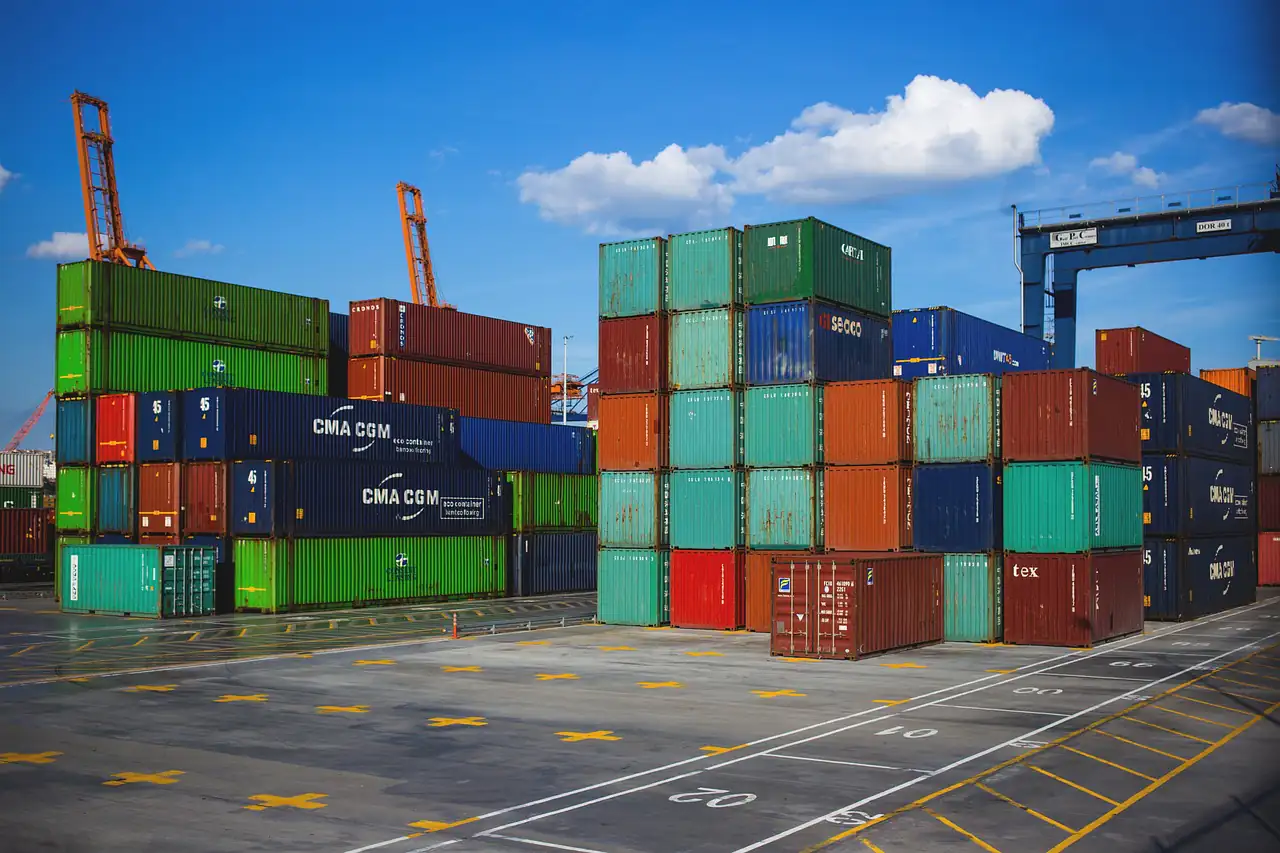
Stacked shipping containers in a port yard

If the maker you want can't export, an Indian exporter of record has to sit in the middle. That's a real job with real liability, and SourcingSync (opens in a new tab) does it for buyers who've found a maker without an IEC.

3. How an Indian Exporter Gets an IEC

You'll need the firm's PAN, a current bank account in the firm's name and a valid business address. DGFT says the address "may be physically verified" after issue, so use the address where you actually work.

Step 1 - Register on dgft.gov.in (opens in a new tab) and log in.

Step 2 - Open IEC Profile Management and choose "Apply for IEC". If your firm already has an IEC from earlier, link it to your login instead, with your digital signature token ready.

Step 3 - Fill in the firm details, partners or directors, address and bank account, and upload the documents the form asks for.

Step 4 - Sign with your digital signature or Aadhaar e-sign and pay. Check the current fee on the DGFT site.

Step 5 - Download the IEC certificate. It carries a QR code that buyers can use to check it.

Step 6 - Put the IEC number on your letterhead, proforma and invoices, and send buyers a copy when they ask.

Changes to the details later go through a modification request on the same page, which DGFT describes as auto-approved.

4. Keeping the IEC Alive

This is the step small exporters forget. Since a DGFT notification of 12 February 2021, every IEC holder must update or confirm its IEC details online between April and June each year, even if nothing changed. If you don't, the IEC is deactivated, and it reactivates once you complete the update (Notification 58/2015-20, read via council and tax-press summaries, so check the current wording on DGFT).

Step 1 - Each April, log in to dgft.gov.in and open IEC Profile Management.

Step 2 - Review the details and either update or confirm them.

Step 3 - Submit before 30 June and save the confirmation.

Who on your team does this? Write it into someone's calendar, because a deactivated IEC in July can stop a shipment you've already made.

Surrendering an IEC suspends it for all transactions, and you can apply to revoke the suspension later. A firm on the Denied Entity List can apply to DGFT for removal.

5. How an Indian Exporter Gets an RCMC

You need an active, updated IEC and a digital signature token or Aadhaar e-sign linked to your login (DGFT, e-RCMC (opens in a new tab)).

Step 1 - Decide your main line of business. DGFT says an exporter "has to declare his mainstream business in the application". Pick the council for that product. For textiles that might be one of several councils by fibre or product, for spices the Spices Board, and so on. If no council covers your product, the DGFT help file points to FIEO, the federation of export organisations.

Step 2 - Log in to dgft.gov.in and open the e-RCMC service, then "Apply for e-RCMC".

Step 3 - Pick the registering authority, fill in the details and upload what that council asks for. Each council sets its own document list.

Step 4 - Sign and submit, and pay the council's membership fee. Check the current fee on the council's site.

Step 5 - Answer the council's queries. Once approved, the RCMC appears on DGFT and buyers can look it up.

Step 6 - Report any change in name, address, ownership or constitution to the council. The help file gives one month.

Step 7 - Renew before the five financial years run out, through "Renewal of RCMC" on the same page.


Ready to act

Need hands-on help?

Registration is quick for a firm with clean papers. Getting a small maker export-ready, with an IEC, RCMC, bank code and the first shipment's paperwork, takes longer. SourcingSync handles that for buyers who want a specific maker on board.

Talk to SourcingSync (opens sourcingsync.com in a new tab)
A loaded container ship berthed under gantry cranes at dusk

6. Why Applications Get Held Up

  • The PAN name doesn't match the bank account name. Fix the bank record first.
  • An address the firm doesn't use. DGFT may verify it.
  • The annual update missed. The IEC is deactivated, and with it the RCMC application stalls.
  • The wrong council. An RCMC from a council that doesn't cover the product is a poor fit for scheme claims. Choose by the main product, not by convenience.
  • No signing method linked. Both services need a digital signature token or Aadhaar e-sign on the login.

7. A Worked Example

This is an illustration, not a real firm. A family block-print workshop in Bagru gets its first order from an Australian label, 150 pieces a style.

The workshop has a GST number but no IEC. It could ship through a Jaipur merchant exporter, which is common and perfectly fine, or get its own IEC. It chooses its own. The owner registers on DGFT with the firm's PAN, bank account and the workshop's address, and gets the IEC certificate with its QR code. Because the label wants a certificate of origin for the Australian duty cut, the workshop then applies for an RCMC with the council for its product and files the certificate on the preferential system (see getting a certificate of origin in India). In April next year, the owner's son confirms the IEC details on DGFT, and the second order ships without a hitch.

FAQ

Is an IEC the same as a GST number?

No. Both link to the firm's PAN, but the IEC is a separate DGFT registration for cross-border trade.

Does an IEC expire?

It has no end date, but it must be updated or confirmed every April to June, or it is deactivated.

Does an RCMC prove a firm is a manufacturer?

No. It shows membership of an export council in a product line. Check manufacturing separately on verify suppliers.

My supplier has no IEC. Can I still buy?

Yes, through an Indian exporter who holds one and answers for the paperwork.

Can a foreign company get an Indian IEC?

IECs are for firms registered in India with an Indian PAN. A foreign buyer imports under its own country's rules.

8. Next Steps

If you're the buyer, ask for the IEC and GST numbers before samples, check them on DGFT, and ask who makes the goods. If you're the exporter, register, put the April update in a calendar, and pick the council for what you actually make.

None of these papers make a good product, but missing ones can keep a good product at the port. Hope this helps, and write to us at team@sourcingfrom.com if your case is different.

Related reading: verify suppliers in India, EOU and SEZ suppliers explained and document legalisation and attestation.

Yash KhatriFounder, SourcingFrom

Yash Khatri founded SourcingFrom to give buyers outside India the full picture of sourcing from India: what the country makes well, where it is made, who makes it and how it ships. He writes and edits every guide on the site, and holds each one to the same rule: say what we know, show how sure we are, and say plainly where the evidence runs out. He also runs SourcingSync, the hands-on service that does the sourcing work for buyers, and Kirnova, the data and intelligence company behind SourcingFrom Intelligence.

View profile

Want new guides when they go up? Get the newsletter

Download This Guide as a PDF

Leave your email and the PDF downloads straight away. We don't email it to you.

FDA Food Facility Registration for Suppliers in India

Every foreign plant that makes, packs or holds food for the US must register with FDA and renew in the last quarter of each even-numbered year. The registration is a number, not an approval, and FDA issues no certificate. This guide shows US importers what to check and walks an Indian food maker through registering, renewing and the filings that sit next to it.

Food Safety Certifications for Buying and Exporting Food From India

BRCGS, IFS, FSSC 22000, ISO 22000 and HACCP are not five versions of the same thing. Only the first three are GFSI-recognised schemes that big retailers ask for, ISO 22000 on its own is a management system standard, and HACCP is a method every one of them is built on. This guide shows an importer what each proves and how to check it, and walks an Indian food exporter through getting certified.

FSC and PEFC Certificates for Wood, Paper and Furniture From India

FSC and PEFC certify forests and the chain of companies that handle their wood. On Indian goods the certificate that matters is the maker's chain of custody, plus the claim printed on each invoice. This guide shows importers how to check both in a minute and walks an Indian exporter through getting chain-of-custody certified, including the Indian PEFC route for trees outside forests.

Latest articles

Product Carbon Footprints and Carbon Credits for Buyers and Indian Exporters

A product carbon footprint is a calculation, not a pass mark, and it is only as good as its boundary, its data and who checked it. Carbon credits are a separate thing: a bought claim against emissions elsewhere, and since 27 September 2026 they can no longer back a "carbon neutral" product claim to EU consumers. India now runs its own credit market under BEE.

CE and UKCA Marking for Products Made in India

CE and UKCA are the maker's own declaration that a product meets EU or GB product law, backed by a technical file and sometimes a third-party body. This guide shows an importer what to ask for and how to check it, and walks an Indian manufacturer through the steps from finding the right directive to signing the declaration.

Certifications for Importing From India and Exporting From It

Every certificate answers one question for one market. This index lists the certification guides by group, says in a line what each one is and who needs it, and gives a table of which certificates a product family usually needs in each main market. Each guide has a half for importers and a half for Indian exporters.

Type a word you met on the page, a product or a place.