

Turmeric From India, Lead Chromate and the Checks at Each Border
Where lead chromate gets into Indian turmeric, what UK, EU, US, NZ and Australian borders actually catch, and the test plan to run before you ship.
9 min read
Every foreign plant that makes, packs or holds food for the US must register with FDA and renew in the last quarter of each even-numbered year. The registration is a number, not an approval, and FDA issues no certificate. This guide shows US importers what to check and walks an Indian food maker through registering, renewing and the filings that sit next to it.
Between January 2021 and August 2026, FDA refused 145 lines of Indian food at the border on two charges that have nothing to do with contamination. "NEEDS FCE" means the maker wasn't registered as a low-acid canned or acidified food plant, and "NO PROCESS" means it hadn't filed the scheduled process for that product (our count of FDA's import refusal data). The goods were sauces, chutneys, condiments, mixed vegetables in sauce, cucumbers, mango products and chocolate-flavoured milk drinks. A plant can be fully registered with FDA as a food facility and still get every one of those refused, because facility registration is only the first of several US filings.
There's a second trap that catches small Indian exporters and their buyers. Companies sell "FDA registration certificates", with an FDA logo, to plants that think they need one. FDA says plainly that food facilities don't need a certificate of registration, that it doesn't recognise one issued by a private business, and that its logo isn't for private use (FDA (opens in a new tab)). This guide sorts the real filings from the paper. Importers first, then the steps for an Indian exporter. Other certificate guides are on certifications.
Under section 415 of the US Food, Drug and Cosmetic Act, any facility that manufactures, processes, packs or holds food for consumption in the US must register with FDA before it starts. Foreign plants are included. "Food" covers human and animal food, ingredients, dietary supplements and beverages.
There's one rule that matters a lot for Indian supply chains. If a foreign plant sends food to another foreign plant for further processing or packing before export, only the second one must register for that food. But if the second plant does something minimal, like putting on a label, both must register. Any packer or holder after the last processor must register too (FDA guidance, 7th edition (opens in a new tab)). So a merchant exporter that relabels in its own warehouse in Mumbai is in scope, and so is the plant that made the goods.
Registration gives the facility a number. FDA's own guidance puts it plainly - the number means only that the facility is registered, and it doesn't convey FDA approval or endorsement of the facility or its products.
Registration is not an inspection result, a product approval or a safety check. It doesn't tell you whether the plant is on an import alert (read FDA import alerts for that), whether its lots pass residue tests (food import testing), or whether its labels meet US rules.
It also doesn't replace the other filings. Here is how they fit together.
| Filing | Who files | What it is |
|---|---|---|
| Food facility registration | The plant (or its US agent) | Number for each facility, renewed every even-numbered year |
| Prior notice | Usually the importer or broker | Notice of each shipment before it arrives |
| FSVP | The US importer | The importer's own verification of the foreign supplier |
| FCE registration and SID process filing | The plant | Extra registration for low-acid canned and acidified foods, with a filed process per product |
The number exists and is current. FDA keeps registrations confidential, so you can't look a plant up in a public database. FDA tells importers to ask the firm directly (FDA, importing human foods (opens in a new tab)). Ask for the registration number, the date of the last renewal and the name of the US agent.
Renewed in the current window. Every registration must be renewed between 1 October and 31 December of each even-numbered year. The 2026 window runs to 11:59 PM on 31 December 2026, and FDA treats any registration not renewed by then as expired and removes it from the account (FDA user guide (opens in a new tab)). If your supplier last renewed in 2024, it must renew again before the year ends.
The right plant. The address on the registration should be the plant that makes your product, and the last plant to touch it. FDA checks each registration's DUNS number against the facility address, so ask for the DUNS number too and see that the D&B record matches.
The US agent is real. Every foreign facility must name a US agent who lives or works in the US. FDA emails the agent to confirm they agreed to serve and won't confirm the registration until they do. Ask who it is. If the supplier doesn't know, that's a warning.
FCE and SID where needed. For pickles, chutneys, sauces, canned vegetables and shelf-stable milk drinks, ask for the FCE number and the SID for each product. FDA checks the SID at entry, and without it the product will be refused.
Red flags - a "certificate" with an FDA logo, an expiry date that isn't 31 December of an even-numbered year, a registration number that the supplier won't share, and a seller who says the FDA "approved" its factory.
If food from a foreign facility that should be registered arrives without a valid registration, it can be held at the port or a secure facility until the facility registers. You pay for the storage.
Nobody in India issues FDA registration. No Indian authority (FSSAI, APEDA, EIC) files it for you. The plant files directly in FDA Industry Systems, or authorises someone to file for it, often the US agent. A DUNS number comes from Dun & Bradstreet, through its Indian operation or its website.
There are plenty of consultants in India who file registrations for a fee, and some of them do a decent job. But FDA says registrants are not required to use a third-party "registrar", and there's no FDA fee to register. What does cost money is a US agent service, if you don't have a US partner who can act as one.
Step 1 - Get a DUNS number for the plant. Use the exact legal name and plant address you'll put in the FDA registration. FDA verifies the address against the DUNS record. Start early, because it can take weeks, and fix any mismatch with D&B before you file.
Step 2 - Line up a US agent. It has to be a person or company that lives or works in the US and is physically present there. Your US importer can sometimes act, or you can use a paid agent service. FDA will email them to confirm, and they have 30 days to answer, or your submission is removed.
Step 3 - Create an FDA Industry Systems account. Open an account in FIS and choose Food Facility Registration. Use a shared company email, not one person's inbox, so renewals don't depend on someone who might leave.
Step 4 - Fill in the registration. You'll give the facility name, address, DUNS number, parent company, emergency contact, the US agent's details, the food product categories you make or hold, and an assurance that FDA may inspect the facility. Every trade name the plant uses goes in too.
Step 5 - Submit and wait for verification. FDA checks the DUNS and the address, and the US agent's confirmation, before it confirms the registration and issues the number. This is usually quick when the DUNS record matches, and slow when it doesn't.
Step 6 - Keep a copy. FDA treats a copy of a valid registration as the proof. Don't buy a certificate.
Step 7 - Add FCE and SID if you make acidified or low-acid canned food. Register the establishment as a food canning establishment and file a scheduled process for each product, prepared by a process authority. These are separate filings in FDA's systems and they take longer than the facility registration, so do them first if your range includes pickles, sauces or canned drinks.
Step 8 - Update within 60 days of any change. New owner, new US agent, new product category or a new emergency contact must be updated within 60 days. A new owner must cancel the old registration and register again.
Step 9 - Renew in every even-numbered year. Renew between 1 October and 31 December. If nothing has changed, the renewal is abbreviated. If you miss it, the registration expires and you register again from scratch.
Common reasons registrations fail - a DUNS address that doesn't match, a US agent who never answers FDA's email, and a registration filed under a trader's office address instead of the plant.
What to send the buyer - the registration number, the US agent's name and contact, the renewal date, your DUNS number and, where it applies, the FCE number and the SIDs for their products. Their FSVP file needs it.
If you'd like someone to handle the agent, the DUNS record and the FDA filings for your suppliers, SourcingSync (opens in a new tab) can take that on.
This example is an illustration built from the rules above, not a real firm.
A New Jersey distributor wants mango pickle and lime pickle from a maker in Gujarat. The maker shows a "certificate" with an FDA logo and a registration number.
The certificate is meaningless, so the distributor asks for the plain facts instead. The registration number, last renewed in December 2024, so it must be renewed by 31 December 2026. The DUNS number, which matches the plant address. The US agent, a compliance firm in New York. All good so far.
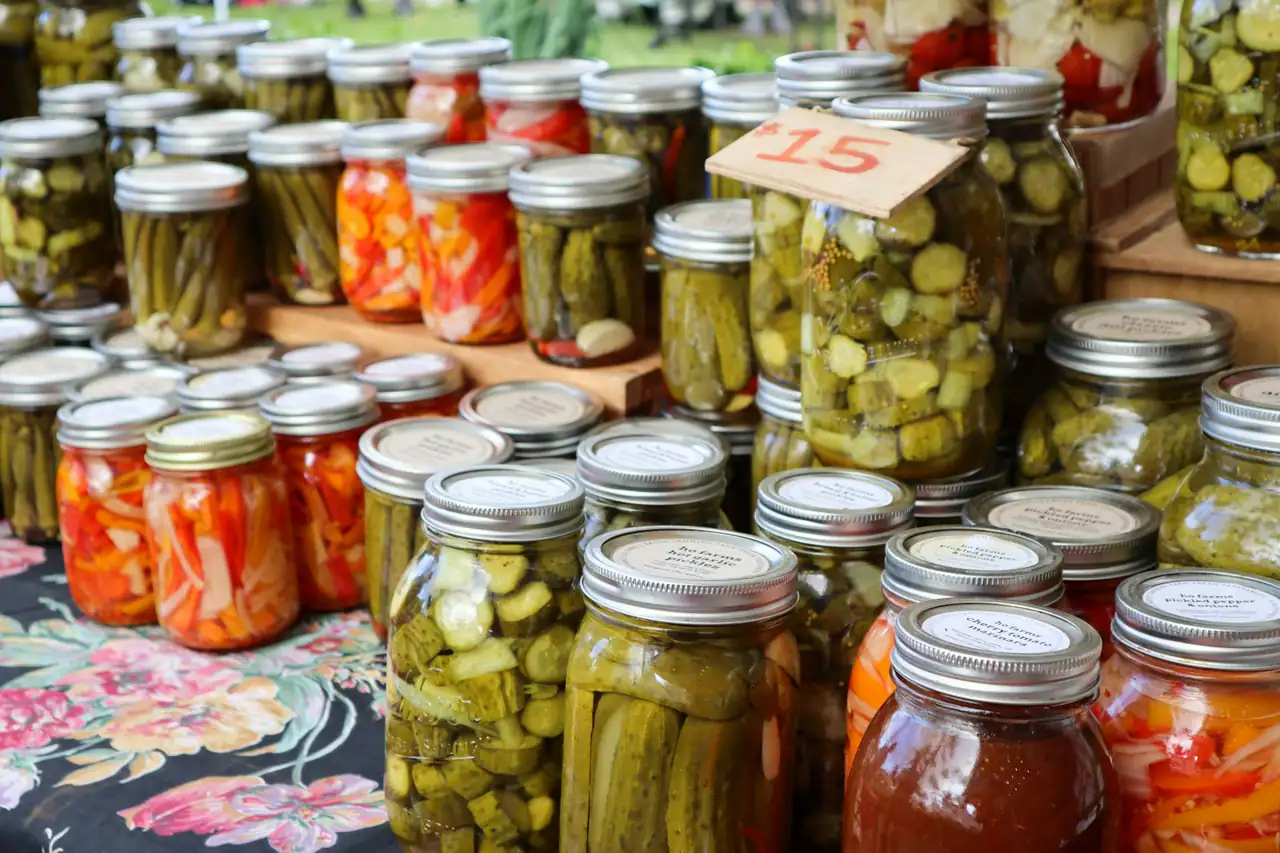
Then the product question. Pickles are acidified foods, the same group behind most of those 145 refusal lines, so the distributor asks for the FCE number and a SID for each pickle. The maker has an FCE number but filed a process only for mango pickle. Lime pickle would be refused at the port. The order goes ahead for mango only, the maker files the lime process with its process authority, and lime joins the second order. That's one email that saved a container.
No. A copy of the valid registration is the proof. FDA doesn't recognise private certificates.
No. US agent services may charge, and so do consultants if you use one.
No. It means the plant is registered. FDA may inspect later, and registration includes the plant's assurance that it will allow it.
If it packs, relabels or holds the food, yes. If the goods go straight from the plant to the ship, the plant registers.
The registration expires on 31 December. Food from that plant can be held at the port until it registers again.
Ready to act
Want this supplier checked before you commit?
SourcingSync can verify who makes it and who answers for quality, then manage the supplier for you.
Where lead chromate gets into Indian turmeric, what UK, EU, US, NZ and Australian borders actually catch, and the test plan to run before you ship.
Why Indian basmati fails at EU and US borders (tricyclazole, thiamethoxam, ochratoxin A), what the records show, and how to spec, test and buy a clean lot.
What decides whether Indian frozen shrimp clears in the US, EU and Australia: antibiotic residues, Salmonella, Vibrio, white spot testing and the FDA Green List.
Yash Khatri founded SourcingFrom to give buyers outside India the full picture of sourcing from India: what the country makes well, where it is made, who makes it and how it ships. He writes and edits every guide on the site, and holds each one to the same rule: say what we know, show how sure we are, and say plainly where the evidence runs out. He also runs SourcingSync, the hands-on service that does the sourcing work for buyers, and Kirnova, the data and intelligence company behind SourcingFrom Intelligence.
Want new guides when they go up? Get the newsletter
Leave your email and the PDF downloads straight away. We don't email it to you.

The IEC is the registration every Indian exporter of goods needs, and the RCMC is the export council membership that unlocks most export schemes. This guide shows buyers what each proves and how to check it on DGFT, and walks Indian exporters through getting, updating and renewing both.
Kosher certification is a private agency's letter that named products from a named plant meet Jewish dietary law under its supervision. No government issues it, in India or anywhere. This guide shows importers how to read a letter of certification line by line and check it at source, and walks an Indian plant through application, ingredient approval, inspection and the letter.
BRCGS, IFS, FSSC 22000, ISO 22000 and HACCP are not five versions of the same thing. Only the first three are GFSI-recognised schemes that big retailers ask for, ISO 22000 on its own is a management system standard, and HACCP is a method every one of them is built on. This guide shows an importer what each proves and how to check it, and walks an Indian food exporter through getting certified.

A product carbon footprint is a calculation, not a pass mark, and it is only as good as its boundary, its data and who checked it. Carbon credits are a separate thing: a bought claim against emissions elsewhere, and since 27 September 2026 they can no longer back a "carbon neutral" product claim to EU consumers. India now runs its own credit market under BEE.

CE and UKCA are the maker's own declaration that a product meets EU or GB product law, backed by a technical file and sometimes a third-party body. This guide shows an importer what to ask for and how to check it, and walks an Indian manufacturer through the steps from finding the right directive to signing the declaration.

Every certificate answers one question for one market. This index lists the certification guides by group, says in a line what each one is and who needs it, and gives a table of which certificates a product family usually needs in each main market. Each guide has a half for importers and a half for Indian exporters.