Skip to content

Is a Delhi or Mumbai Address a Sign Your Supplier Is a Trader?

Yash KhatriFounder, SourcingFrom
Updated

5 min read

A Delhi or Mumbai address is a weak trader signal on its own, because many real Indian manufacturers keep their head office in a metro while the mill runs elsewhere. A product mix spread across unrelated categories is a far stronger sign, and the GST premises, the export council certificate and one direct question all do better than a postcode.

Key takeaways

  • In US-bound bed linen and tufted carpets, most Mumbai addresses among the top ten named shippers were manufacturers' head offices.
  • 13 of 15 Indian maker profiles had one product chapter at 57% or more of their US shipments.
  • The city test does hold in spices such as ginger and turmeric, the most intermediated spice line we read.
  • Ask which unit makes your order and whether you can see it on a video call this week.
  • A trader is a normal way to buy, often the right one for small or mixed orders.

Not on its own. Plenty of real Indian manufacturers keep their registered or head office in Mumbai or Delhi while the mill runs somewhere else, and in our read of US shipping records most Mumbai addresses among the top bed-linen and tufted-carpet shippers were exactly that. A far stronger trader signal is a product mix spread across unrelated categories.

Old commercial buildings on a Mumbai street

The "big city address means middleman" rule gets repeated on forums and echoed in AI answers, and it isn't daft. It's just blunt. This post shows where it holds, where it fails, and the signals that do the job better. One thing I'll say up front - a trader is a normal, often useful way to buy from India. The point is knowing which one you've got.

1. Why The Rule Exists

It comes from real experience. Mumbai and Delhi are trading cities, full of export houses, buying offices and wholesale markets. So the shortcut feels safe.

The trouble is that big Indian manufacturers also like a city office. Banks, ports, customs brokers and foreign buyers are there. The machines aren't.

2. Where The Rule Fails: Head Offices

In September 2026 we read the public US shipping records for 21 Indian product lines. In bed linen and tufted carpets, most of the Mumbai addresses among the ten largest named shippers belonged to manufacturers' head offices, with the mills elsewhere in India (our read of US bill-of-lading records, ImportYeti (opens in a new tab), Sep 2026).

Those are some of the larger home-textile makers in the country. A buyer who crossed them off for a Mumbai postcode would have thrown away exactly the suppliers big retailers use. Ouch.

So a metro address tells you where the paperwork is signed. It doesn't tell you who runs the looms.

3. Where The Rule Holds

It isn't useless everywhere. In ginger, turmeric and other spices, 12 of the 49 named shippers had Mumbai addresses and about a fifth of named shipments were filed under forwarders' names, which made it the most intermediated spice line we read. Compare pepper and chilli, which were led by shippers in Kerala and the other growing and trading belts we'd expect (same records).

Spices fit the trader story because the trade runs through big wholesale markets, and a Mumbai exporter buying from them is doing normal business. That's the pattern where the city address and "trader" really do line up, and even then, the trader may be exactly who you want for a mixed range.

4. The Stronger Signal: How Spread Out Is The Product Mix?

This is the best single test we found. Of 15 Indian maker profiles we read, 13 had one product chapter at 57% or more of their US shipments, usually 72% to 99%. Makers make one kind of thing. The odd one out spread over nine chapters, stone and metal and more, and sent 99% of its shipments to a single US buyer, which looks like a sister company (our count, same records).

You can apply this without any database. Look at the supplier's catalogue, website and email signature. Bath towels and bed sheets from one company? Fine, that's one industry. Towels, brass lamps, basmati rice and auto parts? That's a trading house, wherever its office is. One Indian exporter on a forum summed up the style - "We even export Lifts and Lollipops" (r/IndiaBusiness, 2026 (opens in a new tab)).


Stacks of woven cotton towels

5. Three More Signals That Beat A Postcode

The address on the record, not the letterhead. The GST registration lists each premises and what it does there. A city office plus a separate factory premises in the right cluster tells you a lot. The first two digits of the GST number also show the state, which we unpack in what an Indian GST number tells you.

The export council certificate. A manufacturer-exporter registration with the council that covers the product is the strongest public "we make it" signal India has, because the council asks for evidence of manufacturing (Handbook of Procedures 2023, para 2.79(a) (opens in a new tab)).

The answer to one question. "Which unit makes my order, and can I see it on a video call this week?" A head office says yes and sends you to the mill. A trader tells you about the partner unit. Both are fine answers. A dodge isn't.

Here's how the signals compare.

SignalWhat it tells youWeight
Metro addressWhere the paperwork is signedWeakest
Product spreadOne industry suggests a maker, unrelated chapters suggest a trading houseStrongest single test
GST premisesWhether a factory premises sits in the right clusterStrong
Export council certificateA manufacturer-exporter registration backed by evidence of manufacturingStrong
The video-call questionWhether they can show you the unit that makes your orderStrong

6. So What Should You Do With A Delhi Address?

Note it, and don't decide on it. Run the product-spread test, check the premises on the GST record and ask the question above. If the answers say trader, decide whether a trader suits you. How partner units fit in is covered in job work and subcontracting in India. For a mixed range or small orders it often does, and the honest trade-offs are on manufacturer vs trading company.

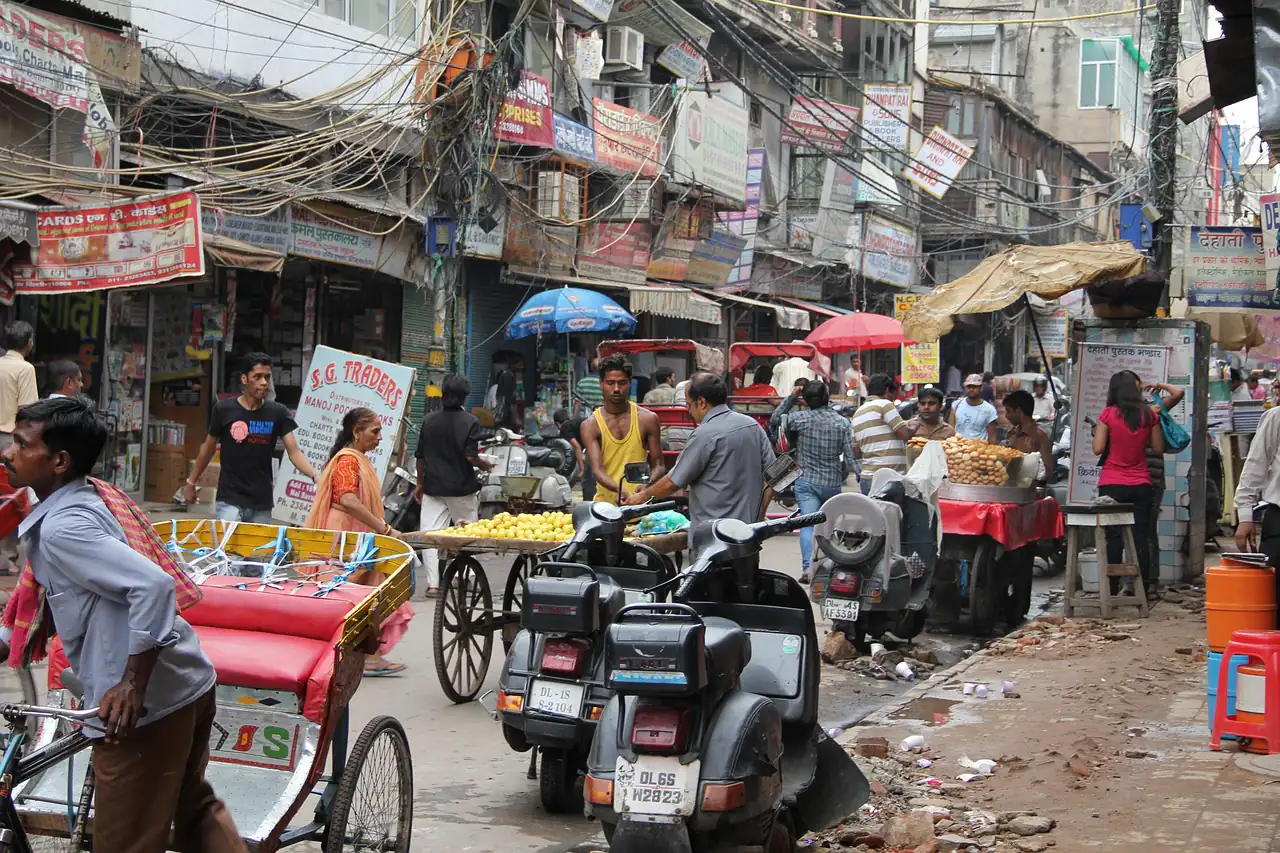
A crowded street in old Delhi

If you'd rather someone walk into the unit behind the city office for you, SourcingSync (opens in a new tab) does that. Either way, the postcode is the weakest clue you have, so give it the least weight.

Related reading: Top Indian supplier lists are forwarders · Are Indian trade fair exhibitors manufacturers?

Questions Buyers Ask

Do Indian manufacturers really keep offices away from their factories?

Yes, commonly. A city office near banks, ports and buyers, with the plant in a cluster town or industrial estate, is an ordinary setup.

Is it bad if my supplier turns out to be a trader?

No. Traders and merchant exporters are a normal way to buy, and often the right one for small or mixed orders. Just know who makes the goods and who answers for quality.

Can I see where a supplier really ships from?

For US sea shipments, public bill-of-lading records show shipper addresses and ports. For other markets you'll rely on the Indian records and a visit.

What if the factory address is in a different state from the GST number?

Ask for the GST registration covering the factory. A different-state number can mean a head office, a partner unit or a trader, and each is fine once you know.

Ready to act

Want the shipment, documents and consolidation handled?

SourcingSync can coordinate the shipping, the documents and the hand-off to your forwarder.

Talk to SourcingSync (opens sourcingsync.com in a new tab)
Yash KhatriFounder, SourcingFrom

Yash Khatri founded SourcingFrom to give buyers outside India the full picture of sourcing from India: what the country makes well, where it is made, who makes it and how it ships.

View profile

Download this guide as a PDF

Leave your email and the PDF downloads straight away. We don't email it to you.

Most 'Top Indian Supplier' Lists Are Really Freight Forwarders

Our read of US shipping records for 21 Indian product lines found that 19 of the 20 biggest "Indian suppliers" are freight forwarders or logistics firms, and that many bills carry no shipper name at all. The post explains why the lists come out this way and how to tell a maker from a mover.

What an Indian GST Number Tells You About a Supplier

An Indian GST number (GSTIN) shows the state a business is registered in, carries its PAN, which is also its export code, and once looked up shows whether it is active and able to export. It proves a registered business exists, not that it makes your product.

Why 'Indian Manufacturers' Email You After Your First Import

Most "Indian manufacturer" emails after a first import come from agents and traders who found your company in shipment data, not from factories. US sea manifests are public and importer lists take minutes to build. The post shows where the trail starts and how to tell a cold pitch from a real maker.

Latest articles

How Long Does Shipping From India to Australia Really Take?

Sea freight from India to Sydney, Melbourne, Brisbane or Fremantle takes about 25 to 36 days port to port, and about five weeks door to door. No carrier we read sails direct, every box changes ship at a hub such as Singapore, Port Klang, Colombo or Tanjung Pelepas, and a missed connection can push a shipment past 50 days.

Mundra or Nhava Sheva: Which Port Should Your Supplier Ship From?

Mundra is the closer port for every north Indian cluster we mapped, but closer is not always faster. In the schedules we read, Mundra was quicker to the US East Coast, Nhava Sheva was quicker to the UAE, New Zealand and slightly quicker to Europe, and for Australia the two are close.

Type a word you met on the page, a product or a place.