

Bed Linen From India: Which Town Makes It, Who Ships It and Which Border Still Gives India an Edge
- Updated
Your route: bed linen from India
Leaves India from
Tuticorin (V.O. Chidambaranar)
IndicativeUseful directional information where precise verification is unavailable.UnknownInsufficient evidence, or not yet researched.
Also Mundra, Cochin, Pipavav, Chennai, Nhava Sheva (JNPA)
At sea
31 to 33 days
6 scheduled sailings, port to port
Every port and sailing to United Kingdom
- Tuticorin (V.O. Chidambaranar) to London Gateway: 31 to 33 days, 6 sailings
- Mundra to London Gateway: 35 to 46 days, 11 sailings
- Cochin to London Gateway: 31 to 37 days, 9 sailings
- Pipavav to London Gateway: 39 to 61 days, 8 sailings
- Pipavav to Felixstowe: 77 to 102 days, 3 sailings
- Chennai to London Gateway: 26 to 34 days, 9 sailings
- Nhava Sheva (JNPA) to London Gateway: 34 to 41 days, 8 sailings
Leaves India from
Tuticorin (V.O. Chidambaranar)
IndicativeUseful directional information where precise verification is unavailable.UnknownInsufficient evidence, or not yet researched.
Also Mundra, Cochin, Pipavav, Chennai, Nhava Sheva (JNPA)
At sea
28 to 30 days
6 scheduled sailings, port to port
Every port and sailing to European Union
- Tuticorin (V.O. Chidambaranar) to Rotterdam: 28 to 30 days, 6 sailings
- Mundra to Rotterdam: 38 to 38 days, 6 sailings
- Cochin to Rotterdam: 28 to 34 days, 9 sailings
- Pipavav to Rotterdam: 38 to 64 days, 5 sailings
- Chennai to Rotterdam: 23 to 31 days, 9 sailings
- Nhava Sheva (JNPA) to Rotterdam: 33 to 33 days, 6 sailings
Leaves India from
Tuticorin (V.O. Chidambaranar)
IndicativeUseful directional information where precise verification is unavailable.UnknownInsufficient evidence, or not yet researched.
Also Mundra, Cochin, Pipavav, Chennai, Nhava Sheva (JNPA)
At sea
34 to 57 days
14 scheduled sailings, port to port
Every port and sailing to United States
- Tuticorin (V.O. Chidambaranar) to New York/New Jersey: 34 to 57 days, 14 sailings
- Tuticorin (V.O. Chidambaranar) to Savannah: 40 to 60 days, 14 sailings
- Tuticorin (V.O. Chidambaranar) to Los Angeles/Long Beach: 38 to 53 days, 7 sailings
- Mundra to New York/New Jersey: 30 to 32 days, 7 sailings
- Mundra to Savannah: 36 to 36 days, 7 sailings
- Mundra to Los Angeles/Long Beach: 45 to 62 days, 10 sailings
- Cochin to New York/New Jersey: 34 to 47 days, 11 sailings
- Cochin to Savannah: 40 to 53 days, 8 sailings
- Cochin to Los Angeles/Long Beach: 44 to 67 days, 10 sailings
- Chennai to New York/New Jersey: 31 to 43 days, 13 sailings
- Chennai to Savannah: 41 to 53 days, 15 sailings
- Chennai to Los Angeles/Long Beach: 36 to 55 days, 7 sailings
- Nhava Sheva (JNPA) to New York/New Jersey: 33 to 35 days, 8 sailings
- Nhava Sheva (JNPA) to Savannah: 38 to 40 days, 6 sailings
- Nhava Sheva (JNPA) to Los Angeles/Long Beach: 35 to 57 days, 12 sailings
Leaves India from
Tuticorin (V.O. Chidambaranar)
IndicativeUseful directional information where precise verification is unavailable.UnknownInsufficient evidence, or not yet researched.
Also Mundra, Cochin, Pipavav, Chennai, Nhava Sheva (JNPA)
At sea
22 to 57 days
8 scheduled sailings, port to port
Every port and sailing to United Arab Emirates
- Tuticorin (V.O. Chidambaranar) to Jebel Ali: 22 to 57 days, 8 sailings
- Tuticorin (V.O. Chidambaranar) to Khor Fakkan: 27 to 58 days, 7 sailings
- Tuticorin (V.O. Chidambaranar) to Fujairah: 23 to 23 days, 1 sailings
- Mundra to Jebel Ali: 26 to 26 days, 2 sailings
- Mundra to Fujairah: 25 to 25 days, 6 sailings
- Cochin to Jebel Ali: 20 to 38 days, 11 sailings
- Cochin to Khor Fakkan: 20 to 29 days, 6 sailings
- Cochin to Fujairah: 22 to 39 days, 4 sailings
- Pipavav to Jebel Ali: 12 to 12 days, 6 sailings
- Pipavav to Khor Fakkan: 27 to 36 days, 3 sailings
- Pipavav to Fujairah: 40 to 46 days, 2 sailings
- Chennai to Jebel Ali: 20 to 44 days, 12 sailings
- Chennai to Khor Fakkan: 24 to 56 days, 12 sailings
- Chennai to Fujairah: 19 to 25 days, 2 sailings
- Nhava Sheva (JNPA) to Jebel Ali: 7 to 14 days, 9 sailings
- Nhava Sheva (JNPA) to Khor Fakkan: 2 to 6 days, 6 sailings
- Nhava Sheva (JNPA) to Fujairah: 2 to 7 days, 3 sailings
Leaves India from
Tuticorin (V.O. Chidambaranar)
IndicativeUseful directional information where precise verification is unavailable.UnknownInsufficient evidence, or not yet researched.
Also Mundra, Cochin, Pipavav, Chennai, Nhava Sheva (JNPA)
At sea
29 to 51 days
15 scheduled sailings, port to port
Every port and sailing to Australia
- Tuticorin (V.O. Chidambaranar) to Sydney: 29 to 51 days, 15 sailings
- Tuticorin (V.O. Chidambaranar) to Melbourne: 30 to 52 days, 12 sailings
- Tuticorin (V.O. Chidambaranar) to Brisbane: 26 to 48 days, 14 sailings
- Tuticorin (V.O. Chidambaranar) to Fremantle: 25 to 56 days, 14 sailings
- Mundra to Sydney: 29 to 42 days, 21 sailings
- Mundra to Melbourne: 26 to 36 days, 18 sailings
- Mundra to Brisbane: 26 to 39 days, 12 sailings
- Mundra to Fremantle: 21 to 49 days, 18 sailings
- Cochin to Sydney: 28 to 49 days, 15 sailings
- Cochin to Melbourne: 28 to 45 days, 10 sailings
- Cochin to Brisbane: 25 to 47 days, 10 sailings
- Cochin to Fremantle: 23 to 40 days, 10 sailings
- Pipavav to Sydney: 35 to 61 days, 9 sailings
- Pipavav to Melbourne: 35 to 55 days, 8 sailings
- Pipavav to Brisbane: 32 to 58 days, 8 sailings
- Pipavav to Fremantle: 30 to 50 days, 8 sailings
- Chennai to Sydney: 27 to 53 days, 19 sailings
- Chennai to Melbourne: 23 to 61 days, 21 sailings
- Chennai to Brisbane: 24 to 64 days, 15 sailings
- Chennai to Fremantle: 18 to 56 days, 15 sailings
- Nhava Sheva (JNPA) to Sydney: 25 to 39 days, 9 sailings
- Nhava Sheva (JNPA) to Melbourne: 20 to 40 days, 8 sailings
- Nhava Sheva (JNPA) to Brisbane: 22 to 36 days, 6 sailings
- Nhava Sheva (JNPA) to Fremantle: 15 to 52 days, 12 sailings
Leaves India from
Tuticorin (V.O. Chidambaranar)
IndicativeUseful directional information where precise verification is unavailable.UnknownInsufficient evidence, or not yet researched.
Also Mundra, Cochin, Pipavav, Chennai, Nhava Sheva (JNPA)
At sea
55 to 90 days
13 scheduled sailings, port to port
Every port and sailing to New Zealand
- Tuticorin (V.O. Chidambaranar) to Auckland: 55 to 90 days, 13 sailings
- Mundra to Auckland: 55 to 89 days, 9 sailings
- Cochin to Auckland: 54 to 90 days, 15 sailings
- Pipavav to Auckland: 82 to 97 days, 5 sailings
- Chennai to Auckland: 30 to 86 days, 31 sailings
- Chennai to Tauranga: 37 to 39 days, 16 sailings
- Nhava Sheva (JNPA) to Auckland: 30 to 80 days, 22 sailings
- Nhava Sheva (JNPA) to Tauranga: 37 to 39 days, 16 sailings
Carrier schedules read 23 Sept 2026. Days are port to port; inland haul and customs time come on top.
Add up the landed costFind the HS codeGet help shipping it (opens sourcingsync.com in a new tab)
In July 2025, three days after India and the UK signed their trade deal, The Tribune went to Panipat to ask the town's exporters what it meant. Lalit Goyal, who chairs the Handloom Export Promotion Council and leads the Panipat Exporters' Association, said "there is a good demand for Indian products in the UK and we hope it would grow further with this deal." The paper listed what the town sends, bed sheets, cushion covers, door mats, bath mats and towels, and the duty those goods had been paying in Britain, 9% to 12%. It also gave the number that matters most to a British buyer. Panipat's exporters put the town's exports at about Rs 20,000 crore a year, and the UK's share at about Rs 400 crore (The Tribune, 27 July 2025 (opens in a new tab)).

That's about 2%. India's best-known home-textile town built its order book around other customers, mostly in America, and the UK was a side door. Then 2026 happened. The US door narrowed, the UK door opened to 0% on 15 July, and the town that hardly needed British buyers started to want them. This page is about buying bed linen from India in that new order of things: which town fits your order, what the shipping records say about who really ships, and what each border charges now. What bed linen is and how to write the spec is on the global bed linen page, and the wider textile picture is on textiles. Our shipment records are US records, and we publish no prices.
A Year In The Life Of One Cotton Sheet
The order of events explains why a buyer outside the US now has a stronger hand than it had in 2024.
- August 2025. US duty on Indian goods jumps to 50% (India to the US). In the southern cluster of Karur, fresh export orders dry up from September and some factories cut to a four or five day week. That story is told on the Karur cluster page.
- 1 January 2026. The EU suspends India's GSP preference on textile materials, home textiles included, until the end of 2028 (Regulation (EU) 2025/1909 (opens in a new tab)). The UK withdraws its own DCTS preference from India on chapter 63 for the same period.
- 15 July 2026. The UK-India deal takes effect. Cotton bed linen at 6302310000 drops from 12% to 0% for Indian goods with proof of origin.
- 24 July 2026. The US replaces the 50% with a flat 10% Section 301 duty on top of the normal rate.
- 20 October 2026. The New Zealand-India FTA starts, and printed cotton bed linen goes from 5% to 0%.
So a Panipat or Karur exporter who sold mostly to America in 2025 is now looking hard at Britain, Australia and New Zealand. If you buy for one of those markets, you're the customer they were too busy for two years ago. Use that to get samples turned quickly and a first order sized for you, not for Walmart.
Same Sheet, Six Borders
This is one place where a table helps, because the decision really is a comparison. We read the UK, Australian and US tariffs at source on 5 October 2026.
| Destination | What others pay | India today | What you must show |
|---|---|---|---|
| United Kingdom | 12% on cotton bed linen | 0% since 15 Jul 2026 | Proof of origin under the deal |
| Australia | 5% | 0% under ECTA | An ECTA origin certificate |
| New Zealand | 5% on printed cotton bed linen | 0% from 20 Oct 2026 | Origin proof and the chapter rule below |
| United States | 2.5% to 20.9% depending on the subline | The same, plus 10% Section 301 | Nothing for preference, but the subline matters |
| European Union | Not read | Preference withdrawn to end 2028 | Look up your code in TARIC |
| UAE | Not read | CEPA rate with a certificate | Ask your clearing agent |
Three rows need a sentence each.
UK. Old advice still circulates. A 2024 thread told a UK buyer to look at DCTS and budget "10- 12% duty" on Indian bedding (r/smallbusinessuk, 2024 (opens in a new tab)). It was fair then and it's wrong now. DCTS is gone for India on this chapter, and the deal rate is 0% with proof. The proofs are on the UK page.
New Zealand. Here the origin rule matters more than the rate. Our reading of the FTA's product rules is that chapters 61 to 63 need a change of tariff heading plus 40% qualifying value (MFAT, Annex 3A (opens in a new tab)). A sheet cut and stitched in India from imported cloth can pass the first test and fail the second. A vertical mill answers "where was the yarn spun and the cloth woven" in one line, a trading house may need a week. Terry towels at 6302.60 are already free into New Zealand. More on the New Zealand page.
United States. The cotton sheet lines run from 2.5% to 20.9% depending on whether the cloth is napped and how the sheet is made and trimmed (USITC, re-read 5 October 2026). That spread is bigger than the Section 301 duty, so the subline is the first number to get right, and the one to put into the landed cost calculator before you compare quotes. Check this with your customs broker before you quote, and find your code with HS codes. Origin proof is explained once in certificates of origin and rules of origin.
Where The Sheets Come From
There isn't one bed-linen town, and the official list is narrower than people assume. The government's Towns of Export Excellence list names Panipat for carpets, floor coverings and bed linen, and Karur for handlooms (DGFT, Appendix 1B, 2023 (opens in a new tab)). Each place has its own page, so here's only what changes a bed-linen order.
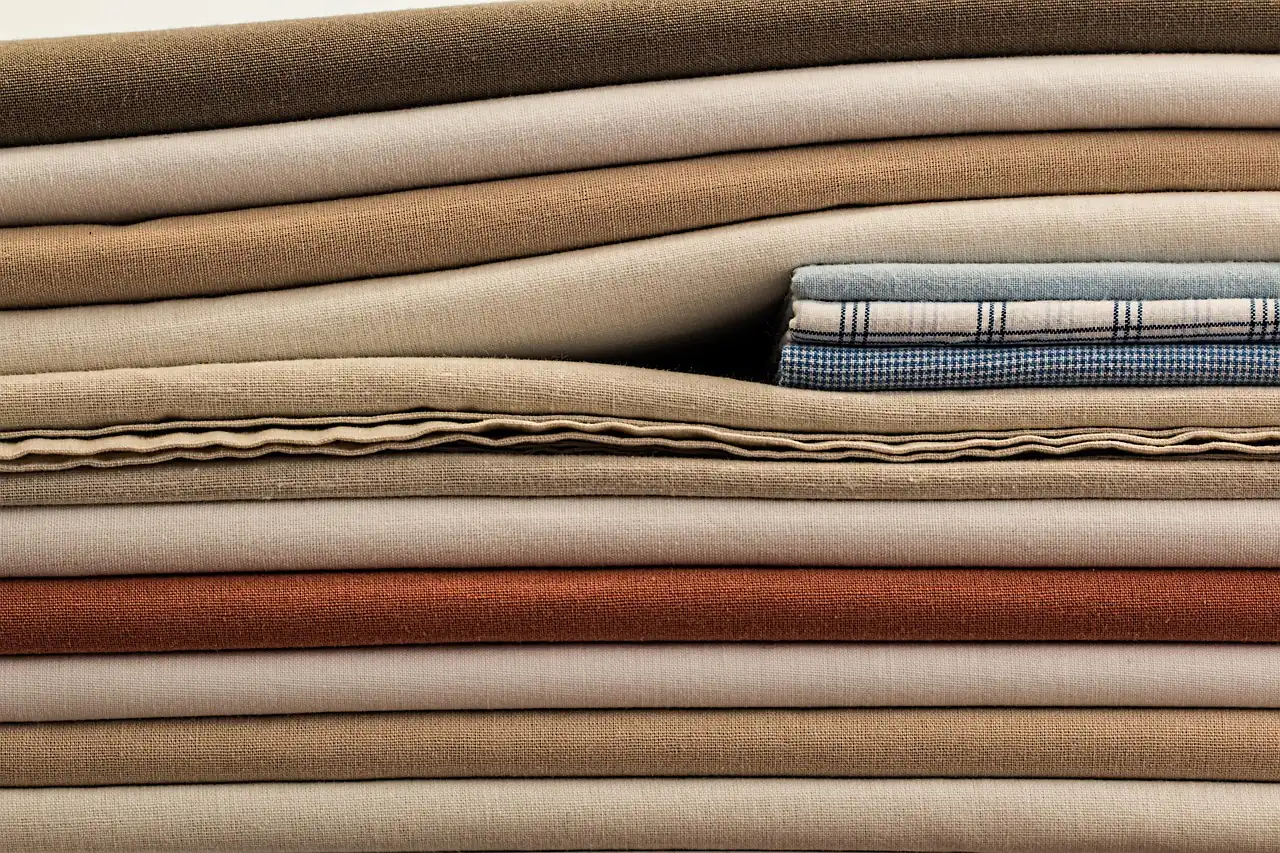
Panipat, Haryana. The north's home-textile town, about 90 km from Delhi, with spinning, dyeing, printing and finishing all in one place by the cluster study's count. The catch is the road. Panipat is inland, and a UK buyer on a forum gave up on an LCL order because "it was the inland trucking in india that made it none viable" (r/smallbusinessuk, 2024 (opens in a new tab)). Quote FCA at the named inland depot so the haul shows on its own line (Panipat cluster, FCA).
Karur, Tamil Nadu. Bed linen, table covers and kitchen cloths, sold mostly to the US and EU before 2025 by its association's account. Karur's makers rarely answer cold email, so tell them you're coming. The town, its port route through Tuticorin and its reticence are on the Karur cluster page.
Chennimalai and Erode, Tamil Nadu. Few foreign buyers search for Chennimalai, which is a reason to. The district administration lists Chennimalai and Erode for bedsheets, bedspreads, pillow covers, towels and home furnishings, and records 191 handloom and 57 power-loom weavers' cooperative societies in the district (Erode district, handlooms (opens in a new tab)). Cooperatives are a perfectly good way to make cloth, and they usually sell through an exporter or merchant, so ask who holds your order and where it's finished.
Solapur, Maharashtra. The towel and chaddar town, with GI protection on both Solapur Terry Towel and Solapur Chaddar (HEPC (opens in a new tab)). It belongs here because "bed and bath" buyers add towels to a sheet order, and towels are the line New Zealand already admits free. Ask about pile yarn and lint, because shedding is the towel complaint we see most from US buyers.
The Gujarat mill belt. The largest named US shipper sits around Vapi and Valsad, and it ships almost entirely full containers, 1% LCL. If you buy by the container on a repeat schedule, a mill like that is your natural partner, and you'd expect it to hold scope certificates you can look up. We found no source tying Bhiwandi or Ahmedabad to bed linen specifically, so we don't claim them.
Who Really Ships It
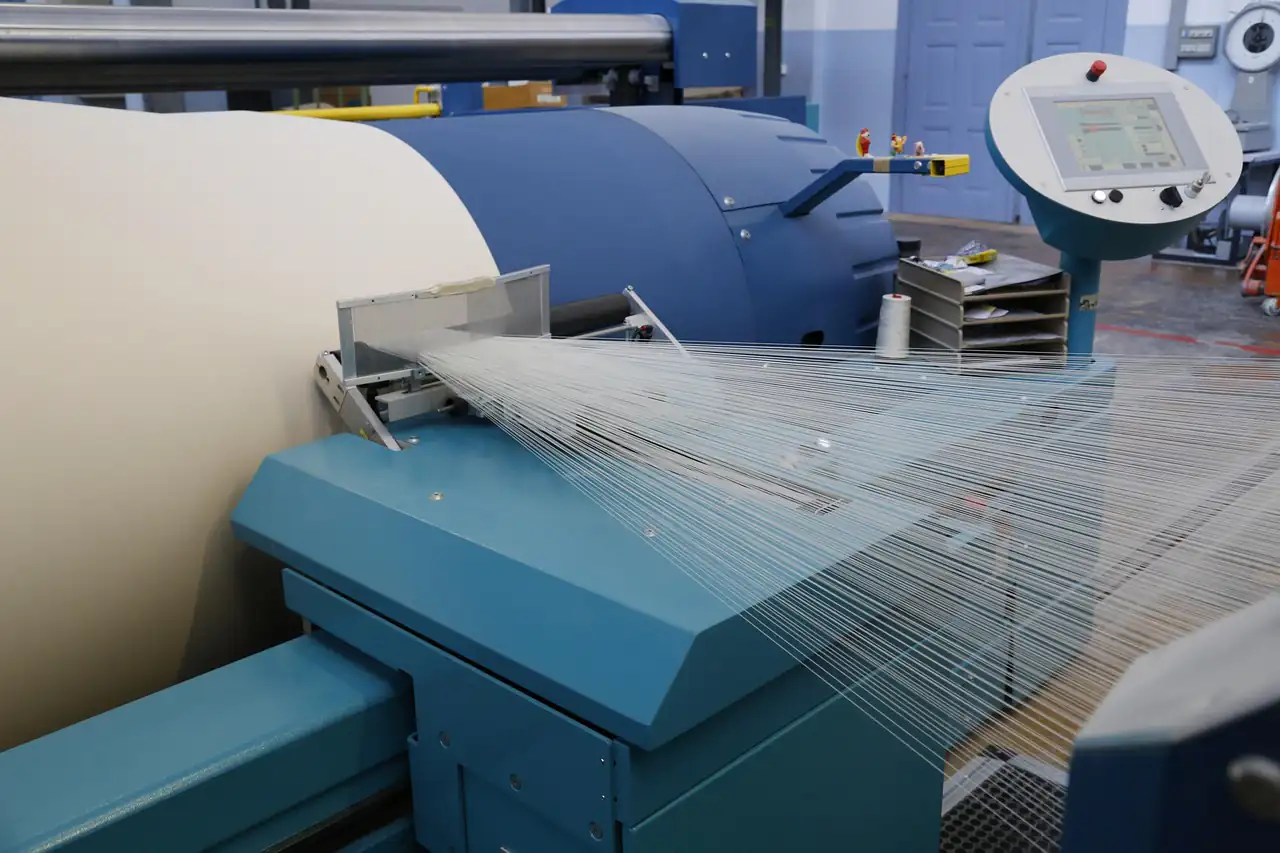
Here's the uncomfortable part of our US count. The towns with the reputation barely appear under their own names. Karur, which its association says exports thousands of crores a year, holds none of the 49 named shipper rows we read in HS 6302. Panipat holds three. The named list is led by big integrated mills, and more than half of all bills carry no shipper name at all.
Read that two ways. A Karur or Panipat exporter with a thin public shipping history isn't necessarily small or new. And you can't use US shipping data to check one, so the free public records on how to verify an Indian supplier do that work instead. Many exporters in these towns are merchant exporters who organise yarn, weaving, dyeing and stitching across several units. That's a normal model. The question is who answers for quality, and manufacturer or trading company shows how to ask it.
The ports in the same records are worth knowing. Nhava Sheva carries 33.7% of India's US bed-linen bills, Mundra 30.0% and Colombo 11.7%. Colombo is a transshipment hub, so a southern order may change ships there. Ask your supplier for the Indian loading port in writing.
What Goes Wrong, And What To Write Down
The regulator alert lists we pulled don't show bed linen as a category. Where buyers get caught is the fibre claim. Forum buyers report cotton sold as linen, polyester sold as silk and "organic" cotton that wasn't (from our forum log, 2026). So the order needs the fibre, weave, yarn count, weight and test method in writing, and the first bulk lot needs a lab test against it. If you want an organic or recycled claim, read textile certifications before you sign, because the certificate has to cover your shipment, not just the mill. For the US and EU forced-labour rules on cotton, see cotton traceability. Inspection method is on quality control in India and AQL sampling.

If you're meeting makers in person, the HEPC handloom fairs and Bharat Tex put home-textile exporters under one roof. Unannounced loom visits, lab sampling and pre-shipment checks in Panipat or Karur are field work, and SourcingSync (opens in a new tab) can do them for you.
Ready to act
Need hands-on help?
Finding out who weaves and finishes your order, lab sampling and pre-shipment inspection are execution, not knowledge. SourcingSync does it.
Questions Buyers Ask
Is Karur or Panipat better for bed sheets?
Neither wins outright. Panipat is near Delhi with handloom units that export mainly to Europe and the US. Karur is a southern cluster with a long record in bed and kitchen linen. Pick by your spec, and by who answers your first sample request properly.
Do I need an origin certificate for bed linen from India?
For the 0% rate in the UK, Australia and New Zealand (from 20 October 2026), yes. The US has no preference to claim. The EU withdrew India's preference on this chapter, so check TARIC with your broker.
Which port will my order leave from?
In our US records, Nhava Sheva and Mundra between them carry nearly two thirds of bills, and Colombo is a common transshipment stop for southern cargo. Ask your supplier for the port and the inland route.
Back To Panipat's Two Percent
When Lalit Goyal hoped the UK trade would grow, Britain was worth about one rupee in fifty of Panipat's exports. The deal has since made Indian sheets duty-free there, and the American market that the town built itself on has become harder. That's the opening for a UK, Australian or New Zealand buyer. Pick the town that fits your order size, ask where the cloth was woven, write the fibre down, and let the duty table do the rest. The other products are in the India product guides.