

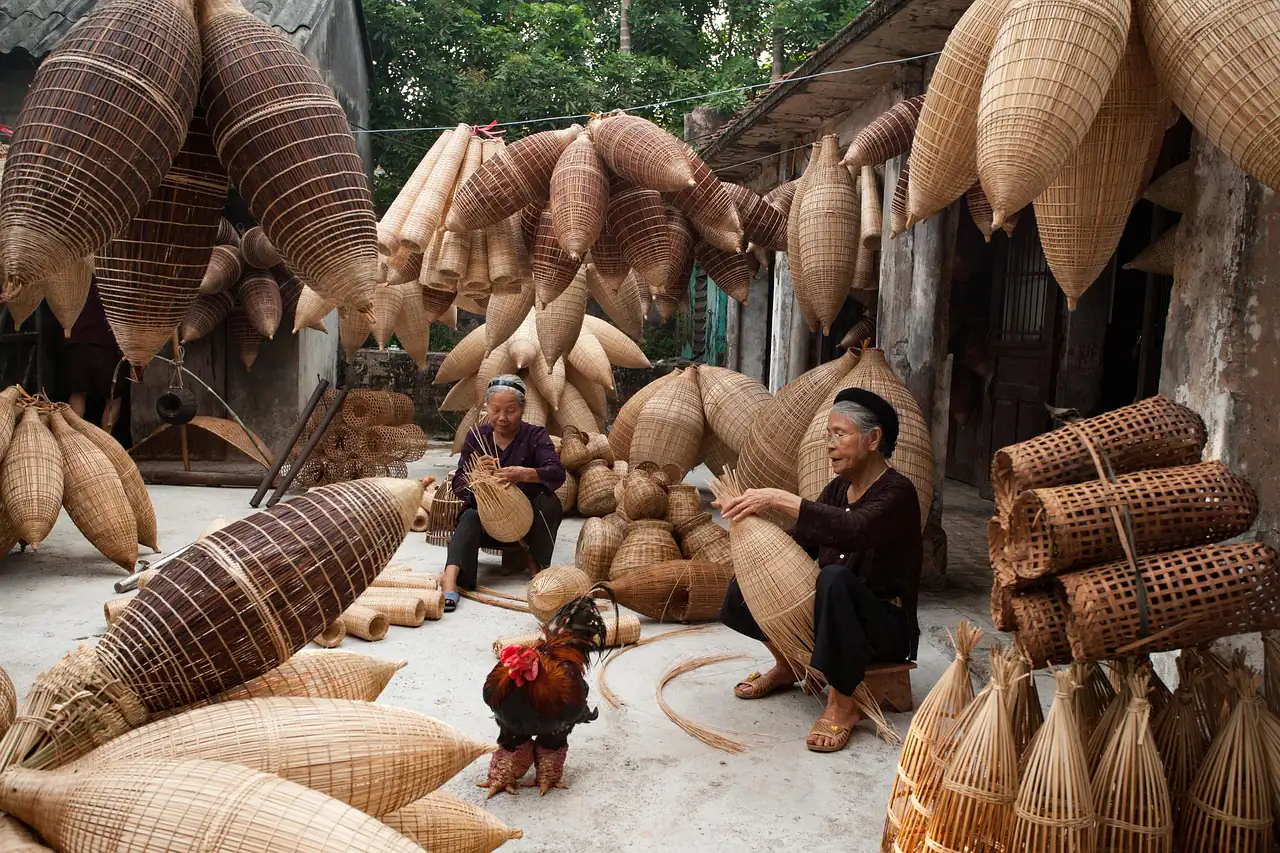
Handicrafts and Home Decor
What counts as handicrafts in trade, which crafts a small seller can buy, the towns that make each one, and the border rules that follow the material: timber, cane, metal and stone.
5 min read
Not always. At export council fairs such as IHGF and IIJS every exhibitor must be a council member, which guarantees a registered exporter but not a factory, because merchant exporters can be members too. Some other big Indian fairs are mostly domestic or open to the public.
No. At India's export council fairs, such as the IHGF Delhi Fair or IIJS, every exhibitor has to be a member of the council, and IHGF also asks for a record of exports. That guarantees you're meeting a registered exporter, not a factory, because council membership includes merchant exporters who buy from makers. Some other big Indian fairs are mostly domestic or even open to the public.
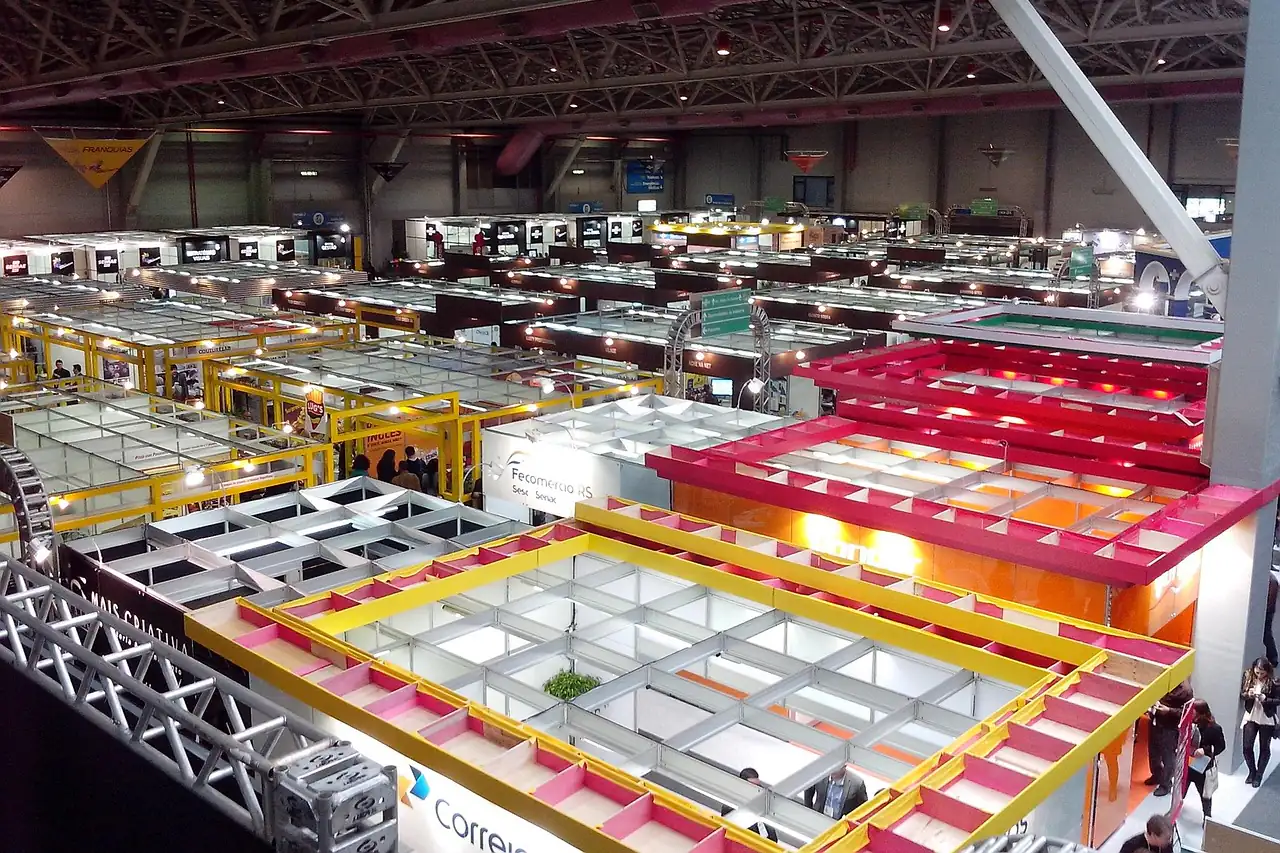
That's still a good deal, by the way. A fair is one of the best ways to meet Indian makers who barely exist online. You just need to know what the badge on the stand promises. This post goes fair type by fair type. The caveat - entry rules change edition to edition, and what I quote here was read on the organisers' own pages in September 2026.
India's Export Promotion Councils run the fairs most foreign buyers fly in for. To exhibit, a firm usually has to be a member. And membership means it holds a registration certificate with that council (Handbook of Procedures 2023, para 2.79 (opens in a new tab)).
Here's the catch. That same registration comes in two flavours - manufacturer exporter and merchant exporter. India's trade policy defines a manufacturer exporter as one that "exports goods manufactured by him", and a merchant exporter as one "engaged in trading activity and exporting" (Foreign Trade Policy 2023, chapter 11, paras 11.32 and 11.33 (opens in a new tab)). Both can be members, and both can take a stand.
So at an export council fair, you are meeting a real, registered exporter with a track record. That's genuinely worth something. Whether the person at the stand runs the machines is the one thing the badge doesn't tell you.
IHGF, India's big home, lifestyle and gifts fair, has the stiffest exhibitor rule I've read. Applicants must be paid-up EPCH members and must attach a three-year export performance certificate, and a nil export record "may not be entertained" (62nd IHGF application form, EPCH). The fair itself talks of "3000+ manufactures & exporters" (ihgfdelhifair.in (opens in a new tab)).
The same form asks exhibitors whether they'll take domestic volume buyers, small orders and ready stock. That's useful news for a small importer, because it says plenty of stands will happily do a modest first order. It also means you'll share aisles with Indian retailers, so some stands will be pitched at them.
A tip - the fair publishes an open pre-fair exhibitor directory by product. Shortlist there, then ask each one before you fly whether they make the product and where.
The jewellery shows run by GJEPC are business "exclusively for GJEPC members" (GJEPC circular, 11 Apr 2026), and "No counter sale will be permitted" (IIJS visitor terms). It's a serious B2B show. The member list still mixes manufacturers with traders and wholesalers, which in jewellery is how the trade works anyway.
| Fair | Who can exhibit | Main audience |
|---|---|---|
| IHGF Delhi Fair | Paid-up EPCH members with a three-year export record | Overseas buyers, plus some domestic volume buyers |
| IIJS | GJEPC members only, no counter sales | B2B jewellery trade |
| IITF | State pavilions, ministries, public companies | Largely the public, with a few B2B days |
| AAHAR | Mostly domestic hospitality and food-service equipment firms | Domestic trade |
Not every big fair at Delhi's Bharat Mandapam is an export show. A few examples, from the organisers' own pages -
None of these are bad events. They're just built for someone else. If you're an Australian importer looking for export-ready makers, your days are better spent at a council fair or a hosted buyer meet.
Fair stands are the easiest place in India to ask awkward questions, because everyone expects them. A few that work -
Then sort your cards into makers, traders and "not sure". Traders aren't a lower class. A good merchant exporter who answers for quality can be the right partner for a mixed range, and we lay that out in manufacturer vs trading company.
That's a bigger question, and it has its own page. Our guide to India's trade fairs lists the fairs with verified dates, which ones host overseas buyers, and how to get a seat. If you'd like someone to come with you, or to visit the shortlisted units after the fair, SourcingSync (opens in a new tab) does that.
So, does everyone at an Indian fair make what they sell? No. But almost everyone at a council fair really exports, and that's a better starting crowd than most directories will give you.
Related reading: Will India pay for your trip to a trade fair? · Is a city address a trader sign? · Job work and subcontracting in India
No. It means a registered exporter. Members can hold a manufacturer or a merchant registration.
We haven't found an export fair that limits exhibitors to manufacturers. Ask each stand and check the registration.
Usually not for an importer. It's mostly a public fair with only a few B2B days.
Many exhibitors expect small orders and ready stock, according to the exhibitor form. Ask at the stand.
Ready to act
Want this supplier checked before you commit?
SourcingSync can verify who makes it and who answers for quality, then manage the supplier for you.
What counts as handicrafts in trade, which crafts a small seller can buy, the towns that make each one, and the border rules that follow the material: timber, cane, metal and stone.
Cut diamonds, fine jewellery and fashion jewellery are three different trades. Where each is made, which fits your business, and the tests and border rules that apply.
Which Indian town weaves which rug, what the UK, US, Australia and NZ charge by rug type, how to ask who weaves your order, and when to meet makers.
Yash Khatri founded SourcingFrom to give buyers outside India the full picture of sourcing from India: what the country makes well, where it is made, who makes it and how it ships.
Leave your email and the PDF downloads straight away. We don't email it to you.

An Export Oriented Unit (EOU) is a manufacturer or service provider by definition, because India's trade policy says trading units are not covered. An SEZ unit can be a trading or warehousing unit, so SEZ status says less. Neither status proves quality or capacity.

Sometimes, and usually only in part. Indian export councils run hosted buyer programmes that cover hotel and part of the airfare, now funded through Market Access Support after the old MAI scheme ended on 31 March 2026. Each organiser sets its own package and conditions.

An Indian GST number (GSTIN) shows the state a business is registered in, carries its PAN, which is also its export code, and once looked up shows whether it is active and able to export. It proves a registered business exists, not that it makes your product.

Sea freight from India to Sydney, Melbourne, Brisbane or Fremantle takes about 25 to 36 days port to port, and about five weeks door to door. No carrier we read sails direct, every box changes ship at a hub such as Singapore, Port Klang, Colombo or Tanjung Pelepas, and a missed connection can push a shipment past 50 days.

Sea freight from India to Auckland takes about 29 to 32 days port to port on a Port Klang relay, and 36 to 39 days to Tauranga. Other routings we read took 51 to 97 days because they relayed through North Asia or Oakland, so the relay your forwarder books decides your transit.

Mundra is the closer port for every north Indian cluster we mapped, but closer is not always faster. In the schedules we read, Mundra was quicker to the US East Coast, Nhava Sheva was quicker to the UAE, New Zealand and slightly quicker to Europe, and for Australia the two are close.