

Babywear From India: Where It Is Made and Why the Poppers Matter More Than the Cotton
- Updated
Your route: babywear from India
Made in
Leaves India from
Cochin
IndicativeUseful directional information where precise verification is unavailable.UnknownInsufficient evidence, or not yet researched.
Also Tuticorin (V.O. Chidambaranar), Chennai
At sea
31 to 37 days
9 scheduled sailings, port to port
Every port and sailing to United Kingdom
- Cochin to London Gateway: 31 to 37 days, 9 sailings
- Tuticorin (V.O. Chidambaranar) to London Gateway: 31 to 33 days, 6 sailings
- Chennai to London Gateway: 26 to 34 days, 9 sailings
Made in
Leaves India from
Cochin
IndicativeUseful directional information where precise verification is unavailable.UnknownInsufficient evidence, or not yet researched.
Also Tuticorin (V.O. Chidambaranar), Chennai
At sea
28 to 34 days
9 scheduled sailings, port to port
Every port and sailing to European Union
- Cochin to Rotterdam: 28 to 34 days, 9 sailings
- Tuticorin (V.O. Chidambaranar) to Rotterdam: 28 to 30 days, 6 sailings
- Chennai to Rotterdam: 23 to 31 days, 9 sailings
Made in
Leaves India from
Cochin
IndicativeUseful directional information where precise verification is unavailable.UnknownInsufficient evidence, or not yet researched.
Also Tuticorin (V.O. Chidambaranar), Chennai
At sea
34 to 47 days
11 scheduled sailings, port to port
Every port and sailing to United States
- Cochin to New York/New Jersey: 34 to 47 days, 11 sailings
- Cochin to Savannah: 40 to 53 days, 8 sailings
- Cochin to Los Angeles/Long Beach: 44 to 67 days, 10 sailings
- Tuticorin (V.O. Chidambaranar) to New York/New Jersey: 34 to 57 days, 14 sailings
- Tuticorin (V.O. Chidambaranar) to Savannah: 40 to 60 days, 14 sailings
- Tuticorin (V.O. Chidambaranar) to Los Angeles/Long Beach: 38 to 53 days, 7 sailings
- Chennai to New York/New Jersey: 31 to 43 days, 13 sailings
- Chennai to Savannah: 41 to 53 days, 15 sailings
- Chennai to Los Angeles/Long Beach: 36 to 55 days, 7 sailings
Made in
Leaves India from
Cochin
IndicativeUseful directional information where precise verification is unavailable.UnknownInsufficient evidence, or not yet researched.
Also Tuticorin (V.O. Chidambaranar), Chennai
At sea
20 to 38 days
11 scheduled sailings, port to port
Every port and sailing to United Arab Emirates
- Cochin to Jebel Ali: 20 to 38 days, 11 sailings
- Cochin to Khor Fakkan: 20 to 29 days, 6 sailings
- Cochin to Fujairah: 22 to 39 days, 4 sailings
- Tuticorin (V.O. Chidambaranar) to Jebel Ali: 22 to 57 days, 8 sailings
- Tuticorin (V.O. Chidambaranar) to Khor Fakkan: 27 to 58 days, 7 sailings
- Tuticorin (V.O. Chidambaranar) to Fujairah: 23 to 23 days, 1 sailings
- Chennai to Jebel Ali: 20 to 44 days, 12 sailings
- Chennai to Khor Fakkan: 24 to 56 days, 12 sailings
- Chennai to Fujairah: 19 to 25 days, 2 sailings
Made in
Leaves India from
Cochin
IndicativeUseful directional information where precise verification is unavailable.UnknownInsufficient evidence, or not yet researched.
Also Tuticorin (V.O. Chidambaranar), Chennai
At sea
28 to 49 days
15 scheduled sailings, port to port
Every port and sailing to Australia
- Cochin to Sydney: 28 to 49 days, 15 sailings
- Cochin to Melbourne: 28 to 45 days, 10 sailings
- Cochin to Brisbane: 25 to 47 days, 10 sailings
- Cochin to Fremantle: 23 to 40 days, 10 sailings
- Tuticorin (V.O. Chidambaranar) to Sydney: 29 to 51 days, 15 sailings
- Tuticorin (V.O. Chidambaranar) to Melbourne: 30 to 52 days, 12 sailings
- Tuticorin (V.O. Chidambaranar) to Brisbane: 26 to 48 days, 14 sailings
- Tuticorin (V.O. Chidambaranar) to Fremantle: 25 to 56 days, 14 sailings
- Chennai to Sydney: 27 to 53 days, 19 sailings
- Chennai to Melbourne: 23 to 61 days, 21 sailings
- Chennai to Brisbane: 24 to 64 days, 15 sailings
- Chennai to Fremantle: 18 to 56 days, 15 sailings
Made in
Leaves India from
Cochin
IndicativeUseful directional information where precise verification is unavailable.UnknownInsufficient evidence, or not yet researched.
Also Tuticorin (V.O. Chidambaranar), Chennai
At sea
54 to 90 days
15 scheduled sailings, port to port
Every port and sailing to New Zealand
- Cochin to Auckland: 54 to 90 days, 15 sailings
- Tuticorin (V.O. Chidambaranar) to Auckland: 55 to 90 days, 13 sailings
- Chennai to Auckland: 30 to 86 days, 31 sailings
- Chennai to Tauranga: 37 to 39 days, 16 sailings
Carrier schedules read 23 Sept 2026. Days are port to port; inland haul and customs time come on top.
Add up the landed costFind the HS codeGet help shipping it (opens sourcingsync.com in a new tab)
In week 47 of 2025, Ireland's product safety authority filed five alerts on the EU's Safety Gate system in one go. Five children's clothing items, all made in India, all with the same fault. "The poppers can be easily detached, creating small parts. A small child may put them in the mouth and choke" (EU Safety Gate, SR/04062/25 to SR/04066/25 (opens in a new tab)). The fabric wasn't the problem. The dye wasn't the problem. A small metal fastener was.
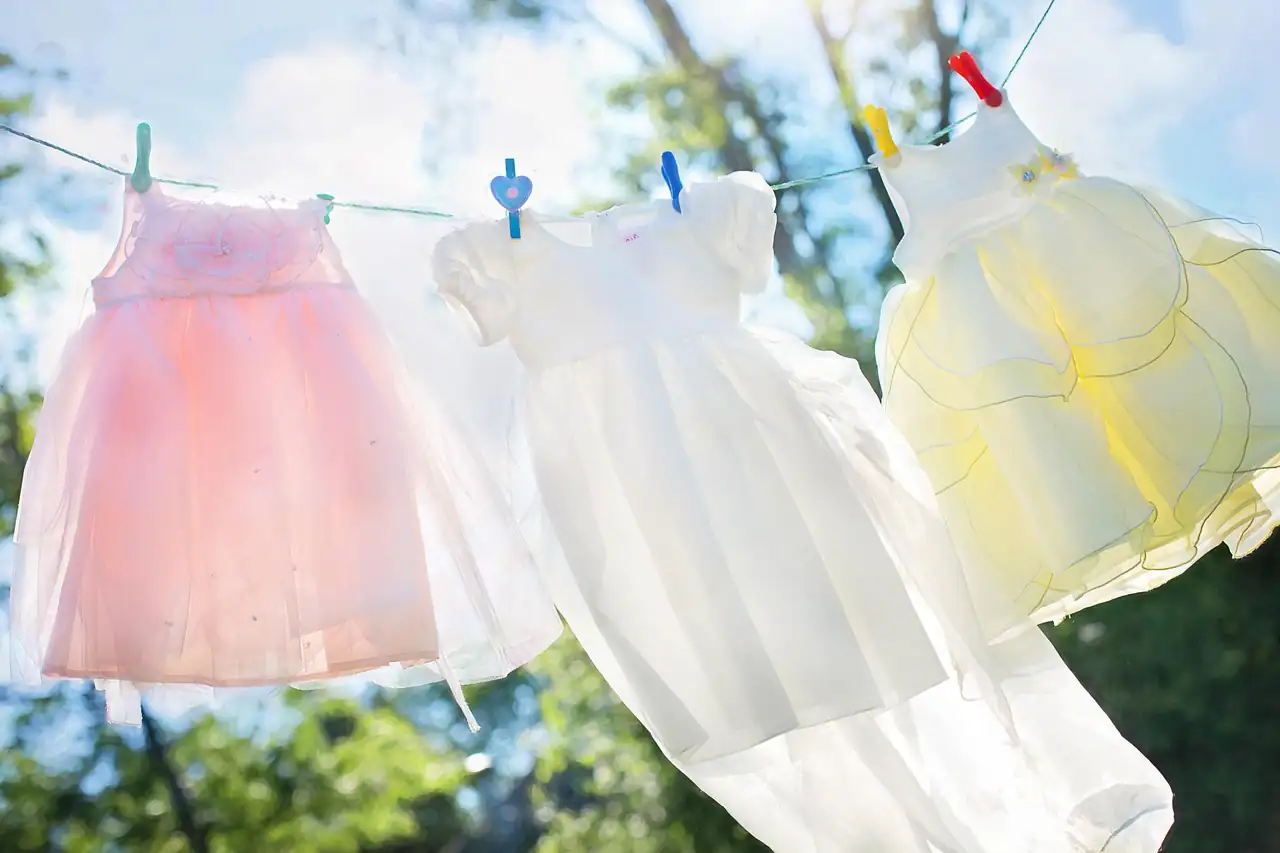
That's the pattern behind almost every Indian babywear failure we can find in official records, and it's good news for a buyer, because it's fixable at the design stage. India is one of the strongest babywear sources in the world, far stronger than in plain T-shirts. This page covers where it's made, what fails at the border and how to design it out, and what each market charges. Our shipping records are US-only, and we publish no prices. Check the current price with your maker.
Where Indian Babywear Is Made
Knitted babywear is a Tiruppur product first. In US shipping records, Tiruppur-area makers account for 37.4% of named-shipper shipments of knitted babywear, and five of the ten largest named shippers have Tiruppur or Coimbatore addresses (our count). The Tiruppur knitwear cluster page explains how the town works: an exporter holds your order while knitting, dyeing, printing and sewing can happen in different units. For babywear that matters more than usual, because the unit that attaches the poppers is the one you most need to see.
The biggest single named shipper, though, is in Kerala, not Tamil Nadu, and another sits in Krishnagiri on the road to Bengaluru. So "babywear means Tiruppur" is a good starting point, not the whole map. Ask every maker where each step happens.
Woven babywear (muslin swaddles, woven sets, smocked dresses) is a different trade. The US record for woven babywear is thinner and 85.2% of its shipments carry no shipper name, so we can't map it with confidence. Woven fashion detail is the Delhi belt's speciality, covered on the NCR apparel hub page. Our reading is that buyers of woven baby pieces should look there and in Jaipur as well as the south, and confirm by sample (Indicative).
Why is India strong here and mid-table in basics? Our reading is cotton and certification. Babywear buyers pay for soft, traceable cotton and an organic claim they can prove, and India grows, spins and knits its own cotton. India also holds the largest share of GOTS-certified facilities in the world (see the Tiruppur page). The plain-tee price fight with Bangladesh matters less when the parent reads the label. Cotton traceability and textile certifications show how to check the claim, and the paper that counts is the transaction certificate for your shipment.
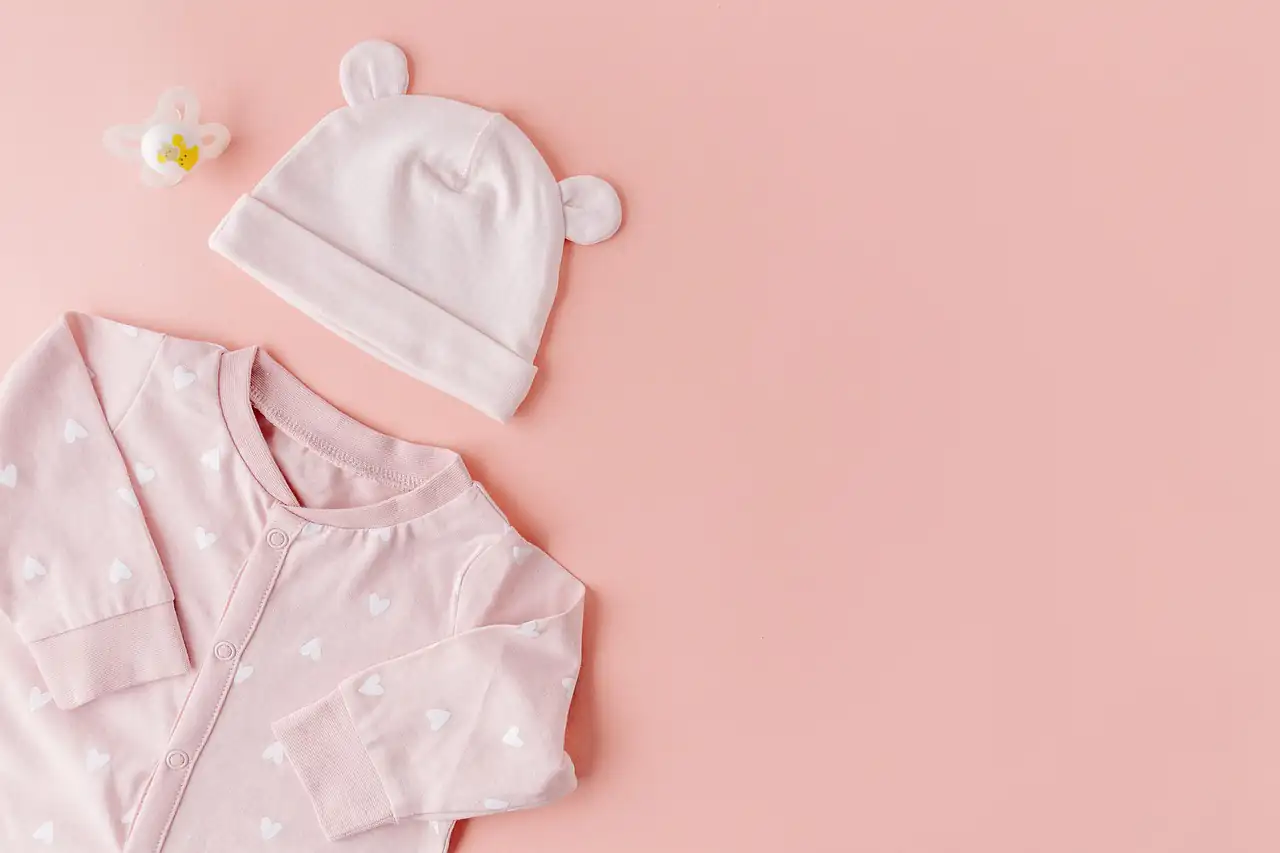
What Fails, And How To Design It Out
Read the records together and they say one thing: the dangerous parts of a baby garment are the parts that aren't fabric. Here are the four failure types, in the order they turn up.
Poppers and snaps that come off. Ireland's five alerts in 2025 are the clearest case, but they aren't alone. Two more EU alerts in 2024 named babies' clothing with detachable poppers and metal fasteners. In the UK, recall notices for India-made rompers, bodysuits and trousers at Poundland (2024), JoJo Maman Bébé (2025) and Matalan (2025) all name poppers. In the US, a 2022 recall of baby rompers sold by The Children's Place cited metal snaps that could detach (CPSC, 2022 (opens in a new tab)). The fix is in the PO. Name the popper supplier, require a pull test on every lot of fasteners and on finished garments, and check that the fabric under the popper is reinforced. A popper is only as strong as the cloth it's pressed into.
Zips that let go. A US recall in March 2026 covered sleepsuits whose "zipper head can detach", and an EU alert in 2024 named a babies' sleepsuit with a zip slider that could come off (CPSC, 2026 (opens in a new tab)). Specify a zip with a locking slider and a top stop, and test it.
Cords near the neck. Twelve EU alerts were cords and drawstrings on children's clothing, under the EN 14682 standard. Most were older children's hoodies and dresses, but a 2025 Italian alert named a children's jumpsuit with decorative ribbons at the neck. For babywear the rule is simple: no cords or ribbons at the neck at all. Make that a design rule before the first sample, not a lab finding after the last carton.
Sleepwear and sleep bags. In the US, eight India-made recalls were children's pyjamas and loungewear that failed the federal sleepwear flammability rules. Two older records, one in the EU and one in the US, concerned infant sleeping bags with neck openings too large for the baby's size. If your range includes sleepwear for the US, decide at design stage whether it will be tight-fitting or flame-resistant, and ask your lab which rule applies to your sizes. That's a call for the lab, not the factory.
Then the chemistry, which has failed less often but matters for every buyer. For the US, children's products need total lead under 100 ppm in accessible parts and 0.009% lead in paint, with a Children's Product Certificate from a CPSC-accepted lab (CPSC (opens in a new tab)). The certificate filing changes on the US page apply. For the EU and UK, test prints for phthalates and dyed cotton for banned azo amines. The limits we hold for those are reported, not read from the law, so confirm them with your lab. The inspection steps that sit around the tests are on quality control in India.
If you want someone to review the pattern and trims before sampling, pull-test fasteners on the line and draw the inspection sample, SourcingSync (opens in a new tab) arranges that at origin.
What Each Border Charges
We read the UK, US and Australian lines for cotton knitted babywear on 7 October 2026.
Australia. 5% general, 0% under ECTA on the 6111 lines we read (DFAT (opens in a new tab)). The garment has to meet the origin rule, which turns on where the fabric was made. India to Australia has the test.
United Kingdom. 12% third-country on cotton knitted babywear, 0% for India from 15 July 2026 (UK Trade Tariff, 6111209000 (opens in a new tab)). See India to the UK for the proofs.
United States. The rate depends on the garment. Under 6111.20, cotton baby blouses and shirts pay 19.7%, T-shirts, sweaters and trousers 14.9%, dresses 11.5% and other items such as sunsuits 8.1% (USITC (opens in a new tab)). The extra Section 301 duty on Indian goods comes on top, covered on India to the US. A babywear set can mix several of those lines, so ask your broker how your set will be classified before you price it.
New Zealand, the EU and the UAE. Apparel kept EU GSP for 2026 to 2028 with a REX statement. New Zealand's FTA rate and start date, and the UAE's CEPA rate, are on the New Zealand, EU and UAE pages.
Origin needs one sentence of attention. Babywear made from Indian cotton yarn, knitted and sewn in India, passes easily. A garment sewn from imported fabric may not, and some trims and fabrics in fashion baby ranges are imported. Put the fabric origin in your RFQ. Rules of origin explains the tests.
Reading The US Shipping Record
Three things in the US data carry over to any buyer.
The trade is more concentrated than T-shirts. The ten largest named shippers hold 18.5% of all India-origin knitted babywear shipments to the US, against 6.5% for T-shirts. Babywear is a specialist business, and a few makers do a lot of it.
The southern route runs through two hubs. Colombo leads as the port of loading, and Salalah in Oman shows up at 14.4%, a transshipment hub on the way to the US east coast. If your Tiruppur quote says Colombo, that isn't a mistake. Sea freight routes explains feeders and hubs.
And the US fall was steep. Shipments were down by half in March to August 2026 against a year earlier (our count). Babywear makers built around US programmes are looking for buyers in the UK, Australia, New Zealand, Europe and the Gulf. Our reading is that this is a good moment to ask for a careful sample round and for the popper and zip specs you want (Indicative). It isn't a promise of anything on price.
To check a maker's registrations, start with how to verify Indian suppliers. To compare India with its neighbour for knitted basics, see India vs Bangladesh for garments.
Ready to act
Need hands-on help?
Pattern and trim reviews, pull tests on the line, lab booking and pre-shipment inspection are execution, not knowledge. SourcingSync does it for foreign buyers.
Questions Buyers Ask
Is organic cotton babywear from India genuine?
It can be. Ask for the GOTS transaction certificate that covers your shipment and check it on the certifier's database. A factory scope certificate alone doesn't prove your order is organic.
Which test matters most?
For the EU and UK, the pull test on poppers and the cord check, because that's what the records show failing. For the US, add lead, the Children's Product Certificate and sleepwear flammability where it applies.
Can I order small quantities?
Babywear makers in Tiruppur work at volume, and we have no reliable MOQ figures. Ask per style and per colour, and expect fabric dyeing minimums to set the real floor.
Back To The Five Alerts
Five garments, one inspector, one week, and the same small fastener in every case. Ireland's alerts don't say Indian babywear is unsafe. They say the trims on those garments weren't specified or tested, and that's the part a buyer controls. India's cotton, knitting and certification are the reasons to buy here. The poppers, the zips and the neckline are the reasons to write a careful PO.
Next, keep India product guides open for the rest of your range, and read cotton T-shirts from India if you're adding older children's or adult basics.