Skip to content

CE and UKCA Marking for Products Made in India

Yash KhatriFounder, SourcingFrom
Published

9 min read

CE and UKCA are the maker's own declaration that a product meets EU or GB product law, backed by a technical file and sometimes a third-party body. This guide shows an importer what to ask for and how to check it, and walks an Indian manufacturer through the steps from finding the right directive to signing the declaration.

The Short Version

  • CE is not a certificate. It is a declaration the manufacturer signs, and most electrical goods need no outside body at all.
  • Great Britain still accepts CE alongside UKCA, so one EU file usually covers both markets.
  • Ask for the signed declaration and the test reports behind it, then check any notified body number on NANDO.
  • Your name and address must go on the product, and the EU now wants an operator based in the EU for most CE goods.
  • Leather, textiles, furniture and most handicrafts must not carry CE at all.
Workers along an electronics assembly line in a factory

In June 2026 a shipment of iron table lamps from India was stopped at the UK border. The fault, according to the UK product safety regulator, was "inadequate cord anchorage", which means a tug on the flex could expose live parts. The lamp was a decorative piece from a handicraft range, the kind of thing a homeware buyer orders alongside candle holders and planters, and that is exactly why it got caught.

This guide covers what the CE and UKCA marks mean, what you as the buyer should check, and how an Indian maker actually gets a product marked. It sits in our certifications hub.

1. What a CE or UKCA Mark Actually Says

A CE mark is the manufacturer saying "this product meets every EU law that applies to it". UKCA says the same thing for Great Britain. Neither is a certificate issued by a government, and there's no central register you can look a mark up in.

For most products the manufacturer checks the product itself, writes a technical file, signs an EU Declaration of Conformity and puts the mark on. An outside body called a notified body only comes in where the law says so (some machinery, gas appliances, PPE, medical devices). The European Commission is blunt about one thing - "voluntary certificates" from test houses are not valid as proof of CE conformity.

So when a supplier sends you a glossy "CE Certificate" from a lab, that's a test report with a nice border. It may be useful evidence. It is not the declaration.

2. Which Products Need CE or UKCA

CE applies only to products covered by EU harmonisation law. From Indian suppliers the ones you'll meet most are:

  • Electrical goods under the Low Voltage Directive 2014/35/EU, which covers equipment running on 50 to 1,000 V AC or 75 to 1,500 V DC. A brass table lamp with a mains plug is in. A battery tea light is not (it falls under general product safety instead).
  • EMC (the Electromagnetic Compatibility Directive) for anything electrical that could give off or suffer interference.
  • Radio equipment for anything with Wi-Fi, Bluetooth or a remote. Since 1 August 2025 internet-connected radio products must also meet the cybersecurity rules in Delegated Regulation 2022/30.
  • RoHS for restricted substances in electronics, covered in our RoHS and WEEE guide.
  • Machinery, PPE (safety gloves and work boots), toys and medical devices.

And here's the part buyers get wrong in the other direction. Apparel, home textiles, leather bags, furniture and most handicrafts are not CE products, and putting CE on them is itself a breach. They fall under general product safety, REACH and sector rules instead, which our restricted substances guide and children's product safety guide cover.

UKCA and CE in Great Britain

Under the Product Safety and Metrology (Amendment) Regulations 2024 the UK keeps recognising CE "alongside or in place of" UKCA for Great Britain. In practice that means most Indian exporters selling to both markets can work from one EU file. UKCA may still sit on a label or a document rather than the product itself until 11pm on 31 December 2027. Only a UK Approved Body (searchable on the UKMCAB database) can certify for UKCA where a third party is needed. Northern Ireland follows its own guidance and stays with CE.

3. What an Importer Should Check

If you import a CE product into the EU or GB you carry legal duties, and "the supplier said it was fine" isn't one of the defences. GOV.UK lists them plainly - put your name, trade name and postal address on the product, check the maker did the conformity work and marking properly, keep the documentation, and cooperate with regulators.

The EU added another layer in 2021. Under Article 4 of Regulation (EU) 2019/1020, products under the Low Voltage, EMC, Radio Equipment and RoHS laws (among others) can't be placed on the EU market unless there's an economic operator established in the EU, and that operator's name and contact details must be on the product, its packaging, the parcel or an accompanying document. If you're the EU importer that's you.

Here is what I'd ask for, and when:

  1. At quotation - the list of directives and standards the supplier says apply. If they can't name them then they haven't done this before.
  2. Before the sample is approved - the signed Declaration of Conformity (EU, and UK if they offer UKCA) naming your exact model numbers.
  3. With the sample - the test reports behind the declaration, dated, with the lab named and the model photographed.
  4. Before shipment - a photo of the rating label, the CE mark (at least 5 mm high unless a product law says otherwise), your importer address and the WEEE bin symbol where it applies.

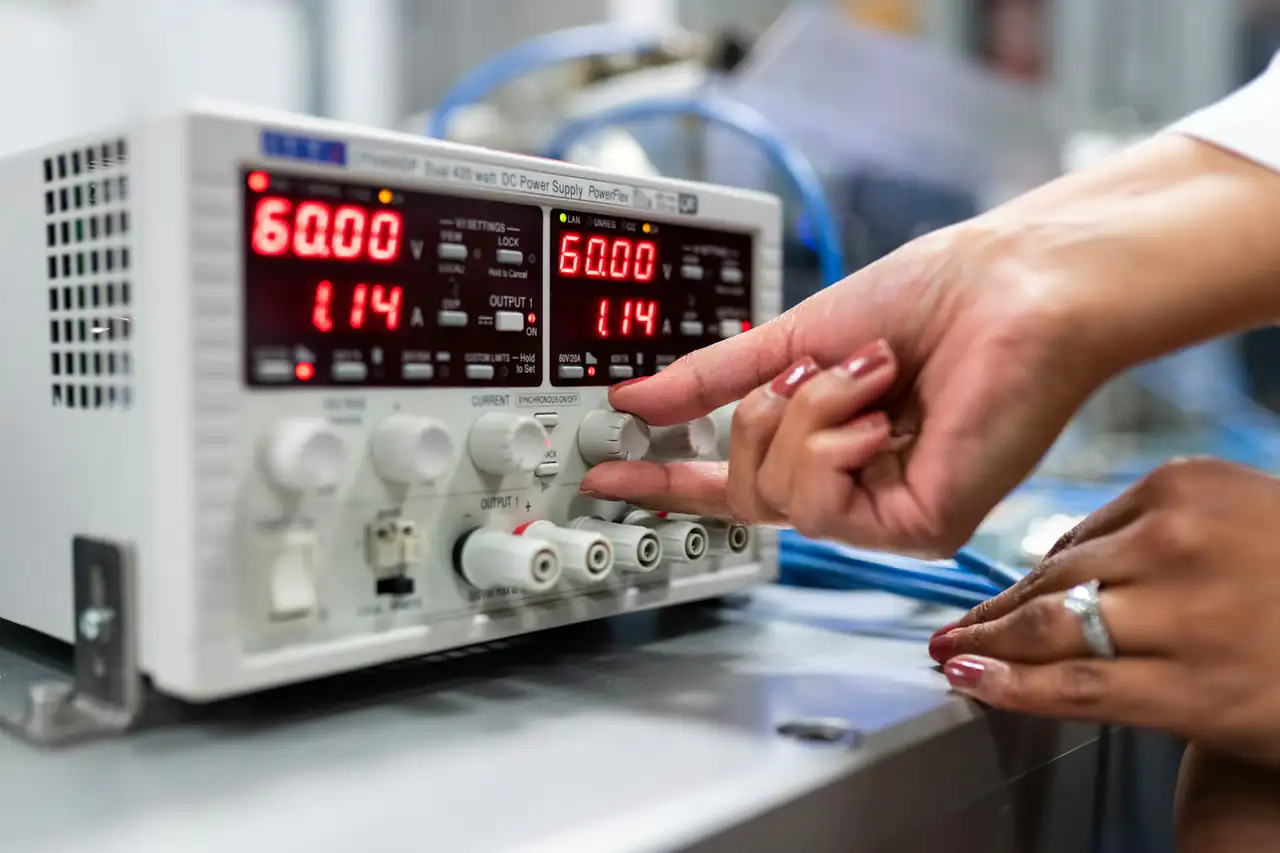
A hand adjusting a bench power supply during electrical testing

How to Check the Paperwork Is Real

  • Notified body number. If a four-digit number sits next to the CE mark, look it up on the Commission's NANDO database and check that body is notified for that directive and that procedure. A number that doesn't exist or covers something else is a red flag.
  • UK Approved Body. Check it on UKMCAB the same way.
  • Test reports. Ring or email the lab using contact details from its own website, not the PDF, and give them the report number. For Indian labs, check accreditation and scope on the NABL laboratory search.
  • Model match. The model on the report must match the one you're buying. A report for a 40 W lamp doesn't cover the 60 W version with a different holder.

Red Flags

  • A "CE certificate" with no declaration behind it.
  • A declaration signed by a trader who didn't make the product and holds no technical file.
  • Reports older than the current version of the standard, or for a different factory.
  • CE printed on cotton cushions or leather bags. It means nobody checked what applies.

4. Where Indian Products Actually Fail

Our own pull of EU Safety Gate, UK OPSS and US CPSC records from 2021 to 2026 found 130 Safety Gate alerts on India-origin products. Most were cosmetics, leather with chromium VI and jewellery with cadmium, and by our read none of them were mains electrical goods. The electrical failures turn up instead in the UK and US records, and they look alike - decorative lamps, wiring inside handcrafted fittings, small machines sold to workshops.

The UK case at the top of this page is the pattern. Another UK report, from October 2025, covered an Indian tablet press machine where the turret could run at full speed with the door open, which is a machinery directive problem rather than a lamp one. Neither failure is exotic. Both are things a test lab checks in the first hour.

So my plain view is this. If you buy decorative lighting from a handicraft cluster then treat the electrical side as a separate product from the brass, and get it tested as one.

5. A Note for Fair Reading

A Moradabad brassware unit that fits a lamp holder and flex bought from a local market is not doing anything shady. It's how that trade has always worked. The fix is to specify a certified lamp holder, cord and plug in the purchase order and have the finished lamp tested, not to drop the supplier. Our brassware page covers that cluster.

6. How an Indian Exporter Gets One

This half is for the manufacturer in India. If you are a trader then the factory still needs to do most of it, because the declaration belongs to whoever makes the product.

Step 1 - Find every law that applies. Go product by product. A mains table lamp usually means Low Voltage, EMC, RoHS and ecodesign for the light source. Add Radio Equipment if it has a smart module. Write the list down. (About a day, if you read the Your Europe pages and the directive scopes.)

Step 2 - Pick the standards. Each directive has harmonised standards published in the EU Official Journal, and only those give a "presumption of conformity". For lamps that's the EN 60598 family. Buy the current edition from a standards body. (A few days.)

Step 3 - Check whether a notified body is needed. For Low Voltage and most EMC work it isn't. For some machinery, PPE category III, gas appliances or medical devices it is, and you'll find accredited bodies on NANDO. For UKCA, the equivalent is a UK Approved Body on UKMCAB.

Step 4 - Test at an accredited lab. Use a lab accredited for that exact standard. In India check scope on the NABL search. Send production-representative samples, not a hand-built special. Testing for a simple lamp usually takes one to three weeks. Check the current fee with the lab.

Electronic test equipment on a laboratory bench

Step 5 - Fix and retest. First-time failures on Indian lighting are mostly cord anchorage, earthing of metal bodies, creepage distances and markings. Fixing these is cheap if you design it in and painful if you find it after 2,000 pieces are polished.

Step 6 - Build the technical file. Product description, drawings, bill of materials with the certified parts listed, risk assessment, test reports, user instructions and labels. The EU says keep it for at least 10 years after the last unit is placed on the market.

Step 7 - Sign the Declaration of Conformity. One page, naming the manufacturer, model, directives, standards and the signatory. Do a UK version if the buyer wants UKCA. Update it whenever the product, the law or your address changes.

Step 8 - Mark the product. CE (and UKCA if used), the notified body number if one was involved, the rating label, your name and address, and space for the importer's address. Agree the artwork with your buyer before printing.

Step 9 - Send the buyer their pack. The signed declaration, the test reports, label photos, and an offer to share the technical file with any regulator on request.

There's no renewal date on a CE mark. But a new standard edition, a changed component or a new factory means you go back to Step 4. Building and running this for a range of SKUs is heavy work, and if you'd like hands-on help managing the testing and the file across suppliers, SourcingSync (opens in a new tab) can take it on.

7. A Worked Example

This example is an illustration built from the rules above, not a real firm.

Say you're a UK homeware brand buying 600 brass table lamps from a Moradabad maker, for sale in the UK and Germany.

You ask at quotation which directives apply. The maker names Low Voltage, EMC, RoHS and ecodesign, so you know you're talking to someone who has done this. You then specify a certified holder and plug in the purchase order. Before approving the sample you get an EU declaration listing your three model numbers, plus EN 60598 and EMC reports from an accredited lab with photos of the lamp. Before shipment you see the label with CE, your UK address and your German operator's address, and the bin symbol.

At the UK border CE is accepted, so you don't need a separate UKCA file. In Germany your EU operator holds the declaration. Nothing in that chain is exotic, and nothing in it relies on trust.

FAQ

Is CE a certificate I can download?

No. It's a declaration the manufacturer signs. Ask for the declaration and the test reports.

Does my product need UKCA if it has CE?

For most goods sold in Great Britain, no. CE is still recognised. Check the sector rules for construction products, medical devices and a few others.

Can my Indian supplier be the EU operator?

Only if it has an establishment in the EU. Otherwise the importer, an EU authorised representative or a fulfilment service provider takes that role.

Do cotton cushions need CE?

No, and they shouldn't carry it.

How long does CE last?

It has no expiry, but it stops being true the moment the product, the standard or the law changes.

8. Next Steps

Read the RoHS and WEEE guide if your product has any electronics, and our quality control page for how to check the goods before they leave. If the importer-of-record side worries you, start with importer of record.

A mark is a promise someone has to keep. Make sure it's the factory, and that you've seen the proof.

Ready to act

Want this supplier checked before you commit?

SourcingSync can verify who makes it and who answers for quality, then manage the supplier for you.

Talk to SourcingSync (opens sourcingsync.com in a new tab)
Yash KhatriFounder, SourcingFrom

Yash Khatri founded SourcingFrom to give buyers outside India the full picture of sourcing from India: what the country makes well, where it is made, who makes it and how it ships. He writes and edits every guide on the site, and holds each one to the same rule: say what we know, show how sure we are, and say plainly where the evidence runs out. He also runs SourcingSync, the hands-on service that does the sourcing work for buyers, and Kirnova, the data and intelligence company behind SourcingFrom Intelligence.

View profile

Want new guides when they go up? Get the newsletter

Download This Guide as a PDF

Leave your email and the PDF downloads straight away. We don't email it to you.

GMP Certification for Supplements, Ayurveda and Medicines From India

GMP means different things depending on who stamped it. An Indian state licence under revised Schedule M, a WHO-GMP certificate or CoPP from CDSCO, a Schedule T licence for Ayurveda and US cGMP under 21 CFR 111 are four separate things, and the US version is never "certified" by the FDA at all. This guide shows importers what to ask for and how to check it, and walks Indian makers through the steps.

Halal Certification for Goods From India, for Buyers and Exporters

A halal certificate is a private or national body saying a product or a plant meets Islamic dietary rules under a named standard. For meat from India it is now also an export rule. This guide shows importers which issuers their market accepts and how to check one, and walks an Indian exporter through i-CAS Halal and the importing country's own system.

Health and Veterinary Certificates for Food From India

A health or veterinary certificate is the exporting government's signed statement that a consignment meets the importing country's rules. For many foods of animal origin and some plant foods, no certificate means no entry. This guide shows importers when their border asks for one and how to check it, and walks an Indian exporter through EIC's inspection, approval and certificate steps.

Latest articles

Product Carbon Footprints and Carbon Credits for Buyers and Indian Exporters

A product carbon footprint is a calculation, not a pass mark, and it is only as good as its boundary, its data and who checked it. Carbon credits are a separate thing: a bought claim against emissions elsewhere, and since 27 September 2026 they can no longer back a "carbon neutral" product claim to EU consumers. India now runs its own credit market under BEE.

Certifications for Importing From India and Exporting From It

Every certificate answers one question for one market. This index lists the certification guides by group, says in a line what each one is and who needs it, and gives a table of which certificates a product family usually needs in each main market. Each guide has a half for importers and a half for Indian exporters.

Dangerous Goods Declarations, Shipping SDS and UN38.3 for Batteries

A surprising share of what buyers source from India ships as dangerous goods: essential oils, attars, perfumes, paints, adhesives, aerosols, some chemicals and anything with a lithium battery. Dangerous goods need a classification, a declaration signed by a trained shipper, compliant packing and labels, and for batteries a UN38.3 test summary. Get it wrong and the carrier refuses the cargo, or worse. This guide shows the buyer what to ask for and the Indian exporter how to prepare it.

Type a word you met on the page, a product or a place.