Skip to content

RoHS and WEEE for Electrical Goods Made in India

Yash KhatriFounder, SourcingFrom
Published

7 min read

RoHS limits ten substances in every homogeneous material of an electrical product, and WEEE makes whoever first sells it in a country pay for its recycling. This guide shows an importer how to read a RoHS claim and which WEEE registration is theirs, and gives an Indian maker the steps to build a RoHS file that holds up.

The Short Version

  • RoHS limits are per homogeneous material, not per product, so one bad solder joint or PVC sleeve fails the lot.
  • Cadmium's limit is 0.01%, a tenth of the other nine.
  • A RoHS claim needs supplier declarations for parts plus targeted tests, not one XRF scan of a finished lamp.
  • WEEE registration sits with the producer in each country you sell into, which is usually you, not the Indian factory.
  • UK producers under 5 tonnes a year register direct, above that they join a compliance scheme.

Ten substances, and a limit of 0.1% for nine of them. The tenth, cadmium, gets 0.01%. That one line from Annex II of the RoHS Directive is the reason I'd never accept a single "RoHS pass" report on a metal-bodied lamp without asking what exactly was tested.

This guide takes RoHS (what's in the product) and WEEE (who pays to recycle it) together, because they hit the same products and the same paperwork. It's part of our certifications hub.

1. What RoHS and WEEE Each Cover

RoHS is Directive 2011/65/EU. It applies to all electrical and electronic equipment unless specifically excluded, which in practice means anything with a plug, a battery or a circuit. It's one of the laws behind the CE mark, so a CE declaration on an electrical product should list it. Our CE and UKCA guide covers the rest of that declaration.

WEEE is Directive 2012/19/EU. It doesn't restrict anything in the product. It makes the "producer" in each EU country register, mark the goods and finance the collection and recycling of what it sells there. The UK runs its own WEEE Regulations with the same idea.

Great Britain also has its own RoHS regulations, which mirror the EU list. Check the current GB position with your compliance adviser if you sell there.

2. The Ten Substances and Their Limits

Under Annex II, as amended by Delegated Directive (EU) 2015/863, the maximum concentration by weight in each homogeneous material is:

SubstanceLimit
Lead0.1%
Mercury0.1%
Cadmium0.01%
Hexavalent chromium0.1%
Polybrominated biphenyls (PBB)0.1%
Polybrominated diphenyl ethers (PBDE)0.1%
DEHP0.1%
BBP0.1%
DBP0.1%
DIBP0.1%

"Homogeneous material" is the bit that matters. It means one material you can't mechanically split further - the PVC jacket on a cord, the solder on a joint, the plating on a switch. The limit applies to each one on its own, not to the product averaged out.

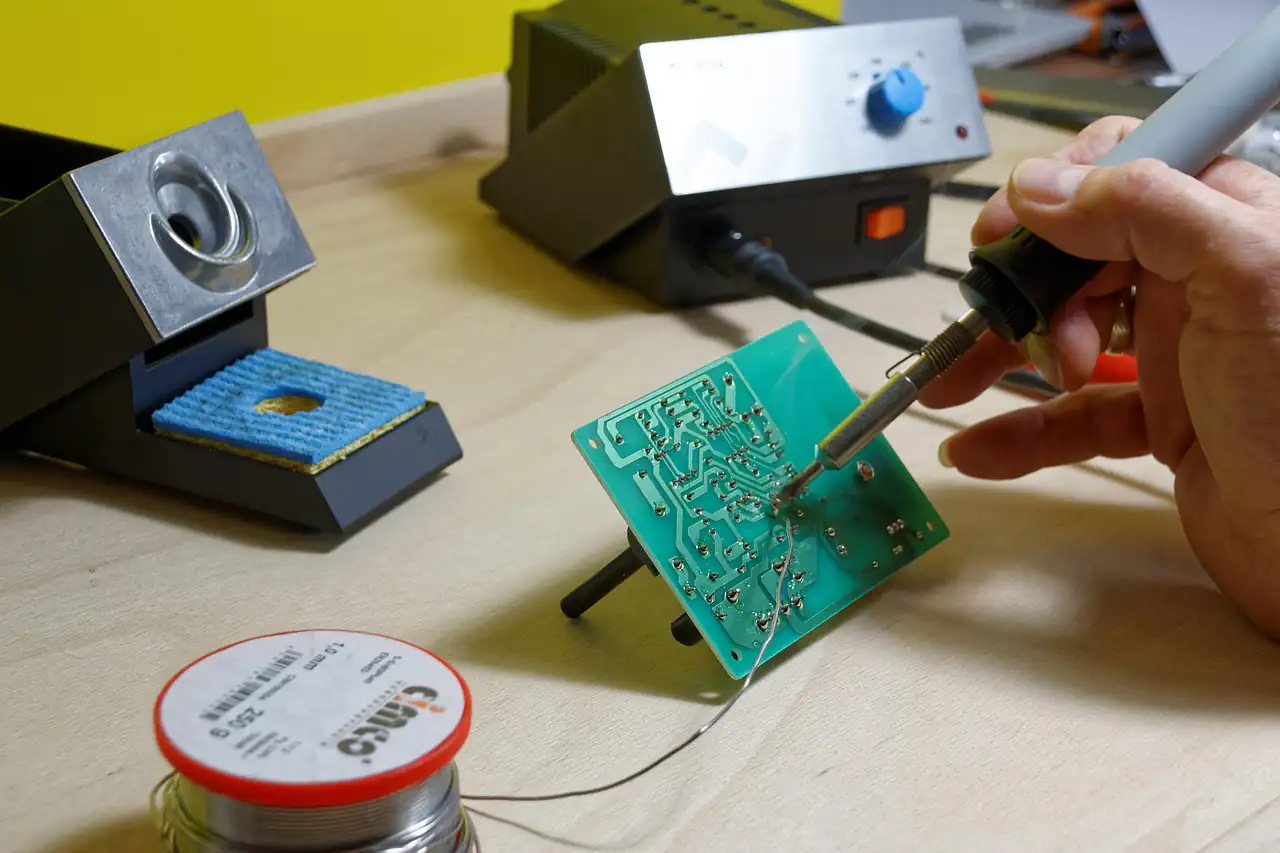
A hand soldering components onto a circuit board

There are exemptions in Annexes III and IV, for things like mercury in some lamps and lead in certain alloys, and they expire and get renewed through delegated directives. If your supplier relies on one then ask which number and check it is still current. The Commission published a review in December 2023 and proposed a targeted amendment, so expect the rules to move.

3. Where Indian Products Are Exposed

Most Indian electronics sold to importers are simple - lamps, fans, heaters, small kitchen appliances, decorative lighting, LED strings on handicrafts. The circuits are bought in, often from China, and the Indian work is the body, the finish and the assembly. So the RoHS risk tends to sit in three places.

  • Bought-in cords, plugs and PVC sleeving. Phthalates (DEHP, DBP and the rest) live in soft PVC. A cheap local cord is the classic weak point.
  • Brass and metal bodies. Leaded brass is common in turned parts. Lead in some copper alloys has an exemption, so it isn't automatically a fail, but it needs checking against the exemption's limit.
  • Paints, platings and pigments. Cadmium and hexavalent chromium can turn up here.

Our own read of EU Safety Gate records from 2021 to 2026 is telling. Of 130 alerts on India-origin goods, 7 of the 11 jewellery alerts were cadmium, some at very high levels, and 12 were chromium VI in leather. None of those are RoHS products, but they're the same metals from the same finishing shops. If a cluster has a cadmium habit in its jewellery then I'd test its lamp finishes too.

4. What an Importer Should Check

RoHS

You don't need a lab report on every component. You do need a file that makes sense. Ask for:

  1. A RoHS declaration from the manufacturer naming your models, and RoHS listed on the CE declaration.
  2. A parts list marking which components came with supplier RoHS declarations (holders, cords, drivers, switches).
  3. Targeted tests on the risky materials the factory makes or finishes itself - plating, paint, solder, any PVC it sources locally. Screening by XRF is fine for metals, but phthalates need a chemical test.
  4. Exemption numbers if any exemption is relied on.

Red flags - a single XRF report on the whole finished product, a report older than the current finish or supplier, or a declaration from a trader with no parts list behind it. To check a lab, look up its accreditation and scope on the NABL laboratory search (for Indian labs) and call it using contact details from its own website.

WEEE

WEEE responsibility sits with the producer in each country, and for imports from India that's almost always you or whoever first sells the goods there.

  • EU. Each member state runs its own producer register. Article 16 requires distance sellers to register in each country they sell into. Under Article 17, a producer without an establishment in a country can appoint an authorised representative there by written mandate. So selling from Germany into France still means a French registration.
  • UK. Under 5 tonnes of electrical goods a year, register directly with your environmental regulator as a small producer. Over 5 tonnes, join a producer compliance scheme. Since the 2025 amendments, online marketplaces carry the obligation for goods from non-UK sellers. Keep records for at least four years.
  • Marking. The crossed-out wheeled bin symbol goes on the product (EN 50419), plus a mark showing it was placed on the market after 13 August 2005. You'll need to tell the factory to print it.

Check the current registration fee with each national register or scheme.

5. How an Indian Exporter Gets RoHS Ready

This half is for the Indian maker. WEEE registration isn't yours unless you sell directly into the country, but RoHS is, because the declaration is the manufacturer's.

Step 1 - List every homogeneous material. Take the bill of materials and break each part down. A table lamp might have 25 to 40 materials once you count platings, insulation and solder. (One or two days.)

A worker assembling small electronic parts on a production line

Step 2 - Collect supplier declarations. For every bought-in part, ask the vendor for a RoHS declaration or test report naming the part number. Parts with no declaration go on a "test" list. (One to three weeks, mostly chasing.)

Step 3 - Switch the weak parts. Where a local cord or holder has no paperwork, replace it with one that does. This is usually cheaper than testing it every batch.

Step 4 - Test what you make or finish. Send plated parts, painted parts, solder and any local PVC to an accredited lab. Check the lab's scope on the NABL search, because phthalate testing and metals screening are separate scopes. Results often take one to two weeks. Check the current fee with the lab.

Step 5 - Write the file. Use the structure in harmonised standard EN IEC 63000 - materials list, declarations, test reports, an assessment of risk per material, and your change control. Keep it with the CE technical file for 10 years.

Step 6 - Sign the declaration. List RoHS on your EU Declaration of Conformity and issue a short RoHS declaration if the buyer asks.

Step 7 - Lock the change control. The common rejection reason isn't a bad first file. It's a purchase team swapping a cord vendor eight months later. Any part change goes back through Step 2.

Step 8 - Send the buyer their pack. Declaration, parts list with declarations, test reports and the bin symbol artwork. Ask the buyer which countries they sell into so the right marks go on.

There's no renewal date for RoHS. The file is valid as long as the materials don't change and the exemption you rely on is still live. If keeping this current across dozens of vendors sounds heavy then SourcingSync (opens in a new tab) can manage the declarations and retests with your suppliers.

6. A Worked Example

This example is an illustration built from the rules above, not a real firm.

A Dutch lighting brand buys 1,200 LED pendant lamps from a maker near Delhi, sold in the Netherlands, Belgium and the UK.

The maker's file lists 32 materials. The LED driver, cord and holder come with vendor RoHS reports. The factory sends its own nickel plating, black powder coat and solder to a NABL-accredited lab, and the powder coat is screened for cadmium and lead. The brass canopy uses leaded brass, so the file cites the copper alloy exemption by number and the lab result shows lead within it.

On the WEEE side, the brand registers as producer in the Netherlands and Belgium, and its UK importer, at under 5 tonnes a year, registers direct as a small producer. The factory prints the bin symbol and date mark on the canopy label. Nobody had to guess.

FAQ

Does RoHS apply to a battery fairy-light garland?

Yes. RoHS covers battery-powered equipment too, even though the Low Voltage Directive doesn't.

Is one RoHS test report enough?

Rarely. The limits apply per material, so a file needs declarations for parts and tests for the risky materials.

Who registers for WEEE, me or the factory?

The producer in each country, which is usually the importer or seller.

Does RoHS expire?

No, but exemptions do, and so does the file the moment a part changes.

Is REACH the same as RoHS?

No. REACH covers chemicals in all articles and has its own guide on restricted substances.

7. Next Steps

Read the CE and UKCA guide for the declaration RoHS sits in, and our quality control page for checking goods before they ship. If you sell in Australia or New Zealand as well, see the RCM guide.

Ten substances and one bin symbol. It's a short list, and that's why you have no excuse to skip it.

Ready to act

Want this supplier checked before you commit?

SourcingSync can verify who makes it and who answers for quality, then manage the supplier for you.

Talk to SourcingSync (opens sourcingsync.com in a new tab)
Yash KhatriFounder, SourcingFrom

Yash Khatri founded SourcingFrom to give buyers outside India the full picture of sourcing from India: what the country makes well, where it is made, who makes it and how it ships. He writes and edits every guide on the site, and holds each one to the same rule: say what we know, show how sure we are, and say plainly where the evidence runs out. He also runs SourcingSync, the hands-on service that does the sourcing work for buyers, and Kirnova, the data and intelligence company behind SourcingFrom Intelligence.

View profile

Want new guides when they go up? Get the newsletter

Download This Guide as a PDF

Leave your email and the PDF downloads straight away. We don't email it to you.

The RCM Mark for Electrical Goods Imported into Australia and New Zealand

In Australia and New Zealand the RCM shows a product meets both electrical safety and radio interference rules, and only a registered local supplier can use it. An Indian factory cannot register. This guide shows the importer how to register, which level their product is and how to check a certificate, and gives an Indian maker the steps to get the test reports and certificate the importer needs.

FDA Food Facility Registration for Suppliers in India

Every foreign plant that makes, packs or holds food for the US must register with FDA and renew in the last quarter of each even-numbered year. The registration is a number, not an approval, and FDA issues no certificate. This guide shows US importers what to check and walks an Indian food maker through registering, renewing and the filings that sit next to it.

CE and UKCA Marking for Products Made in India

CE and UKCA are the maker's own declaration that a product meets EU or GB product law, backed by a technical file and sometimes a third-party body. This guide shows an importer what to ask for and how to check it, and walks an Indian manufacturer through the steps from finding the right directive to signing the declaration.

Latest articles

Product Carbon Footprints and Carbon Credits for Buyers and Indian Exporters

A product carbon footprint is a calculation, not a pass mark, and it is only as good as its boundary, its data and who checked it. Carbon credits are a separate thing: a bought claim against emissions elsewhere, and since 27 September 2026 they can no longer back a "carbon neutral" product claim to EU consumers. India now runs its own credit market under BEE.

Certifications for Importing From India and Exporting From It

Every certificate answers one question for one market. This index lists the certification guides by group, says in a line what each one is and who needs it, and gives a table of which certificates a product family usually needs in each main market. Each guide has a half for importers and a half for Indian exporters.

Dangerous Goods Declarations, Shipping SDS and UN38.3 for Batteries

A surprising share of what buyers source from India ships as dangerous goods: essential oils, attars, perfumes, paints, adhesives, aerosols, some chemicals and anything with a lithium battery. Dangerous goods need a classification, a declaration signed by a trained shipper, compliant packing and labels, and for batteries a UN38.3 test summary. Get it wrong and the carrier refuses the cargo, or worse. This guide shows the buyer what to ask for and the Indian exporter how to prepare it.

Type a word you met on the page, a product or a place.