

Handmade Rugs From India by Town, Border Duty and Who Weaves Them
Which Indian town weaves which rug, what the UK, US, Australia and NZ charge by rug type, how to ask who weaves your order, and when to meet makers.

8 min read
Goods from an inland Indian city reach the sea in one of two ways. A full container can be cleared by customs and sealed at an export-capable inland container depot near the supplier, then moved by rail or road to Nhava Sheva or Mundra. A small LCL lot often cannot be consolidated inland, so it is trucked to a freight station at the port. Which route your order takes changes the Incoterm you should use and how much of the cost you can see.
From an inland city like Jaipur, your order travels to the sea in one of two ways. A full container is usually cleared by Indian customs and sealed at an inland container depot (ICD) near the supplier, then sent by rail or truck to Nhava Sheva or Mundra. A small shared-container (LCL) lot often can't be consolidated at the depot, so it goes by truck to a freight station at the port and is packed into a shared box there.
That split matters more than most buyers expect, because it decides which Incoterm makes sense, who pays for the long road, and whether you can even see that cost. Below is the route from factory to ship, which inland cities have a depot that can clear exports, and what to ask before you book. The facts come from our own cluster-to-port map, built from official terminal and customs-site lists read in September 2026, plus importer and forwarder voices from our forum research. Caveat up front: distances are our straight-line calculations, so the road is always longer.
Picture a block-print maker on the edge of Jaipur. The order can leave in three legs.
Leg one, factory to depot. For a full container, the empty box is brought to the factory and stuffed there, or the goods are trucked to the depot and stuffed on site. The exporter's customs broker files the shipping bill, India's export declaration, and customs clears the cargo at the depot. The box is sealed.
Leg two, depot to port. The sealed container moves on by rail or road to the gateway port. For Jaipur that's usually Mundra or Nhava Sheva, more than 700 km away.
Leg three, port to ship. The box waits at the terminal for its vessel and is loaded.
A small LCL lot skips the first neat part. It's loaded loose on a truck, driven to a container freight station near the port, and packed into a shared container with other exporters' goods. Where customs clears it depends on the forwarder's set-up, so ask.
So the two routes look alike on a map and behave very differently on a bill. One moves a sealed box you can price from a depot. The other moves loose cartons a long way before anyone consolidates them.
Not all of them, and this is the part nobody publishes in one place. We joined the rail operator's terminal register with the customs department's list of connected freight sites to see which export towns have a terminal in their own district. "Mixed" means the terminal handles export and domestic cargo. "Domestic only" means it doesn't clear exports.
| Town (product) | Terminal in district, per official lists | Straight-line km to Mundra / Nhava Sheva |
|---|---|---|
| Jaipur (handicrafts, textiles) | ICD Kanakpura, mixed | 770 / 932 |
| Jodhpur (furniture, handicrafts) | ICD Bhagat ki Kothi, mixed, and ICD Thar Dry Port | 376 to 514 / 773 to 811 |
| Ludhiana (knitwear) | ICD Dhandarikalan, export | 1,093 / 1,360 |
| Noida (apparel) | ICD Dadri, mixed | 1,005 / 1,158 |
| Gurugram, Faridabad (apparel) | None listed in district. ICD Tughlakabad is in South East Delhi | 972 to 990 / 1,136 to 1,142 |
| Moradabad (brassware) | ICD Moradabad, mixed | 1,133 / 1,248 |
| Agra (leather footwear) | ICD Agra East Bank, mixed | 972 / 1,051 |
| Panipat (home textiles) | ICD at Jattipur, customs site | 1,036 / 1,230 |
| Jalandhar (sports goods) | Domestic-only terminals | 1,118 / 1,402 |
| Tiruppur (knitwear) | None listed in the district | Cochin 172, Tuticorin 278 |
Sources: CONCOR's terminal register and the CBIC/ICEGATE list of customs-connected freight sites (Feb 2024), both read 23 September 2026, with our distance calculations. Verified for the terminals, Indicative for which port the cargo actually uses.
Three rows deserve a word. Gurugram and Faridabad, two of the three apparel towns on the government's export list, have no depot of their own in the lists we read, so their exporters use a Delhi-area depot or truck to the port. Ask which. In our lists only Jalandhar, Mirzapur and Agartala were left with domestic-only terminals, so an exporter there has to take the goods to a depot elsewhere or straight to a port. And Tiruppur's cargo runs south and through Colombo rather than to the west coast, which is a story of its own on why South Indian cargo ships via Colombo.
Because a shared container needs enough cargo, going to the same place, to fill it. An inland depot rarely has that for every destination. A vendor on an Indian exporters' forum put it in one line in July 2026 - "for LCL jaipur icd dont stuff a console box" (r/exportersindia, Reported, one voice). So the cartons travel by truck to Nhava Sheva or Mundra and are consolidated there.
That has two effects. The truck leg is paid on a small volume, so it costs a lot per carton. And the consolidation charges at the port come on top. A UK importer summed up what that did to one Indian quote: "it was the inland trucking in india that made it none viable so hopefully your suppliers are near a port" (r/smallbusinessuk, Jan 2024, archived thread, Reported).
The same thread gave a rough rule that above about 10 pallets a full container usually beats LCL. Treat it as one importer's experience, not a rule, and test it with a forwarder on your own lane. The wider trade-off is on LCL vs FCL.
The dedicated freight corridor from the north into Nhava Sheva was finished on 31 March 2026 (DFCCIL milestones (opens in a new tab), Verified), but in August 2026 only about one in nine of the port's containers arrived by rail, by our count from the port's own figures. What that means for the choice of port is in Mundra or Nhava Sheva, so we won't repeat it here.
What matters for your order is narrower. We found no official rail transit times from any northern depot, and no official word on the feeder lines into Mundra. A depot being "rail-connected" tells you nothing about when the next train leaves with space for your box. So the question isn't "will it go by rail" but "who books the inland leg, and how long does it take on this supplier's usual route". Check that with your forwarder before you book.
It's either hidden or visible, depending on the Incoterm, and the point to take from this page is that two FOB quotes from different inland cities aren't comparing the same thing. A Jaipur maker quoting FOB Nhava Sheva has a 900 km road trip inside the unit price. A Moradabad maker quoting the same port has 1,200 km inside it. Neither is dishonest. You just can't see, compare or question the leg.
The fix for a full container is to name the depot under FCA, so the supplier hands over a sealed box at, say, ICD Kanakpura and your forwarder quotes the rail or road leg as its own line. For a small LCL lot the depot route often fails, so price it to the port. The Nhava Sheva port page sets out when FOB there makes sense, and the Jaipur cluster page applies the rule to that city.
One thing to avoid is changing the plan late. A lot priced FCA at the depot that turns out to need consolidation at the port creates a truck bill nobody agreed. The charge lines that turn up on India freight invoices are listed in why FOB India quotes and invoices differ.
Five questions, answered in writing:
Getting these answered, booking the inland leg in your own name and making sure the box makes its vessel is execution work. SourcingSync (opens in a new tab) handles it for foreign buyers who'd rather not manage an Indian trucking leg from abroad.
An inland container depot, a terminal away from the coast where containers are handled and, at an export-capable depot, customs clears the cargo before it travels on to a seaport.
Usually Mundra or Nhava Sheva. Mundra is closer in a straight line, but the right port depends on the sailing to your country.
Often not. A vendor on an Indian exporters' forum says Jaipur's depot doesn't stuff shared boxes for LCL, so small lots are trucked to the port.
FCA at the named depot for a full container. For a small LCL lot, pricing to the port is often the honest option.
It can, but no official rail transit times are published, and most containers still arrive at Nhava Sheva by road. Ask the forwarder for the supplier's usual route and its last few transit times.
Ready to act
Want the shipment, documents and consolidation handled?
SourcingSync can coordinate the shipping, the documents and the hand-off to your forwarder.
Which Indian town weaves which rug, what the UK, US, Australia and NZ charge by rug type, how to ask who weaves your order, and when to meet makers.

Which Indian town makes which brass, why one bowl can pay 50% or about 10% at the US border depending on its code, and how lead rules (FDA, Prop 65, CPSIA) reach importers.
How to tell hand block print from screen print, what Sanganer and Bagru GI status means, the base-cloth and dye specs to write, and what printed cotton pays in each market.
Yash Khatri founded SourcingFrom to give buyers outside India the full picture of sourcing from India: what the country makes well, where it is made, who makes it and how it ships. He reviews every guide on the site and holds each one to the same rule: say what we know, show how sure we are, and say plainly where the evidence runs out. He also runs SourcingSync, the hands-on service that does the sourcing work for buyers, and Kirnova, the data and intelligence company behind SourcingFrom Intelligence.
Want new guides when they go up? Get the newsletter
Leave your email and the PDF downloads straight away. We don't email it to you.
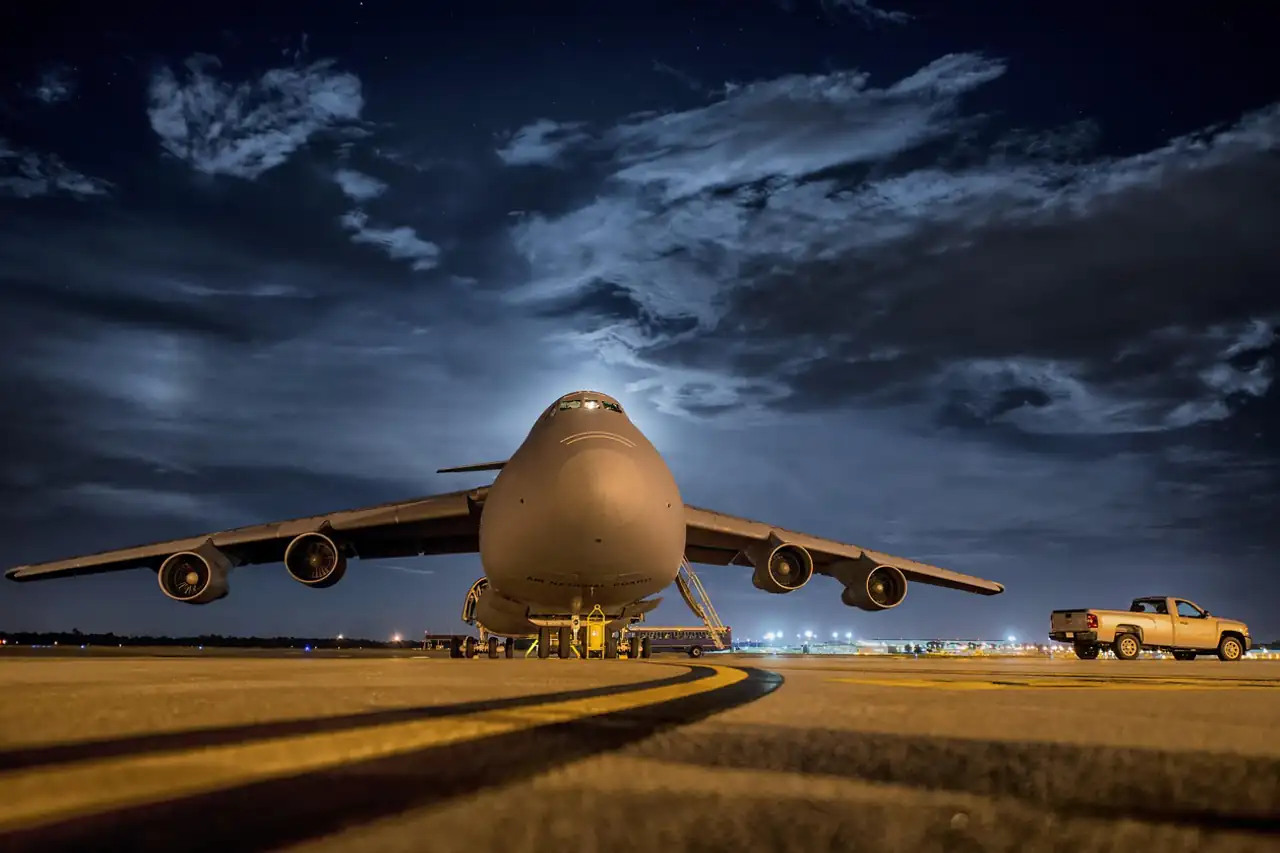
Usually not. Most Indian export towns have no busy international cargo airport, so urgent goods and samples are trucked to a gateway, most often Delhi, Mumbai, Bengaluru or Chennai. Delhi and Mumbai carried 58.5% of India's international air freight in FY2025-26.
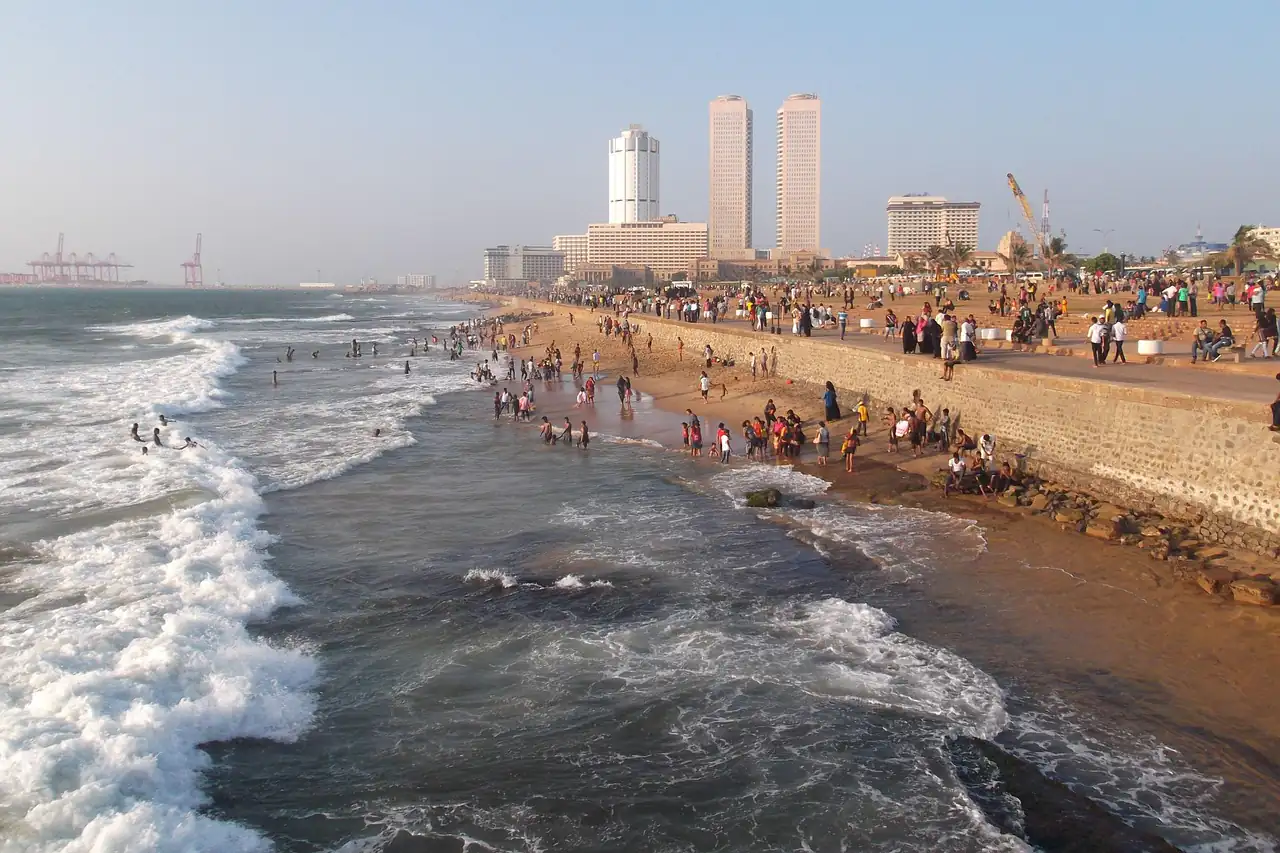
Much South Indian cargo shows Colombo as its port of loading because it travels on a feeder ship from Tuticorin, Cochin or Chennai and joins the ocean vessel in Sri Lanka. North and west Indian cargo mostly sails direct from Nhava Sheva or Mundra. The relay does not change origin, but it affects your Incoterm risk, your trade agreement paperwork and your transit time.
A price rise after you have paid is usually one of three things. A genuine cost letter (freight shocks, bulk fabric that costs more than the sample lot) is negotiable and should come with evidence. A re-price once the supplier holds your deposit is a contract problem you fix in writing. A run of new fees after payment, such as a minimum-order top-up and then a customs or exportation fee, is a known scam, so stop at the first unplanned fee.
A quote that says "leather" tells you nothing about the animal, and in India the answer is often goat, sheep or buffalo rather than cowhide. Each behaves differently in a bag: goat is tough and small, sheep is soft and delicate, buffalo is thick, coarse and variable. Ask for the species, the tannage and the tannery in writing, check the grain yourself, and sample buffalo from the actual lot.
A custom rug from India usually arrives off-colour for one of five reasons: the colour was approved on a screen, the bulk yarn went into a different dye lot, the yarn looks different once woven into pile, the post-weaving wash shifted it, or it is being judged in different light or from the other end of the pile. Each has its own approval. Because returning a large rug to India is slow and costly, the approvals and the remedy belong in the order before weaving starts.
No. Urine does not tan leather, and the smell some buyers notice on Indian leather has ordinary causes: tannery residue left by poor washing and finishing, solvent finishes and bag-making glues, and moisture in packing and transit. Each smells different and has its own fix. Odour has no legal limit, so it has to go into the spec, with a closed-box check on bulk before you accept a shipment.