


Cotton T-Shirts From India by Town, Border Duty and Testing
Where Indian cotton T-shirts are made, what Australia, NZ, the UK, US, EU and UAE charge on them, which origin proof you need and what to test first.
9 min read
Most UK and EU buyers will ask an Indian factory for a social audit before a first order. amfori BSCI and SMETA are audits with reports, not certificates, while SA8000 and WRAP certify a site for a set period. This guide shows importers which one their customers mean and how to read the report, and gives Indian factories the steps, timings and common findings for each.
Has your retailer just asked whether your Indian supplier is "BSCI or SMETA"? You're not alone, and the honest answer is that they are four different tools that get used as if they were one word.
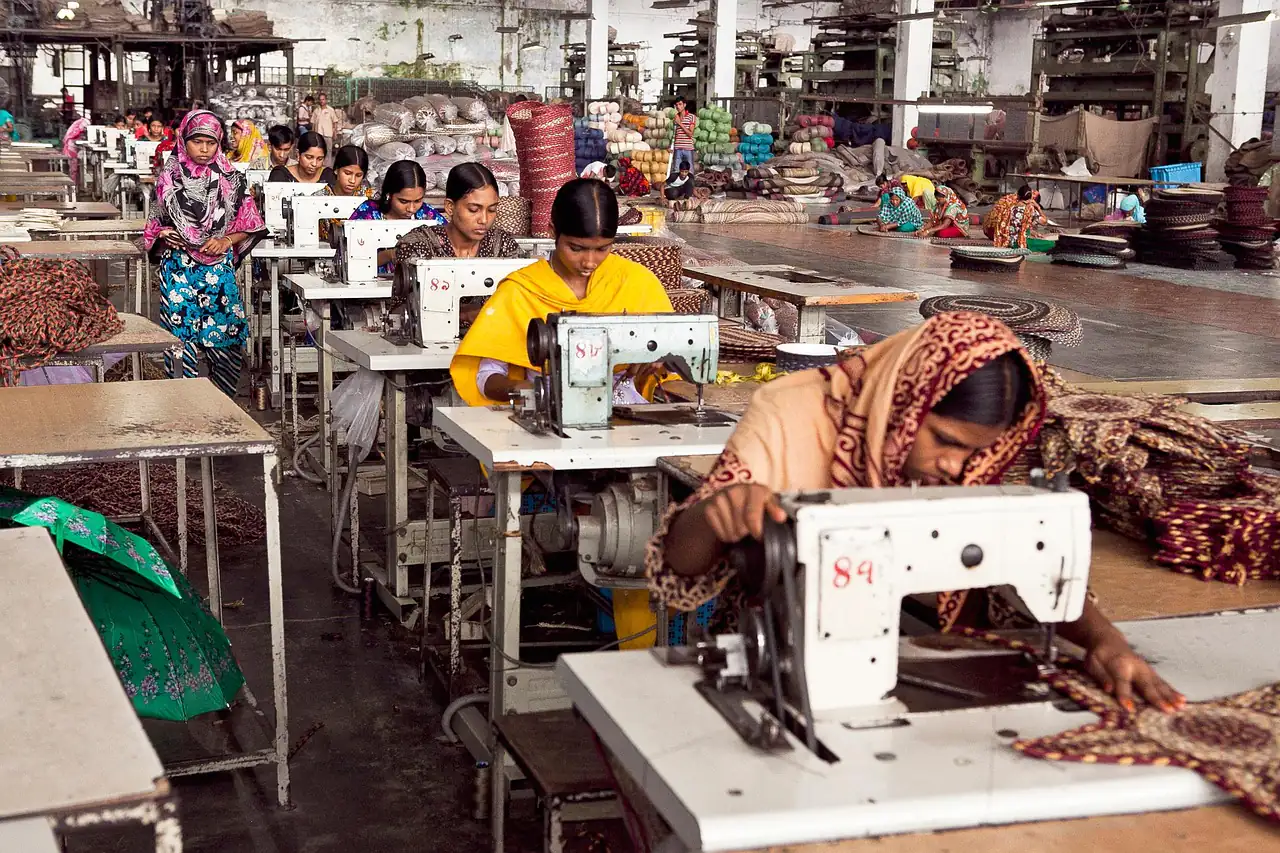
This guide sorts them out for both sides of the order. Importers get what each scheme proves, which one their customers mean and how to read a report. Indian factories get the steps to be audited or certified, with the timings the scheme owners publish. It's part of our certifications hub, and if your real question is forced labour law in the UK, EU, US or Australia then start with our forced labour due diligence guide, which covers the law and what a SMETA report can and can't tell you about it.
Here's the split -
| Scheme | Owner | What you get | How long it counts |
|---|---|---|---|
| amfori BSCI | amfori (Brussels) | An audit report with an A to E rating, on the amfori platform | Two years for A or B, 12 months for D or E (reported by accredited auditors) |
| SMETA | Sedex (London) | An audit report on the Sedex platform, no certificate | Sedex guidance treats reports older than 24 months as no longer current |
| SA8000 | Social Accountability International | A certificate after Stage 1 and Stage 2 audits | Three years, with surveillance visits typically twice a year |
| WRAP | WRAP (US) | A facility certificate | One year on WRAP's own page, with longer periods at higher levels reported by accredited auditors |
Sources are in the sections below. The thing to hold on to is that "BSCI certified" and "Sedex certified" describe things that don't exist. A factory saying either isn't lying to you, it's using trade shorthand, but your customer will want the report itself.
None of these is a border requirement in any of our markets. They're buyer requirements. Where the law comes in (the UK and Australian modern slavery acts, the EU forced labour regulation from December 2027, US forced labour import bans), an audit is one piece of evidence, not a defence.
As a rough guide from what buyers ask Indian exporters for -
Don't guess. Ask your customer, in writing, which schemes they accept and whether they need to see it on a platform (amfori and Sedex both share results through their own platforms with the supplier's permission). Then ask the factory.
A report tells you about one site on given days. So check -
Buyers on forums tell us inspection integrity is a recurring worry in India, and some rotate agencies or add unannounced visits because of it (our forum signal FS-SUP-060). I think that's sensible for any origin, not an India problem. Read the report, not the cover page.
Subcontracting is the other gap. An audit covers the site on the report and nothing else. If your order goes to a job worker for embroidery or finishing, that unit isn't covered. That's normal Indian business practice and not a red flag in itself. Just ask who else touches the goods.
From the shape of the standards and what Indian compliance managers report, the same handful of findings recur -
These are fixable before an audit. A factory that spends a month on its records usually does far better than one that books the audit first and prepares second.
amfori BSCI is requested by an amfori member, usually your buyer. A factory can't simply order one for itself in the usual case. We couldn't read amfori's own pages at source (they blocked our reader), so check the current process on amfori.org.
Step 1 - Get the request. Your buyer, an amfori member, links your factory on the amfori Sustainability Platform.
Step 2 - Register and complete the self-assessment on the platform.
Step 3 - Book an audit with an amfori-approved audit company. Ask for its current fee on its quote.
Step 4 - The audit. Usually semi-announced within a one-month window. It covers the amfori Code of Conduct areas, from fair pay and working hours to health and safety.
Step 5 - The rating. A to E. An A or B result stays valid for two years, and a D or E result is limited to 12 months, with a remediation plan due within 60 days and a follow-up audit (TÜV NORD, an accredited auditor).
Step 6 - Share it. Results sit on the platform. Other amfori buyers can see them with your permission, so one good audit can serve several customers.
SMETA is an audit method. You need a Sedex membership to put the report on the platform. Sedex's site blocked our reader, so check membership rules and the current fee on sedex.com.
Step 1 - Join Sedex as a supplier member and complete the Self-Assessment Questionnaire.
Step 2 - Agree the scope with your buyer. 2-pillar or 4-pillar, and announced, semi-announced or unannounced.
Step 3 - Book an audit with an audit company that offers SMETA. The current version is SMETA 7.0, which adds a management systems assessment.
Step 4 - The audit. Typically one to several days depending on worker numbers, with document review, a site tour and worker interviews.
Step 5 - Corrective action plan. Fix the findings and upload evidence. A follow-up visit may be needed for serious ones.
Step 6 - Share the report with your customers on Sedex. Plan to re-audit before the report turns 24 months old, sooner if your customer rates you high risk (Sedex's recommended cadence is yearly for high-risk sites).
SA8000 is the only one here that a factory starts on its own and ends with a certificate. SAI publishes the path (SAI (opens in a new tab)).
Step 1 - SA8000 Self-Assessment in the SAI Database. SAI says it takes 60 to 90 minutes. Check the current fee on the SAI site.
Step 2 - Choose an accredited certification body. Only bodies accredited by SAAS can issue credible SA8000 certificates, and SAI lists them. Get quotes from more than one.
Step 3 - Stage 1 audit, a readiness check that typically takes one to two days.
Step 4 - Stage 2 audit, the full audit, typically two to ten days depending on size and scope.
Step 5 - Certificate. Valid for three years, subject to surveillance visits, typically twice a year and a mix of announced and unannounced.
Timing matters right now. SA8000:2026 replaced the 2014 version from 1 January 2026, and initial or recertification audits to SA8000:2014 must finish on site by 31 December 2026 (SAI (opens in a new tab)). Starting fresh today means working to the 2026 version.
WRAP certifies production units only, not brands or holding companies (WRAP (opens in a new tab)).
Step 1 - Apply and register with WRAP. Check the current registration fee on wrapcompliance.org.
Step 2 - Self-assessment against WRAP's 12 Principles.
Step 3 - Audit by a WRAP-accredited monitoring firm, which sets its own fee.
Step 4 - Compliance review of the audit report by WRAP.
Step 5 - Certification decision by WRAP's review board.
WRAP says the whole process typically takes two to six months, sometimes as little as six weeks. Its certification page says certificates are valid for one year, and every certified facility can get a random unannounced post-certification assessment (WRAP (opens in a new tab)). Accredited auditors describe Platinum (two years, after three consecutive clean audits), Gold (one year) and Silver (about six months) levels (TÜV SÜD (opens in a new tab)). We couldn't confirm the levels on WRAP's own pages, so check them there.
What to send the buyer for any of the four - the report or certificate, the site address on it, the audit date and type, and the corrective plan with what's been closed.
If you're a buyer managing audits across several Indian suppliers, the heavy part is the follow-up, not the booking. SourcingSync (opens in a new tab) can run that chase on the ground.
This example is an illustration built from the rules above, not a real firm.
A UK homeware retailer wants hand-tufted rugs from a maker in Bhadohi. Its supplier manual says "SMETA 4-pillar, semi-announced, under 24 months".

The maker has an amfori BSCI B rating from 14 months ago. That's a decent result, but it's the wrong scheme for this retailer. The maker joins Sedex, books a semi-announced 4-pillar SMETA, and spends the weeks before fixing overtime records in peak season and fire drills.
The audit finds two issues - incomplete records for contract workers and a grievance box nobody uses. Both go on the corrective plan and are closed with evidence. The retailer also asks about home-based weavers, because tufting and finishing in the Bhadohi belt often go out to households. The SMETA doesn't cover them, so the buyer asks the maker to map them as part of its forced labour due diligence. That conversation is the real work, and the audit is what opened it.
No. It's an audit with a rating. amfori itself says so.
Sometimes. Many buyers accept another scheme's report, but ask each one. Sharing one SMETA or BSCI result across customers is common.
BSCI A and B results count for two years, SMETA reports are treated as current for 24 months, SA8000 has surveillance visits about twice a year and WRAP certificates are typically annual.
Yes. All four work for small sites, and the audit is shorter with fewer workers.
It means the auditor didn't find it on the site on those days. It doesn't cover upstream mills or home workers.
Hope this helps. Ask your customer which scheme first, and the rest gets a lot simpler.
Ready to act
Want the shipment, documents and consolidation handled?
SourcingSync can coordinate the shipping, the documents and the hand-off to your forwarder.
Where Indian cotton T-shirts are made, what Australia, NZ, the UK, US, EU and UAE charge on them, which origin proof you need and what to test first.

Agra, Kanpur, the Tamil Nadu belt, Kolkata or Jalandhar for leather shoes. Duty by construction in the US, UK, EU, Australia, NZ and UAE, chromium VI, CITES and origin labels.
Which Indian town weaves which rug, what the UK, US, Australia and NZ charge by rug type, how to ask who weaves your order, and when to meet makers.
Yash Khatri founded SourcingFrom to give buyers outside India the full picture of sourcing from India: what the country makes well, where it is made, who makes it and how it ships. He writes and edits every guide on the site, and holds each one to the same rule: say what we know, show how sure we are, and say plainly where the evidence runs out. He also runs SourcingSync, the hands-on service that does the sourcing work for buyers, and Kirnova, the data and intelligence company behind SourcingFrom Intelligence.
Want new guides when they go up? Get the newsletter
Leave your email and the PDF downloads straight away. We don't email it to you.
GOTS, OEKO-TEX STANDARD 100 and GRS are earned by the factory, not bought by the brand, and each works differently. GOTS and GRS certify a site and its chain of custody through an approved certification body, while OEKO-TEX tests a product sample and certifies the article for a year. This guide tells importers what to ask for at each stage of an order and gives Indian mills and garment units the steps, timings and common failure points.
LWG audits tanneries and leather traders on environmental performance, from chrome handling to effluent, and rates manufacturers Gold, Silver, Bronze or Audited. It is a brand requirement, not a border one, and it covers the tannery, not the bag or shoe factory. This guide shows importers how to check a rating and read what it leaves out, and gives Indian tanneries and leather goods makers the steps through LWG Assurance Services.

Fairtrade and Rainforest Alliance are both farm-level sustainability marks, but they work differently. Fairtrade sets a Minimum Price and pays a Premium to producer organisations, and FLOCERT certifies everyone in the chain who trades the goods. Rainforest Alliance certifies farms and supply chain actors against its 2020 standard through accredited certification bodies. This guide shows importers how to check both and gives Indian producers and exporters the steps to certify.

A product carbon footprint is a calculation, not a pass mark, and it is only as good as its boundary, its data and who checked it. Carbon credits are a separate thing: a bought claim against emissions elsewhere, and since 27 September 2026 they can no longer back a "carbon neutral" product claim to EU consumers. India now runs its own credit market under BEE.

CE and UKCA are the maker's own declaration that a product meets EU or GB product law, backed by a technical file and sometimes a third-party body. This guide shows an importer what to ask for and how to check it, and walks an Indian manufacturer through the steps from finding the right directive to signing the declaration.

Every certificate answers one question for one market. This index lists the certification guides by group, says in a line what each one is and who needs it, and gives a table of which certificates a product family usually needs in each main market. Each guide has a half for importers and a half for Indian exporters.