

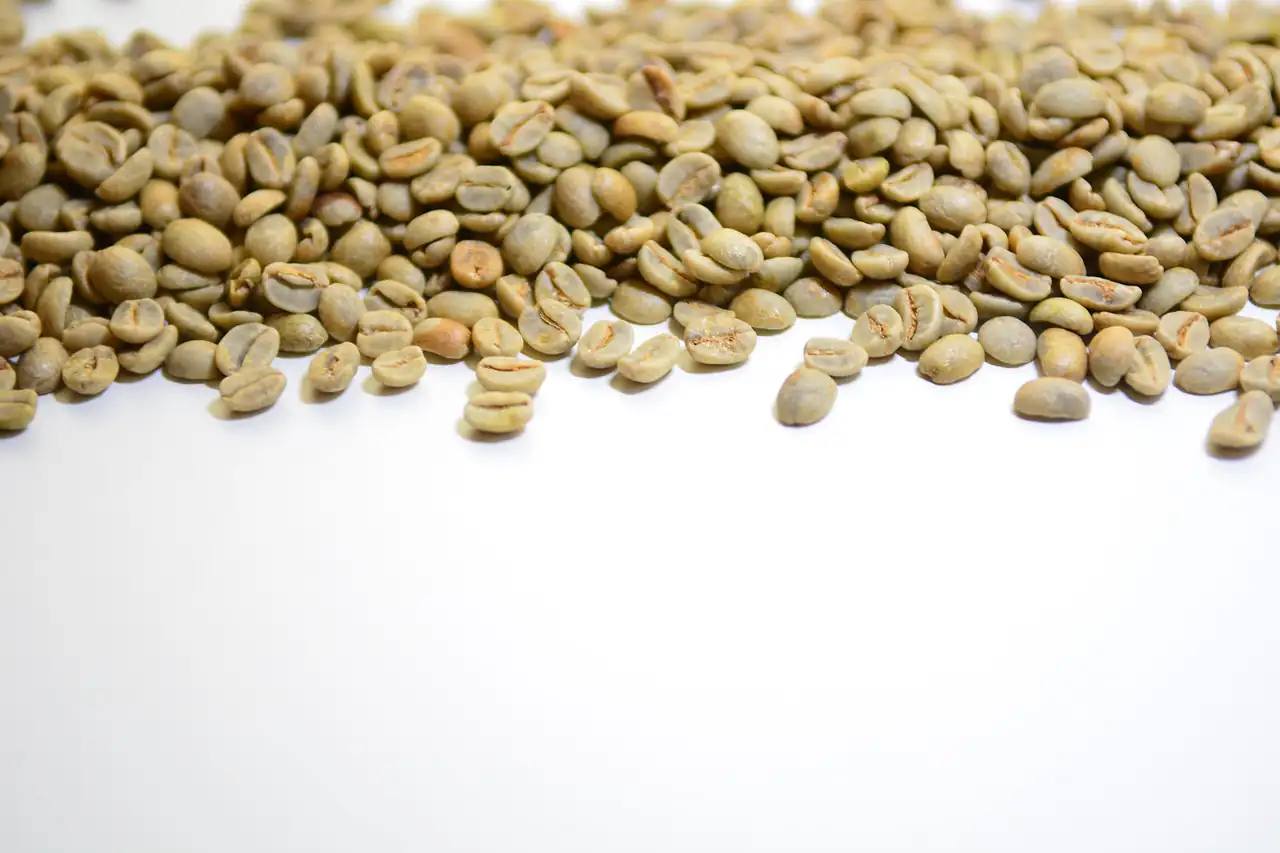
Robusta, Monsooned Malabar and EUDR Rules for Coffee From India
How a roaster buys Indian green coffee, what Monsooned Malabar and Indian robusta are, and how EU deforestation rules (EUDR) work for smallholder coffee.
8 min read
From 30 December 2026 an EU company placing cattle products, cocoa, coffee, palm oil, rubber, soy or wood on the market has to file a due diligence statement with the geolocation of every plot the commodity came from. India is reported as low risk, which simplifies the risk step but keeps the geolocation. This guide shows importers what to collect and how an Indian exporter builds the file.
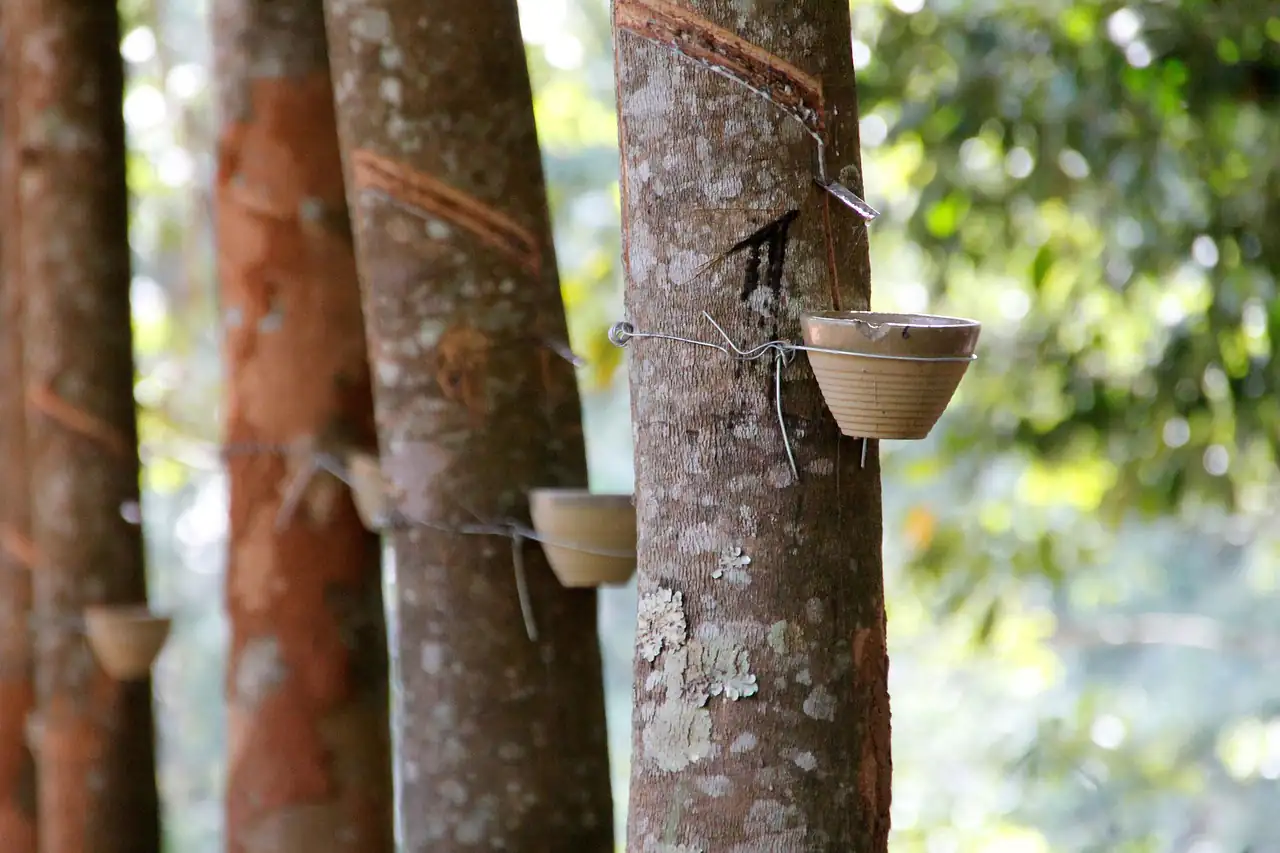
Most of India's EUDR exposure grows on farms you could walk across in ten minutes. Kerala's natural rubber comes largely from smallholdings, Karnataka's coffee from estates big and small along the Western Ghats, and Madhya Pradesh's soybeans from hundreds of thousands of family plots. The EU regulation on deforestation-free products doesn't care about size. It wants the coordinates of every plot that fed your container, and from 30 December 2026 an EU company can't put the goods on the market without them (European Commission (opens in a new tab)).
That's the work in this guide. The importer's half explains what you file and what to collect from India. The exporter's half is the steps an Indian supplier takes to have the data ready. Wood gets a short section only, because our timber-legality guide already covers furniture, species names and CITES in depth. All our certificate guides are listed on certifications.
The EUDR (Regulation (EU) 2023/1115, amended in December 2024 and again in December 2025) covers seven commodities - cattle, cocoa, coffee, oil palm, rubber, soy and wood - and products made from them, such as leather, chocolate, tyres and furniture. Products must be deforestation-free (no deforestation after the cut-off date of 31 December 2020), produced legally under the country of production's laws, and covered by a due diligence statement.
The dates as the Commission states them on 17 October 2026 (Commission (opens in a new tab)) -
| Who | Applies from |
|---|---|
| Large and medium operators | 30 Dec 2026 |
| Micro and small operators | 30 Jun 2027 |
| Micro and small operators already under the old EU Timber Regulation | 30 Dec 2026 |
| Products added by Delegated Regulation (EU) 2026/2102 (soluble coffee, some palm oil derivatives, frozen cattle tongues) | 30 Dec 2027 |
Which goods are in scope is set by HS code in Annex I of the regulation. Check your code against the current annex, not against the commodity name. Many products made with these commodities aren't listed.
| Indian product | In scope? | Where it comes from | The hard part |
|---|---|---|---|
| Coffee, green and roasted | Yes | Karnataka, Kerala, Tamil Nadu estates and smallholders | Collecting points or polygons for every farm in a curing works' lot |
| Natural rubber and products listed in Annex I | Yes | Mostly Kerala smallholdings | Thousands of small suppliers per factory, mixed at the collection centre |
| Leather and leather goods | Only bovine (cattle) | Tanneries in Tamil Nadu, Kanpur, Kolkata | Hide species is often not labelled, and goat and sheep aren't covered |
| Soybean meal and oil | Yes | Madhya Pradesh, Maharashtra, Rajasthan | Smallholder supply aggregated at mandis |
| Wood and furniture | Yes | Farm and roadside trees, depots | See timber-legality |
| Cocoa and chocolate | Yes | Small volumes from Kerala, Karnataka, Andhra Pradesh | Small volumes, same smallholder issue |
The leather line deserves a second look. Indian hide markets mostly offer goat, sheep and buffalo, and buyers who've visited say species and tannage are often not labelled (our forum signals FS-CAT-033 and FS-CAT-034). The regulation covers bovine animals, and whether buffalo falls under your HS line is a question for your customs adviser. So the first EUDR question on a leather bag order isn't about forests at all. It's which animal the hide came from.
The Commission benchmarked every country in May 2025 (Implementing Regulation (EU) 2025/1093). India is classed low risk, as reported by several sources we read, though we couldn't read the annex on EUR-Lex itself. Low risk lets an operator sourcing only from low-risk countries use simplified due diligence (Article 13). In plain words, you collect the information and file the statement, but you don't have to run the full risk assessment and mitigation, unless you learn something that points to a risk.
What it doesn't change is the data. You still need the geolocation of every plot, and the evidence that production was legal under Indian law. A coffee lot from a low-risk country without plot coordinates still can't be placed on the EU market. The benchmark is due for review, so check the current list when you plan each season.
If you're the operator (the company first placing the goods on the EU market, usually the importer), you file a due diligence statement (DDS) in the EU Information System before the goods are released or exported. The system opened for registration in November 2024 (Commission (opens in a new tab)). The DDS reference number goes in the customs declaration.
You collect, per consignment -
If you buy from another EU company that already filed, the December 2025 changes narrowed what you do. Downstream operators and traders don't file their own statements, but the first downstream company must keep and pass on the reference number of the original statement. Check how this applies to your role with your adviser, because the detail decides who in your chain does the work.
Red flags in the Indian file. One polygon for a whole district. Coordinates that sit in a town, a river or a reserve forest. A "deforestation-free certificate" from a private company offered in place of plot data (it's evidence at best, not the statement). A trader who can't tell you which collection centre the lot came from. None of these means a supplier is hiding anything. Most Indian exporters have never had to map a farm. They do mean the file isn't ready yet.
The timing matters more than any document. Geolocation is collected at the farm, so it has to start before harvest or before the supplier buys.
Mapping hundreds of smallholder plots and keeping a lot separate through a curing works or a rubber factory is field work in India. If you'd rather not run that yourself, SourcingSync (opens in a new tab) organises it at origin.
There's no Indian certificate that makes a product EUDR compliant. The exporter's job is to hand the EU buyer a clean data file for each lot. Here's how to build it.
Step 1 - Check which of your products are in scope. Match your HS codes to Annex I. For leather, record the species of each hide, because only bovine hides are in. Time: a day.
Step 2 - List every farm or plot that supplies you. For an estate, it's your own blocks. For smallholder supply, it's every member of the farmer group, collection centre or cooperative. Time: weeks to months, depending on how many farmers.
Step 3 - Collect the geolocation. A point for each plot up to 4 hectares, and a polygon for larger ones, at six decimal places. Most exporters use a phone app or GPS walk of the boundary. Keep the farmer's consent and name with each record. Time: the longest step. Plan a season ahead.
Step 4 - Collect the legality evidence. Land records or lease, plantation registration with the relevant commodity board where it applies (Coffee Board, Rubber Board, Spices Board), and labour and environmental compliance. Ask your EU buyer which documents it expects.
Step 5 - Show no deforestation after 31 December 2020. Records of when the plot was planted, and satellite imagery checks if the buyer asks. Most Indian coffee and rubber plots were planted long before 2020, which helps, but you have to show it.
Step 6 - Keep the lot separate. Segregate traced supply from untraced supply at the collection centre, curing works, factory or tannery, and record the lot numbers. Mixing a traced lot with untraced material breaks the whole file.
Step 7 - Send the file with each shipment. The plot list, production dates, legality evidence and lot numbers, matched to the invoice and packing list. Keep it for at least five years, which is how long the EU operator has to keep its records.
Where files fail: coordinates for the collection centre, not the farm. Polygons drawn from memory that don't match the satellite picture. A tannery that can't say which hides were bovine. Lots mixed after tracing. A supplier that tells the buyer "India is low risk, so no data needed".
This example is an illustration built from the rules above, not a real firm.
Say a Hamburg roaster (a large company) buys 20 tonnes of washed arabica from a curing works in Chikmagalur that buys from 160 growers, from big estates to two-hectare holdings. Shipment in February 2027, so the EUDR applies.
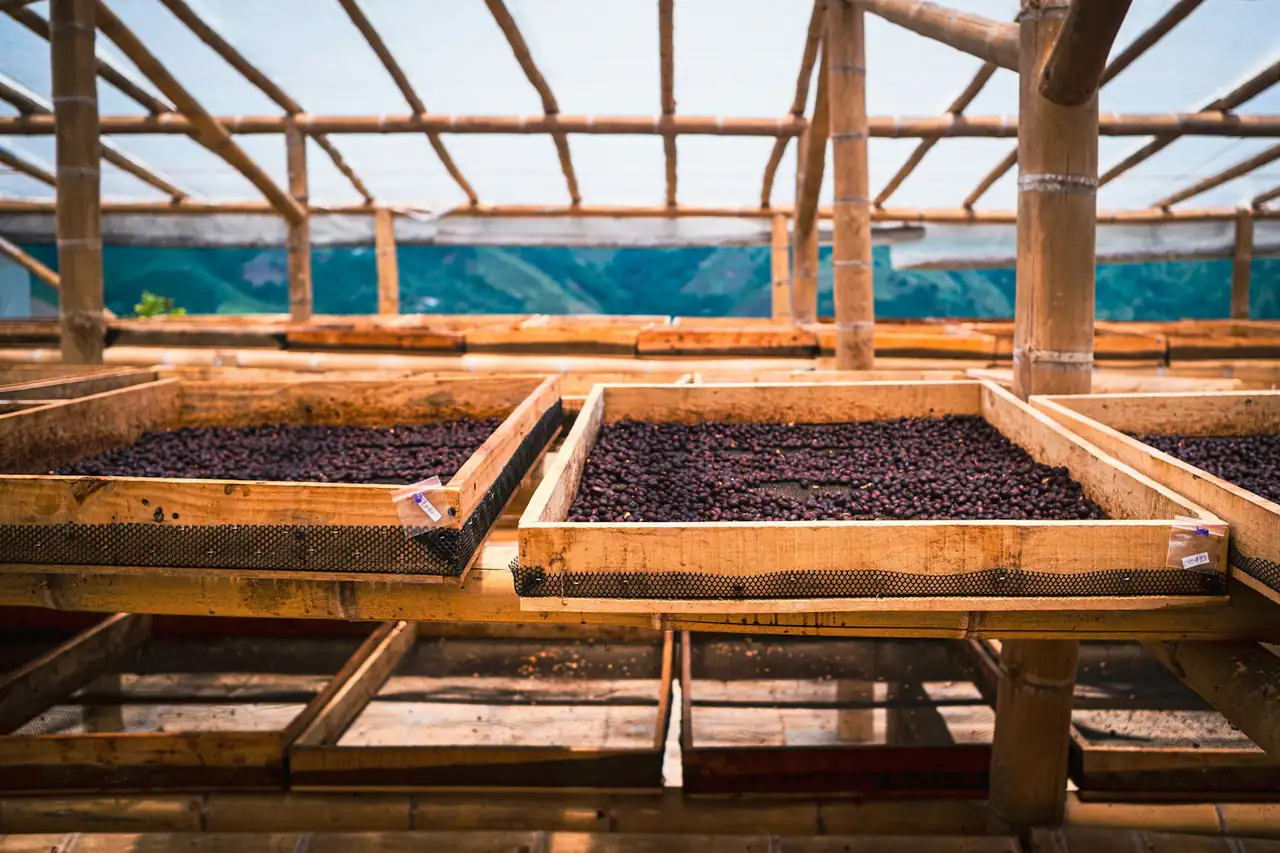
Before the harvest in late 2026, the roaster and the curing works agree the lot will come from a named group of growers. The curing works' field staff collect a point for every holding up to 4 hectares and walk the boundary of the larger estates. They collect each grower's land record and planting history, and check none of the plots were forest after 2020. At the works, the lot is kept apart from other coffee and gets its own lot number. The plot file goes with the invoice.
In Hamburg, the roaster files its DDS using simplified due diligence (India, low risk), checks a sample of the coordinates on a map, and puts the reference number on the customs declaration. For the coffee itself, see the coffee page.
From 30 June 2027 for micro and small operators, unless you were under the old EU Timber Regulation, in which case from 30 December 2026.
No. It simplifies the risk step only.
No. Certificates such as FSC, Rainforest Alliance or organic can support your file, but the statement needs the plot data. See FSC and PEFC and Fairtrade and Rainforest Alliance.
The regulation covers cattle. Goat and sheep hides aren't listed. Check your HS line.
Wood packaging used only to carry goods is treated differently. Check with your adviser, and the pallets still need ISPM 15.
Ready to act
Want this supplier checked before you commit?
SourcingSync can verify who makes it and who answers for quality, then manage the supplier for you.
How a roaster buys Indian green coffee, what Monsooned Malabar and Indian robusta are, and how EU deforestation rules (EUDR) work for smallholder coffee.
Where Indian leather bags are made (Kolkata, Chennai, Kanpur, Mumbai, Delhi-Noida), duty by outer material, chromium VI, exotic leather, and how to protect a private-label design.
Which Indian town makes which wooden furniture, why duty is near zero at most borders, and the timber, biosecurity, tip-over and moisture checks that decide your order.
Yash Khatri founded SourcingFrom to give buyers outside India the full picture of sourcing from India: what the country makes well, where it is made, who makes it and how it ships. He writes and edits every guide on the site, and holds each one to the same rule: say what we know, show how sure we are, and say plainly where the evidence runs out. He also runs SourcingSync, the hands-on service that does the sourcing work for buyers, and Kirnova, the data and intelligence company behind SourcingFrom Intelligence.
Want new guides when they go up? Get the newsletter
Leave your email and the PDF downloads straight away. We don't email it to you.
What the EU deforestation regulation, the US Lacey Act, Australia's illegal logging law, the UK Timber Regulation and New Zealand's coming rules ask of an importer of wood products. It explains the four questions every timber law asks, why Indian trade names for species are loose, the sheesham permit route, and how a Jodhpur furniture order plays out in each market.
RoHS limits ten substances in every homogeneous material of an electrical product, and WEEE makes whoever first sells it in a country pay for its recycling. This guide shows an importer how to read a RoHS claim and which WEEE registration is theirs, and gives an Indian maker the steps to build a RoHS file that holds up.

A health or veterinary certificate is the exporting government's signed statement that a consignment meets the importing country's rules. For many foods of animal origin and some plant foods, no certificate means no entry. This guide shows importers when their border asks for one and how to check it, and walks an Indian exporter through EIC's inspection, approval and certificate steps.

A product carbon footprint is a calculation, not a pass mark, and it is only as good as its boundary, its data and who checked it. Carbon credits are a separate thing: a bought claim against emissions elsewhere, and since 27 September 2026 they can no longer back a "carbon neutral" product claim to EU consumers. India now runs its own credit market under BEE.

CE and UKCA are the maker's own declaration that a product meets EU or GB product law, backed by a technical file and sometimes a third-party body. This guide shows an importer what to ask for and how to check it, and walks an Indian manufacturer through the steps from finding the right directive to signing the declaration.

Every certificate answers one question for one market. This index lists the certification guides by group, says in a line what each one is and who needs it, and gives a table of which certificates a product family usually needs in each main market. Each guide has a half for importers and a half for Indian exporters.